
Best Bipolar Ionization Air Purifier Options
Updated: Oct 1
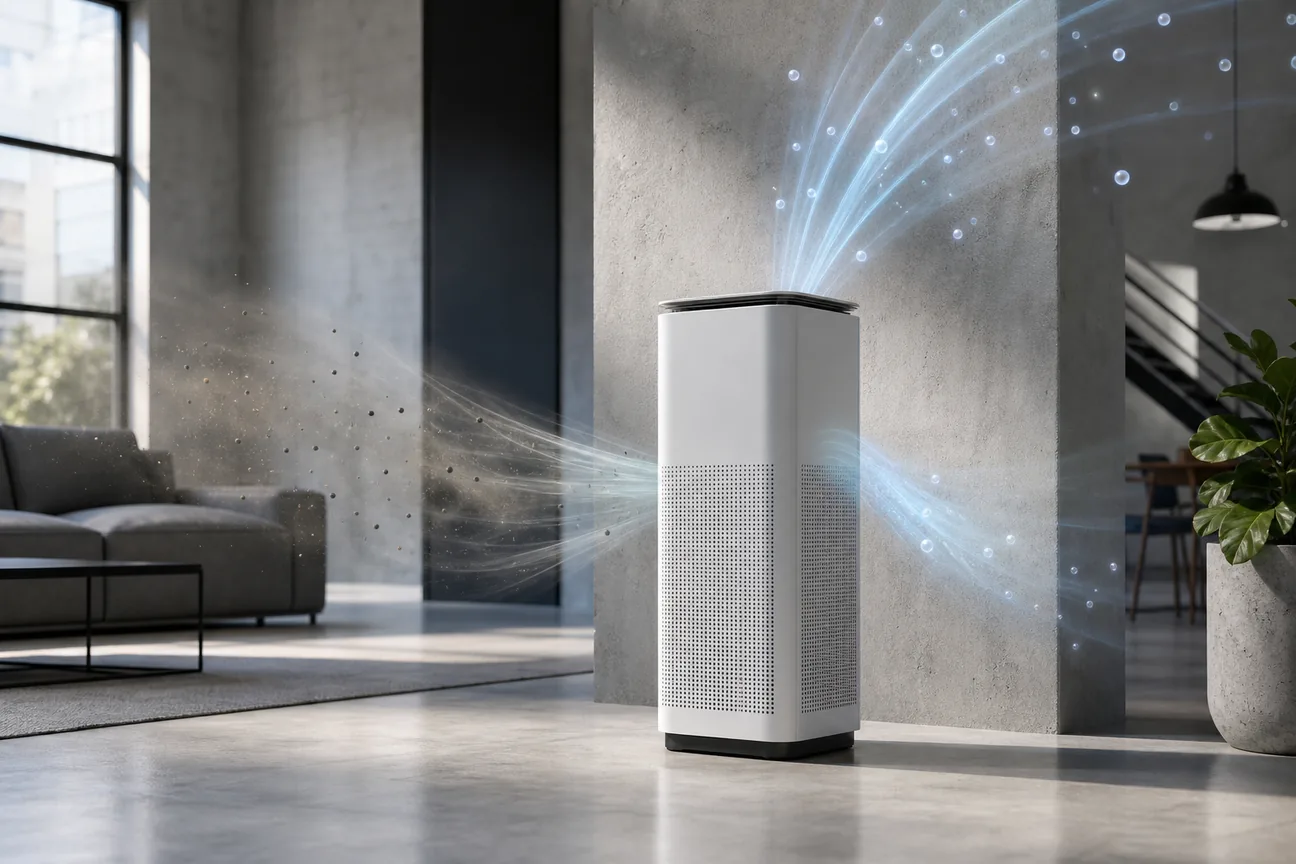
A bipolar ionization air purifier can be built into HVAC equipment or paired with a portable HEPA unit. But ionization claims don’t tell you how well a product cleans your room. Here are five options, what each is designed for, and the safety and performance details to check before you buy.
Table of Contents
1. PlasmaPURE 600 by WellAir Solutions: A dedicated bipolar ionization system
PlasmaPURE 600 by WellAir Solutions is an HVAC-mounted ionization system for residential and small commercial spaces. It may suit a homeowner who wants air treatment through existing heating and cooling equipment instead of a separate room purifier.
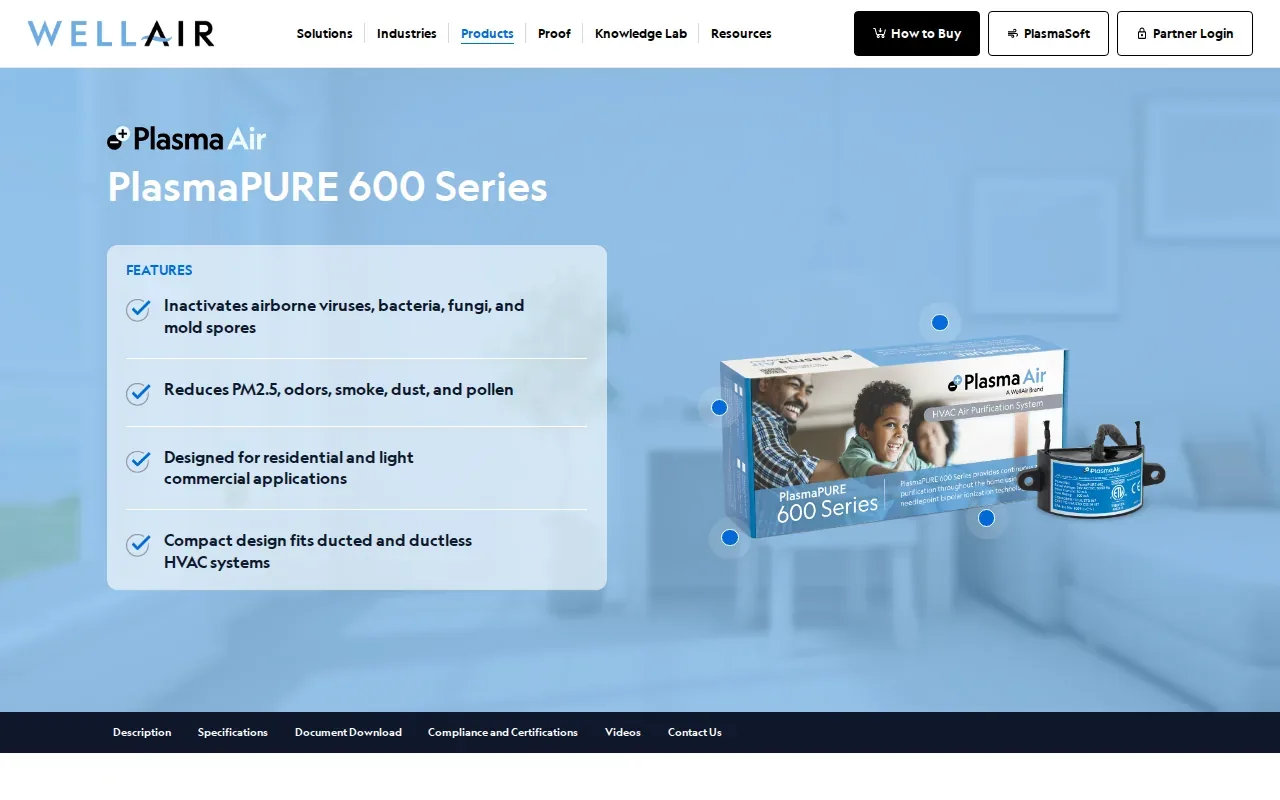
The unit uses brush-style soft ionization to make positively and negatively charged ions. These ions can attach to particles in the air. Some particles may then clump together, which can help a system filter catch them. That mechanism is different from a HEPA filter, which captures particles as air passes through its filter media.
The manufacturer says an HVAC professional can mount the unit at the fan inlet of many air-handling systems. Listed examples include furnaces, heat pumps, mini-splits, fan coils, rooftop units, and VRF systems. Available power configurations include 12VDC, 24V AC/DC, 120VAC, and 208-240VAC. The unit has an in-line fuse and is described as needing minimal maintenance.
Those installation options make system fit a key question. Ask the installer to confirm the power supply, mounting location, and whether your equipment has enough airflow for the device’s intended use.
For a plain-language look at the technology and its limits, our explanation of bipolar ionization air filter benefits covers the basic mechanism. The key trade-off here is clear: whole-system placement can reach air moving through your HVAC, but it isn’t the same as measured HEPA filtration in a room.
2. ISO-Aire: HEPA filtration with optional bipolar ionization
ISO-Aire is a portable commercial air purifier that pairs HEPA filtration with optional bipolar ionization. It may fit a school, office, reception area, or other shared room where a standalone unit is easier than changing the building’s HVAC system.
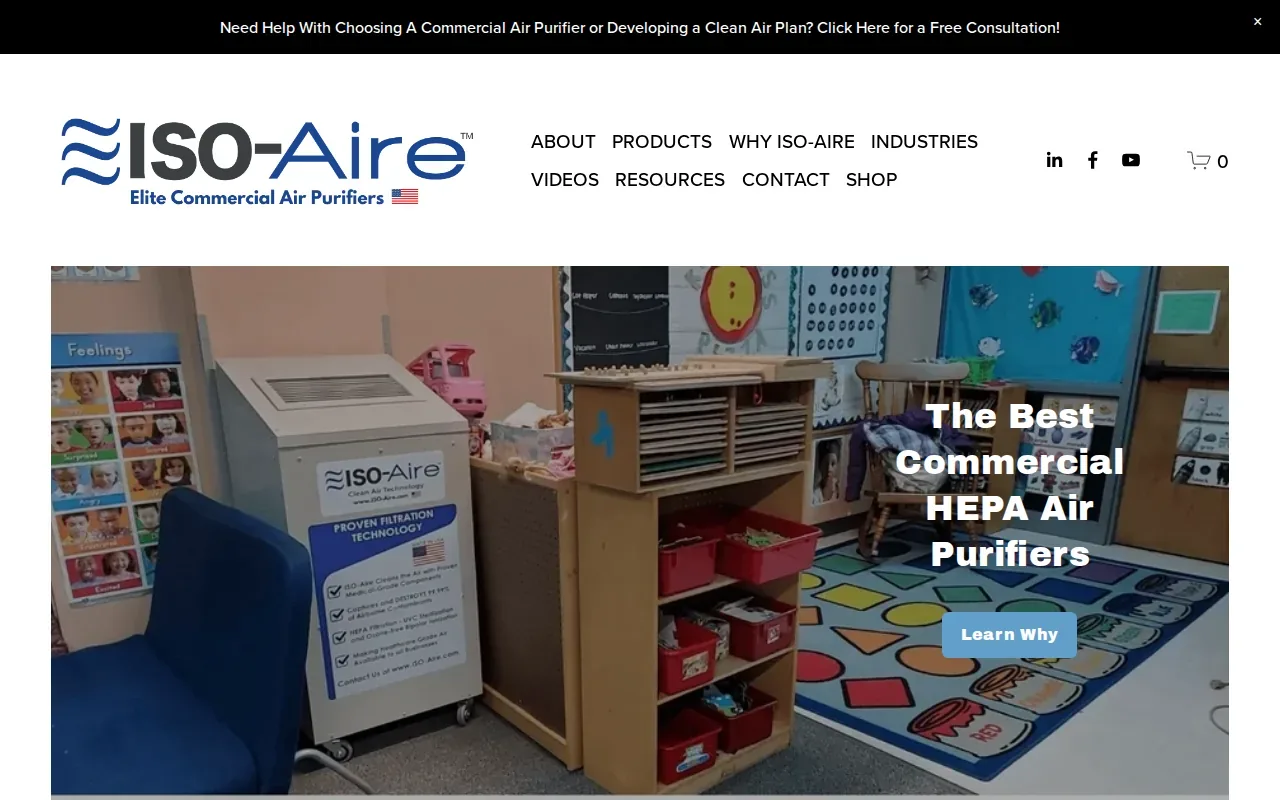
Its main distinction is the filter. The maker describes the HEPA filtration as 99.99% effective and says the ionization feature is optional. UVC is also listed as an option. You can choose filtration without adding every treatment mode, which matters if your main goal is to capture airborne particles rather than add another technology.
Airflow ratings vary by model. CFM means cubic feet of air moved per minute. The maker gives room-area estimates for some models, but the estimate depends on the desired air changes per hour. A larger room may need a higher airflow rate to reach the same rate of air cleaning.
For example, a portable purifier can be placed near a busy waiting area to clean air close to occupants. That’s a different job from an in-duct ionizer treating air as it moves through a whole building. The manufacturer describes plug-in operation and minimal maintenance. Before choosing a size, compare the room’s dimensions with the model’s airflow and the air-change target you need.
HEPA is the more direct fit when particle capture is your priority. The optional ionization setting should be treated as an added feature, not a substitute for the filter or proof that viruses are removed at a certain rate. The maker doesn’t publish comparable independent CADR or time-to-clear results for every configuration.
Key Takeaway:Choose this style when you need a portable room unit and want mechanical HEPA filtration as the main cleaning method.
Home Worx Heating and Cooling serves Auburn, Colfax, Rocklin, Roseville, Grass Valley, Penn Valley, and Lincoln; contact us for local service.
3. GPS-FC24-AC by GPS Air: An HVAC option for systems up to 2,400 CFM
GPS-FC24-AC by GPS Air is a needlepoint bipolar ionization system for HVAC equipment with airflow up to 2,400 CFM, or up to 6 tons as stated by the manufacturer. It may suit a home or smaller building whose system falls within that capacity.
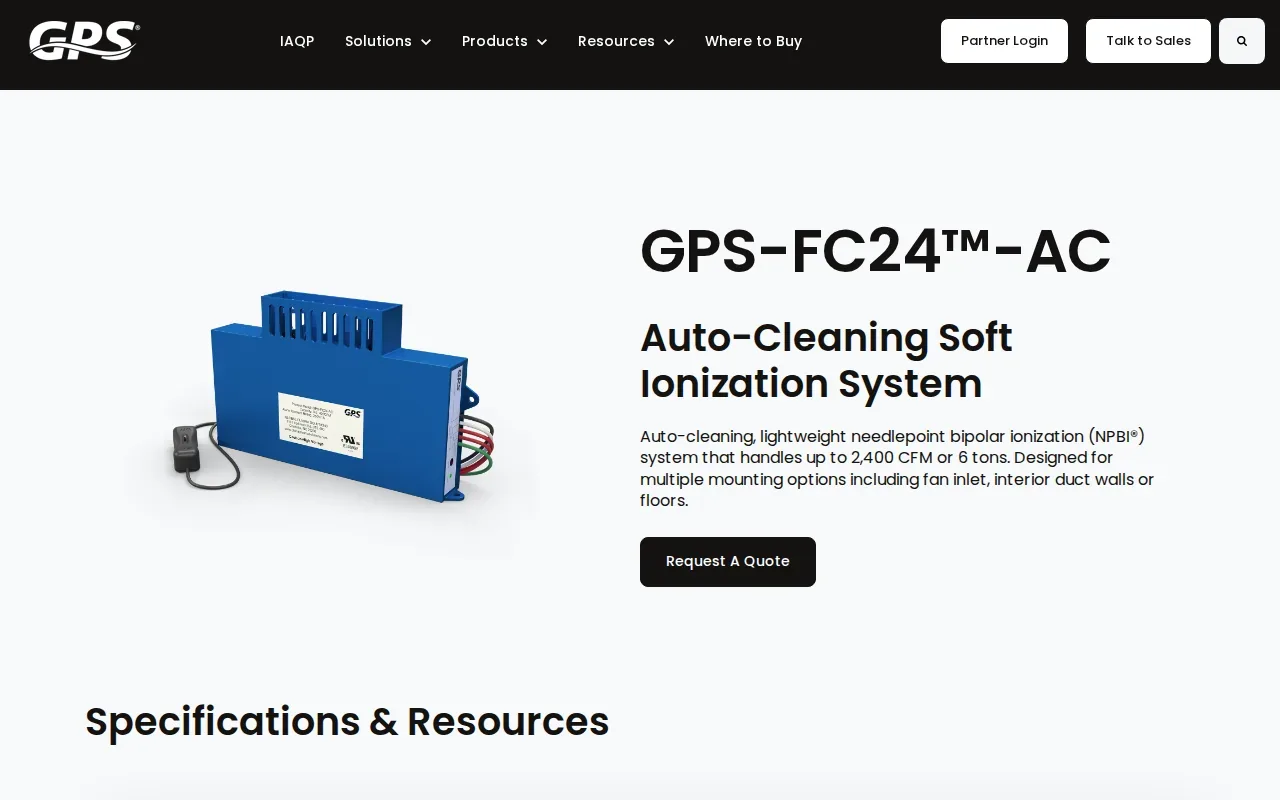
The device is designed to mount at a fan inlet or on the inside of duct walls or floors. It has an auto-cleaning feature, which addresses dust that can gather on ionizing parts. That does not mean the whole HVAC system needs no care. Filters, coils, and the equipment itself still need their normal checks.
The listed input range is 24 to 240 volts AC. Standard power use is listed as 4 watts, with 8 watts during the cleaning cycle. Those figures give a useful starting point for an energy discussion, but they don’t establish total ownership cost. Installation, system run time, and any service needs also affect the full cost.
The product listing includes UL 2998 among its compliance and certification details. A zero-ozone certification is a useful safety check for an ionization device, but it does not prove that the unit removes a set amount of dust, smoke, or pathogens in your home. Ask for the certification details for the exact model and installation.
We recommend looking at this option by equipment capacity first. A unit rated for a given airflow still depends on correct placement and air movement. Home Worx Heating and Cooling can assess HVAC compatibility for homeowners in Auburn and Colfax, then explain whether an in-duct add-on or a portable HEPA purifier better fits the rooms you want to treat.
EPA guidance cautions that evidence for bipolar ionization air cleaning can be limited compared with established filtration methods. Treat it as a possible supplement, not a stand-in for source control, ventilation, or a suitable filter.
4. GPS-FC48-AC by GPS Air: Higher stated airflow capacity for larger HVAC systems
GPS-FC48-AC by GPS Air is an HVAC-mounted needlepoint ionization system listed for up to 4,800 CFM. It may suit a larger air-handling system that exceeds the stated capacity of the FC24 model.
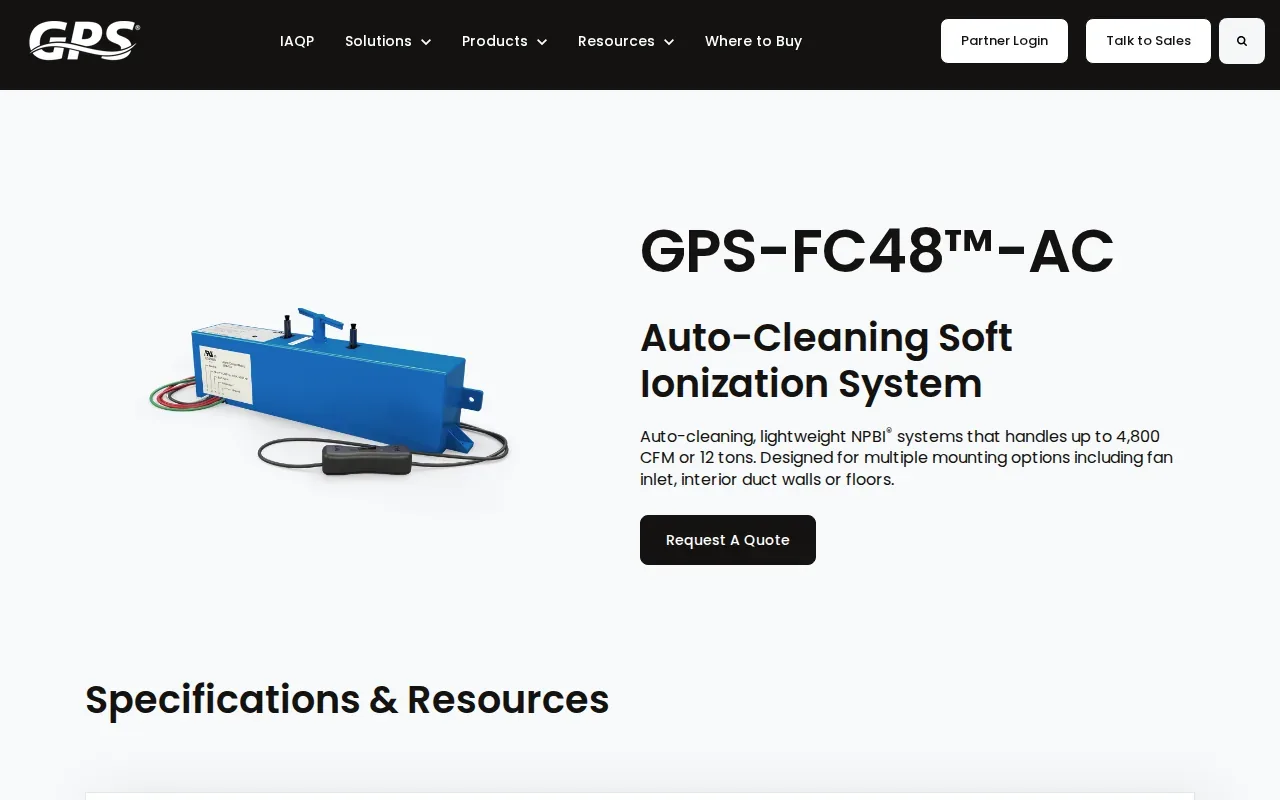
The product is described as lightweight and auto-cleaning. Like other in-duct ionizers, it releases ions into moving air rather than trapping particles inside a portable filter. The maker’s description gives a maximum airflow figure, but the maker doesn’t list power consumption, independent particle-removal results, or a room-by-room coverage estimate for this model.
That difference matters when you compare it with the FC24. The higher airflow rating is a capacity distinction, not proof that it cleans a space faster or removes more contaminants under every condition. A building’s duct layout, fan operation, and filter can affect how air and ions reach occupied areas.
In a commercial setting, an HVAC professional should check that the unit’s size matches the air handler and that the installation can be serviced safely. Ask what the control or status indicators mean, whether the ionizer runs only when the fan runs, and what maintenance the device itself requires. Don’t assume that the word “auto-cleaning” means no inspection is ever needed.
In Northern California foothill homes, heating and cooling systems may run differently across hot, dry summers and cold winters. A site assessment can help check how much time air actually moves through the system. For local whole-house options, see our comparison of whole-house air purifier types , which explains how in-duct treatment differs from portable filtration.
Choose this model for a system whose airflow calls for its larger stated capacity. If you can’t confirm that match, ask for an HVAC assessment before selecting an ionizer.
5. iWave-R by Nu-Calgon: A residential HVAC add-on for systems up to 6 tons
iWave-R by Nu-Calgon is a residential HVAC ionization add-on for duct systems up to 6 tons, or 2,400 CFM. It may suit a homeowner who wants an ionizer installed in an existing central air system and prefers a self-cleaning design.
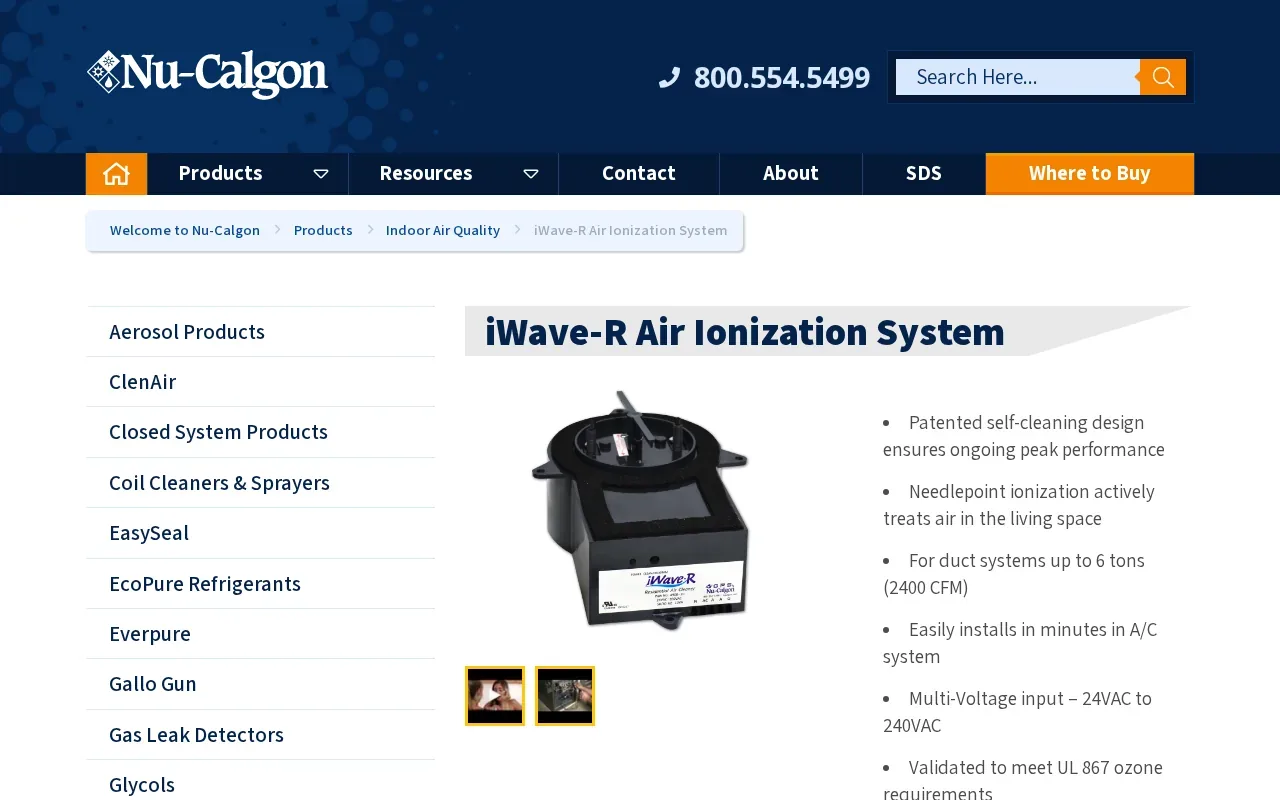
The maker says the unit works with different brands of residential ducted air-conditioning systems. It uses a multi-voltage input from 24VAC to 240VAC and can be mounted in or near ductwork, including with magnets on a metal surface. The installation instructions say the placement depends on the goal: mounting before the coil is suggested when coil treatment is the priority, while placement on the supply side is suggested when treating occupied space is the focus.
Nu-Calgon says the emitter brushes have a programmed cleaning cycle. The factory setting cleans them every third day. The maker also says the unit has no replacement parts and no routine maintenance requirement. Still, a homeowner should ask an HVAC professional to check operation during normal system service. A self-cleaning feature does not confirm that the rest of the air system is clean or working as intended.
The product information says the iWave-R is validated to meet UL 2998 ozone requirements. That addresses ozone emissions under the relevant test standard; it does not establish a guaranteed health outcome or prove a particular removal rate in every house. The maker also notes that results can vary with the application and environment.
Keep a conventional HVAC filter in place. Ionization and filtration do different jobs, and the product should not be treated as a replacement for a suitable filter. If you’re weighing a whole-house add-on against a room purifier, consider where the problem occurs. A portable HEPA unit can focus on one room, while an HVAC device treats air that circulates through the system.
Compare the Five Bipolar Ionization Air Purifier Options
These options don’t all work the same way. ISO-Aire is a portable purifier built around HEPA filtration. The other four are designed for HVAC installation. The table focuses on where each fits and what to verify, rather than treating their claims as directly comparable test results.
Option | Type | Stated capacity or filtration | Best fit | Check before buying |
PlasmaPURE 600 | HVAC ionization system | Multiple power configurations; no airflow figure provided | Residential or small commercial HVAC | Mounting, power, and independent performance data |
ISO-Aire | Portable purifier | 99.99% HEPA filtration; airflow not published | Shared rooms needing portable filtration | Model airflow and required air changes per hour |
GPS-FC24-AC | HVAC ionization system | Up to 2,400 CFM or 6 tons | HVAC applications | Exact model certification and correct placement |
GPS-FC48-AC | HVAC ionization system | Up to 4,800 CFM | Larger HVAC systems within its rating | Power data, maintenance details, and independent tests |
iWave-R | Residential HVAC add-on | Up to 2,400 CFM or 6 tons | Residential ducted air systems | Installation location and continued filter use |
Bipolar ionization creates positive and negative ions. These may attach to airborne particles and help them clump together, so a filter can capture them more easily. Ask for test conditions and measured results, not a broad claim alone.
A HEPA filter physically captures particles that pass through it. UV systems use light, while ionization depends on ions reaching contaminants in moving air. These methods aren’t interchangeable. If your main need is particle removal in one room, a portable HEPA purifier may be the more straightforward choice. If you’re considering HVAC ionization, confirm the device’s ozone certification and keep filtration in place.
Pro Tip:Before installation, ask the contractor to document your system’s airflow, the device’s location, its power needs, and the filter that will remain in use.
FAQ
Does a bipolar ionization air purifier remove dust and smoke?
It may help particles clump together, but a bipolar ionization air purifier does not capture them in the same way a HEPA filter does. Smoke and fine dust need suitable filtration and enough clean-air delivery for the space. Ask for independent test results for the exact device and setup, including particle size and test conditions.
Is bipolar ionization safe to use at home?
Safety depends on the device and its emissions. Choose a unit with verified ozone testing, such as UL 2998 certification where applicable, and confirm the exact model’s documentation. EPA cautions that evidence for bipolar ionization is limited. Keep using suitable filtration and ventilation, and don’t treat an ionizer as a way to prevent illness on its own.
Is an ionizer better than a HEPA air purifier?
A HEPA purifier is usually the clearer choice when your goal is to capture airborne particles in one room. Ionizers treat air by releasing charged ions, often through HVAC equipment. The best fit depends on your space and system. For measured particle cleaning, look for independent test data and a suitable clean-air delivery rate.
Can I install a bipolar ionization unit in my existing HVAC system?
Often, yes, if the unit matches the system’s airflow, power, and mounting needs. A bipolar ionization air purifier designed for ducts may need a specific location near the air handler or ductwork. Have an HVAC professional confirm compatibility and wiring. Don’t install a device where it could interfere with the fan or other equipment.
Do bipolar ionizers need maintenance?
Some models have self-cleaning parts, while others may need inspection or care as dust builds up. Check the product instructions for the exact unit. Continue routine HVAC filter changes and system service, even if the ionizer is described as low-maintenance. In Auburn, Rocklin, and Roseville, Home Worx Heating and Cooling can help assess system fit and air-cleaning options.
Conclusion
For a portable option centered on particle capture, start with a HEPA purifier sized for the room. For an HVAC add-on, compare airflow and verified ozone documentation, then have a qualified technician check compatibility. Home Worx Heating and Cooling serves Rocklin, Roseville, Grass Valley, Penn Valley, and Lincoln as well as nearby communities. Review local whole-house purifier installation considerations , then contact our team for an assessment of your system.