
Best Central Air vs Mini Split Options
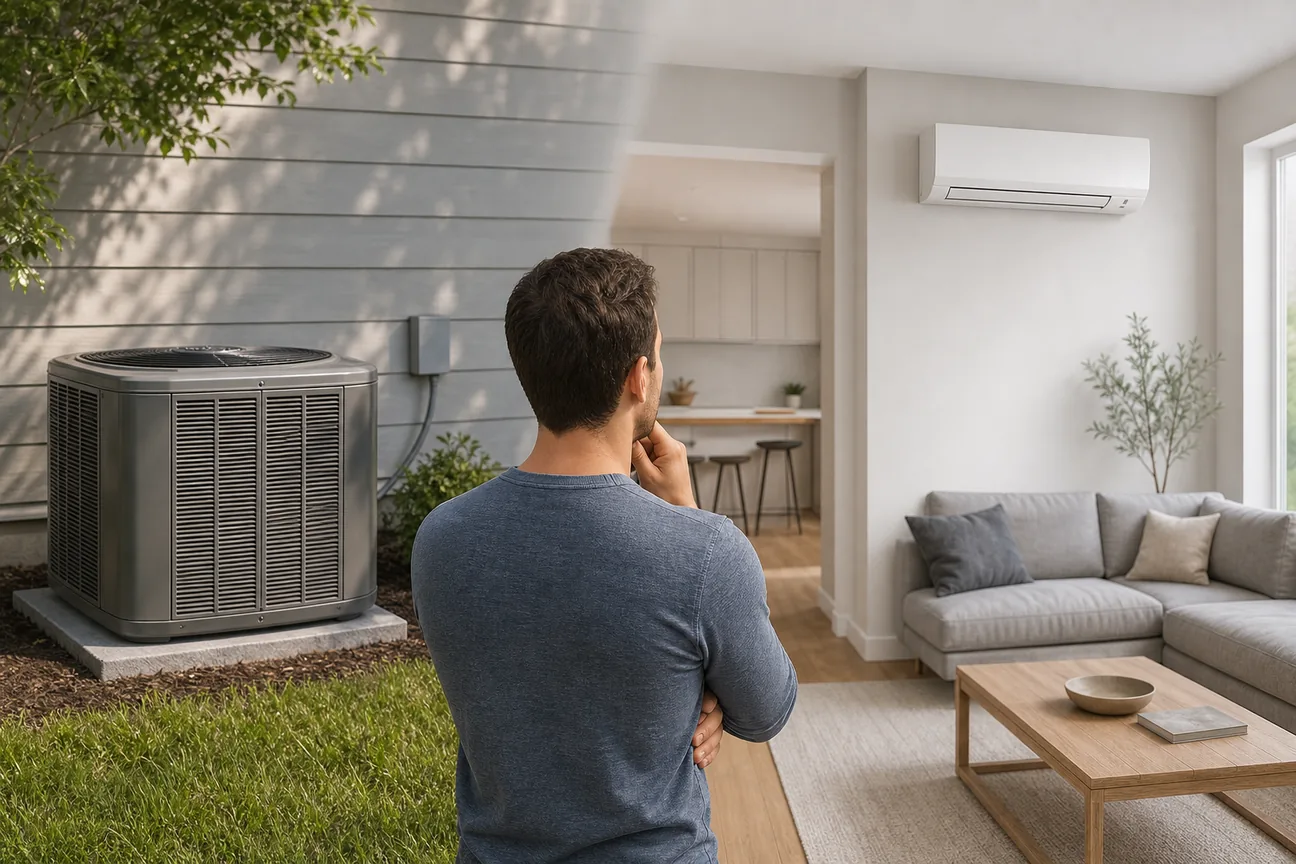
A ductless mini split can reach up to 33.5 SEER, while central air may require costly ductwork in an older home. That changes the central air vs mini split decision for many Sierra foothill homes. Here are five named options, plus the situations where each one makes sense.
Table of Contents
1. Home Worx Heating and Cooling, Our Top Pick, Local central air and mini split guidance
2. Mitsubishi Electric, Proven ductless zoning for challenging rooms
3. Fujitsu General, High heating efficiency for Sierra foothill winters
4. Carrier, Familiar equipment with a broad-service comfort approach
Central Air vs Mini Split: Which Shortlisted Option Fits Best?
1. Home Worx Heating and Cooling, Our Top Pick, Local central air and mini split guidance
Home Worx Heating and Cooling is a family-owned HVAC contractor serving Auburn, Colfax, Rocklin, Roseville, Grass Valley, Penn Valley, and Lincoln. We help homeowners compare central air with ductless mini splits based on the home itself, not a sales script.

That local view matters in the Sierra foothills. A house in Colfax may have different heating needs than a single-story home in Roseville. An older property in Auburn may lack ducts, while a newer home in Lincoln may already have a full duct system.
Home Worx installs ductless mini splits without adding ductwork. The company also lists financing as low as $120 a month, subject to approval and project terms. That can help a homeowner in Roseville or Grass Valley compare a monthly payment with the cost of a larger central air project.
Our first task is sizing. A system that is too large may cycle too often. One that is too small can struggle through a hot August afternoon. We also look at insulation, window exposure, room use, electrical needs, and the best location for each indoor unit.
For a room addition or garage conversion, ductless is often the cleanest fit. For a home with sound existing ducts, a ducted heat pump or central system may be simpler. Our ductless mini split installation guide explains the site and sizing details that affect the job.
Home Worx is the best starting point when you want one local team to inspect the property, compare system types, and explain installation choices. The caveat is simple: no contractor can name the right system from square footage alone.
2. Mitsubishi Electric, Proven ductless zoning for challenging rooms
Mitsubishi Electric is a strong name to discuss when the central air vs mini split question centers on zoning. A ductless system sends conditioned air into each selected room instead of pushing air through one home-wide duct network.
This Mitsubishi Electric option has a 33.1 SEER rating and a 12.4 HSPF rating. SEER measures cooling efficiency across a season. HSPF measures heat pump heating efficiency. Both figures are useful when a system will run through hot summers and cold foothill nights.
An installation range of $3,800 to $6,800 is a comparison point, not a quote, and no ductwork is required. The final cost changes with the number of zones, line-set length, electrical work, wall access, and permit needs.
This option fits a homeowner with a cold bedroom, a warm west-facing office, or an addition that sits outside the reach of the existing ducts. You can condition the spaces you use most. That may reduce wasted heating or cooling in empty rooms.
There is a trade-off. Indoor heads remain visible on walls or ceilings, and each zone needs a sensible placement plan. A multi-zone system also needs careful control setup so one room does not fight another.
For homes in Penn Valley or Grass Valley, as well as Auburn, Colfax, Rocklin, Roseville, and Lincoln, with uneven room temperatures, this type of ductless design deserves a close look. The efficiency rating is impressive, but installation quality still controls how well the system performs. Contact Home Worx Heating and Cooling for local service.
3. Fujitsu General, High heating efficiency for Sierra foothill winters
Fujitsu General stands out in the central air vs mini split discussion when winter heat is your main concern. The Fujitsu General option has a 33.5 SEER rating and a 14 HSPF rating.
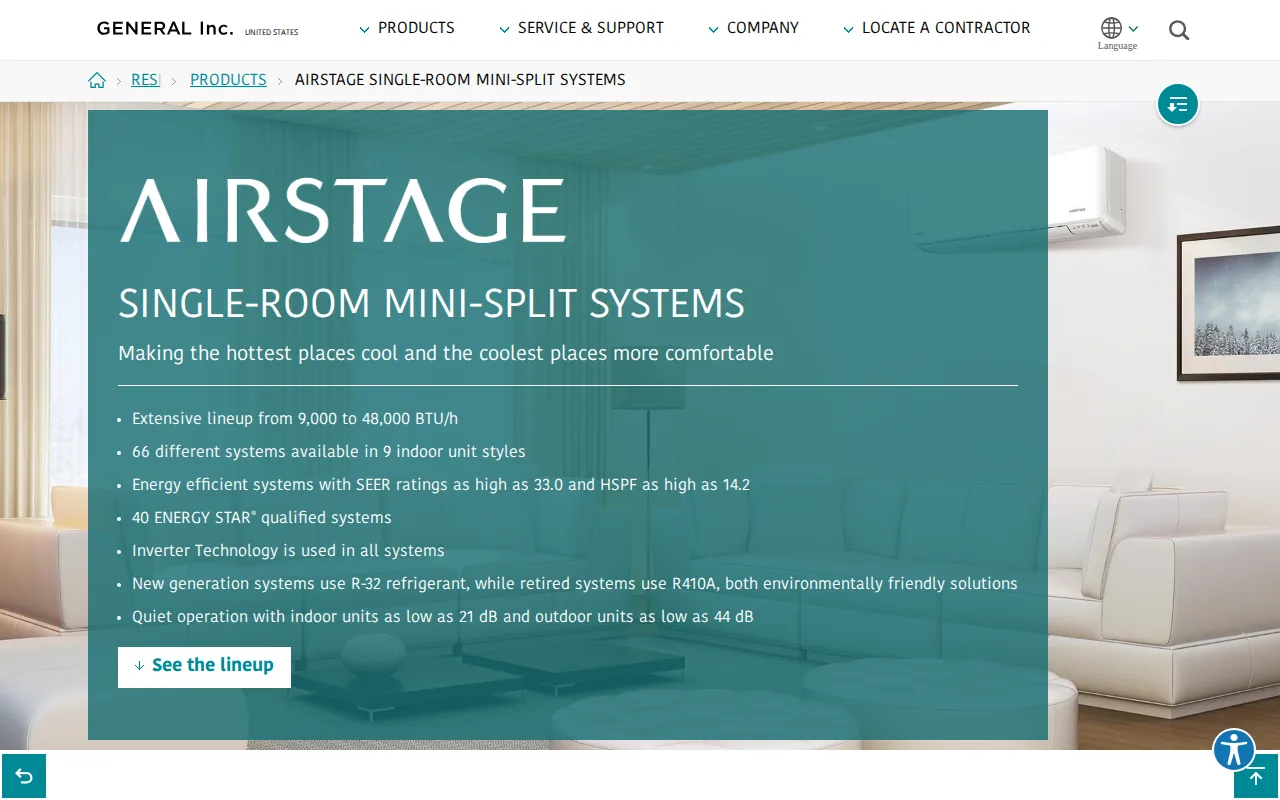
That 33.5 SEER figure is the highest maximum in the research set. The 14 HSPF figure is also above the listed average of 12.04 among entries with heating data. Those numbers point to a system aimed at homeowners who want strong seasonal performance, not simply low purchase cost.
Installation costs vary by project. A ductless design does not require existing ductwork. In a home without ducts, that matters because central air may need a new distribution system before it can cool every room. The ductwork cost can become a large part of the project.
This option may suit a well-insulated home in Grass Valley or Penn Valley where heating demand lasts beyond the short cooling season. It can also fit a homeowner in Auburn or Colfax who wants one heat pump system for both jobs. A heat pump moves heat rather than making heat through electric resistance, then reverses the cycle for cooling.
Before choosing a high-efficiency model, ask for its performance at the outdoor temperatures your home sees. A headline rating does not tell you the full cost of installation. You also need to know how many indoor zones the design requires and whether backup heat is part of the plan. Those questions can also help homeowners in Rocklin, Roseville, and Lincoln compare options.
Our heat pump versus air conditioner comparison explains why a heat pump can replace cooling equipment and support winter comfort in the right California home.
Fujitsu General makes the most sense when heating efficiency earns its higher starting cost. If your priority is a low first quote for one room, another option may fit better.
For central air or mini split guidance in Placer County and Nevada County, contact Home Worx Heating and Cooling for local service in Auburn, Colfax, Rocklin, Roseville, Grass Valley, Penn Valley, or Lincoln.
4. Carrier, Familiar equipment with a broad-service comfort approach
Carrier belongs on a central air vs mini split shortlist because it covers both ducted and ductless comfort setups. Central air typically uses one indoor unit with ducts, while a mini split places indoor units in the rooms being conditioned.
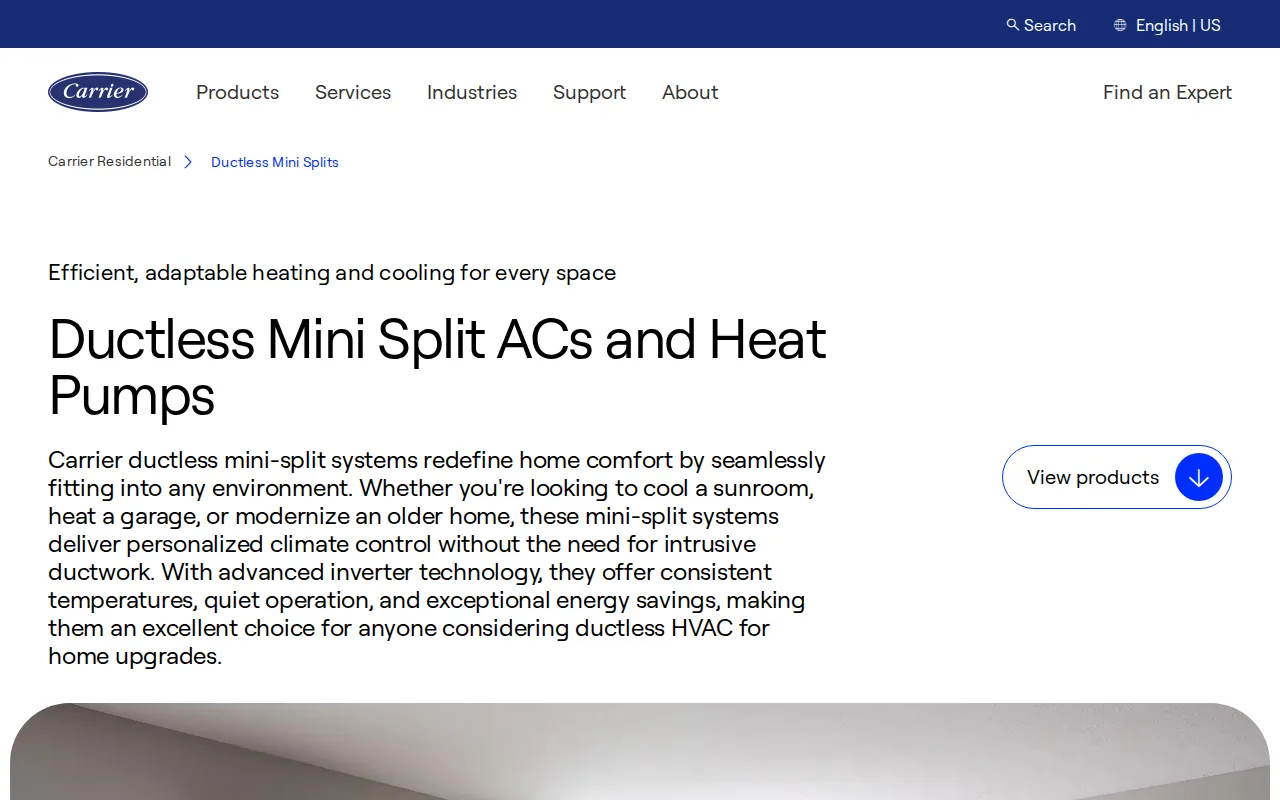
That difference is the heart of the choice. Central air can look cleaner inside because most of the distribution system stays behind walls, floors, or ceilings. Mini splits can avoid major duct work, which helps in older homes and room additions in Rocklin or Roseville.
The Carrier mini split option has a 28.5 SEER rating and a 13 HSPF rating. These figures give you a useful frame for a bid, but they do not replace a load check at the property.
Ductless systems can work well for converted spaces, additions, and rooms with separate comfort needs. That matches common projects in older homes near Colfax or Auburn. A central system may still win when a house already has usable ducts and one thermostat meets the household's needs.
Carrier is worth considering when brand familiarity and a ductless option matter. The limitation is that a familiar name does not remove the need to check installer training, warranty terms, parts access, and service response.
Ask the contractor to compare the full project for homes in Grass Valley, Penn Valley, or Lincoln. That means equipment, electrical work, duct changes, drain paths, controls, permits, and future maintenance. A lower equipment price can lose its edge if the installation plan is weak.
For a local comparison in Placer County or Nevada County, contact Home Worx Heating and Cooling for service in Colfax, Auburn, Rocklin, Roseville, Grass Valley, Penn Valley, or Lincoln.
5. Gree Sapphire, Budget-conscious ductless performance
Gree Sapphire is the budget-focused option in this central air vs mini split shortlist. It has a 30 SEER rating and an 11.2 HSPF rating.
Those numbers show the main appeal. A budget tier does not always mean poor efficiency. The listed 30 SEER figure reflects strong efficiency for a ductless system.
Gree Sapphire is a mini split with a 30 SEER rating and an 11.2 HSPF rating. Ratings can vary by model and testing standard, so compare the exact equipment number on the proposal.
Choice factor | Gree Sapphire may fit | Watch for |
Budget | Projects that need a lower starting range | Final price still depends on labor and electrical work |
Space | One room, office, garage, or small zone | One wall-mounted head does not cool every room equally |
Winter use | Homes that want heating and cooling from one unit | Confirm output at the home's coldest design temperature |
Appearance | Slim wall-mounted indoor design | The indoor unit remains visible |
Central air replacement | Homes without ducts or with a hard-to-serve addition | Whole-home coverage may need several zones |
Keep installation records, including the model number, permit details, and warranty registration, after the work is complete.
Sapphire is a sensible candidate for a focused zone or a cost-aware project. It is not automatically the right choice for a large home that needs even temperatures in every room.
For homeowners in Auburn, Colfax, Rocklin, Roseville, Grass Valley, Penn Valley, and Lincoln, contact Home Worx Heating and Cooling for local help comparing central air and mini split options.
Central Air vs Mini Split: Which Shortlisted Option Fits Best?
The best answer depends on the home's existing structure. If the house already has well-sealed ducts, central air can deliver even whole-home airflow through one indoor system. If the home lacks ducts, a mini split may avoid major wall and ceiling work.
Use this decision rule:
Pick Home Worx firstwhen you want a local inspection and a direct comparison between system types.
Favor ductlessfor an older house, garage conversion, addition, or room that runs hotter than the rest.
Favor central airwhen good ducts already serve the whole home.
Look at higher HSPFwhen winter heating is a major part of the bill.
Compare total project cost, including ducts, electrical work, permits, controls, and service access.
In Auburn, Rocklin, Lincoln, Roseville, and Penn Valley, a summer cooling plan may drive the decision. In Colfax or Grass Valley, winter heat and outdoor design temperature may matter more. Home Worx Heating and Cooling can inspect the home and explain which trade-off fits the building.
FAQ
Is central air cheaper than a mini split?
Central air can cost less when a home already has usable ducts. A mini split may cost less for an older home or addition because it avoids new ductwork. The central air vs mini split price gap depends on zone count, electrical work, access, permits, and equipment size. Compare complete installation quotes, not equipment prices alone. Homeowners in Auburn or Rocklin should also consider the condition of existing ductwork.
Are mini splits more efficient than central air?
Mini splits can be more efficient than central air, especially when high-SEER equipment conditions only the rooms in use. Actual energy use still depends on sizing, insulation, settings, maintenance, and how many zones run at once. A professional evaluation can help Roseville and Lincoln homeowners compare options for their homes.
Do mini splits work in Northern California winters?
Mini splits can work well in Northern California winters when the selected model matches the home's design temperature. Several researched options list strong HSPF ratings, while some models are rated for subzero heating. Homes in Colfax, Grass Valley, or Penn Valley may need a careful heat-load review and a backup heat plan.
Can a mini split cool an entire house?
A mini split can cool an entire house when the system has enough indoor zones and the layout supports good air movement. One wall unit usually cannot cool closed bedrooms well. Central air may be simpler for an open, ducted home, while multi-zone equipment can fit a house with separate room needs.
How much does mini split installation cost?
Mini split installation pricing varies by model and project, and rates are available on request. Equipment and project scope affect the quote. Your quote may change with line-set length, wall access, electrical changes, permits, and the number of indoor units. Contact Home Worx Heating and Cooling for local service in Colfax, Placer County, Nevada County, and nearby communities.
Conclusion
For many Northern California homes without usable ducts, a professionally sized mini split is the stronger choice. Start with Home Worx Heating and Cooling for a property check in Auburn, Colfax, Rocklin, Roseville, Grass Valley, Penn Valley, or Lincoln, then compare the full installed cost before choosing equipment.