
Heat Pump vs Air Conditioner: Which Is Right for You?
Choosing between a heat pump and a standard air conditioner is one of the bigger decisions a Northern California homeowner faces. Get it right and you'll stay comfortable through 105°F Colfax summers and sub-freezing winter nights without overpaying on your PG&E bill. Get it wrong and you're either shivering through January or leaving serious money on the table. Here's a straight comparison so you can make an informed call.
1. Home Worx Heating and Cooling (Our Top Pick)
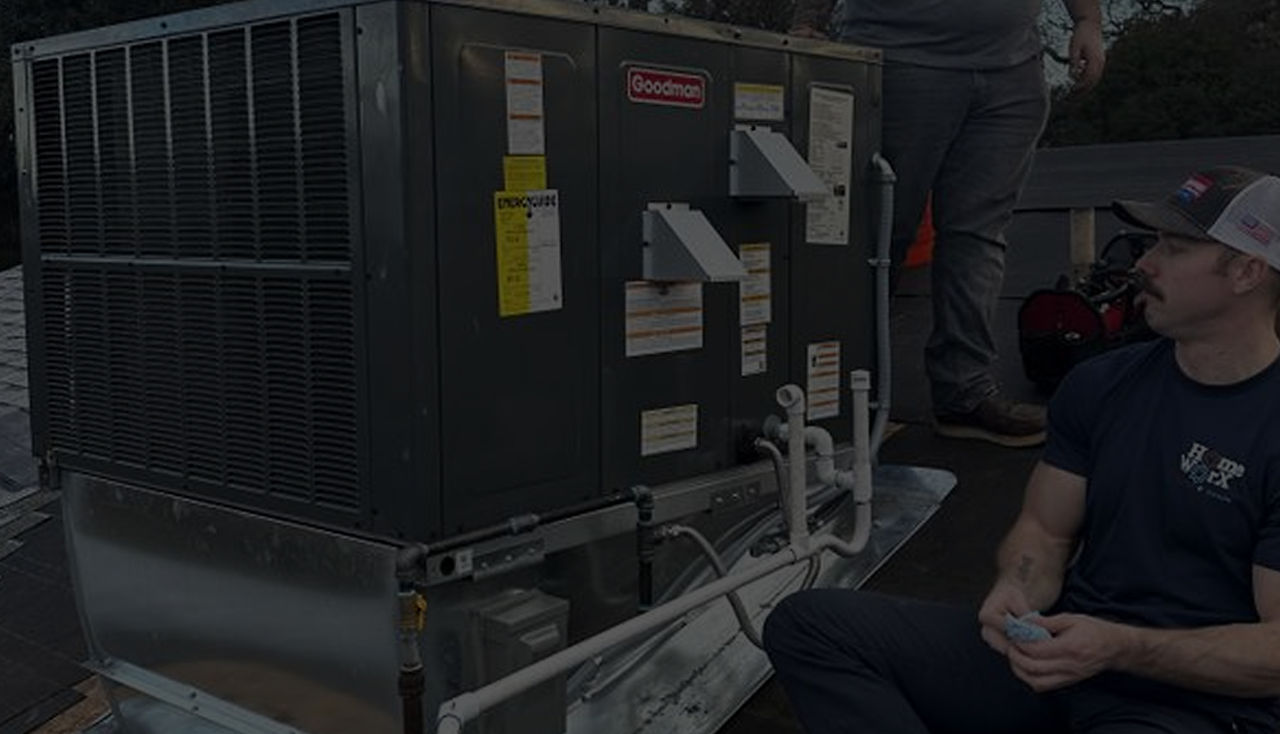
Home Worx Heating and Cooling is a family-owned contractor based in Colfax, CA, serving homeowners across Placer County and Nevada County, including Auburn, Roseville, Rocklin, Lincoln, Grass Valley, and Penn Valley. We install, repair, and maintain both heat pumps and traditional air conditioners, so our recommendation isn't tied to whichever system costs more. It's based on what actually fits your home.
What sets us apart is local knowledge. We know the Sierra Foothill climate specifically. Elevation varies significantly across our service area, and properties at different elevations often need completely different systems. We also carry heat pump and air conditioning installation and service across all major ducted and ductless brands, so we're not locked into one manufacturer's product line.
We offer 24/7 emergency repair, financing options, and maintenance contracts. If you're trying to figure out which system to buy before calling anyone, this guide is for you. But when you're ready to talk specifics, we can run a full load calculation for your home and pull current rebate data for your address. That's the only way to get a real number, not a guess from a web guide.
One honest caveat: we're not the only HVAC contractor in the area. Other local contractors also operate in the region. But we're the only family-owned team with roots specifically in the Colfax and Auburn corridor, and we stand behind our work with a satisfaction guarantee.
Key Takeaway:Home Worx Heating and Cooling is our top pick because local expertise matters more than any generic web comparison when you're deciding between a heat pump and a standard AC in the Sierra Foothills.
Heating Capability: Where Heat Pumps Win (and Where They Don't)
A heat pump does something an air conditioner can't: it runs in reverse. In summer it pulls heat out of your home, just like a standard AC. In winter it pulls heat from the outdoor air and moves it inside. That dual function is why heat pumps appeal to homeowners who want one system for both seasons.
The catch is cold-weather performance. Air-source heat pumps work well down to roughly 20°F. Below that threshold, older or basic models lose efficiency fast. Modern cold-climate heat pumps have improved significantly, but in the Sierra Foothills, where Auburn sits at a lower elevation and Colfax climbs considerably higher, overnight lows regularly dip into the upper 20s through January and February. The elevation matters.
For homes at higher elevations or with significant heating loads, a hybrid system is often the smarter answer. A hybrid pairs a heat pump with a gas furnace. The heat pump handles mild winter days efficiently, and the furnace kicks in when temperatures fall too low for the heat pump to keep up. You get the efficiency benefit most of the time without sacrificing warmth on the coldest nights.
A standard air conditioner has no heating function at all. That's obvious, but it shapes the comparison significantly. If you already have a furnace and it's in good shape, adding a high-efficiency AC might be a lower upfront cost than a full heat pump installation. If your furnace is aging, a heat pump that replaces both units at once can make financial sense even if the initial price is higher.
One counterintuitive finding worth mentioning: in climates with very harsh winters, a window air conditioner paired with a furnace is sometimes the most usable solution for pure cooling needs. That doesn't apply to most Placer County homes with ductwork, but it's a useful reminder that the "heat pump first" recommendation isn't universal. System choice always comes back to your specific home, elevation, and existing equipment.
Energy Efficiency and Utility Costs Compared
Efficiency ratings are where the heat pump vs air conditioner debate gets technical fast. Two numbers matter most. SEER2 (Seasonal Energy Efficiency Ratio) measures cooling efficiency. HSPF2 (Heating Seasonal Performance Factor) measures heating efficiency for heat pumps. Higher numbers mean lower operating costs, all else equal.
Heat pumps move heat rather than generate it. That fundamental difference means a good air-source heat pump can deliver two to three units of heat energy for every one unit of electricity it uses. A standard electric resistance heater delivers exactly one unit per unit. That's why heat pumps tend to lower winter utility bills substantially for homes that currently heat with electric resistance strips or baseboard heaters.
For cooling, a modern heat pump and a modern central air conditioner at the same SEER2 rating perform nearly identically. The efficiency advantage for heat pumps shows up in heating mode, not cooling mode. So if your primary goal is cutting summer electricity bills, swapping a mid-efficiency AC for a high-efficiency AC can produce similar savings to a heat pump at a lower equipment cost.
PG&E rates in Placer County make efficiency especially relevant. Electricity costs in Northern California are among the higher rates in the continental US, which means every efficiency point you gain translates to more real dollars saved each month. The math changes depending on whether your home currently uses gas heat or electric heat, so your baseline matters before running any comparison.
One gap worth flagging: most online comparison guides don't publish specific SEER2 or HSPF2 numbers for the systems they discuss, and installation cost figures vary widely by region and home configuration. If you're trying to build an accurate payback calculation, you need local pricing and efficiency specs for your actual duct system. That's a conversation worth having with a contractor who knows Placer County load conditions, not just a national average from a website.
Pro Tip:Before comparing equipment costs, check current California HVAC rebate programs. Depending on your income bracket and the system you install, you may qualify for significant incentives that change the payback math considerably. Our guide to California HVAC rebates for energy efficiency breaks down what's currently available and who qualifies.
Installation Cost, Rebates, and Long-Term Value
Installation cost is the number most people want upfront, and it's also the number that varies most. A complete HVAC system installation in the Placer County area, including both heating and cooling equipment, will vary depending on the home's size, configuration, and equipment selected. Heat pumps generally sit at the higher end of the range because the equipment handles both functions. A straight AC replacement on top of an existing furnace usually costs less.
Rebates can shift the math substantially. The federal 25C tax credit applied to qualifying heat pumps installed by December 31, 2025, offering up to $2,000. That credit has expired for new 2026 installs. However, California state programs and utility rebates through PG&E remain available, and income-qualified homeowners may still access significant incentives through state and utility programs for qualifying equipment. The landscape changes frequently, so confirming current availability before you buy is worth the time.
Factor | Heat Pump | Central Air Conditioner |
Heating function | Yes (replaces furnace in mild climates) | No (needs separate furnace) |
Cooling function | Yes | Yes |
Best climate fit | Moderate winters, hot summers | Any climate when paired with furnace |
Cold-weather limit | ~20°F for standard models | No cold-weather limit (furnace handles heat) |
Typical install range (Placer County) | Higher end of range; pricing varies by home and equipment | Lower end of range; pricing varies by home and equipment |
2026 federal tax credit | Expired (25C credit ended Dec 2025) | Expired (25C credit ended Dec 2025) |
State/utility rebates available | Yes, income-dependent | Limited, fewer programs |
Long-term operating cost | Lower if replacing electric heat | Depends on furnace fuel type |
Long-term value depends on what you're replacing. A heat pump makes the strongest financial case when it displaces expensive electric resistance heating. If you already have an efficient gas furnace, the payback period for a heat pump over a standard AC stretches longer. For a home where the furnace is 15 years old anyway, bundling the replacement into a heat pump installation often makes more sense than buying two separate systems over two separate service calls.
Understanding what size HVAC system your home actually needs is also part of the cost picture. An oversized unit costs more upfront and short-cycles, which raises wear and lowers efficiency. An undersized unit runs constantly and still can't keep up on peak days. Getting the load calculation right before you buy protects the investment regardless of which system type you choose.
Which System Fits the Sierra Foothills Climate?
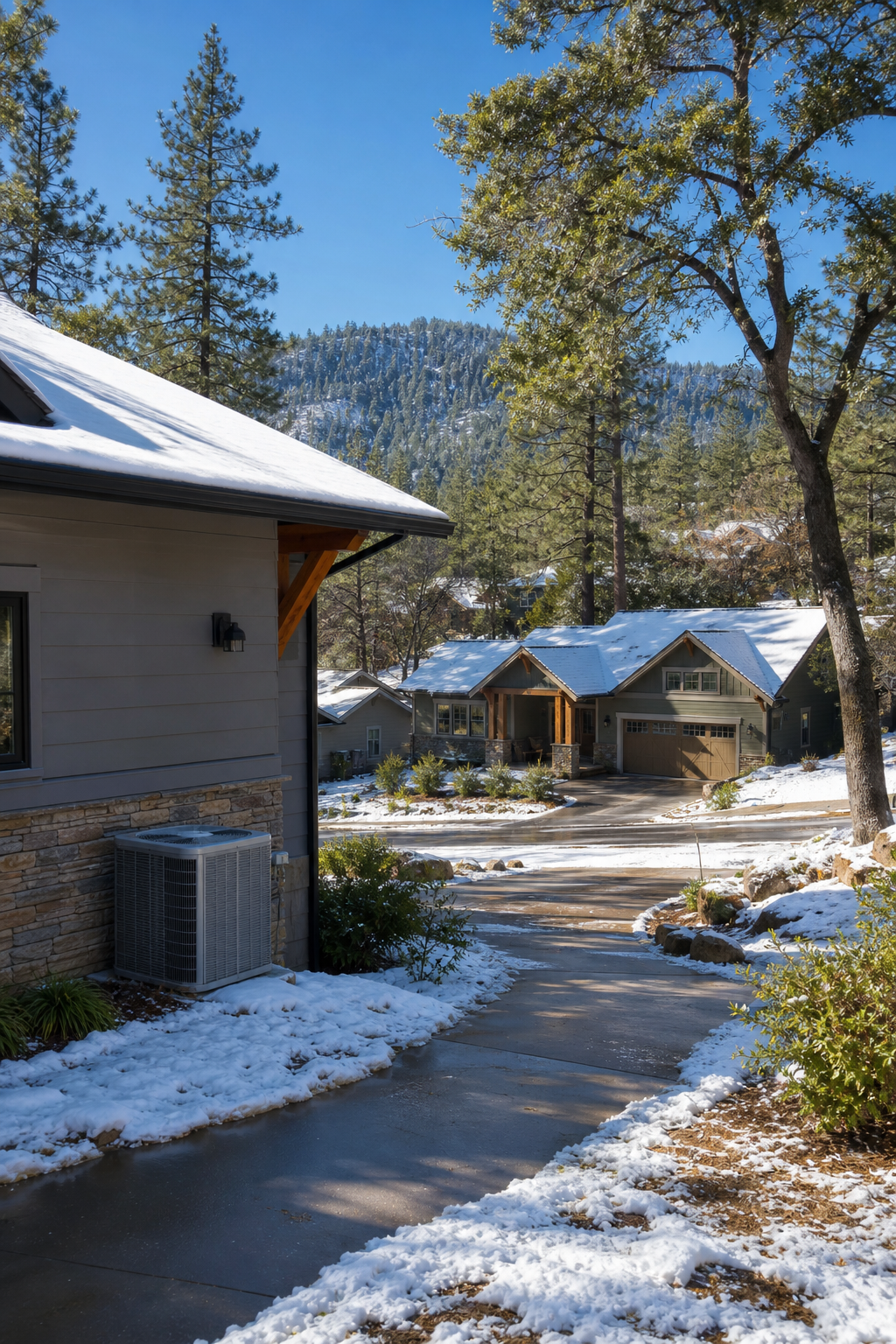
The Sierra Foothills climate is genuinely different from the Sacramento Valley 30 miles downhill. Placer County communities like Auburn and Rocklin sit in a hot, dry valley zone where summer temperatures regularly hit triple digits. But Colfax, Grass Valley, and Penn Valley sit at notably higher elevations. Those communities see significantly colder winters, more precipitation, and occasional hard freezes.
For lower-elevation Placer County homes in Auburn, Roseville, or Lincoln, a heat pump is a strong choice. Winters are mild enough that a standard air-source heat pump handles heating efficiently throughout the season without backup. Summers are brutal, and a heat pump with a high SEER2 rating keeps electricity costs reasonable even during July and August heat waves.
For mid-elevation homes in Colfax or upper Auburn, the decision gets closer. A standard air-source heat pump works most of the time, but if January temperatures drop into the teens, efficiency drops too. A cold-climate heat pump (sometimes called a hyper heat model) handles lower temperatures better. Alternatively, a hybrid system that combines a heat pump with a gas furnace gives you efficiency during mild stretches and reliable heat during the coldest nights.
For higher-elevation properties in Nevada County, including Grass Valley and Penn Valley, a conventional split system with a furnace is often the most dependable choice. The furnace covers serious winter demand without the efficiency cliff that standard heat pumps hit below 20°F. You can still install an efficient AC for summer cooling and come out ahead on operating costs compared to an older system.
Air-source heat pumps are most effective in climates where temperatures rarely stay below freezing for extended periods. That description fits the lower Sierra Foothills reasonably well and fits the higher elevations less cleanly. It's exactly the kind of nuance a local contractor can help you handle.
The team at Home Worx Heating and Cooling works across both counties and knows where the elevation-based performance differences actually show up in homes. We're not guessing at your zip code. If you're in the region and trying to decide, the most useful next step is a site visit where we can assess your insulation, duct condition, existing equipment, and local rebate eligibility together.
FAQ
Is a heat pump better than an air conditioner for California homes?
For most low- and mid-elevation California homes, a heat pump is the better all-around choice because it handles both heating and cooling in one system with lower operating costs than electric resistance heat. In areas with colder winters or higher elevations, like parts of Placer and Nevada County, a hybrid system or a conventional AC paired with a gas furnace may be more reliable and cost-effective depending on the home's specific setup.
How much does a heat pump cost compared to an AC in Placer County?
Heat pump installations generally cost more upfront than a straight AC replacement on top of an existing furnace, since they cover both heating and cooling in one system. Pricing varies depending on equipment type, home size, and ductwork condition. State and utility rebates can reduce the gap significantly for qualifying homeowners, but availability changes frequently so it's worth confirming current programs before you buy.
Can a heat pump handle cold winters in the Sierra Foothills?
Standard air-source heat pumps work efficiently in most winter conditions typical of the Sierra Foothills. For most Auburn and Roseville homes, that covers winter conditions comfortably. At higher elevations in Colfax or Grass Valley, where hard freezes happen several times a year, a cold-climate (hyper heat) model or a hybrid system that adds a gas furnace backup is a more dependable choice. Elevation and average low temperatures matter more than the county line.
What's the difference between a heat pump and a mini-split?
A ductless mini-split is a type of heat pump. It moves heat the same way a standard air-source heat pump does, but it delivers conditioned air directly to each room through wall-mounted units instead of through ductwork. Mini-splits work well for additions, converted garages, or older homes without existing ducts. If your home already has good ductwork, a ducted heat pump is usually more cost-effective than installing multiple mini-split heads.
Are heat pump rebates still available in California in 2026?
Yes, state and utility rebates remain available in California, though the federal 25C tax credit expired for new installations after December 2025. Income-qualified homeowners may still access substantial rebates through state and utility programs, and PG&E offers equipment-based incentives that vary by system efficiency and customer status. The most reliable way to find out what you qualify for is to ask your HVAC contractor to check current program availability for your address and income bracket.
Should I replace my furnace and AC with a heat pump at the same time?
If your furnace is more than 15 years old and your AC needs replacement anyway, combining both into a single heat pump installation often makes financial sense. You avoid a second installation fee in a few years and may qualify for larger rebates on a complete system change. If your furnace is newer and efficient, keeping it and replacing only the cooling equipment is usually the lower-cost path. A load calculation and age assessment of existing equipment helps make that call clearly.
Conclusion
For most Placer County homes at lower elevations, a heat pump is the stronger long-term investment. For higher-elevation Sierra Foothill properties, a hybrid system or a conventional AC with a furnace often makes more usable sense. The right answer depends on your elevation, existing equipment, budget, and rebate eligibility , none of which a generic web guide can tell you with accuracy. If you're in the Colfax, Auburn, or surrounding area, contact Home Worx Heating and Cooling for a site visit and we'll help you work through the numbers specific to your home.