
Best Ductless vs Central Air Options in Placer County
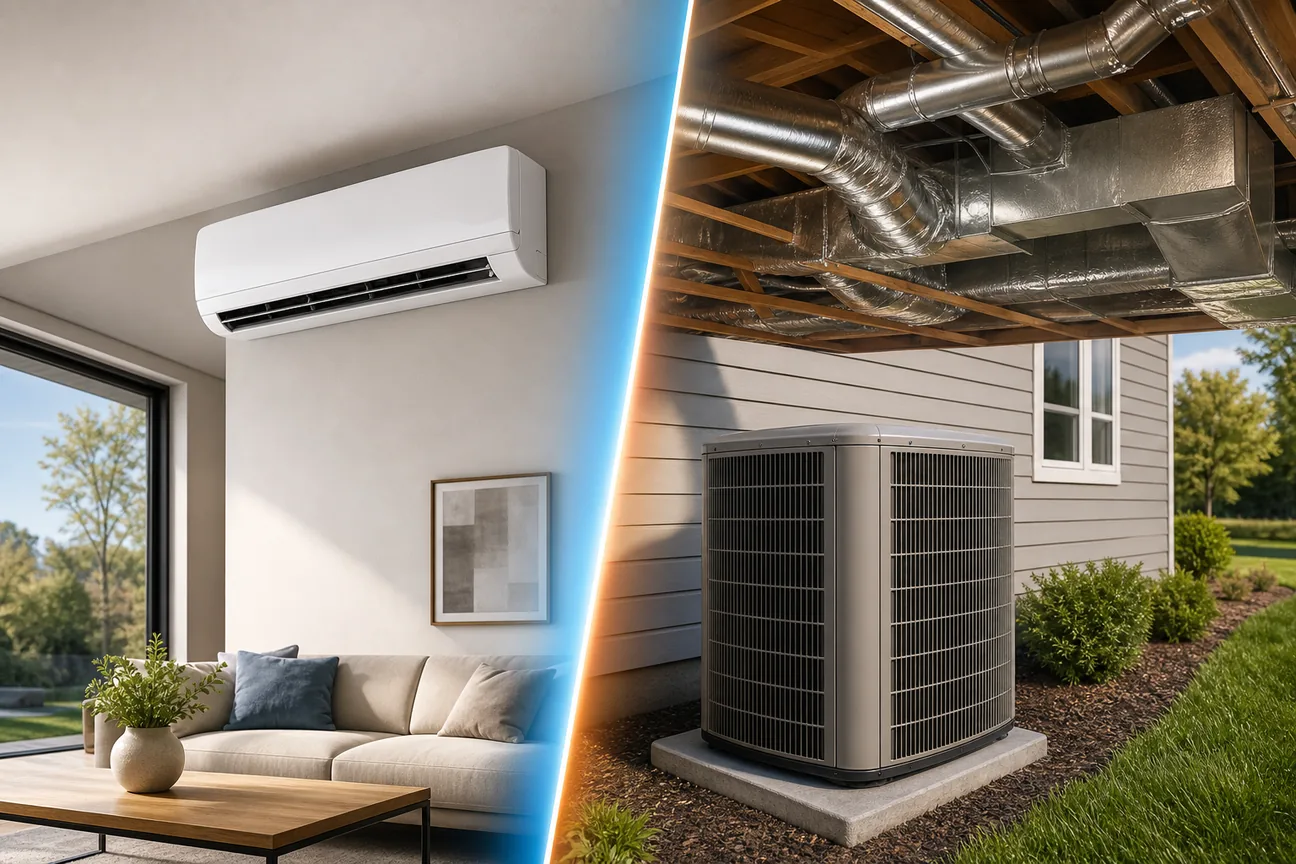
In Placer County, summer heat and chilly winter nights can make the choice between ductless and central air feel less simple. The right fit depends on your ducts, floor plan, and which rooms need comfort most. Here are four options to consider, plus how we help match a system to your home.
Table of Contents
How Home Worx Heating and Cooling Matches a System to Your Home
Home Worx Heating and Cooling is a family-owned HVAC contractor based in Colfax, serving Placer County and Nevada County. A fair comparison of ductless and central systems considers your home's needs rather than steering you toward one system type.

For a house without ducts, a ductless mini-split can avoid the major work of adding a duct network. If your home already has sound ducts, central air may be a simpler replacement. We look at the rooms you use, the existing equipment, and the home's layout before recommending a path. A room-by-room size check matters, since an oversized or undersized unit can waste energy or struggle on a hot afternoon.
We install both ductless mini-splits and central systems. We also offer the Nushield-R air filtration system, a self-cleaning, no-maintenance needlepoint bipolar ionization generator, for cleaner indoor air. If a new system is the right call, financing is available for as low as $120 a month, about $4 a day (terms and conditions apply).
We serve homeowners in Auburn and Colfax, as well as Rocklin, Roseville, Grass Valley, Penn Valley, and Lincoln. Our central air and mini-split comparison explains the home features we weigh when discussing a system. We also provide maintenance and emergency repair, so installation isn't the only part of the decision.
Key Takeaway:Start with the condition of your ducts and the rooms you need to heat or cool, then compare complete system plans.
1. Senville Mini-Split: zoned ductless comfort for homes without ducts
For ductless vs central air in a home without ducts, the Senville Mini-Split is a named ductless option with multi-zone capability. It may suit a homeowner who wants separate indoor units for selected rooms rather than a duct network serving the whole house.

Senville's multi-zone Aura systems carry a SEER rating of about 22. SEER is a cooling-efficiency rating, but it doesn't predict your exact bill. Actual energy use depends on the model, installation, weather, insulation, and how you set each zone.
With ductless equipment, an indoor unit sends conditioned air into the space it serves. Multiple zones can let you condition more than one area independently, though the exact system design determines how many rooms it can cover. Ask an installer to confirm the model and configuration in your estimate.
There is a tradeoff: wall-mounted indoor units remain visible. Each room also needs a suitable unit location. That can be a plus in an older home without ductwork, or for an addition that the existing system doesn't reach. But a multi-zone setup adds equipment and installation work compared with conditioning one room.
Don't size a system by square footage alone. Ceiling height, sun-facing windows, insulation, and how rooms connect all affect comfort. A single unit may not cool separate closed rooms evenly, even if the combined area looks right on paper.
For a house with several rooms to serve, ask for a written zone plan. It should name the spaces each indoor unit will condition. Contact Home Worx Heating and Cooling for local guidance.
2. Carrier Infinity: central air for whole-home cooling
Carrier Infinity is a central-system option to consider when existing ducts are in good shape and you want one system to serve the whole home. In the ductless vs central air comparison, the strongest case for central air is often the house itself: usable ducts make replacement less disruptive than building a new distribution system.
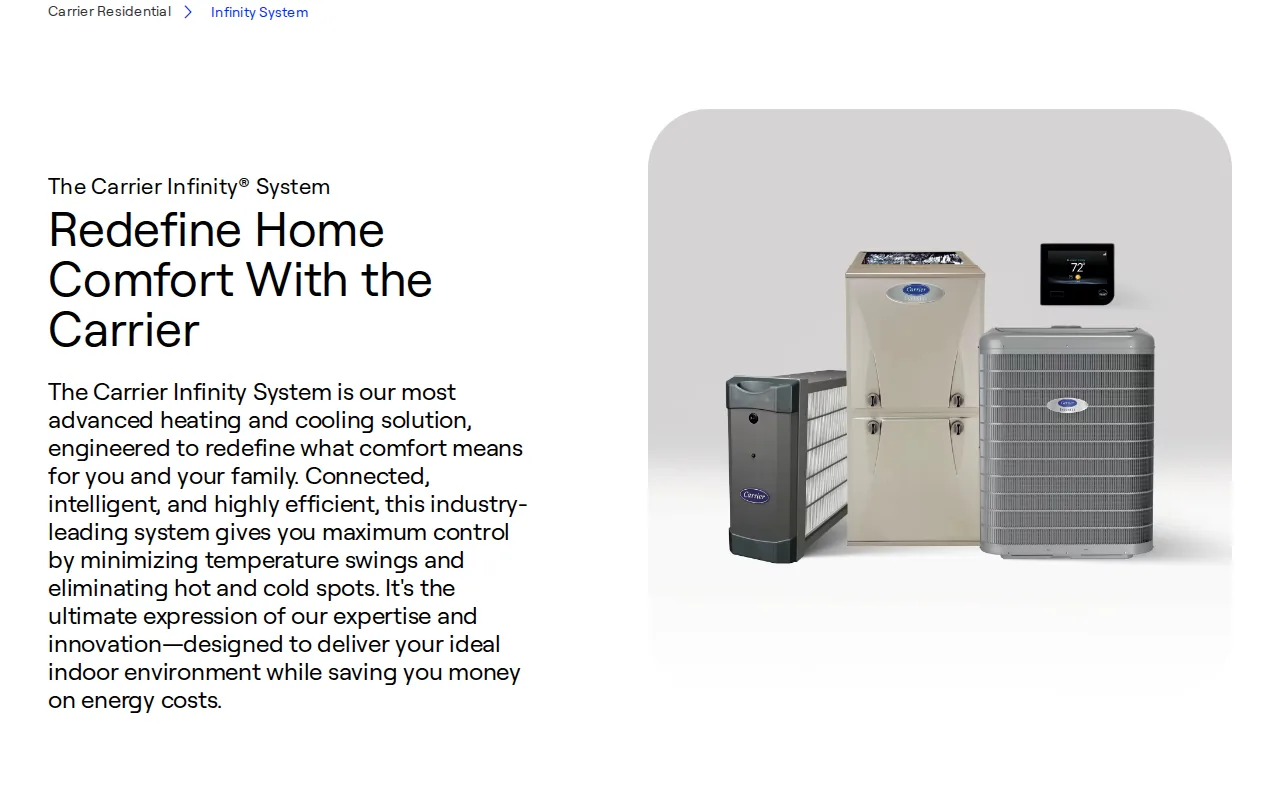
A central system cools air indoors, then a blower sends it through ducts to room vents. Most of the equipment stays out of sight, so the indoor look is less noticeable than wall-mounted mini-split heads. That can suit a Rocklin or Roseville home with a familiar ducted layout and a preference for one central thermostat.
Central systems move air through ducts, while ductless systems place indoor units in the rooms they serve. For a whole-home central replacement, ask the contractor to assess duct condition as well as the equipment. Leaks, poor insulation, or blocked runs can affect how much cooled air reaches living spaces.
Central air can be less efficient when you only need to cool one part of the home, since the system may serve more space than you're using. Zoning controls can change that, but they need to be designed for the home's duct system. A system that's too large or too small can also affect comfort and energy use.
Adding ducts where none exist can change the cost and disruption significantly. The home's size, equipment, duct needs, and access all affect the final proposal.
For an older home or a room that stays warmer than the rest, compare a targeted ductless unit before assuming the central system needs replacement. A hybrid plan may be worth discussing if the main system works but one area needs extra help.
3. Mitsubishi Hyper-Heat: ductless heating and cooling for colder nights
Mitsubishi Hyper-Heat is a ductless option to discuss when heating matters as much as summer cooling. A ductless heat pump can move heat into the home in winter and out in summer. Confirm the exact model's heating capacity and performance for your home's cold-weather needs before choosing it.
That detail matters in foothill communities such as Grass Valley and Penn Valley, where a system may need to work through chilly winter conditions as well as hot afternoons. Cooling efficiency ratings alone don't tell the full heating story. Ask for the model's heating specifications and how the installer expects it to perform in your home's conditions.
Ductless units can work well in rooms without ducts, including additions and converted spaces. Each indoor head is visible and needs a clear location. A multi-room plan may need more than one head, which adds installation complexity and means there are more indoor filters to keep clean.
Most ductless systems call for regular filter cleaning and professional service. Our Nushield-R air filtration system is self-cleaning and needs no maintenance, but that doesn't make the ductless equipment itself maintenance-free. Ask what care applies to the model being quoted.
For winter comfort, get a plan that covers the whole house, not just the main room. Closed doors, room placement, and the home's insulation can affect how well heat reaches spaces away from an indoor unit.
Pro Tip:Ask the installer to show which rooms each indoor unit serves in both heating and cooling mode, especially bedrooms with doors that stay closed.
4. Daikin Aurora: a ductless option built for cold-weather heating
Daikin Aurora is a ductless heat pump line designed to keep heating in colder weather as well as cooling in summer. Features vary by model, so don't assume one description applies to every Aurora configuration. For a Lincoln home, ask the contractor to identify the proposed model and explain how it fits the rooms you need to condition.
The choice often comes down to your home's infrastructure and how much space you want to condition. Use this comparison to frame the estimate conversation:
Decision point | Ductless mini-split | Central air |
Existing ducts | Can serve spaces without ducts | Often simpler when usable ducts are already there |
Room-by-room control | Available when the system is designed for multiple zones | Usually serves the home through ducts; zoning depends on design |
Indoor appearance | Wall or ceiling units are visible | Mostly vents are visible indoors |
Installation disruption | May avoid adding ducts through walls and ceilings | New ductwork can add work in a home without ducts |
Routine upkeep | Clean indoor filters; ask about annual professional service | Change or clean filters and arrange regular service |
For either style, ask what permits may apply to the work in your area and whether the estimate includes electrical changes. If you're considering an incentive, check current PG&E or California program rules directly; eligibility can depend on the equipment and project.
Home Worx Heating and Cooling can help compare a ductless plan with central replacement based on your home and service needs. For a closer look at sizing factors, see our guide to choosing the right HVAC system size . Contact Home Worx Heating and Cooling for local service in Colfax and nearby communities.
FAQ: Ductless vs Central Air
Is ductless or central air more efficient?
Neither system is always more efficient; the home's ducts and usage matter. In ductless vs central air comparisons, mini-splits avoid duct losses and can condition selected rooms, while central air can work well with sound ducts. Compare the equipment ratings and the home's duct condition, then consider how many rooms you'll heat or cool each day.
Is ductless air cheaper to install than central air?
It can cost less to install a single ductless zone than to add ducts, but a whole-home multi-zone system may cost more than replacing central equipment when usable ducts exist. For ductless vs central air, compare the full installed project, including electrical work, duct repairs, permits, and the number of zones. Ask for an itemized estimate.
Can a ductless mini-split heat a home in winter?
Many ductless mini-splits are heat pumps that provide both heating and cooling, but check the exact model's heating performance. In a ductless vs central air decision, compare heating specifications as well as cooling ratings. Ask how the proposed system will serve colder rooms and whether your home needs another heat source for particular conditions.
Does a ductless mini-split need regular maintenance?
Yes, most ductless systems need regular filter cleaning and professional service. Some systems advertise self-cleaning filtration, but confirm what that means for the specific model and what care the rest of the equipment needs. Central systems also need filter care and routine service. Follow the manufacturer's instructions rather than assuming either type is maintenance-free.
Conclusion
Choose central air when your home has sound ducts and you want whole-home coverage. Consider ductless when you lack ducts or need control in selected rooms. For a home-specific comparison in Auburn, Colfax, Rocklin, Roseville, Grass Valley, Penn Valley, or Lincoln, contact Home Worx Heating and Cooling to discuss an installation or service assessment.