
Best Filters for an HVAC System
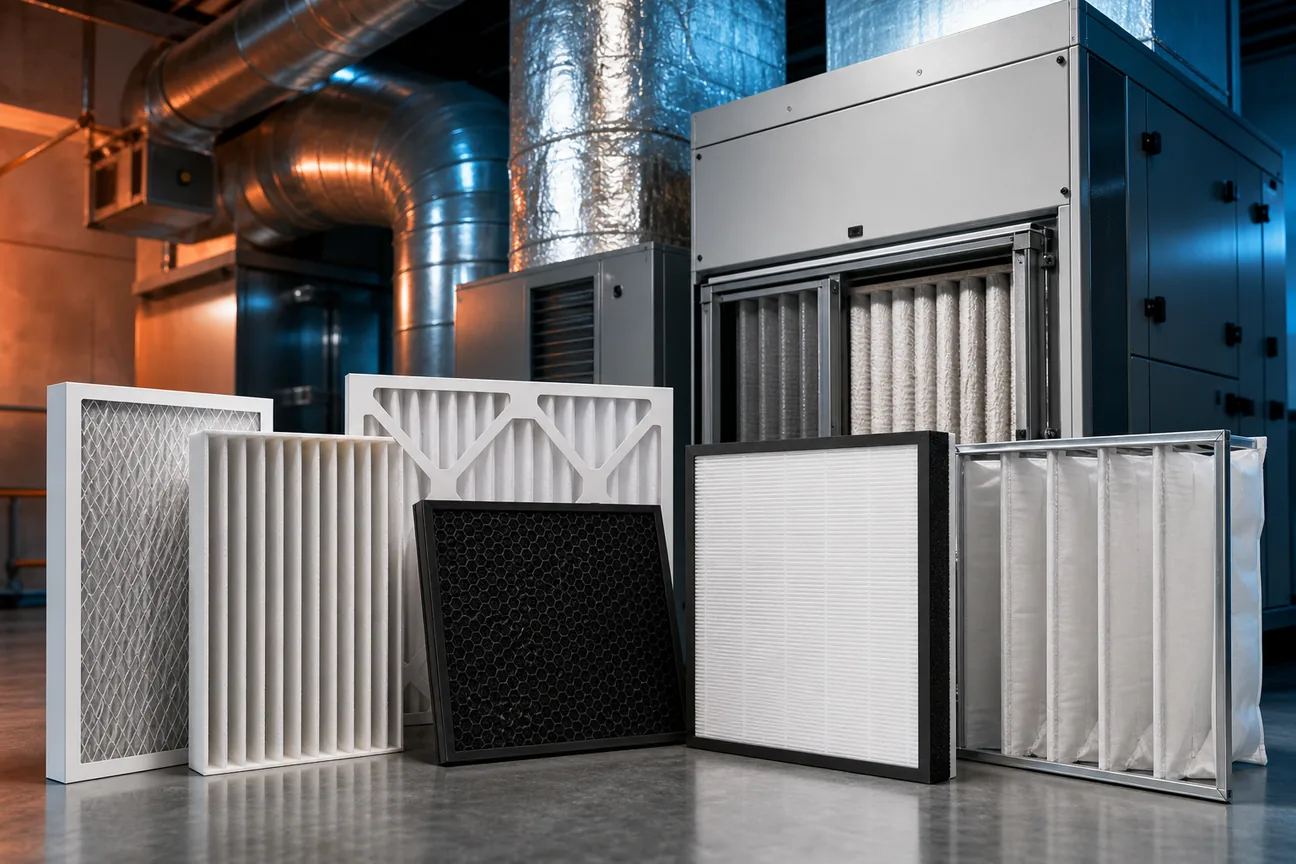
Spot dust in a sunbeam and start wondering when you last changed your filter? The best filter for an HVAC system is the one that suits your air quality needs without blocking the airflow your equipment needs. Here are five options, plus the fit and upkeep checks that help you choose.
We analyzed 69 YouTube comments about HVAC filters and found that 38% mentioned the trade-off between filtration efficiency and airflow restriction.
Table of Contents
1. Filterbuy MERV 8: A practical pleated-filter upgrade
Filterbuy MERV 8 is a pleated filter and a step up from bare fiberglass. It’s a reasonable choice when you want routine particle filtration without starting with a higher MERV rating.
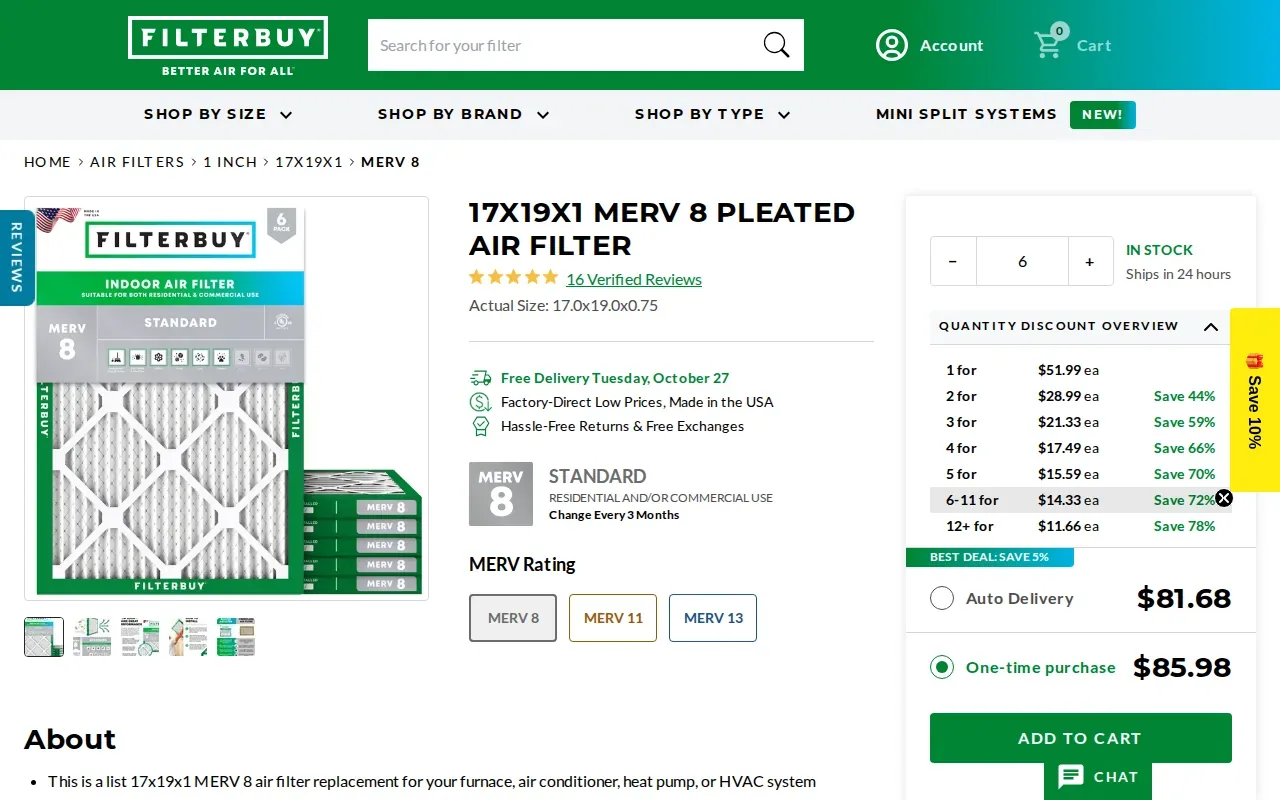
MERV stands for Minimum Efficiency Reporting Value . A higher rating means a filter can capture more types of particles, including smaller ones. But that number doesn’t tell you whether your furnace or heat pump can move enough air through the filter. Check your equipment manual before changing ratings, or ask an HVAC technician to check the system.
Pleats fold the filter material into a larger area within the same frame. More surface area can help air pass through more easily than a flat sheet of the same size, though the actual result depends on the filter’s design and how loaded it is. Within a fixed filter size, pleat count and shape affect how much media is available to catch particles.
Confirm the dimensions printed on the old filter before you buy. A filter that sits loosely can leave gaps, letting air pass around the media. Filterbuy’s catalog includes multiple thicknesses, but a deeper filter needs a cabinet made for that depth. Don’t force a thicker filter into a shallow slot.
If you’re comparing ratings for a home in Auburn or Colfax, our MERV rating guide for Northern California homes explains the trade-off between particle capture and airflow. Filterbuy MERV 8 is a sensible starting point when the system calls for that rating and basic filtration is the goal.
2. Filterbuy MERV 11: For stronger particle filtration
Filterbuy MERV 11 is a pleated option for households seeking more filtration than a MERV 8 filter provides. It offers protection against allergens and smaller particles.
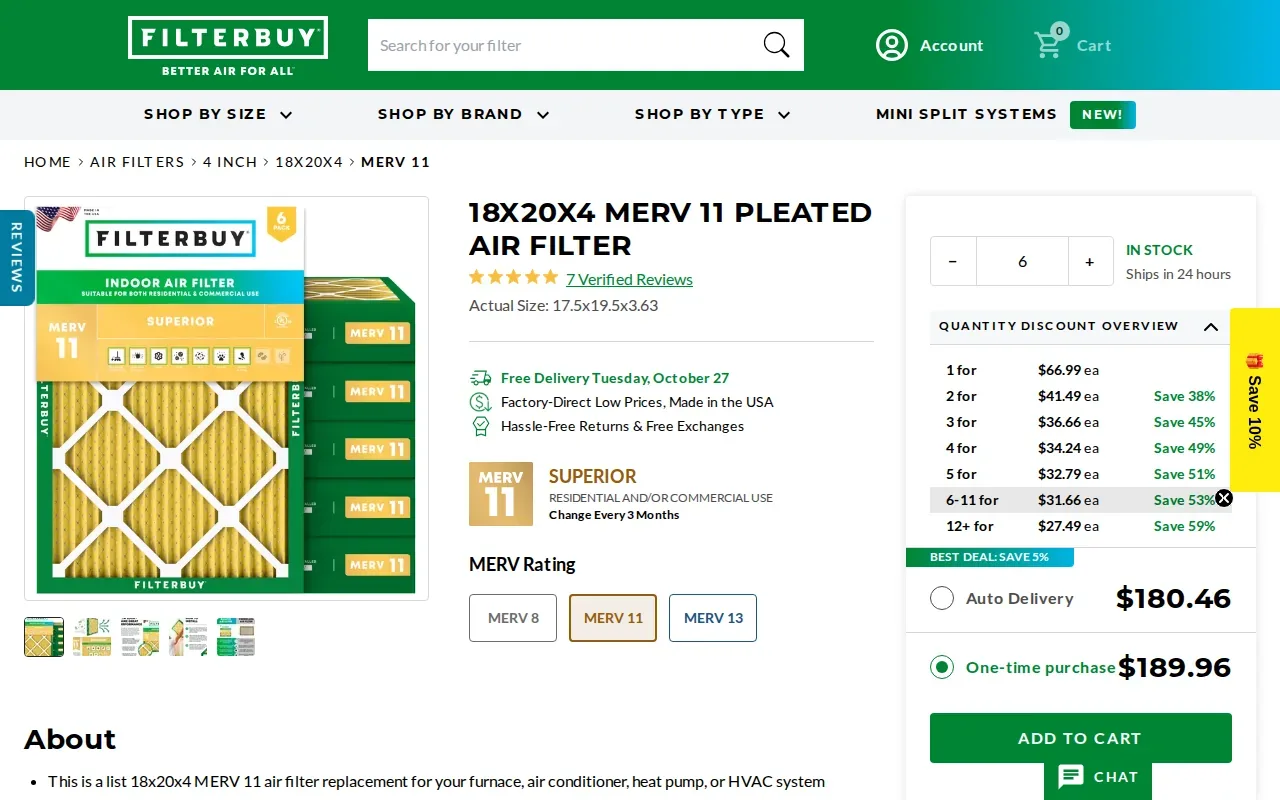
Filterbuy sells it in sizes such as 18x20x4. That size and four-inch depth matter only if they match your filter cabinet. Measure the existing filter and check its label before ordering. The nominal size may differ from the exact slot measurement, so use the size the system is designed to take.
A higher MERV rating can also add resistance to airflow. Think of the filter as a screen the blower must pull or push air through. If airflow drops, the system may run differently and comfort can suffer. A MERV number alone can’t confirm compatibility; the filter’s depth, area, condition, and your equipment all matter.
After installing a higher-rated filter, pay attention to changes. Weak airflow at vents or a new whistling sound near the return grille is a reason to check fit and system performance. Don’t assume that a denser filter is automatically an upgrade for every furnace.
Filter life depends on the product and the air moving through your home. Dust, smoke, pets, and long system run times can load a filter sooner. Use the product guidance and your equipment manual, then check the filter regularly rather than relying on a calendar alone. Our HVAC filter replacement schedule guide covers factors that can change the timing.
For homes in Rocklin or Roseville, MERV 11 may suit a household that wants more particle capture, provided the system supports it. If you’re unsure, have the filter slot and airflow checked before moving up.
3. Filter King MERV 13: A higher-efficiency pleated option
Filter King MERV 13 is a pleated filter made with dense media for that rating range. It’s an option for people seeking stronger filtration of smaller particles, but the HVAC system must be able to handle the added resistance.
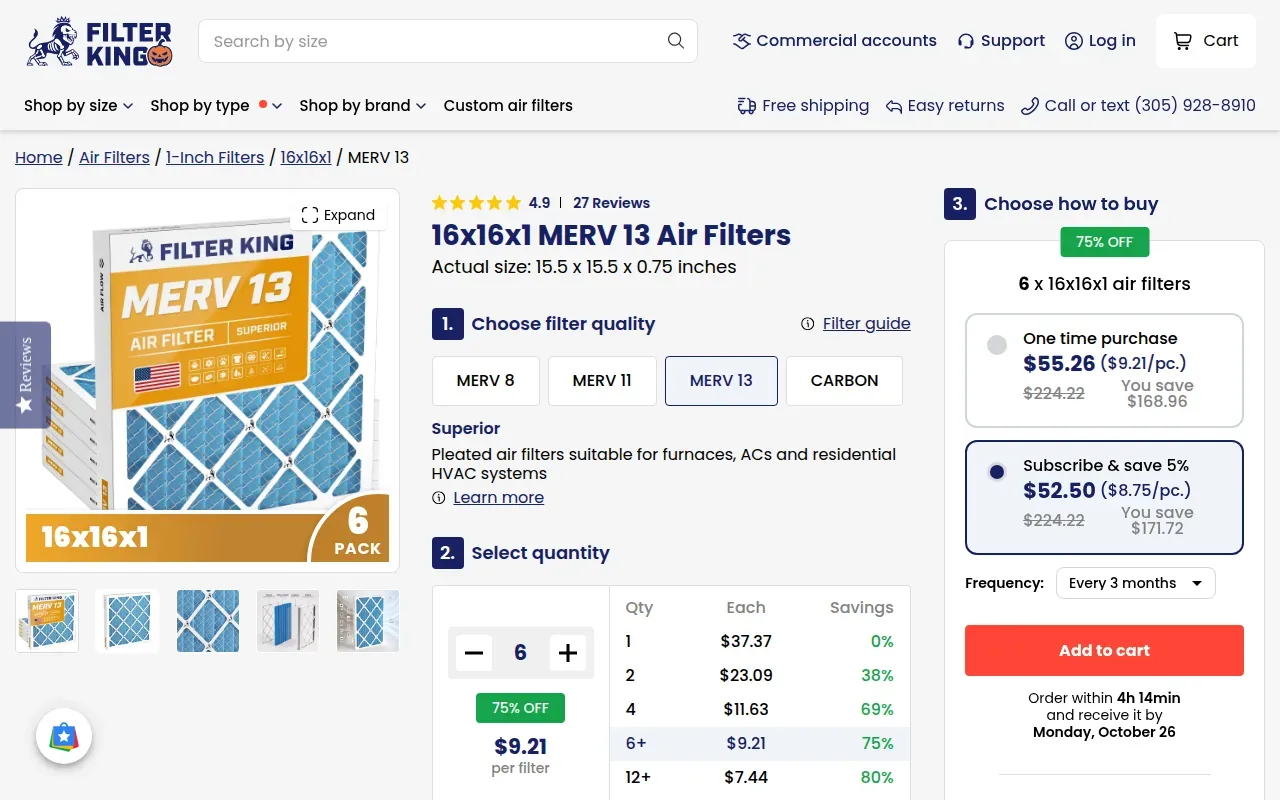
MERV 13 isn’t a safe default just because it has a higher number. A filter can capture more particles while also making it harder for air to pass through. Check the system manual or ask a technician about its approved filter rating before switching. If the equipment isn’t suited to the added resistance, a high-MERV filter can affect airflow and system operation.
Structure counts, too. A frame that bows or twists can open gaps at the edges. Then air may slip around the filter instead of passing through its media. Check that the installed filter sits snugly and stays in place while the system runs. A filter that fits poorly can’t do its intended job.
Filter King gives its MERV 13 filter a lifespan of three months. Treat that as a guide, not a promise that every home can wait that long. Dusty conditions or heavy system use may call for an earlier check. Replace the filter according to its instructions and inspect it during periods of frequent heating or cooling.
Homes in Grass Valley and Penn Valley may face different dust and outdoor air conditions over the year. That doesn’t change the need to match the filter to the equipment. If smoke or fine particles are a concern, ask a technician to check airflow before choosing a denser filter.
4. Aprilaire Model 213 Replacement Air Filter: For compatible cabinet systems
Aprilaire Model 213 Replacement Air Filter is a replacement filter for compatible cabinet systems. It is a MERV 13 filter that AprilAire says removes up to 97% of common allergens and 92% of viruses.
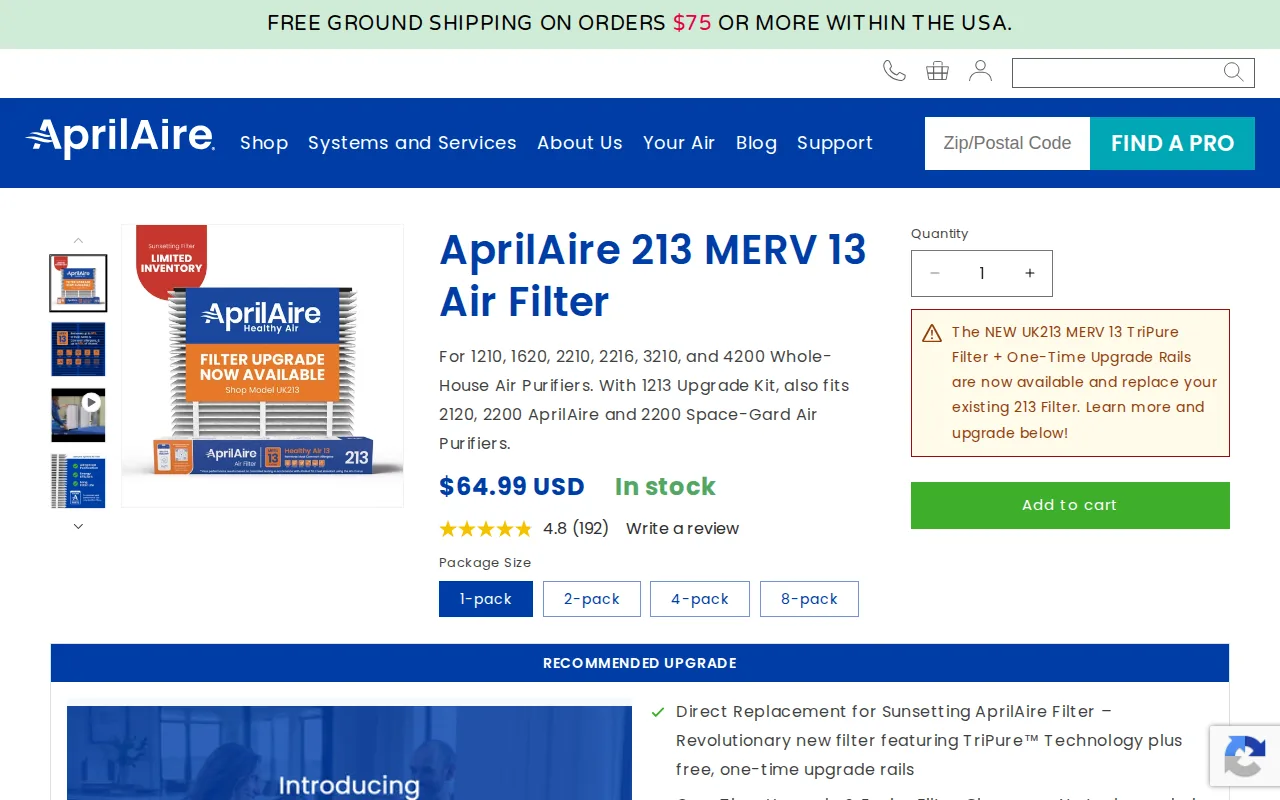
Those capture claims don’t establish that the filter fits every HVAC system. The model number matters: confirm that your equipment uses the matching cabinet and filter. A similar-looking slot isn’t enough. Check the current filter and the system documentation before buying a replacement.
Its MERV 13 rating also makes airflow compatibility important. A filter cabinet designed for a particular media filter can differ from a standard one-inch return slot. Use the filter type the system was built to accept, and don’t trim or bend a filter to make it fit.
When you install a replacement, check its orientation. Many filters have an airflow arrow that should point in the direction air moves through the system. A snug fit helps limit bypass around the edges. For help with sizing and orientation, see our guide to replacing an HVAC air filter .
This is a focused choice for a compatible cabinet, not a universal MERV 13 replacement. If you’re preparing a home in Lincoln for sale or move-in, confirm the existing cabinet model rather than guessing from the filter’s outside dimensions.
5. Hi-Flo Air Filter by Camfil: A commercial HVAC option

Hi-Flo Air Filter by Camfil is designed for commercial and industrial HVAC installations. It is built to clean particles from the air and improve indoor air quality.
That makes it a candidate for a business or building with a commercial air-handling system, rather than a typical residential filter slot. Fit is specific to the installation. A property manager should check the existing filter rack and equipment requirements before selecting a replacement.
For a small business, the right filter has to work with the air handler’s design and the building’s filter service routine. A filter that doesn’t seal well can let air bypass the media. One that adds too much resistance can interfere with the airflow the equipment needs. Have the system specifications checked instead of choosing by the filter’s name alone.
Filter inspection also belongs on the building’s maintenance schedule. A loaded filter can restrict airflow, while a damaged or poorly seated one can let particles pass around it. Staff can note visible dust or damage, but a technician can assess whether the filter setup matches the system.
Whoever services the building should review the equipment and filter setup before a change, so a commercial product isn’t treated as a drop-in residential replacement.
Quick comparison: Which HVAC filter fits your needs?
Start with the filter your system is built to use. Then weigh the air-quality goal against fit and airflow. This table compares the five named options by their intended use, not by a universal ranking.
Filter | Type or rating | May suit | Check before choosing |
Filterbuy MERV 8 | Pleated, MERV 8 | Routine filtration as an alternative to bare fiberglass | Correct size and system rating |
Filterbuy MERV 11 | Pleated, MERV 11 | More filtration for allergens and smaller particles | Size, depth, and airflow compatibility |
Filter King MERV 13 | Pleated, MERV 13 | People seeking higher particle filtration | System approval and three-month lifespan |
Aprilaire Model 213 Replacement Air Filter | MERV 13 | Compatible Aprilaire cabinet systems | Cabinet and model match |
Hi-Flo Air Filter by Camfil | Commercial and industrial filter | Commercial HVAC installations | Air-handler and rack compatibility |
Fiberglass filters are often used for basic equipment protection. Pleated filters provide more media area within a frame, while higher-MERV filters target smaller particles and may add airflow resistance. The filter type and rating must suit the system together.
Washable filters can be reused, but they need cleaning and full drying before going back in. Disposable filters are replaced instead. Either way, follow the product directions and make sure the filter sits correctly in its slot.
HEPA filters are very dense and generally aren’t a direct replacement in a standard HVAC filter slot. They can restrict airflow if the system wasn’t designed for them. For smoke or odors, particle filters may not address gases and smells by themselves; ask about an activated-carbon option or a separate room air cleaner suited to the concern.
A technician can use a static-pressure gauge to check resistance through the system. Temperature readings across the equipment can also help assess operation. Those checks are more useful than guessing based on the filter’s MERV label.
Pro Tip:Write down the filter’s size, depth, and MERV rating before shopping. Keep the old filter until the replacement is confirmed to fit.
Frequently asked questions
What MERV rating is best for a home HVAC system?
The best MERV rating is the highest one your HVAC system can handle while maintaining proper airflow. MERV 8 is a common starting point for routine filtration; MERV 11 or 13 may suit added particle concerns if the equipment supports them. Check the manual or ask a technician before moving to a higher rating.
Can a MERV 13 filter damage my furnace?
A MERV 13 filter can cause problems if it adds more airflow resistance than the furnace is designed to handle. That doesn’t mean every MERV 13 filter is wrong for every system. Confirm the approved rating and filter size, then watch for changes in airflow or unusual sounds after installation.
How often should I replace an HVAC filter?
Follow the filter’s instructions and your HVAC manual, then check the filter regularly. Filter King rates its MERV 13 filter for three months, but dusty air or frequent system use may mean an earlier check. A visibly loaded filter deserves attention rather than waiting for a fixed date.
Can I use a HEPA filter in my furnace?
A HEPA filter generally isn’t a direct fit for a standard furnace slot because its dense media can restrict airflow. Use only a filter the system is designed to support. If you want HEPA filtration, ask an HVAC professional whether your equipment can accommodate it or if a separate air cleaner is a better fit.
Conclusion
Choose by system fit first, then select the MERV rating that matches your air-quality needs without harming airflow. If you’re in Auburn, Colfax, Rocklin, Roseville, Grass Valley, Penn Valley, or Lincoln, contact Home Worx Heating and Cooling to check your system and find a suitable filter.