
Best Options for the Most Efficient Way to Cool a House
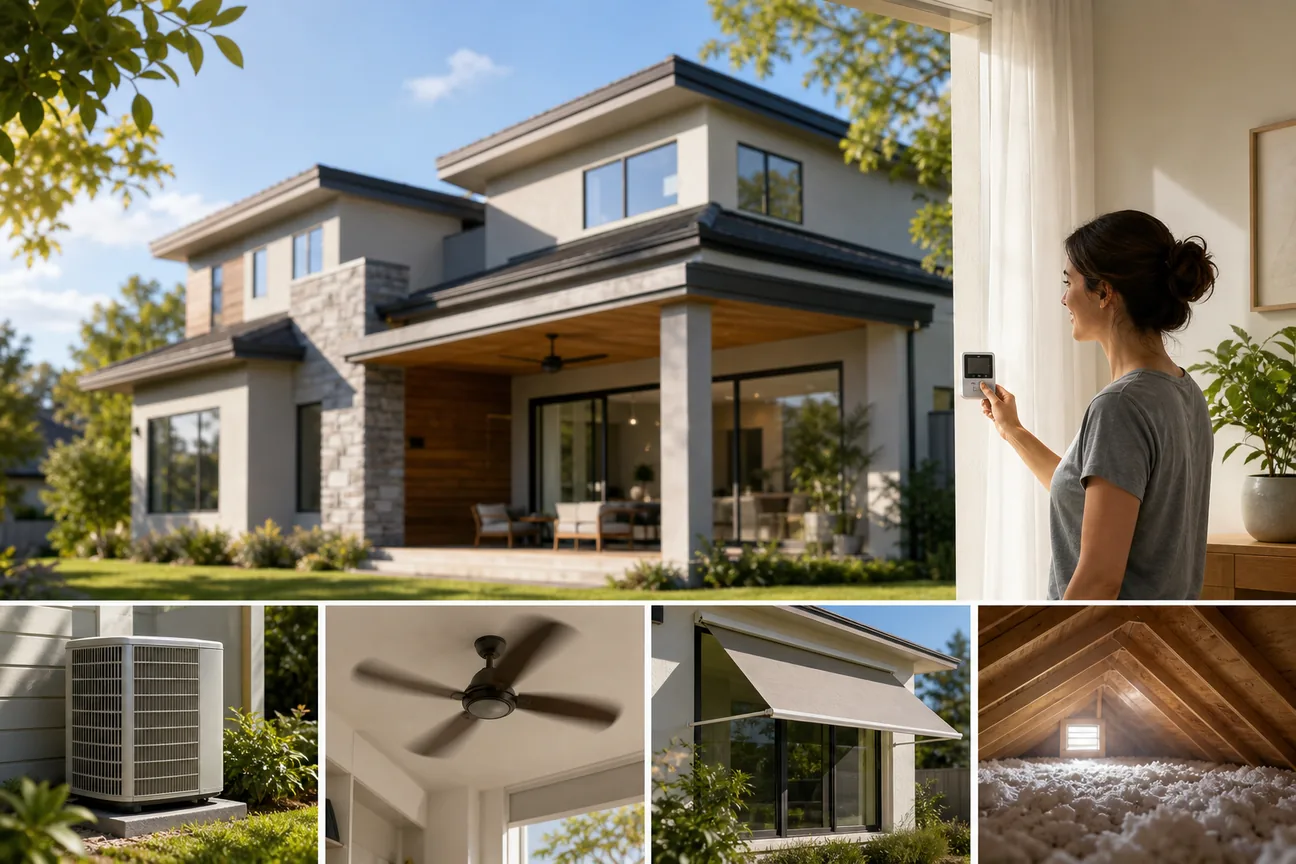
In the Sierra foothills, the most efficient way to cool a house often starts with a ductless mini-split, especially when existing ducts leak or waste cooled air. The right fit still depends on your home and which rooms need cooling. Here are five options to consider, starting with local help from Home Worx Heating and Cooling .
We compared published SEER2 ratings for 7 current cooling systems. Three were central air or heat pump models from Carrier, Lennox and Trane, and four were ductless mini-splits from Mitsubishi and Daikin. The central models ranged from 21 to 25.8 SEER2, the mini-splits from 19.3 to 32.2 SEER2, and the highest mini-split beat every central unit. ENERGY STAR's duct sealing guidance also puts typical air loss through leaky ducts at 20 to 30 percent, the kind of loss a ductless mini-split simply avoids.
Table of Contents
1. Home Worx Heating and Cooling
Home Worx Heating and Cooling is a family-owned HVAC contractor based in Colfax, serving Placer and Nevada counties. It’s the first stop for homeowners who want a local assessment before choosing central air or a ductless system.

That assessment matters because a house with usable ductwork presents a different choice from an older home with no ducts, or a west-facing bedroom that stays hot after sunset. Home Worx installs heating and cooling systems, provides maintenance and air-quality services, and offers financing options. Ask the team to compare equipment choices for your home rather than assuming one system suits every room.
Homes in Colfax and Grass Valley can face cold winters as well as hot summer days. A heat pump may suit a household that wants one system for both seasons. In Auburn or Rocklin, an assessment can also help show whether existing ducts are in good enough shape to support central AC.
Home Worx serves Auburn, Colfax, Rocklin, Roseville, Grass Valley, Penn Valley and Lincoln. Ask about the work needed for your home, including permits and any current rebate programs. Financing and rebate terms can change, so confirm the details before planning a project.
Key Takeaway:Get the home and ductwork assessed before choosing equipment. The right system depends on what the house needs, not just its age or size.
2. Central Air Conditioning With Well-Maintained Ducts, Whole-Home Cooling
Central air can be an efficient choice when you want the most efficient way to cool a house with existing, well-sealed ducts. It’s best for homes where ducts already reach the rooms you use and the system can cool the whole house evenly.
Compared with older or poorly maintained equipment, a new central system can improve comfort. But ducts matter. Research estimates used in system comparisons put potential duct losses at 20 to 30 percent. That loss can mean the air conditioner works hard while less of its cooling reaches the rooms.
Before replacing a unit, ask a technician to inspect accessible ducts for loose joints, damage or poor insulation. A system’s SEER2 rating describes its cooling efficiency under set test conditions. Common comparisons place central air around SEER2 14 to 22, while ductless mini-splits often reach higher ratings. A rating alone doesn’t account for leaky ducts or poor sizing.
Central air systems use indoor and outdoor components to move heat out of a home. For more context, see air-conditioning guidance . The duct network is another part of the job, and its condition affects how well cooled air reaches each room.
Central air may be the simpler choice if ducts are sound and the house already has compatible equipment. If duct repairs or new duct installation are needed, compare the full project with a ductless system before deciding.
For local service, contact Home Worx Heating and Cooling in Auburn, Colfax, Rocklin, Roseville, Grass Valley, Penn Valley or Lincoln.
3. Ductless Mini-Split Heat Pump, Efficient Zoned Cooling and Heating
A ductless mini-split heat pump is a strong candidate for the most efficient way to cool a house when you want room-by-room control. It suits homes without ducts, additions, and households that don’t need every room cooled at the same time.
Mini-splits move heat between indoors and outdoors. In summer, they carry heat out of the house. Many models can reverse the process and provide heat in winter, too. Evaporative cooling is distinct from compressor-based air conditioning, which cools by moving heat rather than adding moisture to indoor air. For more on evaporative cooling, see this guide to evaporative cooling .
System comparisons report SEER2 ratings of roughly 20 to 33 for ductless mini-splits, often above the ranges reported for central air. A higher rating can mean less electricity for the same cooling output under test conditions. In a home with duct losses, zoning can also reduce how much space needs cooling at once.
There are tradeoffs. Indoor units stay visible on a wall or ceiling, and each zone needs correct sizing and placement. Filters need regular cleaning. If you’re weighing heating and cooling choices for winter as well as summer, the difference between a heat pump and an air conditioner can help frame the decision.
Mini-splits often cost more upfront than replacing central equipment when good ducts are already in place. Ask for a full estimate that covers the indoor units, outdoor unit, electrical work and installation. The lowest purchase price may not be the lowest cost to run. Homeowners in Auburn, Colfax and Rocklin, as well as Roseville, Grass Valley, Penn Valley and Lincoln, can contact Home Worx Heating and Cooling for local service.
4. Single-Zone Mini-Split, Efficient Cooling for One Problem Room
A single-zone mini-split cools one room or open area, making it a focused choice when the rest of the home stays comfortable. It can suit a converted garage, a home office or a bedroom that gets strong afternoon sun.
Instead of cooling the whole house to fix one hot room, the system targets that space. It avoids the need to extend ductwork and lets you keep the central thermostat setting separate from that room’s comfort needs. That can help in a home where one room is used for long stretches but other rooms are often empty.
There’s a catch: one indoor unit won’t solve uneven temperatures throughout a large home. Its placement matters, too. A wall unit blocked by tall furniture or placed where air can’t circulate may not cool the room as expected. Have an installer assess the room’s size, windows and sun exposure before choosing capacity.
Research estimates place some single-zone systems near SEER2 22, though ratings vary by model. The indoor unit is usually visible, and the filter needs regular cleaning. If you’re only trying to improve comfort without installing another cooling system, these ways to keep a house cool without AC cover shade and ventilation strategies.
Choose a single-zone setup when one room is clearly the trouble spot. If several rooms need separate control, compare it with a multi-zone system instead.
5. Multi-Zone Mini-Split, Ductless Comfort Across Multiple Rooms
A multi-zone mini-split provides zone control for multiple rooms and offers high efficiency. Separate zones give you the ability to cool different rooms independently, rather than relying on one setting for the entire home.
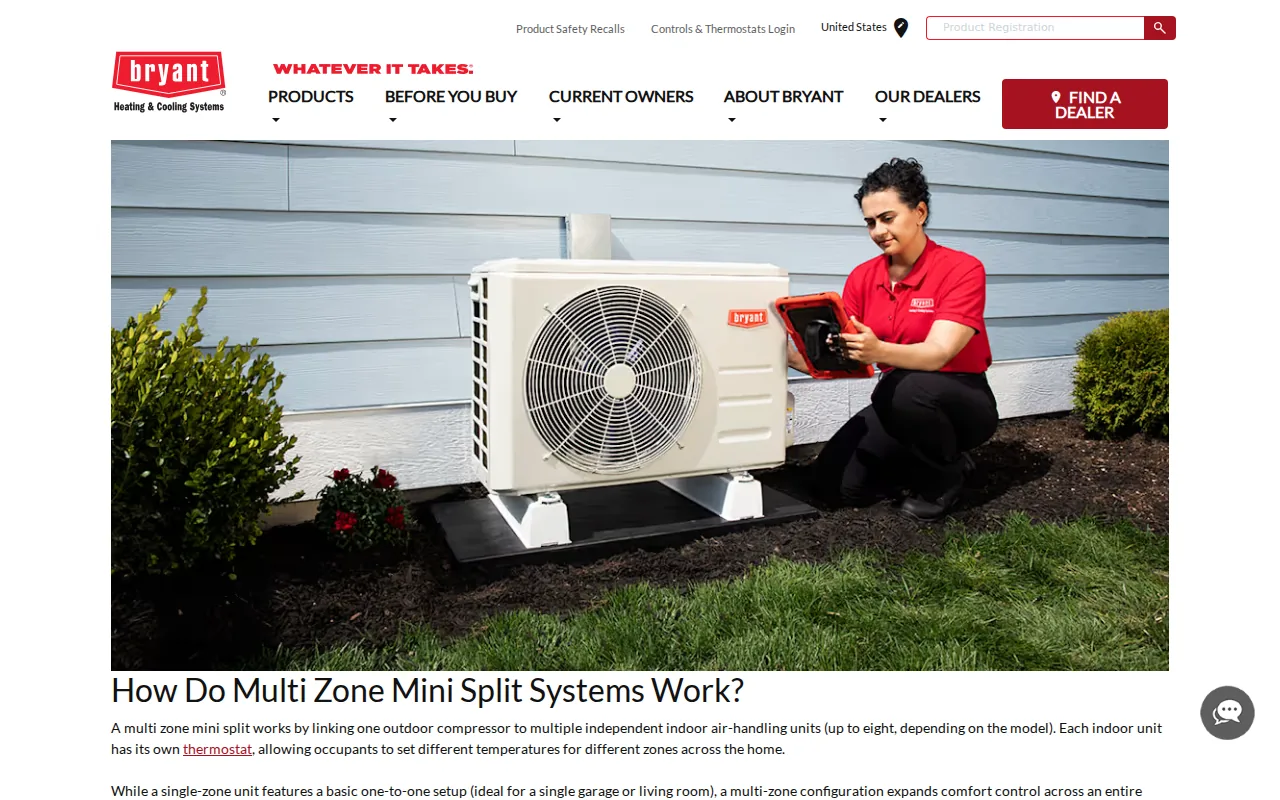
This option may suit a household that wants different rooms cooled to different settings. Zone control lets occupants adjust cooling room by room, while the system’s high efficiency makes it worth comparing with other cooling options. The equipment is not hidden, however: indoor units remain visible in the rooms they serve.
Multi-zone mini-splits have a SEER2 rating of 22. The system’s efficiency is one factor to consider alongside its higher cost per zone. Installation is also more complex than a simpler setup, so compare the expected cost and installation requirements before choosing this option.
Because a multi-zone system serves multiple rooms, planning the zones and installation is important. Keep in mind that the indoor units are visible and that adding zones can mean a higher cost per zone. These tradeoffs matter when weighing the benefits of zone control and high efficiency against the system’s overall cost and installation complexity.
This option is worth comparing when you want zone control for multiple rooms. Ask an installer to discuss the layout, installation complexity and cost per zone before settling on a system.
Quick Comparison: Which Cooling Option Fits Your House?
The most efficient way to cool a house depends on the starting point: existing ducts, the number of rooms that need cooling and whether you also want winter heat. Use this table to narrow the choices before requesting an estimate.
Option | Best fit | Main efficiency factor | Tradeoff to check |
Home Worx Heating and Cooling | Local assessment and installation | Match system to house and duct condition | Confirm scope, permits and current rebates |
Central AC with sound ducts | Whole-home cooling with ducts in place | Duct condition and system rating | Leaky ducts can waste cooling |
Ductless mini-split heat pump | Several zones plus heating and cooling | Higher SEER2 ranges in system comparisons | Higher upfront cost and visible units |
Single-zone mini-split | One hot room or addition | Cooling only the space in use | Doesn’t solve other hot rooms |
Multi-zone mini split | Zone control for multiple rooms | High efficiency; SEER2 22 | Higher cost per zone, more complex installation and visible units |
When comparing quotes, ask what the rating applies to and whether the estimate includes electrical work and any duct repairs. In Auburn, Colfax, Rocklin and Roseville, note which rooms get afternoon sun; in Grass Valley, Penn Valley and Lincoln, share which rooms run warm. Contact Home Worx Heating and Cooling for local service.
FAQ
What is the most efficient way to cool a house?
A high-efficiency ductless mini-split is often the strongest choice when a house has no ducts or needs zone control. System comparisons report SEER2 ratings from about 20 to 33 for ductless models. A home with well-sealed ducts may still be well served by central air, so compare the system rating and the condition of the house together.
Are mini-splits more efficient than central air?
Mini-splits often have higher rated efficiency and avoid losses through ductwork. But the most efficient way to cool a house depends on the equipment and installation. A well-sized central system with sound ducts may make more sense than adding several ductless units, while leaky ducts can reduce the cooling that reaches the rooms.
Is central air a good choice for an older home?
Central air can work in an older home if suitable ducts are already present and in good shape. If the home lacks ducts, adding them can affect project cost and disruption. Compare that work with a ductless mini-split, which can cool selected rooms without building a duct network through the house.
Can a heat pump cool and heat my home?
Yes. A heat pump can move heat out of the home in summer and bring heat indoors in winter. That can suit foothill homes with both hot summers and cool winters. Ask an HVAC contractor to size the system for your house and explain its expected performance in the local climate.
Do mini-splits need regular maintenance?
Yes. Clean the indoor filters as the equipment maker directs, and arrange service when the system needs it. Dirty filters can restrict airflow. Keep the outdoor unit clear of leaves and other debris, too. Regular care helps the system work as intended, though it can’t correct an undersized unit or poor placement.
Conclusion
For homes without good ducts, compare a ductless mini-split with a zoned ductless system. If your ducts are sound, central air may fit better. Home Worx Heating and Cooling serves Auburn, Colfax, Rocklin, Roseville, Grass Valley, Penn Valley and Lincoln; contact us for a local assessment in Placer or Nevada County.