
Does Closing Vents Save Money? HVAC Facts
Does closing vents save money? Usually not. Shutting supply vents can raise pressure in your ductwork, make your system work harder and send heated or cooled air through duct leaks instead of into your home.
We analyzed 40 comments and questions from Reddit, YouTube and Quora about closing vents to save money and found that 20% mentioned vent zoning methods.
The better fix depends on what’s causing uneven comfort. Here’s how vent closures affect airflow, when a small adjustment may be reasonable and what to try instead.
Table of Contents
What Happens to HVAC Airflow When You Close a Vent?
A forced-air system moves air in a loop. The blower pulls room air through return grilles, sends it across a heating or cooling part, then pushes it back through supply ducts and vents. The system is designed to move a certain amount of air through a planned network.
Closing a supply vent narrows one of the paths in that network. It doesn’t tell the furnace or air conditioner to make less air. Instead, it changes the resistance the blower faces. HVAC technicians call that resistance static pressure.
Think of it this way: a duct system is more like a set of air paths than a water pipe with a tap. Blocking one path doesn’t always send all that air neatly to the rooms you want. Pressure can rise, airflow can fall, and air can escape through weak duct joints.
Closed vents can raise static pressure, reduce airflow and make the fan draw more power.
Closing one vent briefly is different from shutting many vents across the house. But there isn’t one safe percentage for every system. Duct size, blower type, filter condition and the equipment maker’s limits all affect how much airflow restriction a system can handle.
Keep return grilles open, too. Those larger grilles let room air flow back to the equipment. Blocking them with furniture or a rug can further restrict the system, even if all supply vents remain open.
In Auburn, Colfax, Rocklin, Roseville, Grass Valley, Penn Valley or Lincoln, a stuffy room may point to a vent or duct issue. Check that the supply vent is open and unobstructed first.
Why Closing Vents Can Raise Energy Use Instead of Lowering It
The idea sounds simple: heat or cool fewer rooms, then pay less. But a central system usually keeps running according to the thermostat’s call for heating or cooling. Closing a vent doesn’t automatically lower that demand or reduce the system’s output.
When pressure rises, the blower has to push against more resistance. Some systems may use more electricity to do that. Others may deliver less air to the rooms that are still open. Either way, the expected saving can shrink or disappear.
Higher pressure can also push conditioned air through gaps in ducts. If those ducts run through an attic, crawlspace or other unheated area, the lost air isn’t helping the rooms where you spend time. Sealing and insulating those ducts can reduce that energy loss.
A closed room can also affect the temperature near the thermostat. If the thermostat sits in a room that gets enough warm or cool air, it may end the cycle while another area still feels uncomfortable. Or a cold room may draw heat through walls from rooms you’re trying to keep warm. The system may then run longer to reach its set temperature.
Heating and cooling seasons bring different risks. In heating mode, restricted airflow can cause some furnaces to overheat and shut off on a safety limit. In cooling mode, too little air moving over the indoor coil can contribute to ice forming on it. If you see ice or feel weak airflow, don’t keep closing vents to force air elsewhere.
SEER, or Seasonal Energy Efficiency Ratio, describes an air conditioner’s cooling efficiency over a standard test period. A higher rating doesn’t mean the system can work efficiently with blocked vents. The rating applies to equipment operating under specified conditions, not to a home with airflow paths restricted at random.
For a useful cost check, compare energy use over similar stretches of weather and keep the thermostat setting and household routine steady. A smart meter or other whole-home energy records may show changes in use, but they won’t tell you whether vent closure caused them. Temperature, hot water use and other appliances affect the same total.
Can Closed Vents Damage a Furnace, Air Conditioner, or Heat Pump?
They can contribute to equipment stress, especially when many vents are shut or another airflow problem is already present. A dirty filter, blocked return grille or damaged duct can add to the restriction. The system’s design and manufacturer instructions matter, so avoid treating a single percentage as a guarantee of safety.
In a furnace, reduced airflow can mean less air carries heat away from the heat exchanger. A safety switch may stop the burners if temperatures get too high. Repeated shutoffs can point to a problem that needs attention. If the furnace keeps starting and stopping, don’t try to fix it by closing more vents.
Air conditioners and heat pumps need enough air moving across the indoor coil to transfer heat. Restricted airflow can make the coil too cold and lead to freezing. An iced coil can reduce cooling and block more airflow. If you notice ice, turn off cooling and arrange an inspection rather than running the system and hoping it clears.
Motor type makes a difference, but it doesn’t make closed vents harmless. A variable-speed blower may raise its speed to try to maintain airflow. That response can increase electrical use. A standard motor may respond differently, but it still has to work within the airflow limits set for the system.
Air leakage is another concern. Pressure in the ducts can push conditioned air through loose seams, particularly when ducts pass through an attic or crawlspace. That means you may pay to heat or cool air that never reaches the living area.
Don’t assume a warranty will cover damage caused by operating outside the equipment maker’s instructions. Check the manual and ask a qualified technician how your system is meant to run. If you’re in Rocklin or Roseville and a room is persistently uncomfortable, an airflow assessment is more useful than repeated trial-and-error adjustments.
Home Worx Heating and Cooling provides heating and cooling repair, maintenance and duct and vent services in the local area. We can help check whether the cause is airflow balance, a filter, ductwork or another system issue.
When Is It Reasonable to Adjust a Vent, and When Should You Leave It Open?
For most central forced-air systems, leave supply vents open unless the equipment instructions or an HVAC professional say otherwise. Don’t close return grilles. They’re part of the air path back to the system, not a second kind of supply vent.
Small louver changes may help redirect a draft. For example, angle the slats toward the middle of the room instead of closing the register. A vent deflector can also guide the airflow away from a desk or bed. These changes affect where the air blows, not the system’s overall heating or cooling demand.
If a room stays too warm or cold, note when it happens and whether nearby rooms have the same issue. Check for a closed register, furniture over a vent or a blocked return. Avoid making several changes at once. That makes it harder to tell what helped.
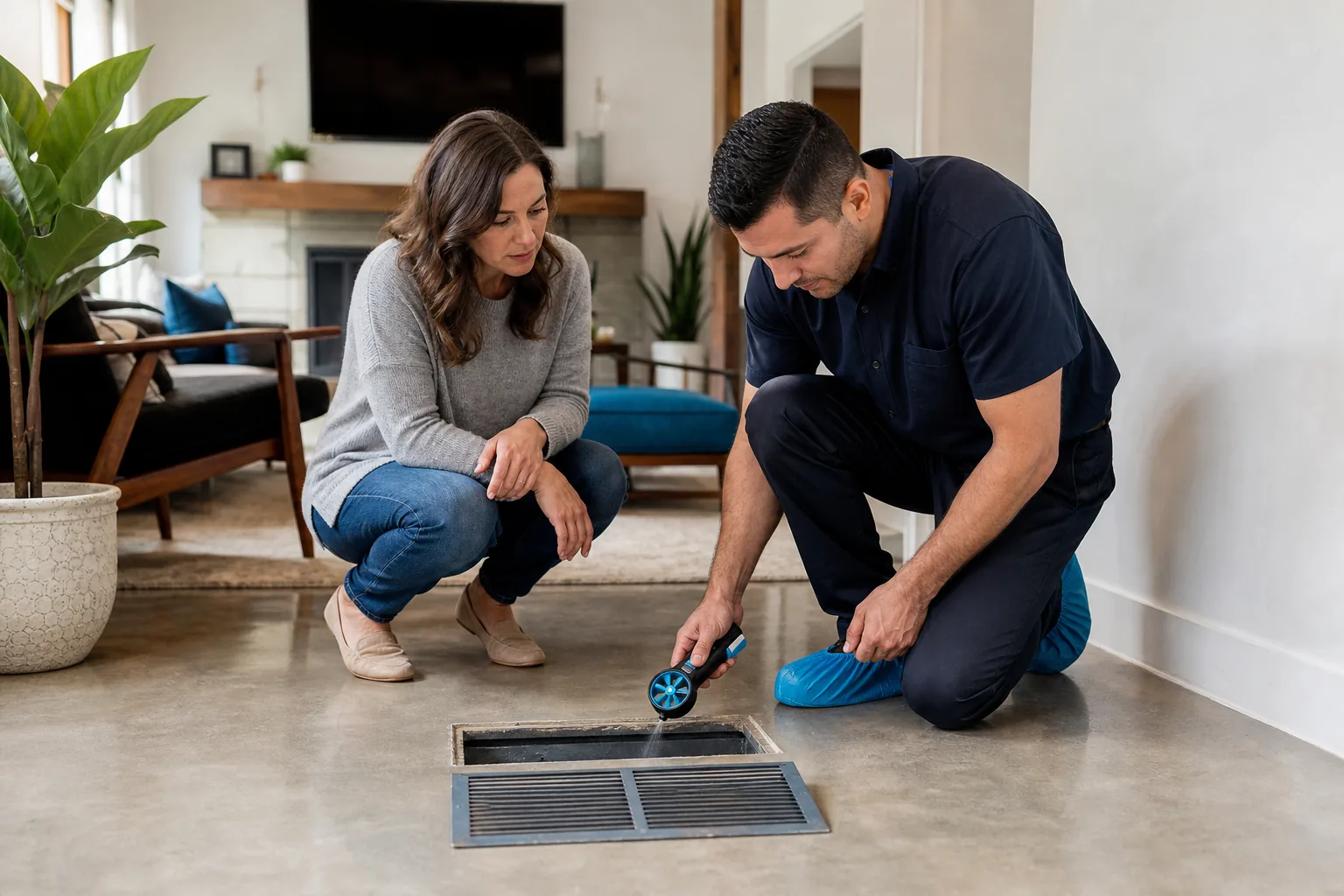
A technician can assess airflow across the home as part of a whole-system check. Proper balancing considers the whole duct system and the equipment’s operating limits.
Persistent hot and cold spots may call for a professional airflow check or, in some homes, a zoning system. Zoning uses controls and dampers designed to direct air to separate areas. Read about how HVAC zoning systems work before deciding whether that approach fits your home.
In Grass Valley or Penn Valley, seasonal swings can make a weak airflow issue more noticeable. Keep the vents open while you track the pattern, then share those details with a technician.

Better Ways to Improve Comfort and Control HVAC Costs
Help the system move air as designed: keep supply vents open and clear, leave return grilles uncovered, and replace dirty filters with the correct size and type according to the manufacturer’s directions.
If one room gets too much direct airflow, adjust the louver direction rather than shutting the register. In Auburn and Colfax, as elsewhere, a technician can check weak airflow for duct leaks, a crushed duct, a balancing issue or a filter problem. The right fix depends on the inspection.
Thermostat schedules can reduce heating or cooling when the home is empty or people are asleep. A programmable or smart thermostat can adjust temperatures on a schedule. Choose changes that suit your household and equipment, especially if you have a heat pump.
Insulation and air sealing can help keep indoor temperatures steadier. In Rocklin and Roseville, as in other foothill communities, controlling drafts may reduce system load without blocking airflow. Check for gaps around doors and windows and whether attic insulation needs attention.
Routine maintenance gives a technician a chance to check system operation before extreme weather arrives. Home Worx Heating and Cooling offers seasonal tune-ups, repairs and duct services in the area. Homeowners in Grass Valley and Penn Valley can also keep up with system care to spot airflow trouble before it becomes an urgent comfort problem.
For an independent read on energy use, note utility use alongside outdoor weather and thermostat settings. Compare similar periods, not a mild week with a hot spell. Make one setting change at a time and record when you made it; this won’t prove the cause but can give a technician useful context.
For more ways to cut wasted heating and cooling, see our guide to improving HVAC efficiency at home . Better airflow, working ducts and sensible controls are a stronger plan than shutting off vents. For local service in Lincoln and surrounding communities, contact Home Worx Heating and Cooling.
Frequently Asked Questions
Should I close vents in rooms I don’t use?
Usually, no. Most central forced-air systems are designed to move air through the duct network, and closing vents can raise pressure or reduce airflow. Keep supply vents open unless your equipment instructions or an HVAC professional recommend a specific adjustment. If an unused room is uncomfortable, check for a blocked vent or ask a technician to assess the system.
Can closing vents make my AC freeze?
It can contribute to a frozen indoor coil by reducing airflow over the coil. A dirty filter or blocked return can add to the problem. If you see ice or the system blows weak or warm air, stop cooling and arrange service. Don’t keep running the AC while the coil is frozen, and don’t close more vents to redirect air.
Is it okay to partially close one vent?
A small louver adjustment to redirect a draft is different from shutting off a vent. Still, every system has its own airflow limits. Keep return grilles open, and avoid closing supply vents as a way to control whole-room temperatures. If one space stays uncomfortable, have the airflow checked before making repeated changes.
Do smart thermostats save energy if I close vents?
A smart thermostat can follow a schedule, but it doesn’t correct restricted airflow in the ducts. Closing vents may still raise pressure or reduce air reaching the system. Use thermostat settings that suit your household and equipment, keep vents open, and ask a technician about persistent uneven temperatures.
What should I do if one room is always too hot or cold?
First, check that the supply vent is open and clear, then make sure nearby return grilles aren’t blocked. Note when the room feels uncomfortable and whether the issue happens during heating, cooling or both. If the problem continues, ask for an airflow assessment. The cause may involve ducts, system balance or another repair need.
Conclusion
Keep supply vents open unless a qualified technician or your system’s instructions say otherwise. If you still have uneven temperatures or weak airflow, contact Home Worx Heating and Cooling for local service in Placer County and nearby communities.