
How to Improve HVAC Efficiency at Home
When your HVAC runs for hours but some rooms still feel warm or chilly, wasted energy may be part of the problem. Learning how to improve HVAC efficiency starts with small checks, then moves to repairs and upgrades that need a pro. In the Sierra foothills, leaky ducts can waste a large share of the air your system works to heat or cool.
We analyzed 75 comments from YouTube and Reddit about HVAC efficiency and found that 27% mentioned shading the condenser.
Table of Contents
Step 1: Check the Air Filter and Clear Supply Vents
Start with the filter. A dirty one can block airflow, so the blower has to work harder to move air through your home. Check it once a month during heavy use. Replace a disposable filter at least every three months, or sooner if its maker says to. Wash a reusable filter only as its instructions allow, then let it dry fully before putting it back.
Turn the system off at the thermostat before you open the filter slot. Match the size and type of the old filter, and point the airflow arrow toward the equipment. If you’re unsure which filter fits, note its label and check the system manual. Our guide to HVAC filter change timing explains what can affect your schedule.
Next, walk through the rooms. Move rugs, curtains, or furniture away from supply vents and return grilles. Keep doors from blocking large returns. Set the thermostat fan to “auto” unless a technician has advised a different setting. A ceiling fan can help you feel cooler while the AC runs, but switch it off when you leave. Fans cool people, not empty rooms.
ENERGY STAR recommends checking the filter monthly and replacing it at least every three months. See its home heating and cooling guidance for more on routine care.
Homes near open fields or dusty roads, including parts of Lincoln and Auburn, may need more frequent checks during peak system use. Let the filter’s condition guide you rather than waiting for a set date.
Step 2: Set a Thermostat Schedule for Your Routine
Set the temperature for the hours you’re home, then adjust it while you’re asleep or away. In cooling season, try a slightly higher setting when nobody’s home. In winter, lower the heat a little during sleep or an empty-house stretch. Make small changes and see how your comfort feels before adjusting again.
Use the thermostat’s schedule to match your real week. If you leave for work at the same time each day, set the temperature to shift after you go. Have a changing schedule? A programmable or smart thermostat can let you adjust settings remotely. Some smart models can also use location or learning features, but check that the model works with your heating and cooling system before buying.
Avoid setting the temperature far below your target when you get home. That won’t cool the house faster. It can keep the system running longer while you wait. If a room feels stuffy, first check its vents and return path. A fan may help you feel more comfortable without lowering the thermostat for the whole house.
The California Energy Commission describes grid-responsive smart thermostats as devices that can shift heating and cooling use in response to utility signals. Its home energy resource hub explains how these controls fit into home energy use. Keep the schedule simple enough that everyone in the home can follow it.
In Roseville or Rocklin, a sunny afternoon can heat rooms quickly. Close blinds on the sunny side before the house warms up, then let the thermostat schedule do its job. In Colfax, where winter nights can feel colder, plan for comfort while you sleep rather than making sharp temperature swings.
Pro Tip:Write down your usual wake, leave, and return times before programming the thermostat. A schedule built around your routine is easier to keep.
Step 3: Find and Seal Leaky Ductwork
Ducts carry heated or cooled air to each room. When a seam leaks, some of that air escapes into an attic, crawl space, or wall cavity instead. Your rooms may take longer to reach the set temperature, even while the system keeps running. ENERGY STAR lists sealing duct seams with mastic or foil tape, then insulating exposed ducts, as ways to reduce air loss.
Look at duct sections you can reach safely, such as visible runs near an attic hatch or utility area. Check for loose joints, damaged insulation, or air you can feel while the system runs. Don’t crawl across ceiling joists or move stored items if the area isn’t safe. And don’t seal equipment access panels or parts that need to stay open.
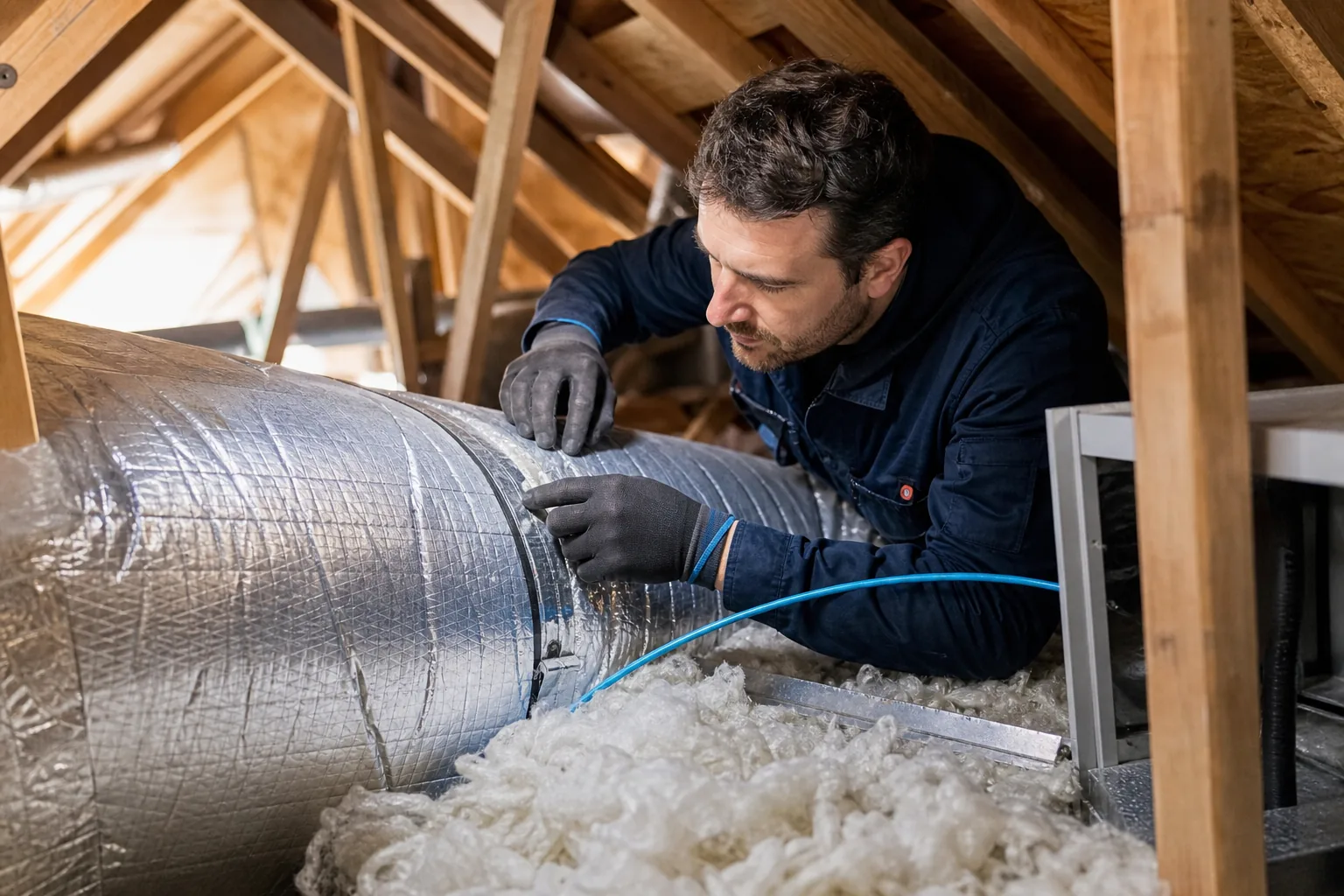
For small accessible gaps, use a sealant made for HVAC ducts. Ordinary cloth-backed duct tape can lose its grip over time, so use a product intended for duct sealing. Ducts in a hot attic may also need insulation after the seams are sealed. If you can’t reach the leak or aren’t sure what material to use, leave the repair to an HVAC technician.
Home Worx Heating and Cooling works on duct and vent installation and repair in local homes. A technician can check whether the issue is a leak, poor airflow, or duct sizing. That distinction matters. Sealing a leak won’t fix a system that needs a different airflow balance.
In Grass Valley and Penn Valley, homes can face summer heat as well as chilly winter conditions. Check ducts in both seasons, especially if one room stays uncomfortable while the others feel fine. Fixing the source is better than closing vents to force air elsewhere.
Step 4: Reduce Heat Transfer Through the Attic, Walls, and Windows
Your HVAC system has less work to do when the house holds onto cool air in summer and warm air in winter. Start with simple checks. Feel around doors and windows for drafts. Look for worn weatherstripping or gaps around trim. Close blinds or curtains on windows that get direct afternoon sun, then open them when the sun has moved away.
For small gaps around window frames, doors, or other openings, caulk or weatherstripping may help. Follow the product directions and avoid sealing areas that need airflow for safety. If the draft seems to come from an attic hatch or a pipe opening, check whether it can be sealed safely. A pro can advise when you can’t tell what lies behind the gap.

Insulation slows heat moving through walls and the attic. If rooms heat up fast in summer or cool down quickly in winter, ask an insulation professional to assess the home before adding material. The right fix depends on what’s already there and where the air is escaping. Don’t cover wiring, vents, or other equipment without guidance.
Shade can help outside, too. Planting or keeping shade near a sunny window can reduce direct heat, but leave room around the outdoor HVAC unit so it can move air freely. Clear leaves and weeds away from the unit. A little shade is useful; a tight screen or dense growth that traps hot air is not.
In communities such as Colfax and Lincoln, the same home may need cooling through dry summer afternoons and heat during cold winter nights. Work on the house shell first where you find a clear leak or bare insulation. Home Worx Heating and Cooling can also discuss system changes if the home remains uncomfortable after those repairs.
Before a larger upgrade, check which incentives may fit your home and equipment. Our California HVAC rebate guide covers programs to review before you commit. Eligibility and terms can vary, so confirm the current rules with the program.
Step 5: Schedule a Tune-Up and Address Persistent Efficiency Problems
Book a professional tune-up each year, ideally before the season when you’ll rely on the system most. A technician can inspect performance and check parts that aren’t safe for a homeowner to service. ENERGY STAR also recommends annual HVAC maintenance. For heat pumps, ask about service timing for both heating and cooling use.
Keep the outdoor unit clear of leaves, weeds, and other debris. Don’t place a solid cover or tight shade structure around it, since the unit needs space to release heat. If the coil looks dirty, ask a technician about cleaning. Don’t open the cabinet or spray the coil with high pressure. The thin fins can bend, and electrical parts may be nearby.
Pay attention to changes. A sudden jump in energy use, weak airflow, odd sounds, or rooms that no longer reach the thermostat setting can point to an issue. Note when it happens and which rooms are affected. That gives the technician a useful starting point instead of relying on a vague report that the system “doesn’t feel right.”
During a visit, ask what was checked and what needs repair now versus later. Persistent comfort problems may come from duct leaks, a dirty coil, thermostat placement, or a system that doesn’t match the home’s needs. A proper load calculation helps determine equipment size. If you’re comparing replacements, check the SEER2 rating, a measure of seasonal cooling efficiency, alongside system fit and installation quality.
Home Worx Heating and Cooling provides HVAC maintenance and seasonal tune-ups for homeowners in Placer and Nevada counties. The company’s website lists new system financing starting at $120 a month, with terms and conditions. Ask about current terms and any rebates before deciding on an upgrade. For additional background, see this resource .
For residents in Rocklin or Roseville, and Auburn, Colfax, Grass Valley, Penn Valley and Lincoln, schedule service before long summer heat sets in. If your system runs year-round, ask a technician what service schedule suits its workload. Our local HVAC service timing guide can help you plan the next visit. Contact Home Worx Heating and Cooling for local service.
Frequently Asked Questions
How often should I change my HVAC filter?
Check your HVAC filter every month and replace a disposable one at least every three months. A dusty home, heavy system use, or pets may mean you need to change it sooner. Use the size and type recommended for your system, since a filter that doesn’t fit can leave gaps or affect airflow.
Does sealing HVAC ducts improve efficiency?
Yes, sealing duct leaks can help more heated or cooled air reach the rooms where you need it. Check accessible seams for gaps or damaged insulation, but don’t enter an unsafe attic or crawl space. A technician can find hidden leaks and advise whether the ducts also need insulation or airflow adjustments.
What thermostat setting saves energy?
The best setting is the highest cooling temperature and lowest heating temperature that still feels comfortable to the people at home. Use a schedule to adjust the temperature when everyone is asleep or away. Make gradual changes, since big shifts may leave you uncomfortable without making the system cool or heat the home faster.
Should I shade my outdoor AC unit?
You can reduce direct sun near an outdoor unit, but don’t block airflow with a solid screen or dense plants. Keep leaves and weeds away from the unit so air can move around it. If you’re considering a shade structure, leave open space around the equipment and ask a technician whether its placement is safe.
Conclusion
Start with the filter, thermostat schedule, and vents, then address duct or insulation problems you can identify. If the system still struggles, arrange a tune-up with Home Worx Heating and Cooling. Contact the team to discuss service in Auburn, Colfax, Rocklin, Roseville, Grass Valley, Penn Valley, or Lincoln.