
Fall HVAC Maintenance Checklist for California Homes
That first cool evening is a good cue to check your heating system before you need it every day. Our fall HVAC maintenance checklist covers the homeowner tasks you can handle safely, plus the checks to leave to a trained pro.
We analyzed 63 comments and questions from YouTube and Quora about fall HVAC maintenance and found that 38% mentioned specific checklist items.
Table of Contents
Outdoor Unit and Heat Pump Checklist
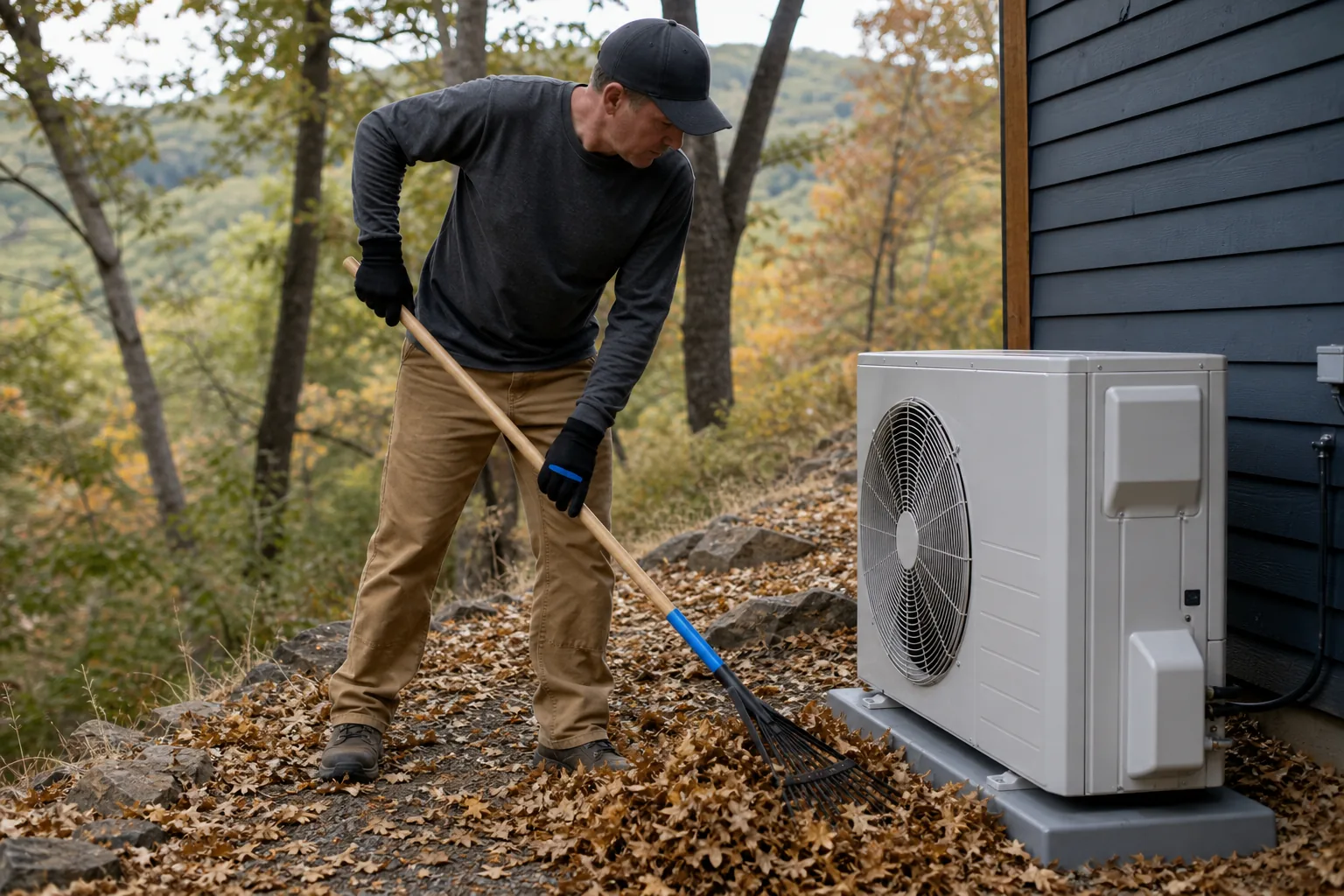
Start outside with the power off. Follow the shutoff steps in your equipment manual before you inspect the unit or clear debris. Keep hands away from the fan and don’t remove service panels or touch wiring.
Clear leaves, grass, pine needles, and other loose debris from around the cabinet. Trim back plants so air can move around the unit. The right clearance depends on your equipment, so use the manual rather than guessing. In Auburn and Colfax, a quick walk around the unit after windy or leaf-heavy days can catch debris before it packs against the coil.
Look for visible damage, such as bent fins, loose panels, or torn insulation on the refrigerant line. Don’t try to straighten fins or repair a line yourself. If the coil looks dirty, a gentle garden-hose spray is safer than a pressure washer. Strong spray can damage the thin fins.
Heat pumps need open airflow in heating mode, so don’t cover the outdoor unit for winter. A cooling-only air conditioner may need a different approach, but check its manual before covering it. If you’re unsure which system you have, ask a technician before changing how you protect it.
Listen during a normal system cycle. New grinding, repeated clicking, or strong vibration deserves a professional check. A faint sound you haven’t heard before can be useful information, so note when it happens and whether the system is heating or cooling.
For a heat pump-specific walk-through, our heat pump maintenance guide for homeowners explains which checks belong to you and which should stay with a technician.
Air Filters, Vents, and Indoor Airflow Reference
A clean, correctly fitted filter is one of the simplest fall checks. Find the filter location in your system manual, then note its size and the airflow arrow before removing it. Replace a disposable filter with the right size and type. If yours is washable, clean it as the maker directs and let it dry fully before putting it back.
Don’t rely on a fixed calendar alone. Check the filter monthly when the system is working hard, then replace it when it looks dirty or your manual says it’s due. Dust, pets, smoke, and home projects can load a filter faster. A blocked filter can restrict airflow and make the system work harder.
In Roseville and Rocklin, summer dust can carry into fall, so check the filter when you switch the system to heat. Homes near construction or busy roads may need more frequent checks. Keep a note of the date and filter size; it makes the next replacement easier.
Walk through each room and check the supply registers, where warm air comes out, and the return grilles, where air flows back to the system. Move rugs, curtains, boxes, or furniture that block them. Don’t close vents in unused rooms unless your HVAC contractor has advised you to do so for your system.
You can vacuum dust from the visible register cover. Leave duct cleaning and repairs to a qualified professional, especially if you see damaged ductwork or have weak airflow in several rooms. For filter timing in different home conditions, see our guide to how often to change an HVAC filter .
Also look around the indoor unit for signs of water. A damp area, musty smell, or water in a visible drain pan needs attention. Don’t open electrical compartments or pour a cleaner into a drain unless your manual tells you to. Tell your technician what you saw and where it appeared.
Pro Tip:Write down the filter size and date when you change it. If the new filter won’t slide in easily, stop and check the size instead of forcing it.
Heating-System Safety and Professional Inspection Resources
For a gas furnace, use fall service to have a professional inspect the parts you can’t safely assess yourself. That includes fuel connections, burner operation, the heat exchanger, flue, and safety controls. A heat exchanger is the part that transfers heat while keeping combustion gases separate from indoor air.
Homeowners can test carbon-monoxide alarms and replace batteries as needed. Follow the alarm maker’s instructions. If an alarm sounds, leave the home and contact emergency services from outside. Don’t stay indoors to troubleshoot the furnace.
Other checks need training and test tools. A technician can inspect electrical connections, lubricate parts where the equipment requires it, and check system operation. Don’t open a panel to use a multimeter or tighten wires unless you’re qualified. A thermostat setting does not make electrical components safe to touch.
Home Worx Heating and Cooling serves local homeowners with heating maintenance and repair. We offer seasonal tune-ups and service packages; you can review our HVAC services in Colfax when deciding what to ask about before booking.
Check | Homeowner task | Professional task |
Filter and vents | Check the filter and clear blocked registers. | Check airflow if rooms stay uneven. |
Carbon-monoxide alarm | Test it and follow its battery instructions. | Inspect the heating system if an alarm or safety concern arises. |
Gas furnace | Keep the area around the furnace clear. | Check fuel connections, combustion, heat exchanger, and flue. |
Electrical parts | Look only for visible damage without opening panels. | Test connections and controls with suitable tools. |
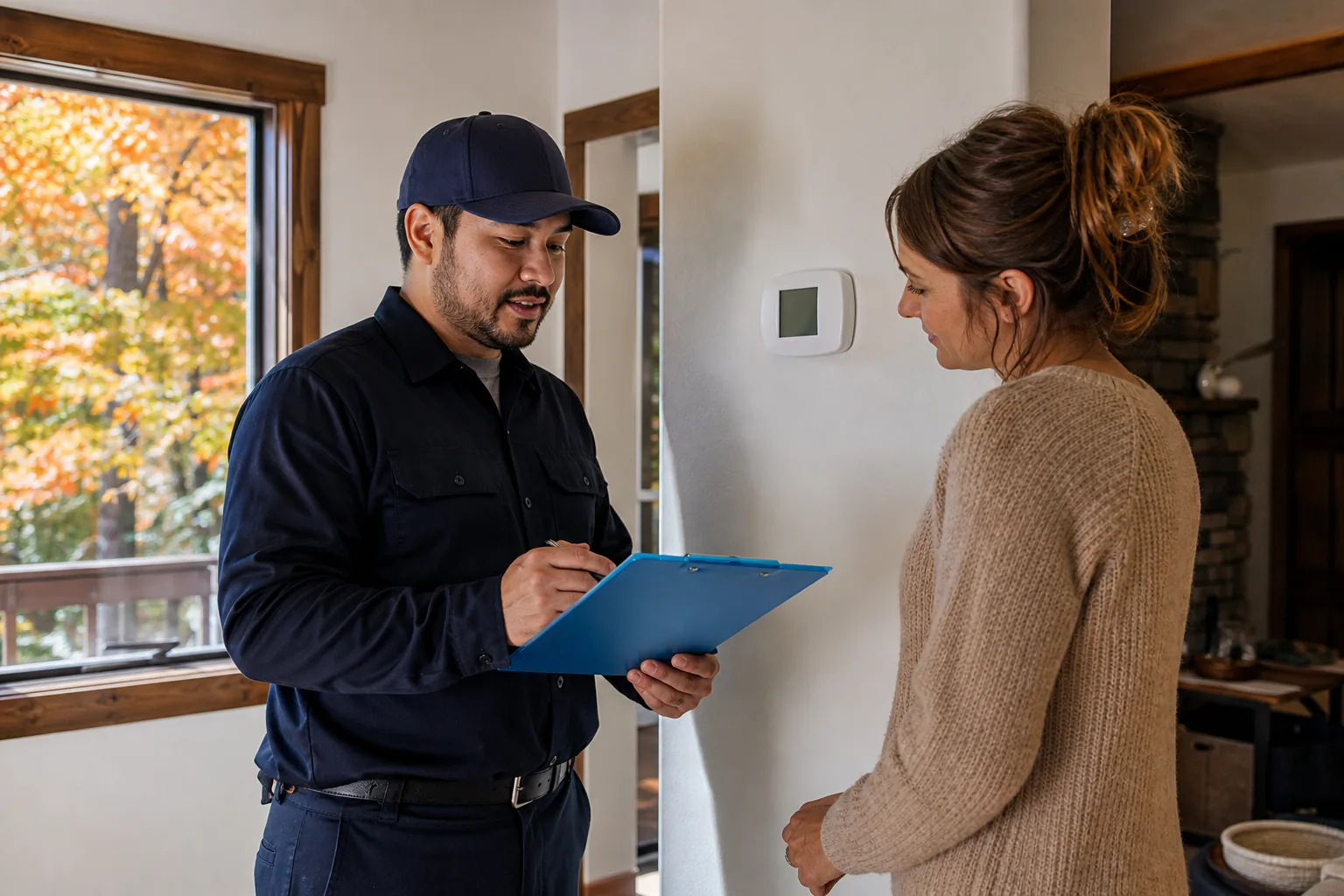
Ask what the visit includes and request a clear explanation of any finding. Home Worx Heating and Cooling is family-owned and serves Colfax, Auburn, Placer County, and Nevada County. We provide maintenance, repair, and installation service, so the next step can match the issue found during the inspection.
Thermostat and Winter-Readiness Checklist
Test the thermostat before a cold night forces a rushed check. Set it to Heat, raise the set point a little above the room temperature, and wait to see whether the system starts. Then confirm that warm air reaches the rooms served by the system. Follow your manual if your thermostat uses a schedule or has a special setup process.
If you use a programmable thermostat, set a schedule that fits your household. Check that the time and day are right after a power interruption. Smart thermostats may also need the right system type and settings; use the thermostat maker’s instructions rather than guessing at installer settings.
Compare the thermostat reading with a separate thermometer placed nearby, away from sunlight or a supply vent. If readings differ or the system cycles on and off often, write down what you notice and ask a technician. Don’t remove the thermostat to adjust wiring unless you’re qualified.
Run the system long enough to notice changes in sound, airflow, or smell. A brief dusty smell on the first heating cycle can occur after months without heat. If a smell persists, seems sharp or chemical, or comes with smoke, turn the system off if you can do so safely and seek professional help.
Check the visible condensate area if your system manual identifies it. A clogged drain can lead to water near the indoor unit. Don’t dismantle the drain or pour a product into it without manufacturer guidance. For homes with a heat pump, ask the technician to check heating operation and the defrost function during the visit.
Write down any odd sound, short cycle, uneven room temperature, or water mark. Details help the technician find the problem faster. In Penn Valley and Grass Valley, where foothill nights can turn cold, booking before the first stretch of steady heating gives you time to deal with a fault before you depend on the system.
Local Fall HVAC Resources for California Homeowners
Fall is a useful time to book a heating tune-up because the system is about to work more often. September or early October is a reasonable target in the Sierra foothills, but the right date depends on your schedule and the equipment. If you haven’t booked yet, ask about the next available maintenance visit before cold weather sets in.
Keep the equipment manual, model details, and past service notes in one place. Share any recent repair, alarm event, or change in system performance when you schedule. If you rent or manage a property, make sure the person arranging service can provide access to both the thermostat and equipment.
Local homes vary. A house in Lincoln may face different dust and yard conditions than one near trees in Penn Valley. In Auburn, Colfax, Rocklin, Roseville, Grass Valley, Penn Valley, and Lincoln, use the same basic checks, then tailor filter timing and debris checks to your home and the maker’s directions.
California energy programs and utility offers can change. If you’re considering a new system or an efficiency upgrade, check current eligibility with the program or utility before budgeting around a rebate. A contractor can help identify what equipment details you may need, but only the program administrator can confirm its current terms.
Home Worx Heating and Cooling serves homeowners across Placer and Nevada County, including Auburn, Colfax, Rocklin, Roseville, Grass Valley, Penn Valley, and Lincoln. We also serve Sacramento County. Our team handles heating maintenance, repairs, installations, heat pumps, and ductless systems. If you’re unsure whether a sound, leak, or airflow problem needs service, share what you’ve noticed and ask about the right next step.
For a cooling-only outdoor unit, don’t assume a full winter cover is needed. Check the equipment instructions first. Heat pumps need to stay open for airflow when they run in heating mode, and any cover used on a separate air conditioner must come off before cooling season.
Fall HVAC Maintenance Checklist FAQs
When should I schedule fall HVAC maintenance?
Schedule a heating tune-up in early fall, ideally before you rely on the system each day. September or early October can give you time to address a repair before colder weather and busy service weeks. Timing varies by equipment and location, so book when you can and follow the maker’s maintenance schedule.
What HVAC maintenance can I do myself in fall?
You can check or replace the filter, clear items blocking vents, remove loose debris around the outdoor unit, and test carbon-monoxide alarms. Follow your equipment instructions and shut off power before any permitted inspection. Leave wiring, fuel connections, refrigerant, and internal furnace parts to a trained professional.
Should I cover my heat pump in winter?
No, don’t cover a heat pump that will run in heating mode. It needs open airflow around its outdoor coil. If you have a separate air conditioner that won’t run during winter, check its manual before using any cover, and remove the cover before running the unit again.
What should I do if my carbon-monoxide alarm sounds?
Leave the home right away and contact emergency services from outside. Don’t stop to inspect the furnace or try to find the source while inside. Once the home is safe, have the heating system checked by a qualified professional before using it again.
Conclusion
Check the filter, clear the airflow path, and test your alarms, then book a professional inspection for the safety checks you can’t do yourself. Home Worx Heating and Cooling serves Northern California foothill communities; contact our team to ask about fall maintenance for your home.