
How Long Does HVAC Installation Take? Typical Timelines
A straightforward HVAC replacement can take less than a workday, while a project with new ductwork may take several days. If you're asking how long HVAC installation takes, the short answer is 4 to 8 hours for a simple AC replacement, with permits and scheduling adding time before or after the crew's visit.
We analyzed 37 Reddit comments about HVAC installation time and found that 27% mentioned a few hours.
Table of Contents
The Short Answer: From a Few Hours to Several Days
For a like-for-like AC replacement, plan on about 4 to 8 hours of on-site work. A furnace and AC replacement often takes 8 to 14 hours. The crew may finish in one long day, or split the work across two days if the job is more involved.
Those estimates cover installation work, not the whole calendar. Equipment orders, appointment availability, permits, and final inspections can add days or weeks. For planning, ask your contractor to separate the expected crew time from the expected start date and inspection date.
The shorter estimate fits a home where the new equipment can use the existing location and connections. The job may take longer if the crew needs to alter ducts or work around tight attic or crawl-space access. Replacing ductwork can extend the job to a full day or more, and larger changes may take two or three days.
For a closer look at cooling-system timing, our AC installation timeline and delay guide explains what can change a basic swap estimate.
One local planning note: Northern California foothill homes need both summer cooling and winter heat. If your system is near the end of its life, arranging an estimate before a breakdown can give you more choice in scheduling.
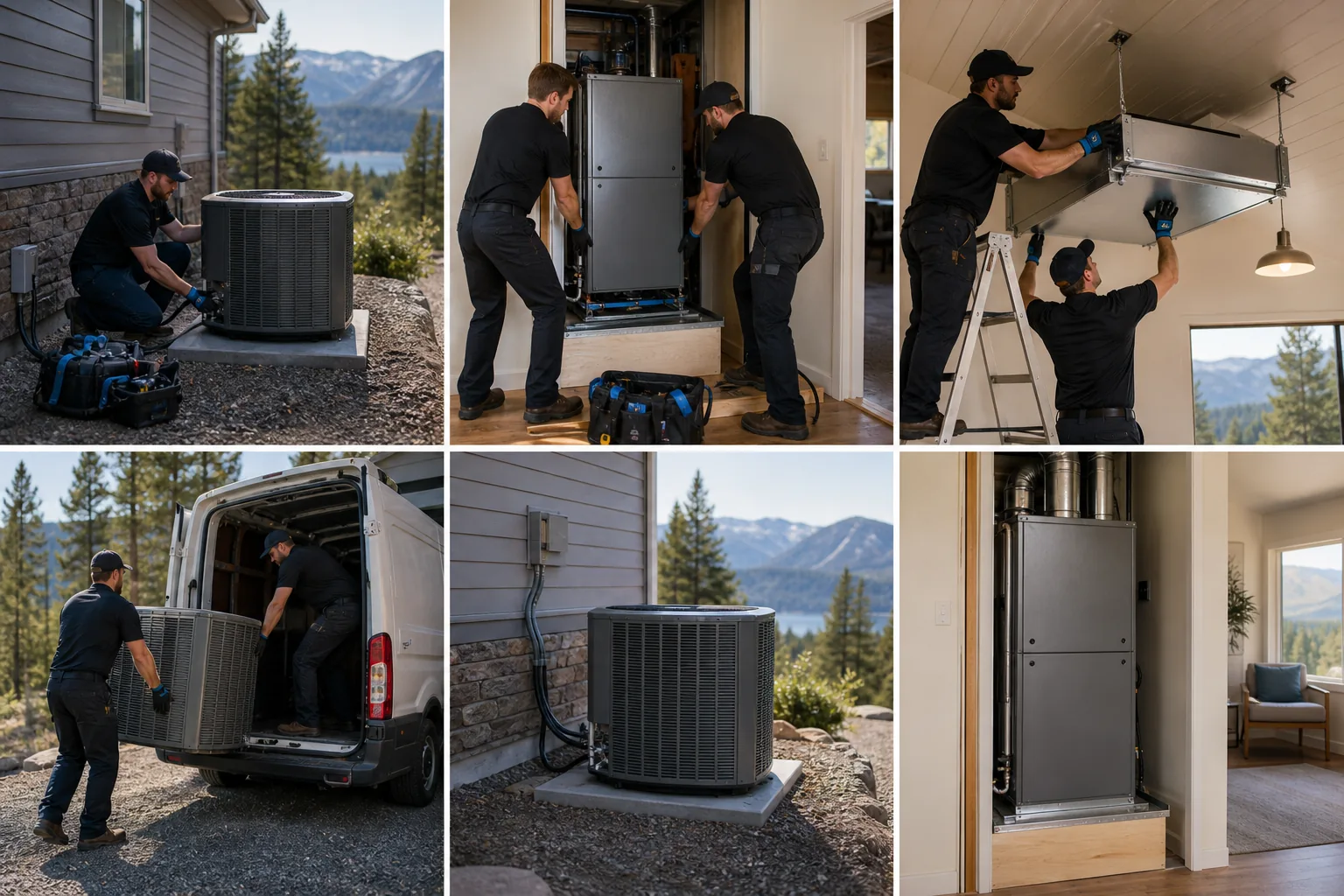
Key Takeaway:The crew may need hours or days for installation, while scheduling and permits can extend the full project timeline.
What Happens During an HVAC Installation?
The work follows a sequence. First, the crew protects the work area and disconnects the old system. They remove the equipment, then set the replacement in place and connect it to the home's existing ductwork, electrical supply, and refrigerant lines as the job requires.
Next comes the careful part. The technicians check connections and prepare the system for startup. They test its operation before wrapping up, so the equipment is running as intended when they leave. The exact tasks depend on whether you're replacing one unit or several parts of the system.
Removal and setup can take longer when equipment sits in a cramped attic or crawl space. Getting an old unit out safely may also take extra effort if access is narrow. These conditions affect the work itself, not just the time spent moving equipment.
Before installation day, confirm what the quote includes. Ask whether the crew expects to reuse existing connections, whether duct changes are part of the work, and how much time they have set aside for testing. A clear scope helps you understand why one estimate allows for a few hours while another plans for a full day.
Keep the path to the indoor and outdoor equipment clear. If the crew needs to move stored items before work can begin, the installation clock starts later. A clear work area is a small task for you and a useful head start for the crew.
Home Worx Heating and Cooling installs complete HVAC systems, heat pumps, and ductless mini-splits in the local area. We can review the job scope with you so you know what the crew expects to do on site.
How the Type of HVAC Project Changes the Timeline
“HVAC installation” can mean a quick equipment swap or a project that changes how your home moves air. The more parts of the setup that need work, the more time the crew needs. Use this table as a starting point, then ask for an estimate based on your home and equipment.
Project type | Typical crew time | What can change the plan |
AC-only replacement | 4 to 8 hours | Existing duct condition, equipment size, and access |
Furnace and AC replacement | 8 to 14 hours | Whether ducts need repair or replacement |
Replacement with new ductwork | 2 to 3 days | How much ductwork must change and where it runs |
Two-unit replacement | 8 to 16 hours, sometimes across two days | Equipment availability and added labor |
Difficult attic or crawl-space access | Allow 2 to 4 extra hours | Space to reach and move the equipment |
A like-for-like replacement is usually the quickest option because much of the home's existing layout stays in place. A full system replacement takes longer because the crew handles more equipment and connections. New ductwork adds still more work, especially when ducts run through hard-to-reach parts of the home.
A ductless mini-split has its own timeline. It doesn't use the home's duct network, but the crew still needs to place indoor units and route refrigerant lines. The number of indoor units and the path those lines take affect the schedule. Our ductless mini-split installation guide covers the work involved in that type of project.
In Auburn or Lincoln, as in other nearby communities, the best estimate comes from the scope of work, not the system name alone. Ask whether the quoted time is for one visit or includes work scheduled for another day.
What Can Make HVAC Installation Take Longer?
Most delays come from details that change the planned work or hold up the start date. A contractor's site visit can help spot many of them before installation day, but some issues only become clear once the old equipment comes out.
Changes to ducts, wiring, or connections
If the existing ducts need repair or replacement, the crew has more work than a simple equipment swap. Electrical changes can also add time. Ask whether the estimate includes these tasks, or whether the crew will pause and discuss a new scope if they find an issue.
Tight or hard-to-reach equipment
A unit tucked into a small attic or crawl space takes longer to reach than one in an open utility area. The crew needs room to remove the old equipment and position the new system safely. Before the visit, move stored items away from access points and the equipment itself.
Equipment, permits, and inspection timing
A system that's in stock is easier to schedule than equipment that must be ordered. Local permits and inspections can also affect the calendar. Permit timing varies by jurisdiction and project, so ask who handles the permit and when the inspection is expected. A simple replacement may qualify for faster permit processing in some areas, but your contractor should confirm the rules for your address.
Home Worx Heating and Cooling serves Colfax, Rocklin, and Roseville, along with nearby communities. We can discuss access, equipment needs, and permit steps as part of planning the job.
One useful question before booking: “Is the equipment available, and is the permit plan in place?” Then clear the work area the day before. Good preparation may save time on site, but it can't remove delays caused by a parts order or an inspection schedule.
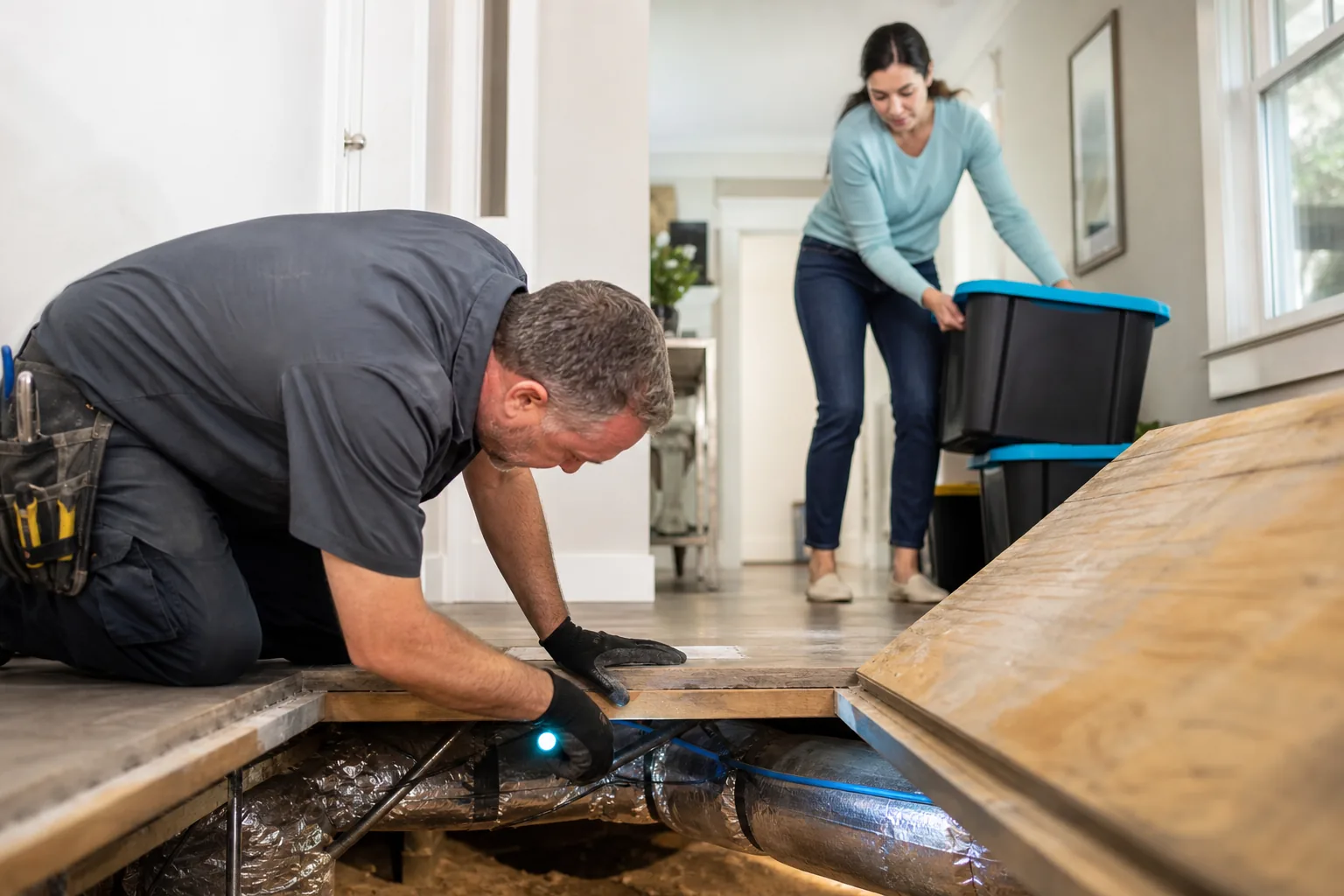
Pro Tip:Ask for separate estimates for crew time, scheduling, and inspection. That makes it easier to see where a delay may occur.
Installation Day vs. the Full Project Timeline in Northern California
The day technicians work at your home is only one part of the schedule. First comes the estimate and a decision on equipment. Then the contractor coordinates the job date, parts, and any permit steps. After installation, an inspection may still be needed, based on local requirements.
That gap matters in Placer and Nevada Counties. A basic replacement may take one workday on site, yet permit review or a busy installation calendar can stretch the time from approval to completion. Some permit processes take a few business days; homeowners may need to allow several weeks for the full chain of scheduling, review, and inspection. Confirm the local timeline rather than assuming the crew's work hours are the whole project.
Demand can also affect the start date. During hot, dry Northern California summers, more homeowners need cooling work at once. A cold spell can raise demand for heating repairs. If your system still runs, asking about a replacement before peak weather gives you more room to plan.
In Grass Valley or Penn Valley, a home with aging ducts may need a longer visit than a straightforward swap. In Lincoln, a system change that needs permit review could add calendar time even when installation takes one day. The same distinction applies across the area: crew hours describe the work, while the full timeline includes preparation and approvals.
Home Worx Heating and Cooling is a family-owned contractor based in Colfax, serving Placer and Nevada County communities. For a local estimate, contact our team and ask for the expected on-site hours as well as the likely full project schedule.
HVAC Installation Timing FAQs
Can HVAC installation be done in one day?
Yes, many straightforward replacements fit into one workday. An AC-only swap often takes 4 to 8 hours, while replacing both a furnace and AC may take 8 to 14 hours. A project with ductwork changes or difficult access can need more time. Ask your contractor whether the estimate covers one visit or work across multiple days.
How long does a full HVAC system replacement take?
A full furnace and AC replacement often takes 8 to 14 hours of crew time. It may fit into one long day, though some crews schedule work across two days. New ductwork can stretch the project to two or three days. The condition of your current system and access to the equipment affect the final estimate.
How long does HVAC installation take when ducts need replacing?
Replacing ductwork can turn a one-day equipment swap into a project lasting two or three days. The timeline depends on how much ductwork needs work and where it runs in the home. Ask whether the contractor has included duct removal and installation in the schedule, rather than only estimating the equipment replacement.
Do permits add time to an HVAC installation?
They can. Permit processing and inspection schedules are separate from the hours the crew spends installing equipment. Timing depends on the local jurisdiction and the work involved. Ask your contractor who will handle the permit and when an inspection is expected, then use those dates when planning the full project.
What can I do to help the installation stay on schedule?
Confirm that the equipment is available and ask about permit status before the crew arrives. Clear a path to the indoor and outdoor units, plus any attic or crawl-space access points. Let the contractor know about access limits in advance. These steps help the crew begin work promptly, though they can't prevent every delay.
Conclusion
Plan for 4 to 8 hours for a simple AC replacement, and allow more time for a full system or ductwork project. Before booking, ask for both the on-site estimate and the full schedule, including permit and inspection steps. Contact Home Worx Heating and Cooling for a local estimate in Auburn, Colfax, Rocklin, Roseville, Grass Valley, Penn Valley, or Lincoln.