
How Much Electricity Does a Heat Pump Use?
A heat pump's electricity use varies widely, so a broad range is not a useful promise. In Auburn and Colfax, Rocklin and Roseville, Grass Valley, Penn Valley, and Lincoln, your home's size, insulation, weather, system size, and controls matter more than the label on the outdoor unit. Use the steps below to build a sensible estimate, check it against your bills, and spot waste before you replace equipment. For local help, contact Home Worx Heating and Cooling .
We pulled ENERGY STAR's certified heat pump database and compared units of matching capacity, 137 near 3 tons and 100 near 16 kW. HSPF2 ran 8.10 to 10.50 in the smaller group and 8.20 to 10.70 in the larger group, with COP spanning 1.80 to 2.34. A Department of Energy comparison found 11,660 kWh a year for a low-efficiency model against 7,683 kWh for a high-efficiency model, a 34% gap. Same-capacity heat pumps can differ that much before weather or insulation affect the bill, so checking efficiency ratings matters as much as checking size.
Table of Contents
Step 1: Gather the Heat Pump and Home Details That Affect Usage
To estimate how much electricity your heat pump uses, start with the home's heat demand and the unit's seasonal efficiency .
Write down the following details before you do any math:
Home size in square feet.
Heat pump type, such as ducted, ductless, air-to-air, or air-to-water.
Rated capacity in kW or tons.
Heating and cooling efficiency ratings.
Seasonal performance factor, often shown as SCOP or JAZ.
Thermostat settings during winter and summer.
Whether the system heats water.
Whether electric backup heat is installed.
Capacity is not the same as annual electricity use. A 10 kW, 12 kW, or 16 kW unit may run for very different hours. A larger home with poor insulation can use more power than a smaller home with a well-sealed shell.
For a quick screen, note the home's insulation, window type, duct condition, and air leaks. Also write down the coldest winter conditions you normally see. Auburn and Colfax homes can face cold winter nights, while summer cooling demand rises during hot, dry spells. Rocklin and Roseville homes may also see substantial summer cooling demand, while Grass Valley, Penn Valley, and Lincoln can have different heating patterns based on the home and site.
COP means the heat delivered at one test condition for each unit of electricity. SCOP describes the seasonal average, so it is more useful for yearly estimates. A COP of 4 means the system moves four units of heat with one unit of electricity at that moment. It doesn't mean the unit will keep that result all year.
Our team at Home Worx Heating and Cooling uses the home's load rather than square footage alone when discussing replacement options. If you want a plain-language explanation of system choices, our guide to energy-efficient HVAC system options can help you prepare questions.
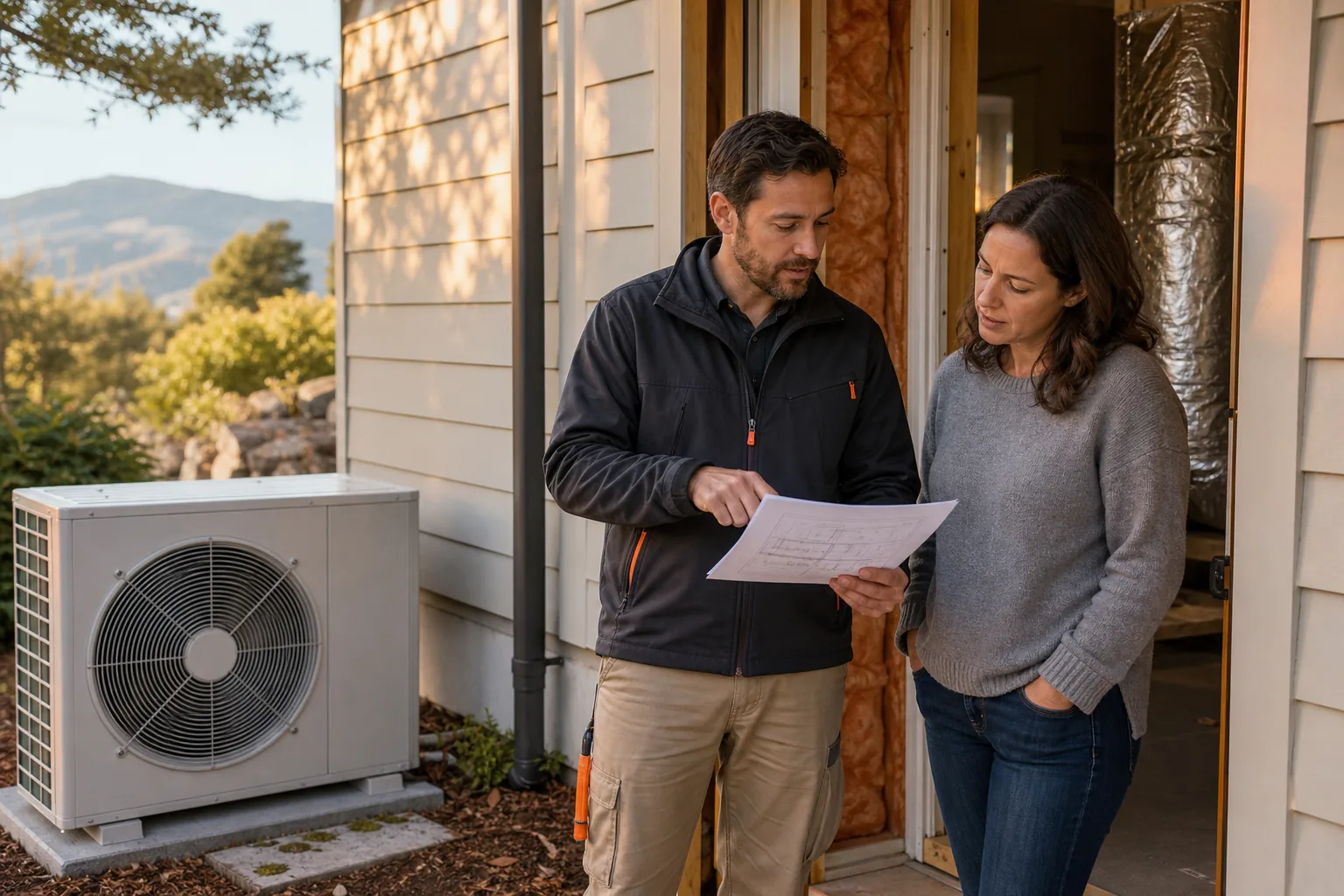
Keep your equipment model number and last service record nearby. The nameplate may show electrical input, but that is a running draw at a set condition, not a yearly total.
For a deeper estimate, a load calculation is the right next step. The heat pump calculator guidance explains why seasonal efficiency, heat demand, flow temperature, and tariff rates all affect the result. The calculator is useful for screening, but it can't inspect your walls or ducts.
Key Takeaway:Gather the home's heat demand and the system's seasonal efficiency before judging its power use.
Step 2: Estimate Daily and Annual Electricity Consumption
The simplest way to estimate heat pump electricity use is to divide annual heat demand by seasonal efficiency.
Use this formula:
Annual electricity use = annual heat demand ÷ SCOP
Then estimate cost:
Annual electricity cost = annual kWh × your electric rate
For example, a home's estimated electricity use depends on its annual heat demand and the system's SCOP. A higher SCOP generally means less electricity for the same amount of delivered heat.
That example shows why system size alone can't answer the question. The same 16 kW unit can have a low or high annual bill based on the building it serves. Insulation and air sealing lower the heat demand before the pump ever turns on.
What you know | What to do | What it tells you | Watch for |
Annual heat demand | Divide by SCOP | Estimated heating kWh | Don't use a test-condition COP for a full year |
Electric rate | Multiply by heating kWh | Estimated heating cost | Include delivery fees when comparing bills |
Daily kWh | Divide annual kWh by 365 | Simple average | Winter days will be much higher |
Monthly bill increase | Compare with mild months | Possible HVAC share | Hot weather may add cooling load |
Backup heat run time | Check thermostat history | Possible source of spikes | Electric resistance heat uses more power |
For a rough daily figure, divide the annual estimate by 365. That average hides the seasonal pattern. A cold January day may use far more than a mild spring day.
Published estimates show the spread clearly. A 10 kW residential heat pump's annual electricity use varies with building area, insulation, and seasonal efficiency, while 16 kW systems are estimated at about 7,000 to 9,000 kWh. A separate estimate for a Viessmann Vitocal 250-A lists 4,950 kWh per year. These figures are reference points, not promises for a California home.
Some sources also report annual costs in euros, but those rates don't apply to PG&E bills. Use your own rate instead. Check the energy charge on your bill, then account for any time-of-use periods that change the price by hour.
In Rocklin or Roseville, summer cooling can shape the annual total as much as winter heating. Auburn and Colfax homes may also see seasonal variation, while Grass Valley, Penn Valley, and Lincoln homeowners should account for local heating and cooling patterns. A ducted system that runs through a long hot spell may use more power than your winter-only estimate suggests.
For California homeowners, rebate eligibility can change the purchase math without changing the heat pump's kWh use. Review the current California HVAC rebate guidance before choosing equipment, since programs may have income, equipment, or installer rules.
Pro Tip:Make two estimates, one for heating and one for cooling. Adding them gives a more useful yearly picture than using a winter figure alone.
For local guidance on heat pump electricity use, contact Home Worx Heating and Cooling for service in the Northern California Sierra foothills.
Step 3: Compare the Estimate With Your Electric Bill and Meter Data
To test your estimate, compare it with monthly kWh from your electric bill instead of comparing dollars alone.
Start with 12 months of bills if you have them. Mark the months with the highest use. In Northern California, winter heating and summer cooling may create two separate peaks. Auburn and Colfax homeowners may see these patterns vary with local weather.
Next, compare those peaks with thermostat settings and outdoor weather. A bill spike during a cold week may be normal. A spike during mild weather deserves more attention.
Subtract the home's summer base load from winter use to get a rough heating share. For example, if the home uses 900 kWh in a mild month and 1,500 kWh during a cold month, the extra 600 kWh may include heating. It may also include holiday loads or electric water heating, so treat this as a screen.
Smart meter data can show the time of day when use rises. A steady rise during heating hours points toward HVAC. Short, sharp spikes may come from backup heat, an electric water heater, or another large load. Rocklin and Roseville homes may also show different patterns based on insulation and exposure.
Tracking kWh, rates, and yearly totals together can provide a clearer picture of energy costs. A lower price per kWh can still lead to a higher bill if the system runs much longer.
If you have a separate circuit meter, use it for a cleaner check. Some homes can also use a monitoring device, but installation must follow electrical safety rules. Don't open panels or test live wiring yourself.
Home Worx Heating and Cooling can review the estimate beside system age, airflow, and service history. That helps separate normal seasonal use from a system that runs too long.
In Grass Valley, a cold snap may raise demand for several days. In Penn Valley, a home with a different exposure or insulation level may show a different pattern. Lincoln homes can differ as well. The bill is evidence, not a diagnosis.
Step 4: Identify and Reduce Unusually High Electricity Use
High electricity use usually comes from high heat demand, poor airflow, backup heat, or a control problem.
Check the easy items first:
Replace a dirty filter with the correct size and type.
Keep supply vents and return grilles clear.
Remove leaves and other debris around the outdoor unit.
Check that the thermostat isn't set far above the target temperature.
Look for an AUX or emergency heat message.
Backup electric heat deserves special attention. Resistance strips turn electricity into heat directly. A heat pump usually moves heat, so it can deliver more heat per kWh under suitable conditions. If backup heat runs for long periods, consumption can rise quickly.
Don't switch to emergency heat just because the outdoor unit pauses during a defrost cycle. That pause can be part of normal operation. If the system stays cold, trips a breaker, or shows a fault, shut it down and arrange service.
Dirty coils and blocked airflow can also stretch run time. The system may reach the set point slowly, then keep running. Duct leaks create a similar problem, especially when ducts pass through a hot attic or a vented crawlspace.
Watch for short cycling too. This means the system starts and stops often without completing a steady cycle. Oversizing can cause it, but a sensor issue or airflow fault can do the same. Replacing the unit with an even larger model is the wrong fix until the cause is known.
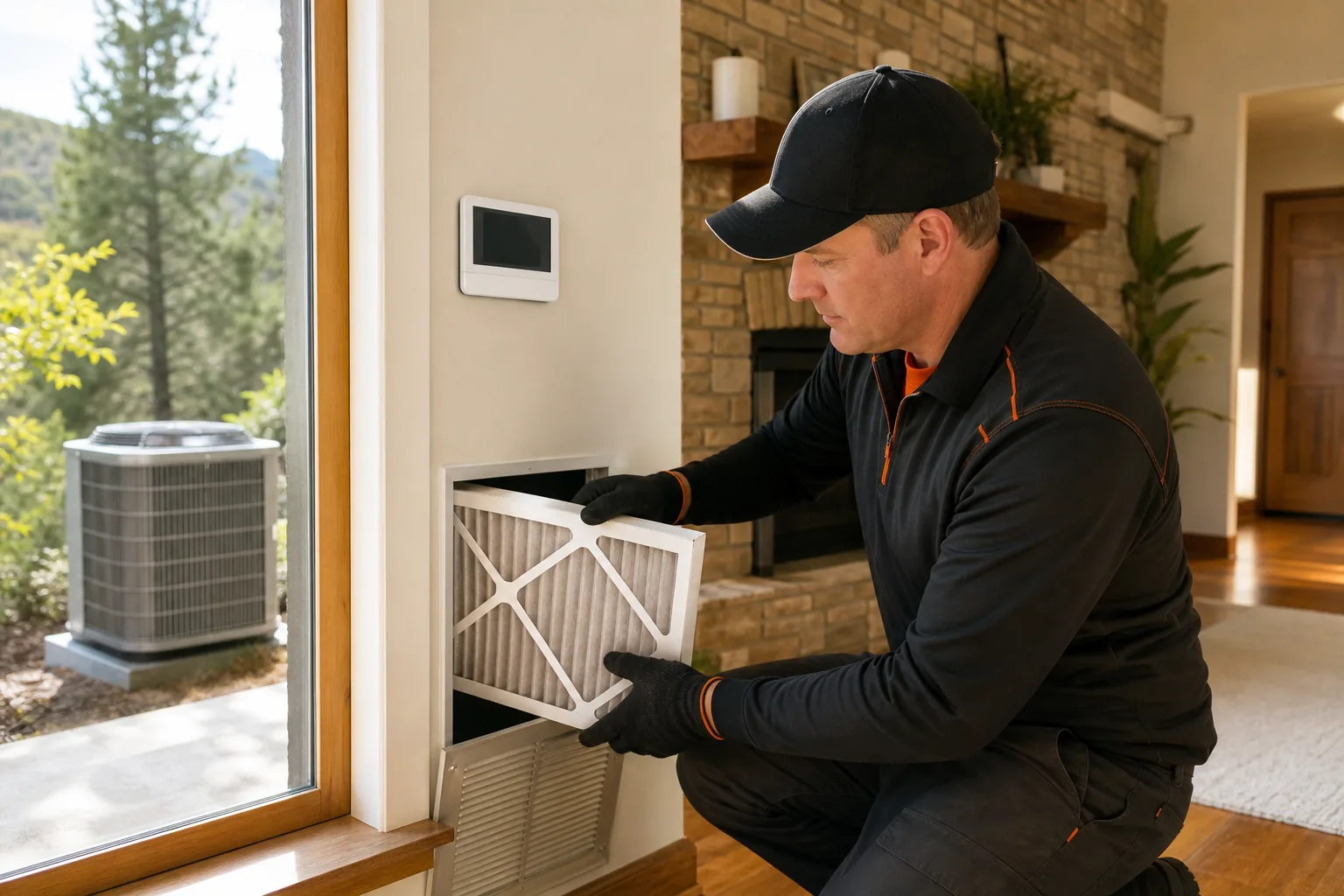
Setbacks need care. A large temperature change may trigger backup heat when the system tries to catch up. A smaller adjustment can reduce demand without forcing a hard recovery cycle.
Solar panels can help with annual electric purchases, but they don't fix an oversized heat pump or leaky duct. Fix the load and system faults first. Then review solar or a time-of-use plan with your utility data.
Key Takeaway:Check backup heat, airflow, filters, and duct leaks before blaming the heat pump's rated capacity.
Step 5: Get a Local Assessment Before Replacing or Upsizing the System
Get a local assessment before replacing a heat pump, because the right size depends on the house rather than a sales guess.
Ask the contractor to explain the load calculation. It should account for windows, insulation, orientation, duct layout, outdoor design temperatures, and the rooms served. Ask which assumptions could change the result.
Then ask how the proposed unit performs at low outdoor temperatures. A brochure's top efficiency number may come from a mild test condition. You need to know the expected seasonal result for your home.
Request the expected annual kWh range in writing. A range is more honest than one exact number. Ask what is included. Does it cover cooling, hot water, circulation pumps, or backup heat?
Also review electrical needs. A new system may need a dedicated circuit or panel work. A qualified contractor should identify that before installation. Permit requirements can apply in California, so ask who handles the local permit process.
Use online calculators only as a screening tool. Floor area or nominal tonnage cannot select equipment by itself. A calculator cannot inspect the building, issue a permit, or replace formal equipment design.
Home Worx Heating and Cooling serves homeowners in Auburn, Colfax, Rocklin, Roseville, Grass Valley, Penn Valley, and Lincoln. Our family-owned team can review the home's comfort complaints, existing system, and utility pattern before recommending a repair or replacement.
That local view matters in the Sierra foothills. A home in Lincoln may face a different cooling load than one in Colfax. A drafty older home near Grass Valley may need envelope work before a larger unit makes sense.
Don't upsize because one room feels cold. First check airflow, insulation, duct balance, and thermostat location. A larger unit can cost more to run if it cycles poorly.
Pro Tip:Bring 12 months of electric bills to the assessment. The pattern gives the contractor a useful starting point before any equipment quote.
FAQ: Heat Pump Electricity Use
How much electricity does a heat pump use per day?
A heat pump may use anywhere from a few kWh to several dozen kWh per day, depending on weather and home demand. Daily averages can obscure higher winter and summer peaks, especially in Auburn and Colfax. Treat the daily figure as an average, not a fixed target.
Does a heat pump use more electricity than an air conditioner?
A heat pump uses electricity for both heating and cooling, while a standard air conditioner uses it for cooling only. In cooling mode, similar systems can have similar efficiency ratings. The heat pump's yearly total may be higher because it also handles winter heating, but it can use less energy than electric resistance heat in homes in Rocklin and Roseville.
What causes a heat pump's electric bill to rise?
A higher bill can come from colder weather, poor insulation, blocked airflow, leaky ducts, or long periods of backup heat. A wrong thermostat setting can add demand too. Compare monthly kWh first. If use rises during mild weather, have the system checked rather than assuming the unit needs replacement, including in Grass Valley.
Does a larger heat pump use more electricity?
A larger heat pump can use more electricity when it serves a larger load, but capacity alone doesn't set annual consumption. An oversized unit may cycle poorly and waste energy. Proper load calculations match the equipment to the home's heat loss, insulation, ducts, and local weather in Penn Valley.
How can I lower heat pump electricity use?
Lower heat pump electricity use by improving airflow, replacing dirty filters, sealing duct leaks, and avoiding unnecessary backup heat. Keep thermostat changes modest during recovery. A contractor can also check charge, sensors, controls, and system size. Home Worx Heating and Cooling can help homeowners in Placer and Nevada counties, including Lincoln, review those causes; contact us for local service.
Conclusion
Start with your home's heat demand, divide it by seasonal efficiency, then compare the result with 12 months of meter data. If the numbers don't line up, don't guess or automatically buy a larger system. Contact Home Worx Heating and Cooling for a local assessment in Auburn, Colfax, Rocklin, Roseville, Grass Valley, Penn Valley, or Lincoln, and get a plan based on the home you actually have.