
How to Choose the Right Air Conditioner for Your Home
Choosing the right air conditioner starts with your home, not a model name. If you're figuring out how to choose the right air conditioner, we'll help you check your ductwork, estimate your cooling needs, and compare the costs that matter in Northern California.
We analyzed 69 YouTube comments about choosing the right AIR conditioner and found that 38% mentioned proper load calculations.
Hot, dry summers and chilly winters can put very different demands on homes around the Sierra foothills. A room-by-room plan may point to central air, a ductless system, or a smaller unit for one space.
Table of Contents
Step 1: Assess Your Home, Ductwork, and Comfort Needs
Start by noting which rooms get too warm, when the problem happens, and whether your current system cools the whole home evenly. A west-facing room may heat up in the afternoon, while a finished garage or new addition may need cooling of its own.
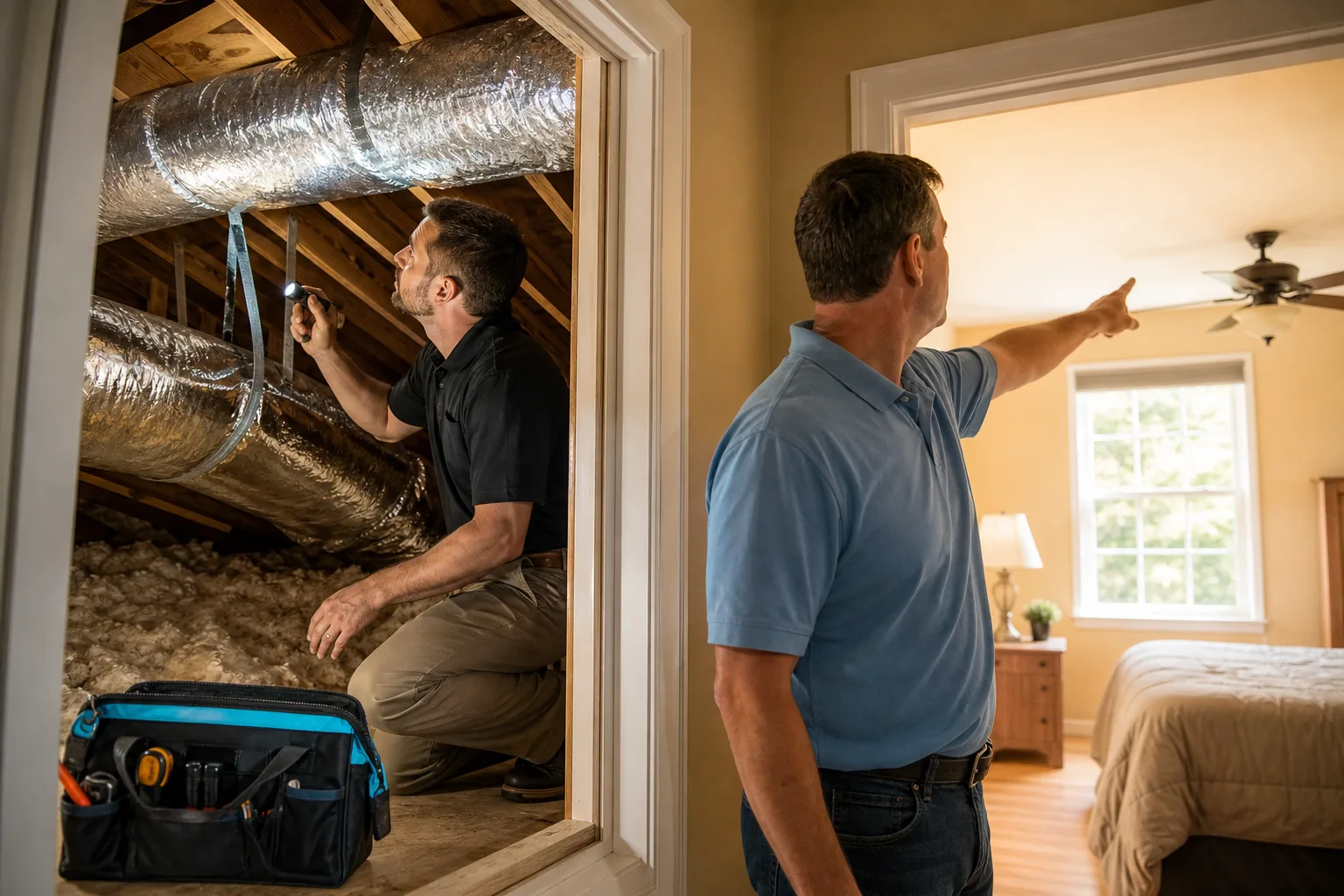
Next, look at the system already in place. If your home has ducts, check for rooms with weak airflow or vents that barely blow cool air. Leaky or poorly sized ducts can waste cooled air, so replacing the outdoor unit alone may not fix an uneven home.
In older homes around Colfax, the duct layout may limit your choices. A newer home in Rocklin may already have central ductwork that suits a whole-home system. Either way, ask the installer to check duct condition, insulation, windows, ceiling height, and sun exposure before recommending equipment.
Think about how you use each space, too. If you spend most of the day in a few rooms, room-by-room cooling may fit better than cooling every room equally. If the whole family uses the home throughout the day, central air may be a better match.
Smart controls, noise, and moisture removal also shape comfort. A quiet system can matter when an indoor unit sits near a bedroom. App controls can help you change settings when plans shift, but they won't correct poor sizing or blocked airflow.
Home size, layout, local climate, and comfort preferences all affect equipment choice. That's why a walk-through beats picking a unit from a label alone.
If the existing system is failing often, compare repair needs with the cost of replacement before deciding. Our guide to air conditioner replacement signs and timing can help you frame that choice.
Key Takeaway:Write down the rooms that need help and ask for a duct and airflow check before choosing equipment.
Step 2: Get the Cooling Capacity Sized for Your Home
Ask for a cooling-load calculation before you approve a system size. Capacity is often shown in BTUs or tons. One ton equals 12,000 BTUs per hour, but that conversion doesn't tell you how many tons your home needs.
Square footage gives a rough starting point. It can't account for a high ceiling, a sunny window, weak insulation, or a duct that loses air in a hot attic. A home in Auburn or Lincoln with the same floor area as a shaded home may need a different capacity because the heat entering the rooms is different.
A qualified installer can use a cooling-load calculation to estimate how much cooling the home needs. The calculation considers the building and local design conditions, rather than relying on the size of the old unit.
Why be so careful? An oversized unit can cool the air quickly, then shut off before it removes enough moisture. That short cycling can leave rooms feeling clammy and cause more frequent starts. An undersized unit may run for long stretches on a hot afternoon without reaching the thermostat setting.
For a system serving one room, match capacity to the room rather than the whole house. A system that's too small can also struggle to cool and dehumidify its space.
Don't choose a larger unit as a safety margin. Instead, ask the contractor to show the load result and explain how it leads to the proposed size. If two rooms have different loads, ask how the system will handle that difference.
Homeowners in Roseville, Rocklin, or Colfax may see different results from homes at higher elevations near Grass Valley or Penn Valley. Local weather is one input, but the home's layout and shell still matter. Use a square-foot estimate to start a conversation, not to make the final purchase.
By now you should have a written capacity recommendation tied to your home's load, not just its floor area.
For local cooling advice, contact Home Worx Heating and Cooling .
Step 3: Choose Between Central AC and Ductless Cooling
Pick a system type that fits the rooms you need to cool and the equipment your home can support. Central air sends cooled air through ducts. A ductless mini-split uses indoor units connected to an outdoor unit, so it can cool selected rooms without adding ducts.
Some cooling options are designed for a single room. A packaged system keeps major parts in one outdoor cabinet. Geothermal systems move heat through underground loops and need a site-specific design. A split system describes equipment divided between indoor and outdoor sections; central split systems use ducts, while mini-splits do not.

System type | Good fit when | Check before choosing |
Central air | You want cooling across the home and have usable ducts. | Have ducts checked for leaks, airflow, and fit. |
Ductless mini-split | You need cooling in selected rooms or lack ducts. | Plan indoor unit locations and how many zones you need. |
Geothermal | You are considering a ground-loop system for the property. | Ask about site needs, design scope, and total project cost. |
For homes without ducts or with a few rooms that stay warm, a ductless layout can avoid extending ductwork through the house. Mini-splits are a common option for homes without ductwork or for zoned comfort.
That doesn't make ductless the automatic winner. If ducts are in good shape and you want whole-home cooling, central air may be simpler to fit into the existing layout. If you only need one room cooled, a room-focused cooling option may be enough.
In Grass Valley or Penn Valley, ask how the chosen system will serve rooms with different sun exposure. With hot, dry summers in the Sierra foothills, homeowners in Auburn and Colfax can also compare how each layout addresses the rooms they use most. Home Worx Heating and Cooling installs central systems and ductless mini-splits, so we can help compare the options against your home's layout. Our central air versus mini-split comparison covers the trade-offs in more detail.
Choose the smallest system plan that covers the spaces you actually use, with a clear path to add cooling later if your home changes. Homeowners in Rocklin and Roseville can contact Home Worx Heating and Cooling for help comparing options; for local service in Lincoln, contact us to discuss your home's cooling needs.
Step 4: Compare Efficiency, Comfort Features, and Operating Costs
Compare the full-system efficiency rating, not a single number without context. SEER2 measures seasonal cooling efficiency: a higher rating means the system uses less electricity to deliver a given amount of cooling under the test conditions. EER2 measures efficiency under a set operating condition, which can help when comparing performance in hot weather.
California is in the federal Southwest region for air-conditioner efficiency rules. Federal minimums can vary by region, equipment type, and capacity, so ask the installer which requirements apply to the system in your proposal. A minimum is a compliance floor, not a recommendation that every home should buy the same rating.
A higher rating can cost more up front, but it may use less power during the cooling season. To judge value, compare the price difference with your likely cooling use and how long you expect to stay. Don't assume the highest rating will pay back fastest. A correctly sized, well-installed system matters just as much.
Variable-speed equipment can adjust its output instead of switching only between full power and off. That can help keep indoor temperatures steadier. Ask whether the system can reduce output when the home needs only a little cooling, and whether the proposed controls work with that equipment.
Check noise where the unit will sit. An outdoor condenser near a bedroom window may affect sleep, while indoor ductless units need a placement that doesn't blow air straight at a bed or desk. Ask the installer to explain the sound ratings for the exact equipment in your quote.
Wi-Fi controls may let you adjust settings from an app. They can help when your schedule changes, but they don't replace good insulation or sealed ducts. Also, closing vents in unused rooms is not a reliable way to save energy. It can change airflow through the duct system, so ask a technician before blocking registers.
For a fair comparison, put equipment, installation work, controls, and expected operating costs side by side. Home Worx Heating and Cooling advertises new HVAC system installation from $120 a month, subject to terms and conditions. Ask whether a specific system and project qualify, then compare the total proposal rather than judging by the monthly figure alone. Homeowners in Auburn, Colfax, Rocklin, Roseville, Grass Valley, Penn Valley, and Lincoln can contact Home Worx Heating and Cooling for local service.
Step 5: Compare Installation Quotes, Warranties, and Local Requirements
Get written quotes that describe the same scope of work. Each should identify the proposed equipment, capacity, efficiency rating, and any duct changes. Ask whether the price includes removal of the old equipment, electrical work, start-up checks, and cleanup.
Then compare who will do the work and what happens after installation. Ask for the warranty terms in writing. Find out which parts are covered, what the labor coverage includes, and what steps you need to take to keep coverage in force. Keep the model numbers and final paperwork with your home records.
Confirm permit needs before work begins. Requirements depend on the project and the local authority, so have the contractor explain which permits apply in your area and who will handle them. Don't assume a replacement follows the same rules as a new installation.
Rebates can affect the final cost, but eligibility depends on the equipment and current program rules. Check the terms before you count a rebate toward your budget. Our page on California air conditioner rebates explains what to verify when you review an offer. You can also ask whether PG&E or state programs apply to the system you're considering.
Ask how the installer will verify airflow and system operation after the equipment is connected. A clear start-up plan matters because the installed system needs to match the home's load and the equipment's specifications.
In Lincoln, as in other foothill communities, the best quote is the one that explains the work and fits the home, not simply the one with the lowest first number. Home Worx Heating and Cooling serves homeowners across the local area, including Auburn, Colfax, Rocklin, Roseville, Grass Valley, Penn Valley, and Lincoln. We can review your comfort needs and help you compare installation options.
Pro Tip:Ask each contractor to put the proposed capacity, model numbers, included work, and warranty terms in writing.
Frequently Asked Questions
What type of air conditioner is best for a house?
The best type depends on your home's layout and the rooms you need to cool. Central air can suit a home with usable ducts and whole-home cooling needs. A ductless mini-split can fit selected rooms or a home without ducts. For a single room, consider a system suited to cooling selected spaces. Have the space assessed before choosing.
How do I know what size air conditioner I need?
Ask an HVAC professional for a cooling-load calculation. Square footage is only a starting point because windows, insulation, ceiling height, sun exposure, and duct condition also affect the load. An oversized unit may cycle off too soon, while an undersized unit may struggle on hot days. Ask to see how the proposed capacity matches the calculation.
Is a ductless mini-split better than central air?
A ductless mini-split can be a better fit when you need cooling in a few rooms or don't have ducts. Central air can make more sense when usable ductwork already serves the home and you want whole-home cooling. Compare the installation work, room coverage, and operating needs for your home rather than choosing by system type alone.
Does a higher SEER2 rating always mean lower costs?
A higher SEER2 rating means greater seasonal efficiency under the rating test, but it doesn't guarantee the lowest total cost for your home. Equipment price, installation scope, cooling hours, system sizing, and duct condition all affect value. Ask for the price difference between options and compare it with your expected use.
What should I ask before hiring an air conditioner installer?
Ask how the contractor sized the system and what work the quote includes. Request the equipment model numbers, efficiency rating, warranty terms, permit plan, and start-up checks in writing. Also ask who handles service after installation. Contact Home Worx Heating and Cooling for local service in Auburn, Colfax, Rocklin, Roseville, Grass Valley, Penn Valley and Lincoln.
Conclusion
Choose a system that matches your home's cooling load, ductwork, and daily use, then compare complete written quotes before you commit. If you live in the Placer or Nevada County area, contact Home Worx Heating and Cooling to discuss your home and review local installation options.