
How to Clean AC Condenser Coils Safely
Dirty condenser coils make your AC work harder, especially during hot, dry Sierra foothill summers. Learning how to clean AC condenser coils can help you remove light buildup without bending fins or wetting electrical parts. Use the steps below for an outdoor unit, and stop if the job involves wiring, refrigerant, or heavy damage.
Table of Contents
Step 1: Turn Off Power and Gather Supplies in Auburn or Colfax
Step 2: Access the Outdoor Coil and Remove Debris in Rocklin
Step 3: Clean the Condenser Fins and Coil Surface in Roseville
Step 4: Rinse, Dry, Reassemble, and Restore Airflow in Grass Valley
Step 5: Restart the AC and Check for Ice or Weak Cooling in Penn Valley
Step 6: Prevent Buildup and Know When to Contact Home Worx Heating and Cooling in Lincoln
Step 1: Turn Off Power and Gather Supplies in Auburn or Colfax
The first step in learning how to clean AC condenser coils is to remove electrical risk. Turning the thermostat off alone doesn't fully disconnect the outdoor unit.
Set the thermostat to Off. Then switch off the air conditioner breaker at the electrical panel. Find the outdoor disconnect box beside the condenser and switch it off, or remove the disconnect block if that's how your system works.
If you aren't sure which breaker controls the unit, stop. Don't open the cabinet or spray water until a trained technician confirms the power is off. Capacitors can hold a charge even after the system stops.
Let the condenser cool if it was running. Put on work gloves and safety glasses. Gather the rest of your supplies:
A suitable hand tool for removing the access panel
A vacuum for loose debris
A soft-bristle brush
A low-pressure water source
A coil-cleaning solution suitable for the unit
Clean rags or microfiber cloths
A fin comb for small areas of bent fins
A scoop or trash bag for leaves and loose debris
Keep the electrical panel closed while you work. A low-pressure water source is usually enough for light dirt. A pressure washer is too strong and can flatten aluminum fins within seconds.
Avoid high-pressure water and harsh chemicals. That advice is worth following even when the outside of the unit looks sturdy.
For homeowners in Auburn or Colfax, and those in Rocklin, Roseville, Grass Valley, Penn Valley, or Lincoln, spring is a good time to do this work before long cooling cycles begin. If the unit has never been cleaned, arrange a professional inspection instead of guessing at the power controls. Contact Home Worx Heating and Cooling for local service.
Step 2: Access the Outdoor Coil and Remove Debris in Rocklin
To clean AC condenser coils well, you need to see how much dirt sits inside the cabinet. Start outside the unit, where pine needles, grass, leaves, and dust often collect. In Auburn and Colfax, check for this buildup before cleaning.
Clear objects around the condenser. Move mulch, branches, toys, and stored items away from the cabinet. Trim back plants that block the sides or the warm air leaving the top. Aim for about two feet of open space around the unit. This is especially useful for outdoor units in Roseville.
Check the service panel and top grille. If the manufacturer's instructions allow removal, take out the screws and lift the panel carefully. The fan may remain attached to the grille, so don't pull it away or stretch its wires. In Grass Valley, take extra care when working around an older unit.
Pick out large debris by hand. Then use a soft-bristle cleaning tool. Hold it near the coil without pressing it into the fins. Work slowly around the inside base and cabinet floor. Homeowners in Penn Valley can use the same gentle approach.
Look at the fins with a flashlight. You should see open paths through the coil. A mat of dirt that blocks the view needs more than a quick surface rinse. It may need a technician who can protect the tubing while cleaning deeper rows. In Lincoln, inspect more than one side of the condenser.
Don't use a wire brush. Its hard bristles can crush the thin fins. If you see a small flat area, a fin comb may help straighten it. Stop if the damage is widespread or the metal looks torn.
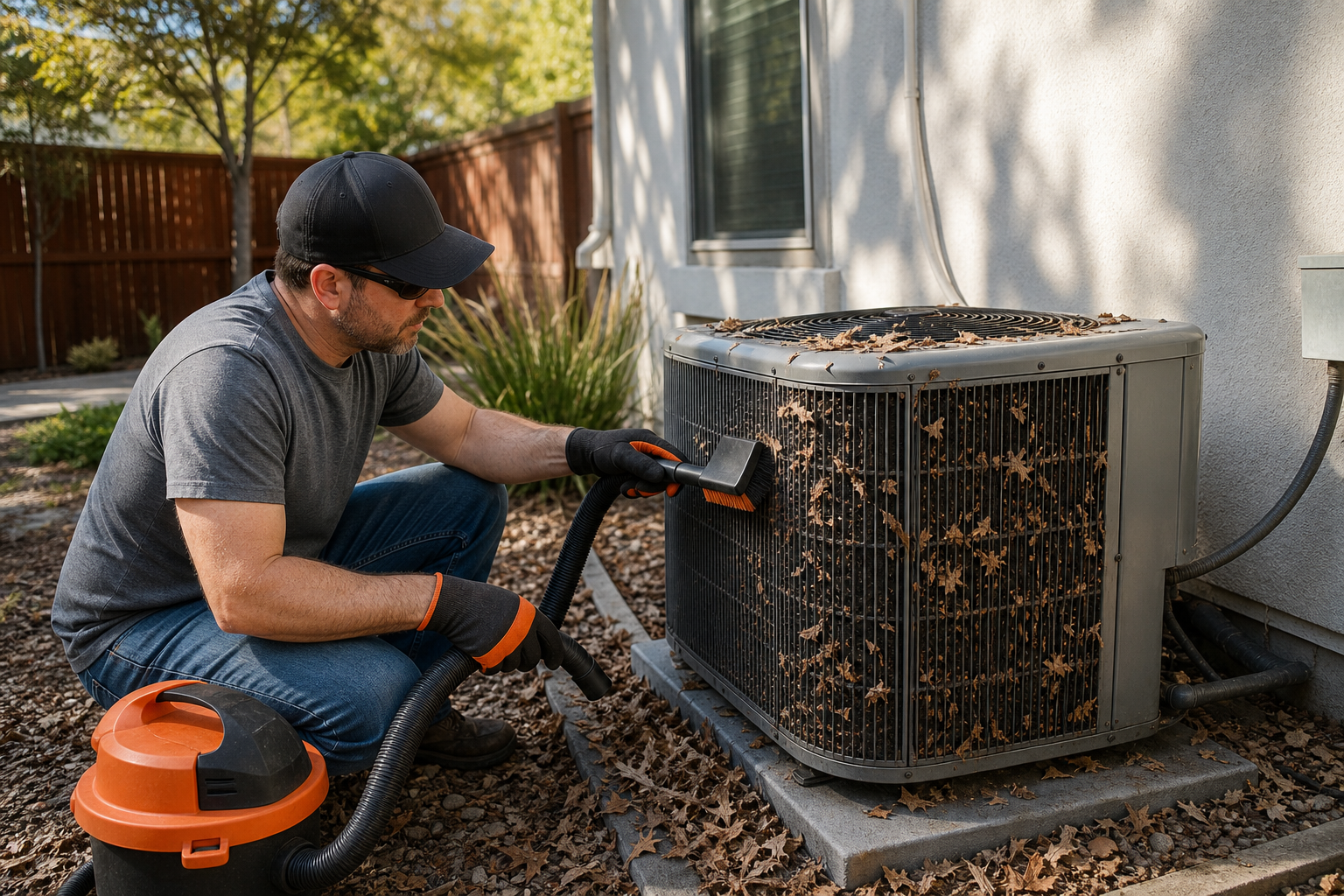
In Rocklin, dry dust can settle deep in the coil even when the outer face looks clean. Check from more than one side. The cleanest-looking panel isn't always the cleanest part of the condenser.
For deeper cleaning or damaged fins, contact Home Worx Heating and Cooling for local service.
Step 3: Clean the Condenser Fins and Coil Surface in Roseville
Now clean the condenser coil with a light touch. The goal is to loosen dirt without folding the fins or pushing grime farther inside.
First brush the surface in the same direction as the fins. Most fins run up and down, but check your unit before brushing. Short strokes work better than force. If the brush catches, back off instead of pushing through.
For light dust, water may be enough. Direct it from the inside outward when you can safely reach the inner side. This pushes dirt out through the coil instead of packing it into the narrow spaces.
Use a soft shower or fan pattern. Don't use a jet stream. Keep moisture away from the electrical compartment, wiring, and disconnect. Work in small sections until the runoff looks clearer.
Moderate or oily buildup may need a product intended for condenser coils. Read the label before mixing or applying it. Wear eye protection and gloves. Apply only enough to cover the coil, then let it sit for the time listed on the product.
Never substitute harsh household chemicals for a product intended for condenser coils. These chemicals can damage aluminum fins or copper tubing. Don't scrub with steel wool.
Roseville homes may collect pollen and fine dust quickly during spring. Homeowners in Auburn, Colfax, Rocklin, Grass Valley, Penn Valley, and Lincoln should also watch for recurring buildup. If the coil clogs again within a short time, the answer may not be another DIY wash. Dirty coils can restrict airflow and contribute to AC freeze-ups , so the unit may need a deeper cleaning, better clearance, or a check of the filter and airflow.
For additional background, see AC coil cleaning methods .
Pro Tip:Take a photo of the coil before cleaning. It gives you a simple record of the buildup and makes it easier to spot sections that still need attention.
Stop if the coil is crushed, corroded, leaking, or packed with dirt between multiple rows. A surface wash won't fix those problems.
Step 4: Rinse, Dry, Reassemble, and Restore Airflow in Grass Valley
Rinsing removes loosened dirt and cleaner. Drying comes before power. That order matters for homeowners in Auburn and Colfax.
Use low-pressure water. If you can access the inside, rinse outward through the fins. Otherwise, spray gently from the outside while keeping the nozzle angled along the fin direction. Work from the top down so dirty water can drain toward the base. Rocklin homeowners should use the same gentle approach.
Watch the runoff. Clear water is a useful sign, but it doesn't prove every inner row is clean. If water backs up or leaves remain trapped, repeat the gentle rinse rather than increasing pressure. Roseville homeowners can use this check as well.
Check the small drain openings at the bottom of the cabinet. Clear mud and leaves with a soft tool. Don't poke into the coil or tubing. In Penn Valley, seasonal debris can make this check especially useful.
Wipe the cabinet and grille with a dry cloth. Leave the top panel and access cover off only if they are safely supported and the area is protected from new debris. Otherwise, reattach them loosely while the unit finishes drying, then secure every screw.
Wait at least 30 to 60 minutes before restoring power after wet cleaning. Longer is better if water reached a hard-to-see area. Make sure no moisture sits near electrical parts.
Grass Valley and Lincoln yards can hold leaf litter and fine plant debris around outdoor units. After the first rinse, check the space below the condenser too. Air must enter through the sides and leave through the top without a blocked path.
Once the cabinet is dry, reinstall the grille and panels. Confirm that no wire is pinched and that the fan can turn freely by hand without scraping. Don't restore power if anything feels loose or damaged.
Step 5: Restart the AC and Check for Ice or Weak Cooling in Penn Valley
Restart the system in stages. This lets you catch a problem before the compressor runs for hours. This is useful for homeowners in Auburn and Colfax.
Put the disconnect back in place or switch it on. Restore the air conditioner breaker. Set the thermostat to Cool and choose a temperature below the room temperature. Give the system several minutes to start. Homeowners in Rocklin should use the same careful startup process.
Listen for a steady fan sound. Look for strong warm air leaving the top of the condenser. Inside, check whether the supply vents begin blowing cooler air. Let the system run for about 10 to 15 minutes before judging the result. This check also applies in Roseville.
Inspect the larger insulated refrigerant line near the outdoor unit. It may feel cold and show condensation during cooling. Don't loosen fittings or touch bare electrical parts. Homeowners in Grass Valley should leave those checks to a professional if they are unsure.
Watch for ice on the refrigerant line, outdoor cabinet, or indoor air handler. Dirty coils can contribute to freeze-ups by restricting airflow, but ice can also point to a dirty filter, blocked return, blower problem, or low refrigerant.
If you see ice, turn the AC off and let the coil thaw. Don't chip at it or pour hot water over it. If the system freezes again after thawing, leave it off and arrange service. This is especially important in Penn Valley.
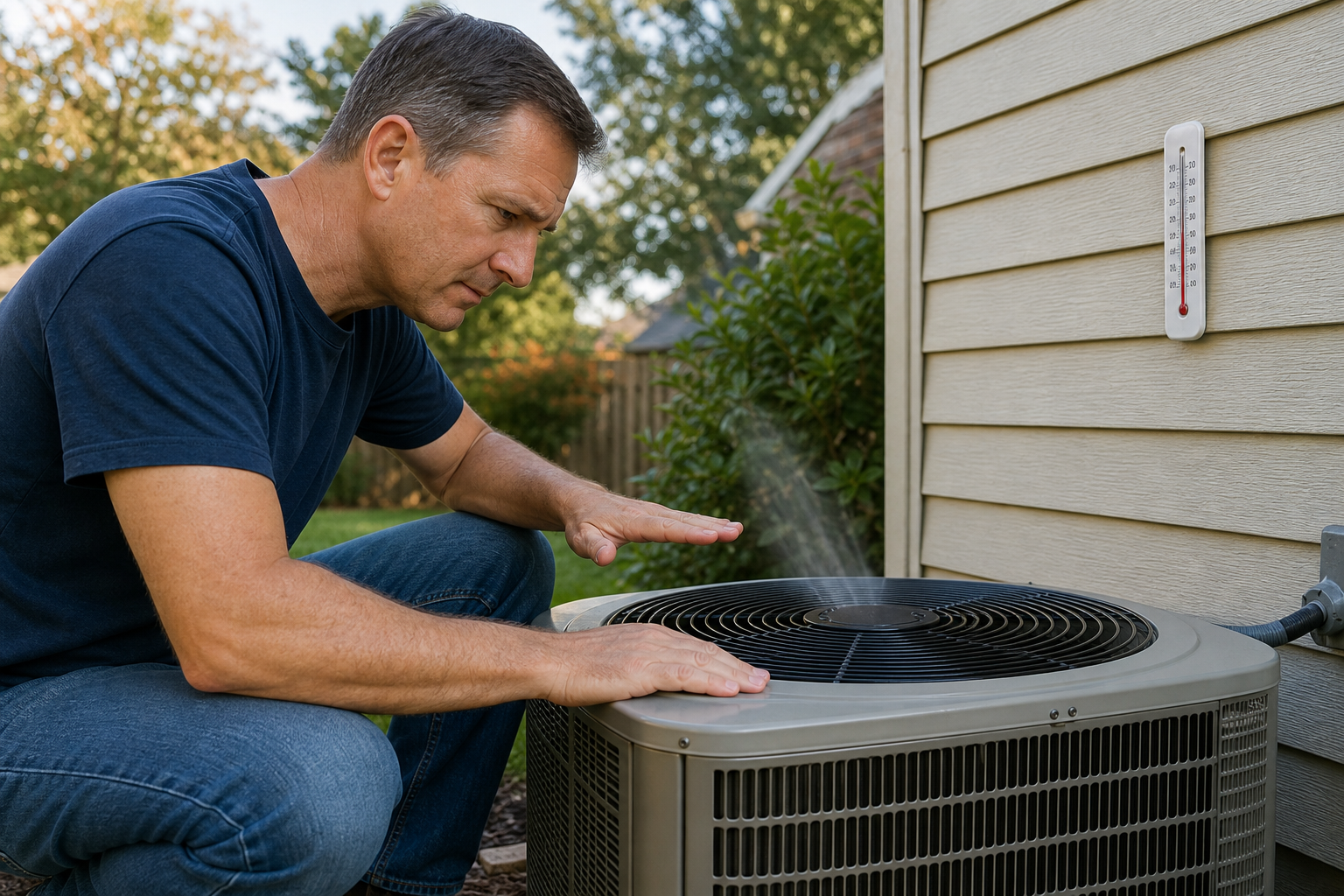
If cooling remains weak, don't assume the coil was the only fault. The system may have an airflow or refrigerant issue. For simple checks before requesting service, review basic AC cooling checks . Homeowners in Lincoln can arrange service if the problem continues.
A coil can look clean from the outside while dirt remains packed between the rows. A technician can measure system operation before and after cleaning, which a homeowner usually can't do safely.
For local AC service in Auburn, Colfax, Rocklin, Roseville, Grass Valley, Penn Valley and Lincoln, contact Home Worx Heating and Cooling.
Step 6: Prevent Buildup and Know When to Contact Home Worx Heating and Cooling in Lincoln
Cleaning once helps, but a schedule keeps the condenser from reaching the point where it struggles. Most homes need coil cleaning at least once each year. Homes with pets, heavy dust, or high pollen may need attention every three to six months.
Change the indoor air filter on the schedule printed on its package, or more often when it loads with dust. Keep return vents open. Check the outdoor unit every few weeks during cooling season for weeds, leaves, and grass clippings.
Keep shrubs and stored items away from the cabinet. Don't use the condenser as a shelf. After yard work, check whether clippings have collected on the coil face.
Annual professional cleaning commonly falls between $100 and $300 in the research reviewed, though system size, access, buildup, and added repairs can change the final price. Emergency or specialty work may cost more. Ask what the visit includes before approving service.
Home Worx Heating and Cooling provides HVAC maintenance and coil cleaning for homeowners across Auburn, Colfax, Rocklin, Roseville, Grass Valley, Penn Valley, and Lincoln. Its maintenance plan includes twice-yearly inspections with coil cleaning, which fits homes that face dusty summers and cold winter downtime.
That twice-year schedule can make sense in Lincoln before summer starts and again before the system sits through winter. In Colfax and Grass Valley, leaf litter and pollen may justify closer checks. We can also inspect the indoor coil, filter, drain, and electrical parts when outdoor cleaning doesn't explain weak cooling.
Contact Home Worx Heating and Cooling when the breaker trips again, the unit leaks, ice returns, the fins are badly damaged, or you smell burning. Refrigerant work and electrical testing belong with a qualified HVAC technician.
Key Takeaway:DIY cleaning is reasonable for light outdoor buildup, but recurring ice, weak cooling, or hidden coil dirt calls for professional testing.
FAQ
How often should you clean AC condenser coils?
Clean AC condenser coils at least once a year, usually before the cooling season. Homes with pets, heavy dust, or high pollen may need cleaning every three to six months. For homeowners in Auburn or Colfax, check the coil during spring and summer. If dirt returns quickly or cooling gets weak, arrange a professional inspection instead of waiting for the next scheduled cleaning.
Can low-pressure water clean AC condenser coils?
Yes, low-pressure water can clean light surface dirt from an outdoor condenser coil. Spray in the direction of the fins, ideally from the inside outward. Never use a pressure washer. High pressure can bend fins, damage tubing, or push water into electrical parts. This is especially useful to remember in Rocklin and Roseville during the cooling season.
What cleaner should I use on AC coils?
Use only a product appropriate for outdoor AC condenser coils, following its directions. Avoid bleach, harsh household cleaners, and abrasive materials. If you don't know the coil material or product requirements, use water for light dirt or ask a technician. Homeowners in Grass Valley can use the same cautious approach.
Why does my AC freeze after coil cleaning?
An AC can freeze after cleaning because the problem may involve more than outdoor dirt. A clogged filter, blocked return, indoor coil buildup, blower fault, or low refrigerant can restrict airflow or reduce system performance. Turn the system off if ice appears. Let it thaw, then arrange service if freezing returns, including for homes in Penn Valley.
Is it safe to clean the indoor evaporator coil myself?
Cleaning an indoor evaporator coil is usually better left to an HVAC technician. It often requires opening the air handler, protecting the drain pan, and working near electrical parts. The outdoor condenser is easier to access, but indoor coil cleaning can expose hidden damage or refrigerant problems that a rinse won't fix for homeowners in Lincoln or elsewhere. For local service, contact Home Worx Heating and Cooling.
Conclusion
For light outdoor dirt, shut off power, use a soft brush and low-pressure rinse, then let the unit dry fully before restarting it. If cooling stays weak or ice returns, contact Home Worx Heating and Cooling for local service in the Sierra foothills.