
How to Cool an Upstairs Bedroom: 5 Practical Steps
Updated: Oct 3
If your upstairs bedroom stays hot after sunset, you’re not imagining it. Heat rises, and roof and window heat can make the second floor harder to cool. Start by finding the cause, then work through these five steps before lowering the thermostat or buying a new unit.
Table of Contents
Step 1: Find Out Where the Heat Is Coming From
The first step in learning how to cool an upstairs bedroom is to see whether the problem is heat coming in or cool air failing to reach the room. Heat naturally rises through stairwells and open spaces. The upper floor also sits closer to a hot roof and attic.
On a warm afternoon, compare the bedroom with a lower-floor room. Note the temperature, the time of day, and whether the bedroom has direct sun. Then check whether the ceiling feels warmer than the walls. A room that heats up mainly in the afternoon may have strong sun exposure. A hot ceiling can point to attic insulation or air leaks .
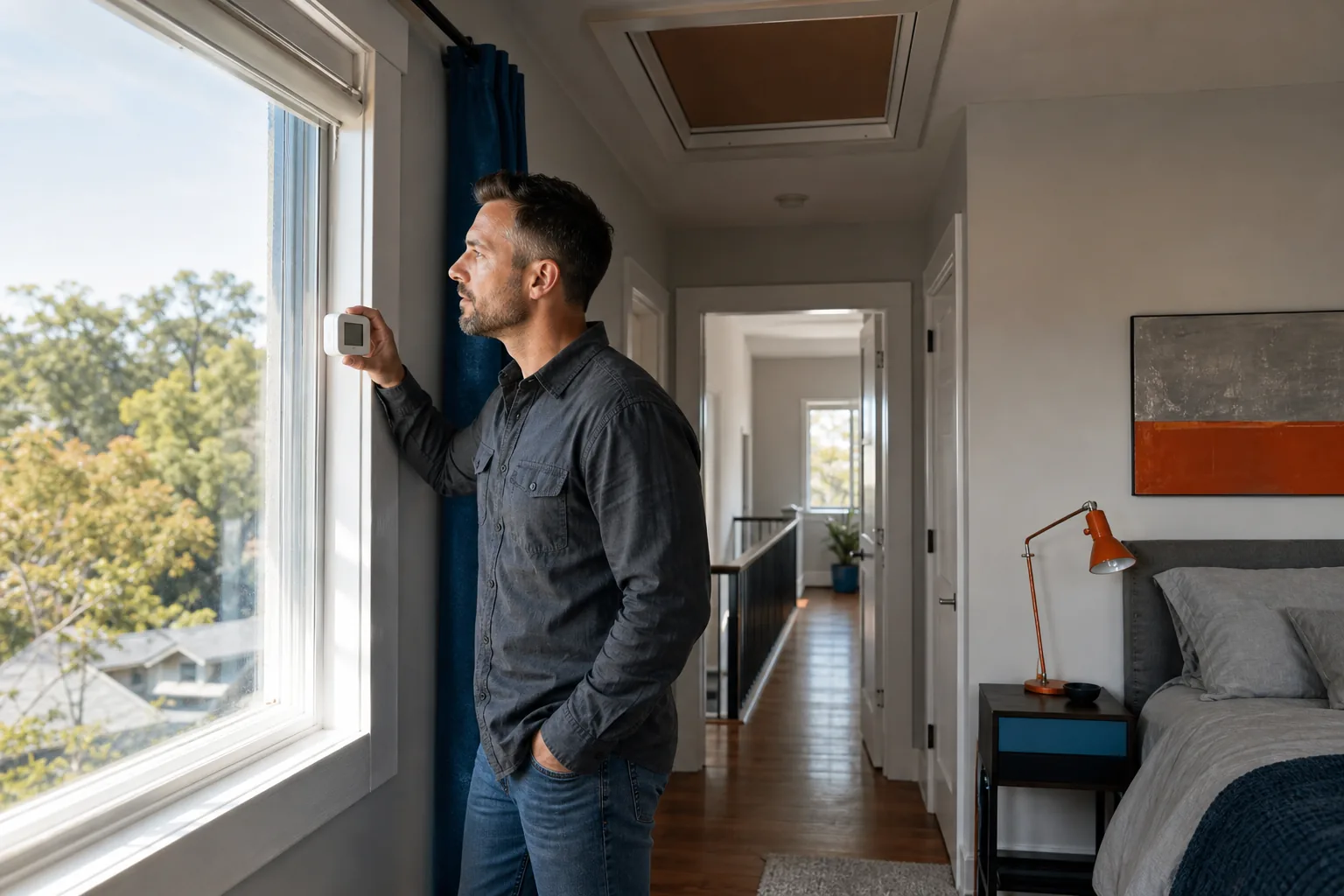
Check the window direction and watch when sunlight reaches the glass. West-facing windows often take direct afternoon sun, while south-facing windows may get sun for much of the day. Close shades before the room heats up, rather than waiting until bedtime.
Look for easy-to-spot signs of air leaks near the attic hatch, recessed lights, or ceiling edges. Don’t enter a very hot attic or move insulation if you’re unsure what’s there. Insulation slows heat transfer through the home.
Also note whether the bedroom has a TV, computer, or other electronics running for long periods. These add heat to a small room. Turn off devices you aren’t using and see if the room stays more comfortable.
By now you should have a short list: sun, attic heat, electronics, or weak airflow. More than one can be at work.
Step 2: Improve Airflow Without Blocking the System
Once you know where the heat is coming from, check whether cool air can reach the room and return to the HVAC system. A supply vent blows conditioned air into the room. A return grille lets air flow back. Both paths need to stay open.
Turn on the cooling system and check each upstairs register with your hand. Compare the airflow with a nearby room. Move rugs, curtains, beds, and dressers away from vents and return grilles. Dust the register. Make sure its louvers are fully open.
Next, test the bedroom door. If airflow seems weak with the door shut, leave it open during a cooling cycle and see whether the room improves. A closed door can restrict the path air needs to leave the room, especially if there’s no return grille inside it. If the change is clear, ask an HVAC professional about a return-air path or transfer grille.
A portable fan can help move cooler hallway air into the bedroom. Aim it through the doorway, or point it at the person using the room for a cooling breeze. A ceiling fan can also make you feel cooler while you’re in the room. In summer, set it to push air downward. Turn it off when you leave.
Some homeowners try a fan to move cooler basement air toward the stairs. That can help circulate air, but don’t disconnect ductwork or remove the system’s filter to make a DIY air path. Those changes can affect airflow and let unfiltered air enter the system. Keep pets and children away from fans and open equipment.
A register booster fan may help when one room gets weak airflow, but it won’t fix a blocked or leaking duct. Don’t close every downstairs register to force air upstairs. Closing too many can raise duct pressure and reduce the air moving through the system. Small changes are safer than shutting vents completely.
If balancing airflow seems like the next step, our explanation of airflow adjustments for different room needs may help.
Step 3: Block Sun and Reduce Heat From the Attic
To cool an upstairs bedroom during hot, dry foothill summers, reduce heat before it enters through the windows and ceiling. Close blinds or insulated curtains before direct sun reaches the glass. In Auburn and Rocklin, this matters most on sunny afternoons, when a room can keep warming even as the air conditioner runs.
Keep curtains clear of supply vents so they don’t block conditioned air. If the room still heats up near the window, consider an exterior shade. It can block sun before it reaches the glass, while indoor shades help limit heat in the room.
Use cooler foothill nights, too. If the outdoor air is cooler than the room, open windows to let the heat out. Shut them again when the outdoor temperature rises. Skip this step if outdoor smoke, pollen, security, or noise makes open windows a poor choice.
For a quick comfort check, try a fan in the doorway while the window is open. The aim is to move air through the room, not to leave a fan running in an empty space. Fans change how warm you feel, but they don’t lower the room’s actual temperature.
If the ceiling stays hot well into the evening, have the attic checked for thin or uneven insulation and gaps around wiring, plumbing, or the attic hatch. Insulation slows heat moving through the ceiling. Air sealing addresses the gaps that let hot air pass into the home.
Attic ventilation may also be part of the picture, but it isn’t a fix to add without checking the attic and roof setup. A professional can look at ventilation, insulation, and air leaks together. In California, check local permit needs before work that changes attic ventilation or installs a cooling system.
For homes in Colfax and Lincoln, blocking afternoon sun and sealing an attic hatch are sensible first moves. If the ceiling remains hot, get the attic assessed instead of guessing at insulation depth or adding a fan. Contact Home Worx Heating and Cooling for local service.
Step 4: Adjust HVAC Settings and Check Basic Maintenance
Good settings and basic upkeep can help the system cool an upstairs bedroom, but they won’t correct a major duct or equipment problem. Start at the thermostat. Confirm it’s set to Cool, then check that the schedule isn’t raising the temperature before bedtime.
Many homes have one thermostat downstairs. It measures the temperature where it sits, not the upstairs bedroom. If the lower floor reaches its set point first, the system may stop while the bedroom is still warm. Ask a technician whether airflow between floors can be adjusted for your equipment and duct design.
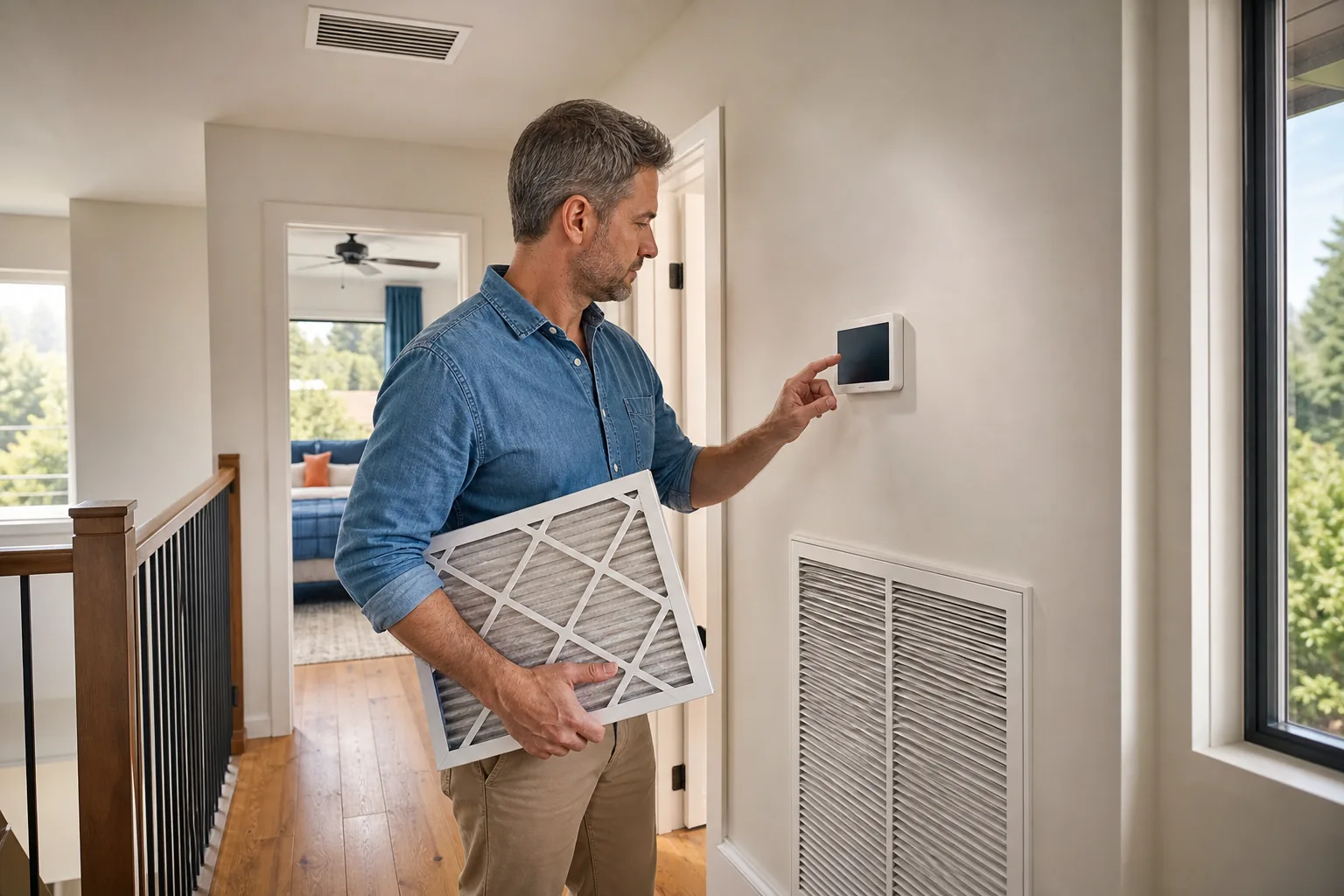
Check the air filter and replace it with the size and type recommended for your system if it’s dirty. A filter that’s too restrictive can also reduce airflow, so don’t assume a higher filtration rating is always a better fit. Keep return grilles clear of furniture and curtains.
Try the fan setting on Auto first. A continuous fan can mix air between floors, but it also runs the indoor blower more often. In some systems, it can make the room feel less cool between cooling cycles. If you test the On setting, compare the comfort and the system’s operation rather than assuming it will help.
Don’t make large damper changes or close several supply vents at once. If a downstairs room is already comfortable, a small adjustment may be worth discussing with a technician. A system needs enough airflow to operate as designed.
Pro Tip:Compare airflow and room temperature at the same time of day before and after a change. That makes it easier to tell whether a step helped.
By now you should have checked the thermostat schedule, filter, vents, and return path. If the system runs for long periods but the upstairs airflow stays weak, note that for a service visit.
Step 5: Get Help When the Bedroom Still Won’t Cool
If the bedroom remains much warmer than the rest of the home after these checks, ask an HVAC professional to find the cause. The issue may be a duct leak, a crushed or disconnected duct, poor airflow balance, an equipment problem, or a system that doesn’t match the home’s cooling needs.
Tell the technician when the room gets hot and what you’ve already tested. Mention whether the bedroom has strong afternoon sun, a closed door at night, or weak airflow compared with other rooms. These details help narrow down the problem. A useful assessment may include checking airflow at registers and returns, duct connections, filter condition, and system operation.
For a home with one persistently hot room, a ductless mini-split can provide dedicated cooling. It needs professional installation, and the right size depends on room area, ceiling height, sun exposure, and insulation. Our ductless mini-split installation guide explains the main planning questions. Don’t choose capacity from square footage alone.
A portable AC can be a short-term option if the room has a suitable window and a way to vent the unit. Check the room size and the unit’s capacity, then consider how much noise and floor space you can accept. A portable unit won’t fix uneven central airflow, and it may not suit a room without a proper window opening.
For more than one hot room, ask whether your ductwork can support zoning. Zoning uses controls and dampers to direct air to separate areas, but the design must allow the system to keep moving air safely. Attic work or new equipment may also need local permits, so confirm requirements before the project starts.
Home Worx Heating and Cooling serves homeowners in Auburn, Colfax, Rocklin, and Roseville, along with Grass Valley, Penn Valley, and Lincoln. If a new system turns out to be the answer, we offer financing through Optimus: a new HVAC system installed for as low as $120 a month, about $4 a day (terms and conditions apply).
Choose a repair or upgrade only after the cause is clear. That keeps you from paying for a new cooling method when a return-air or duct issue may be the main problem.
FAQ
Why is my upstairs bedroom hotter than downstairs?
An upstairs bedroom often runs hotter because warm air rises and the upper floor gets more heat from the roof and sun. Weak supply airflow or a blocked return path can add to the gap. Check the windows and vents first, then compare the room’s temperature with downstairs at the same time of day.
Should I close downstairs vents to cool my upstairs bedroom?
No, don’t shut downstairs vents completely to cool an upstairs bedroom. Closing too many can raise pressure in the ducts and reduce airflow across the system. Keep vents open as a starting point. If you make any balancing change, keep it small and ask an HVAC professional if airflow or system performance gets worse.
Will a ceiling fan cool an upstairs bedroom?
A ceiling fan can make an upstairs bedroom feel cooler by moving air across your skin, but it doesn’t lower the room’s air temperature. Set the fan to push air downward in summer, then turn it off when nobody’s in the room. Pair it with shade and working air conditioning for better comfort.
When should I call an HVAC professional about a hot upstairs room?
Call an HVAC professional when the bedroom stays hot after you clear vents, check the filter, and reduce direct sun. Weak airflow, a large temperature gap, or long cooling cycles can point to a duct, return-air, or equipment issue. A technician can check the whole system before you commit to an upgrade.
Conclusion
Start by checking the room’s sun exposure and airflow, then move to attic or HVAC work only when the signs point there. If your upstairs room stays hot, contact Home Worx Heating and Cooling for local service in the Sierra foothills and nearby communities.