
How to Lower Your AC Bill This Summer
When summer heat sets in, your AC can run for hours while your electric bill climbs. To lower your AC bill, start with your rate plan and daily habits, then cut the heat entering your home and help your system move air well.
We analyzed 74 comments and questions from Reddit, YouTube and Quora about lowering AC bills and found that 24% mentioned off-peak electricity rates.
In the Sierra foothills, hot afternoons make timing matter. Small changes can help, but a system that struggles needs a closer look.
Table of Contents
Step 1: Check Your Bill, Rate Plan, and Cooling Habits
Before changing settings, find out what drives the bill. Check your latest statement for total kilowatt-hours (kWh), the billing period, and the rate plan. The kWh figure shows how much electricity you used. The rate plan tells you when that power costs more.
Many California plans charge more during peak hours. Check your utility’s schedule, then see whether AC use overlaps with its high-rate window. A statewide rate is only a rough guide; your utility, plan, and usage shape your bill.
Compare this month’s use with the same month last year if that information is on your bill. Also note changes in weather, guests, cooking, or EV charging. Those details help separate higher AC use from other household loads.
For a closer look at electricity data, see the data page . Your utility’s account site can show your own hourly or daily usage, which is more useful for choosing when to shift cooling.
Then write down when the AC runs longest. If it starts before the house warms, shade may be the issue. If it runs deep into the evening, check the thermostat schedule and the home’s air leaks. Unplug or switch off devices you don’t use, too. Chargers and electronics can draw power when idle, and their added heat gives the AC more work.
Across Auburn, Colfax, Rocklin, Roseville, and Lincoln, homes and shops can face long warm afternoons; buildings in Grass Valley and Penn Valley have their own usage patterns, too. A small shop may need cooling during business hours, while a home may sit empty. If your bill has a new peak-hour charge, shift laundry or dishwashing first, then adjust cooling around the rate window.
For related summer energy steps, see How to Reduce Energy Bill in Summer: 6 Options . Keep a simple weekly note of thermostat settings and kWh use. That makes it easier to tell whether a change helped. For local cooling advice, contact Home Worx Heating and Cooling in Colfax.
Key Takeaway:Check your kWh use and rate schedule before deciding which cooling habit to change.
Step 2: Set the Thermostat for Comfort and Efficiency
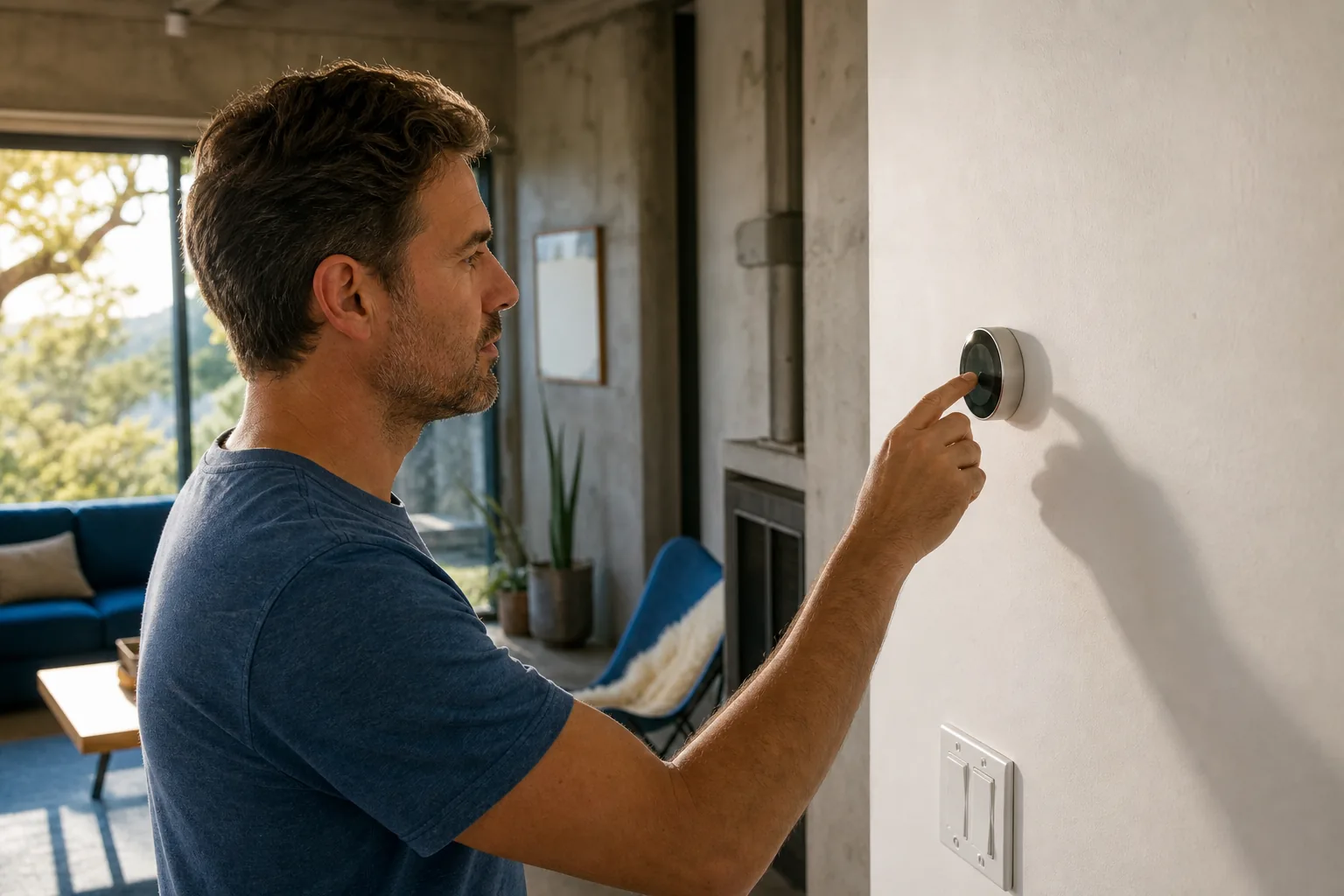
Pick a steady setpoint you can live with, then raise it when the house is empty. A setting near 78°F is a common starting point when people are home, but comfort varies with health, age, humidity, and activity. Try one-degree changes and give each setting time before adjusting again.
The “ 20-degree rule” is a rough guide, not a target that fits every home. It says an AC may cool most effectively when indoor air is about 20 degrees cooler than outdoor air. If it’s 100°F outside, that rule points to 80°F indoors. Don’t force that setting if it feels unsafe or uncomfortable, and don’t expect the number to predict your bill.
A programmable thermostat can raise or lower settings on a schedule. Use that feature to ease cooling while you’re away, then bring the home toward your comfort setting before you return. Avoid large swings that make the system work hard to catch up. Across Auburn, Colfax, Rocklin, Roseville, Grass Valley, Penn Valley, and Lincoln, hot summer afternoons can make this schedule useful.
Schedule around your actual day. If you leave at 8 a.m., set a warmer away temperature for that period. If you return before the most expensive hours, let the schedule begin cooling earlier rather than waiting until the house is hot. Check your utility’s peak window; it may differ from another household’s plan.
For a room-by-room comfort boost, run a ceiling or portable fan only when someone is there. A fan moves air across skin; it doesn’t cool an empty room. Switch it off as you leave. Open windows for natural ventilation only when outdoor air is cooler and safe to bring indoors. Close them before afternoon heat builds.
Smart controls can help if they match your system and routine. Keep the schedule simple, check that the thermostat isn’t in direct sun, and avoid placing lamps or TVs nearby. Those heat sources can affect its reading. If the thermostat setting doesn’t match how the rooms feel, have the control and airflow checked.
Our summer AC temperature guide covers common home, away, and sleep settings. Use it as a starting point, not a rulebook. A comfortable setting you can keep is better than a low setting that leaves the AC running for long stretches.
Pro Tip:Change one thermostat setting at a time and compare your next bill with a similar weather period. For local service, contact Home Worx Heating and Cooling.
Step 3: Reduce Heat Gain with Shade, Sealing, and Airflow
Keep the sun and hot outdoor air from adding to the cooling load. Close blinds or curtains on windows that get direct afternoon sun, especially before the rooms heat up. In Grass Valley and Penn Valley, a hot, dry afternoon can warm sun-facing rooms fast, even when the thermostat is set well.
Check doors and windows for gaps. On a warm day, move your hand along the edges and feel for drafts while the AC is running. Use weather-stripping on moving doors or windows. Caulk fixed cracks around trim or pipe openings, following the product directions. Small gaps in several places can add up.
Look at the attic access and visible insulation, too. If insulation is thin, compressed, or missing in spots, heat may move into the rooms below. Don’t cover vents or block the paths that let attic air move. If you’re unsure what you’re seeing, ask an energy auditor or HVAC contractor to inspect it.
Keep supply vents and return grilles clear of rugs, furniture, and boxes. The return grille is where the system draws room air back in. Block it, and airflow may suffer. If one room stays warm while others cool, note which vents are open and whether doors are usually shut. A technician can check whether the issue is a duct leak, poor balance, or another fault.
Use kitchen and bath exhaust fans only as needed, then turn them off. They push indoor air out, and outdoor air has to replace it. For natural ventilation, open windows when it’s cooler outside than inside. Close them before the outdoor temperature rises. This works best during cooler mornings or evenings, not during the hottest part of the day.
Clear space around the outdoor unit so air can pass through its coil. Remove loose leaves and weeds nearby, but don’t bend the thin metal fins. Shade can help reduce direct sun on the house, though don’t plant or place anything where it blocks the unit’s airflow or service access.
Step 4: Maintain the AC and Check for Cooling Problems
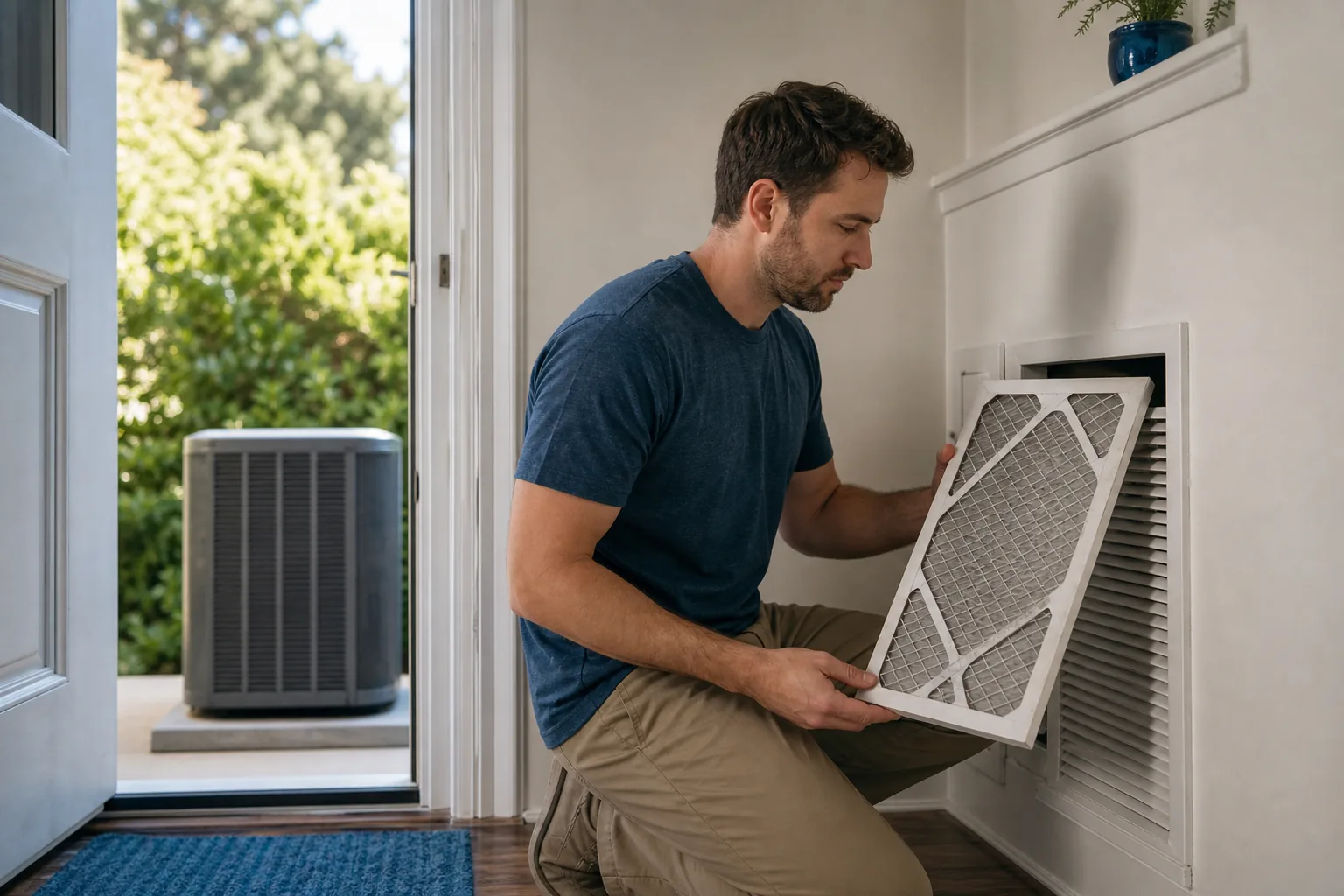
Start with the air filter. Check it monthly during heavy summer use, then replace or clean it as the system maker directs. A clogged filter can restrict airflow. Choose the correct size and type for your equipment; a higher MERV rating can catch smaller particles, but the filter must still allow enough air through.
Next, look at the outdoor unit from the outside. Turn the system off at the thermostat before clearing loose leaves or grass from around it. Keep the electrical cabinet closed. Don’t take off panels or spray into electrical parts. If you’re not sure how to shut the system off safely, leave the cleaning to a technician.
For basic outdoor care, use a soft brush to lift loose debris from the area around the unit. If the coil needs washing, use only gentle water pressure from a garden hose and avoid aiming a hard stream at the fins. High pressure can bend them and restrict airflow. Don’t apply coil cleaner unless the product is made for your unit and you know how to use it safely.
Watch for warning signs while the AC runs. A filter that gets dirty very quickly, weak airflow, unusual noises, ice on the indoor coil, or a system that can’t reach its setting can point to a maintenance or repair issue. Don’t keep lowering the thermostat to compensate. That can extend run time without fixing the cause.
Check visible ducts for loose joints or damaged insulation, especially in an attic or crawl space. Don’t seal ducts with ordinary cloth-backed tape. If a duct is hard to reach or the leak is not clear, ask a professional to inspect it. A proper tune-up can also check the coils, electrical parts, drainage, and system operation.
Seasonal tune-ups are part of Home Worx Heating and Cooling ’s HVAC services. We serve homeowners and small businesses in Roseville and Rocklin, as well as nearby foothill communities. A professional check is a good next step when the system runs longer than usual or comfort changes from room to room.
Step 5: Compare Repair, Upgrade, and Rebate Options
If basic changes don’t help, find out whether the system needs repair or is due for replacement. Ask the technician to explain what they found, how it affects cooling, and what work they recommend. If the AC cools unevenly or runs almost nonstop, ask them to check airflow and duct condition before assuming a new unit is the answer.
For a repair, ask what part failed and whether the fix addresses the cause. For replacement, compare the proposed system’s size and efficiency with your home’s needs. A unit that’s too large or too small can affect comfort and run time. Ask for the equipment details in writing, plus any work needed on ducts or the thermostat.
Check incentive rules before choosing equipment. Rebates and tax credits can depend on the system type, efficiency level, household income, utility, and installation date. Ask the program or utility directly whether funds are open and what paperwork is needed. Don’t assume an incentive applies just because a system is described as efficient.
California households may also have access to utility energy programs or bill-assistance options, depending on eligibility. A rate change may help some homes, while others may benefit more from weatherization or equipment work. Review the terms before switching plans, and compare the hours when your household uses the most power.
When reviewing financing, separate the monthly payment from the electric bill. Home Worx Heating and Cooling lists a new HVAC system starting at $120 per month, or $4 per day, with terms and conditions; ask for details. That payment is for the system, not a promise of a lower utility bill. We also offer system repair, installation, maintenance, and light commercial HVAC service in the region.
For California incentive steps and current program details, see the California AC rebate application guide . Confirm eligibility before signing a contract. Keep the proposal, equipment model details, and installation paperwork together in case an application asks for them.
Home Worx Heating and Cooling is family-owned and serves Auburn, Colfax, Rocklin, Roseville, Grass Valley, Penn Valley, and Lincoln. If you’re comparing a repair with an upgrade, ask for a clear explanation of the work and the payment terms before you decide.
Frequently Asked Questions
What temperature should I set my AC to in summer?
A setting near 78°F is a common starting point when you’re home, but comfort and health needs differ. Try raising the setting by one degree and see how it feels. Use a fan in an occupied room to improve comfort, then turn it off when you leave. Set a warmer temperature while the home is empty.
Does the 20-degree rule really lower an AC bill?
The 20-degree rule is a rough guide to the temperature difference between indoors and outdoors, not a guaranteed bill-saving formula. It suggests an AC may work effectively when the indoor air is about 20 degrees cooler. Don’t set an unsafe or uncomfortable temperature to follow it. Your system, home, and local weather all affect performance.
Should I leave a fan on when nobody is home?
No, turn off room fans when you leave. Fans cool people by moving air across the skin; they don’t lower the room’s temperature. Running one in an empty room uses electricity without helping anyone feel cooler. A fan can help you tolerate a slightly warmer AC setting while you’re in the room.
How often should I change my AC filter?
Check the filter monthly during heavy summer use, then follow the system maker’s replacement or cleaning guidance. A filter can need attention sooner if it gets visibly dirty. Use the correct size and type for your equipment. If airflow drops after a filter change, ask an HVAC technician whether the filter is right for your system.
Will cleaning the outdoor AC unit lower my bill?
Keeping leaves and weeds away from the outdoor unit helps preserve clear airflow, but it can’t fix every cause of high energy use. Turn off the system before clearing loose debris, and avoid high-pressure water that could bend the coil fins. Leave panel removal, electrical parts, and deep coil cleaning to a trained technician if you’re unsure.
Conclusion
Start with your bill and rate plan, then raise the thermostat gradually and reduce heat entering the home. If the AC still runs too long, arrange an inspection before replacing equipment. For local cooling service in Placer or Nevada County, contact Home Worx Heating and Cooling to discuss your system and next steps.