
How to Make AC Colder: 6 Practical Fixes
If your AC runs for hours but the rooms still feel warm, don't start by lowering the thermostat to 60°F. That often hides the real problem. The better path is to check settings, restore airflow, clear the outdoor unit, and then look for faults that need a licensed HVAC technician. These six steps show you how to make AC colder without risking damage to your system.
Table of Contents
Step 1: Check the Thermostat and Cooling Settings
The first step in learning how to make AC colder is to confirm that the system is getting the right call for cooling.
Set the thermostat toCool, not Heat or Fan. Set the fan toAuto. When the fan stays on, it can keep blowing room-temperature air between cooling cycles. That makes the air feel warmer even when the AC is working as designed.
Lower the set point at least five degrees below the room temperature. Then wait three to five minutes. You should hear the outdoor unit start. If the indoor blower runs but the outdoor unit stays quiet, the problem may involve power, the thermostat signal, a capacitor, or the control board.
Check the thermostat schedule next. A programmed setting may raise the temperature soon after you lower it. If the thermostat has a Hold button, use it for a short test. Replace the batteries if the display is weak or blank.
Walk to the electrical panel once. A tripped AC breaker may sit between the On and Off positions. Push it fully to Off, then back to On. If it trips again, stop resetting it. Repeated trips point to an electrical fault that needs professional attention.
For a longer checklist that covers thermostat settings and the outdoor disconnect, see Air Conditioner Not Cooling? Here's How to Fix It . By now, you should know whether the system is receiving a normal cooling command.
Step 2: Improve Airflow with the Filter, Vents, and Returns
Restricted airflow is one of the most common reasons an AC feels weak. A clean filter and open return path can make the supply air feel much colder.
Find the filter behind a return grille or inside the air handler. Hold it up to a light. If you can't see light through much of the filter, replace it. Follow the arrow on the frame. It must point toward the air handler, not toward the room.
Most one-inch filters need checking every 30 to 90 days. Homes with pets, dust, or recent building work may need more frequent checks. A clogged filter can starve the blower. It can also contribute to a frozen indoor coil , which blocks airflow even more.
Next, open every supply vent. Move rugs, couches, curtains, and storage bins away from the grilles. Keep return grilles clear too. Closing several vents doesn't usually make the system cool better. It can raise duct pressure and send less air through the rooms that need it.
After changing the filter, run the AC for 20 to 30 minutes. Check the strongest vent first, then compare it with a distant bedroom. If airflow improves but the air still isn't cold, the filter wasn't the only issue. You may have a coil, duct, or refrigerant problem.
In hot, dry areas such as Auburn and Colfax, dust can load a filter faster during summer. Check it at the start of each hot spell.Never run the system without a filter.Dirt can reach the blower and indoor coil.
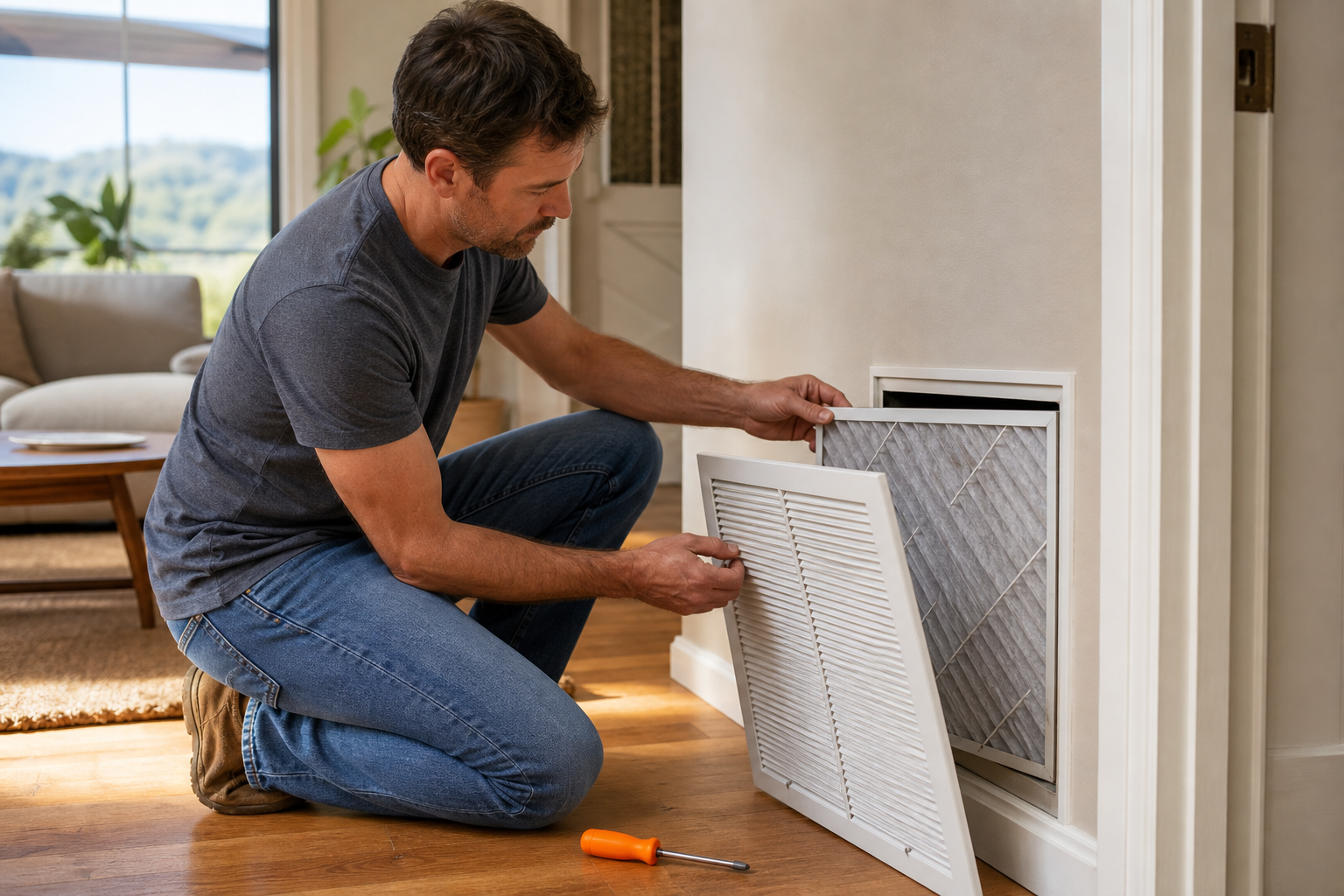
By now, you should have a clean filter, clear vents, and a return grille that can pull air freely.
Step 3: Clear the Outdoor Unit and Reduce Heat Gain
To make the AC colder, help the outdoor condenser release heat. The unit cannot cool well when leaves, grass, or dense plants block its coil.
Turn off the system at the thermostat. Then shut off power at the outdoor disconnect before you clean near the condenser. Don't remove panels or touch wires. Capacitors can hold a charge even after power is off.
Look around the cabinet. Keep plants and stored items away from the sides. Clear grass clippings and leaves from the coil surface. Use a garden hose on a gentle setting. Spray from the inside outward when possible, so dirt moves away from the coil instead of deeper into it. Avoid pressure washers. They can bend the thin aluminum fins.
The top fan should spin when the system runs. Warm air should leave the top of the unit. That warm discharge is normal because the condenser is sending indoor heat outside. A fan that won't start, a loud hum, or a unit that shuts down points to a repair, not a cleaning job.
Also reduce heat entering the home. Close blinds on sun-facing windows during the hottest part of the day. Check that attic access panels seal well. A room with west-facing glass may stay hot even when the AC is producing cold air.
Here's a useful safety rule: if you smell burning, hear grinding, or see damaged wiring, turn the system off and arrange service. Home Worx Heating and Cooling provides emergency response for homeowners across Placer and Nevada counties when a cooling problem cannot wait.
In Rocklin and Roseville, a condenser can collect fine yard dust during a long dry summer. A gentle rinse may help. It won't fix a failed motor or low refrigerant.
Step 4: Check Ducts, Insulation, and Room-by-Room Cooling
If the AC feels cold at one vent but weak in another, the next step is to inspect the path between the air handler and the room.
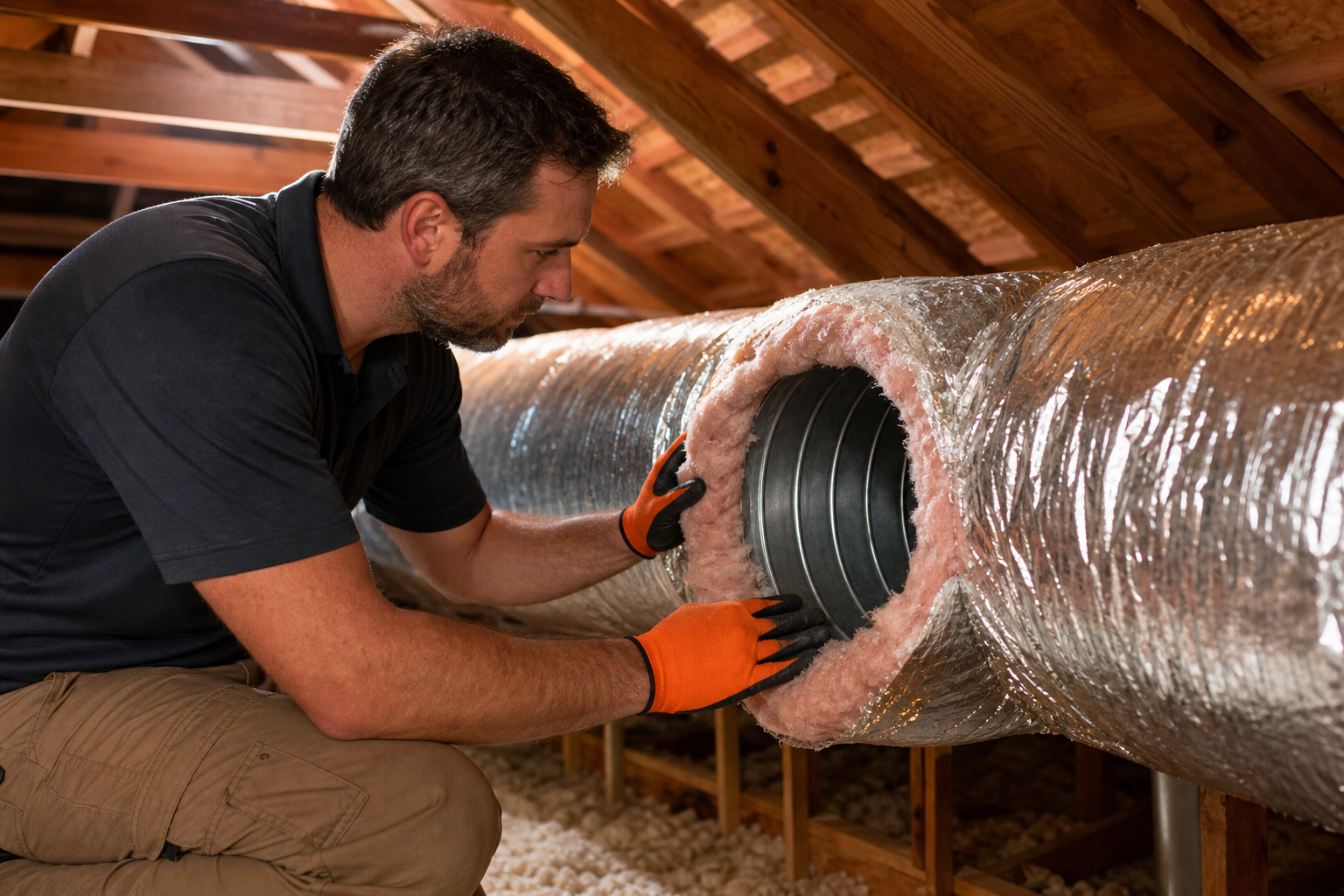
Start with accessible ducts in an attic, crawl space, garage, or closet. With the system running, feel near joints and seams. Strong air leaks can point to loose connections or torn flex duct. Use foil HVAC tape or mastic on accessible gaps. Standard cloth duct tape often dries out in attic heat.
Look for crushed flex duct too. A sharp bend can reduce the air that reaches a bedroom. Don't pull hard on the duct. If insulation has slipped or the duct has separated, a technician should repair it so the system keeps its designed airflow.
Check insulation around the supply ducts. In a hot attic, poorly insulated ducts can gain heat before the air reaches the vent. The vent may blow cool air, yet the room still warms because the duct loses capacity along the way.
Compare rooms at the same time. Place your hand over each supply vent. A room with low airflow needs a different fix from a room with strong airflow but too much sun. Keep interior doors open during a cooling test if the room has no return grille. A closed door can trap air and limit circulation.
For a more precise diagnosis, a technician can measure supply and return temperatures, inspect duct pressure, and check whether the system is sized correctly. Bigger is not always better. An oversized AC may cool the air quickly but shut off before it removes enough moisture.
Homes in Grass Valley and Penn Valley can have sharp room-to-room temperature changes because of attic layout, sun exposure, and older duct runs. Fix the room with the weakest airflow first. Don't close several vents to force air elsewhere.
Step 5: Know When Cleaning, Repair, or Replacement Is Needed
Some cooling problems need more than a filter change. Knowing the warning signs helps you stop before a small fault damages the compressor.
Check for ice on the refrigerant line or indoor coil. If you see ice, turn the AC off and set the indoor fan to On. Let the coil thaw on its own. Don't chip the ice or use a heat gun. A dirty filter can cause freezing, but a coil that freezes again may have low refrigerant, a leak, or another airflow fault.
You can look at the large insulated copper line outdoors. After the system runs for about 15 minutes, it should feel cold and may have condensation. That is only a rough clue. Homeowners can't safely measure or add refrigerant. Refrigerant work requires the right tools and trained handling.
Regular care helps an AC operate more efficiently, while blocked airflow and dirty components can reduce performance; see the air-conditioning guidance for general information. A professional tune-up can also check electrical parts, coil condition, drain operation, and refrigerant pressures.
Repair is usually the first question when the system is fairly young and the fault is clear. Replacement deserves a closer look when the unit needs repeated repairs, struggles through every hot spell, or uses an older refrigerant that is costly to service. Ask for a written diagnosis before approving major work.
Home Worx Heating and Cooling serves Auburn, Colfax, Rocklin, Roseville, Grass Valley, Penn Valley, and Lincoln. The company also advertises financing, including a new HVAC system at as low as $120 per month, or about $4 per day, subject to approval and terms. That can make a replacement worth comparing with repeated repair bills, especially when an old system keeps leaving the house warm.
Don't choose a new system by square footage alone. A proper load check considers windows, insulation, ceiling height, duct condition, and sun exposure. In California, ask the contractor what permits and efficiency requirements apply to the planned work.
By now, you should have a clear decision: clean and monitor the system, schedule a repair, or request a replacement assessment.
FAQ
How can I make my AC colder fast?
To make your AC colder fast, set the thermostat to Cool, switch the fan to Auto, replace a dirty filter, and open blocked vents. Clear debris around the outdoor condenser after shutting off power. If the system still blows warm air, check for ice and stop running it. Continued warm air usually needs a technician.
Why is my AC running but not getting cold?
An AC may run without getting cold because of low airflow, a dirty coil, low refrigerant, or a condenser fault. Start with the filter and thermostat. Then check whether the outdoor unit runs. If the coil freezes or the outdoor fan stays off, turn the system off and arrange licensed HVAC service.
Should I set my thermostat lower to make the AC colder?
Setting the thermostat lower won't make the air leave the vent colder. It only tells the system to run longer. Try a moderate set point first and check airflow. If the home never reaches that setting, the system may have a duct, refrigerant, electrical, or sizing problem.
Can a dirty filter make my AC freeze?
Yes, a dirty filter can restrict airflow enough to make the indoor coil freeze. Turn off cooling and let the ice thaw. Replace the filter before restarting the system. If ice returns within a day or two, stop using the AC and have a technician check refrigerant levels and airflow.
When should I call an HVAC technician?
Call an HVAC technician when the breaker trips again, the outdoor unit won't start, ice returns after a filter change, or the system makes grinding or hissing sounds. You should also get help when the AC runs constantly but cannot reach the set temperature. Home Worx Heating and Cooling can assess cooling systems across the local service area.
Conclusion
Start with the thermostat and filter, then check vents and the outdoor condenser. If those steps don't restore cold air, don't keep lowering the set point or adding refrigerant yourself. Arrange a diagnosis with Home Worx Heating and Cooling so you can compare a repair with a properly sized replacement. That next check can restore comfort before the next hot spell.