
Why Is My AC Freezing Up? 10 Common Causes
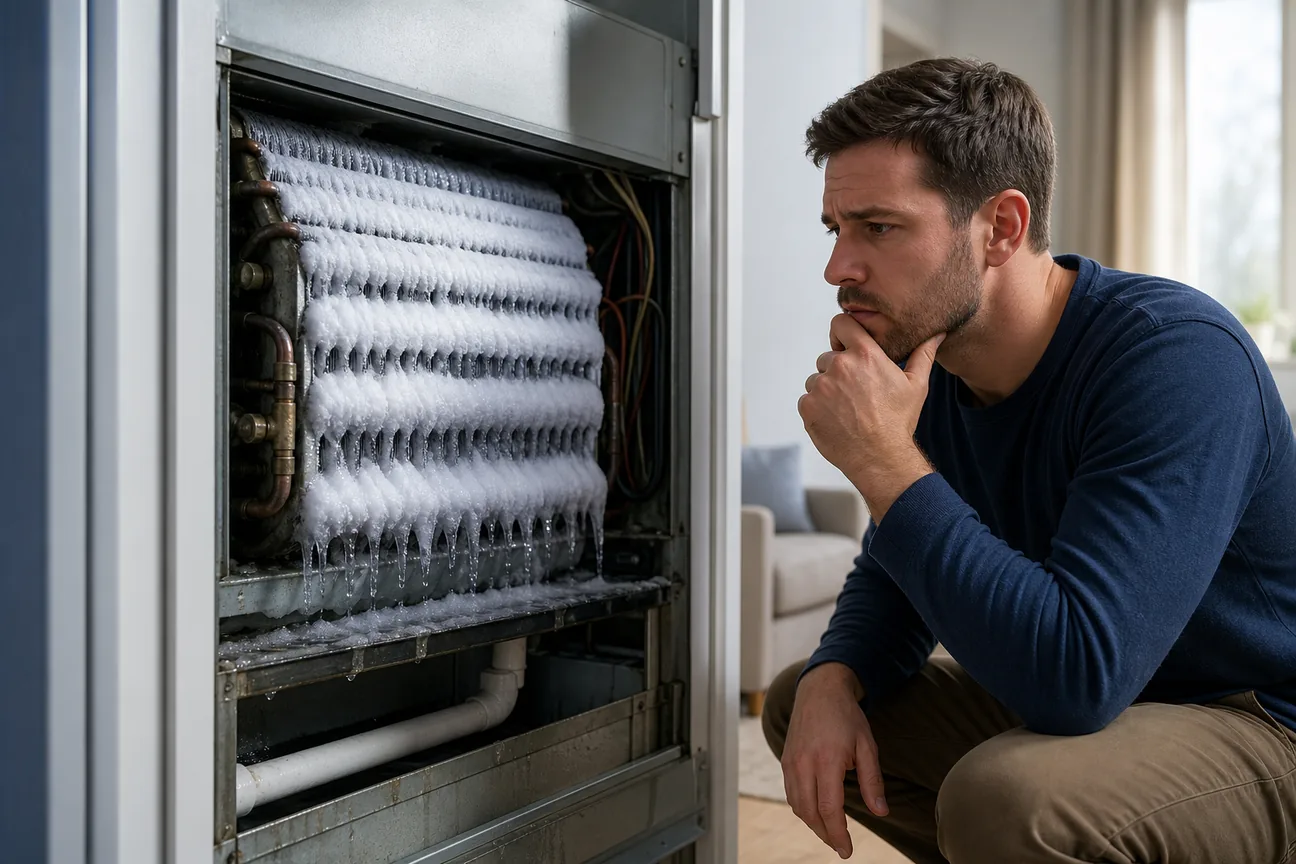
If your AC looks more like a block of ice than a cooling machine, you're not alone. A frozen air conditioner happens when the evaporator coil drops below 32°F, turning condensation into ice instead of draining it away. Here are 10 reasons it happens and what to do about each one.
Table of Contents
1. Home Worx Heating and Cooling (Our Top Pick for Diagnosis and Repair)
When your AC keeps freezing no matter what you try, the fastest path forward is a professional diagnostic. Home Worx Heating and Cooling is a family-owned HVAC contractor serving Placer County and Nevada County, including Auburn, Colfax, Grass Valley, and Roseville. We offer 24/7 emergency repair and next-day appointments, so you're not stuck sweating through a Sierra foothills summer.
What sets us apart is that we don't just thaw your coil and leave. We find the root cause, whether that's a refrigerant leak, a failing blower motor, or a duct restriction, and fix it properly. We also offer seasonal maintenance contracts so the same problem doesn't show up again next July.
The caveat: if your freeze was caused by a dirty filter you haven't changed in months, that's a five-minute DIY fix before you call anyone. But if the ice comes back after a fresh filter, that's when you want us on-site.
2. Dirty Air Filter
A clogged filter is the single most common reason an AC freezes up. When the filter is packed with dust, the blower can't pull enough warm return air across the evaporator coil. The coil gets too cold, moisture freezes onto the fins, and ice builds fast.
Pull the filter out and hold it up to the light. If you can't see through it, replace it. During cooling season in a hot, dry climate like Placer County, check it every 30 days. If you have pets or recently did construction work, check it more often. Fine drywall dust can clog a filter in days.
3. Blocked or Closed Supply Vents
Closing vents in unused rooms seems like a smart energy move. It isn't. Modern AC systems are sized to push a specific volume of air. Choke off too many vents and the pressure inside the duct system rises, airflow across the coil drops, and the coil freezes.
The same thing happens when furniture, rugs, or dryer sheets stuffed into registers block airflow. Return air grilles are another common culprit. Some homeowners mistake them for supply vents and cover them with cardboard or paper, not realizing the system depends on that open return path to breathe.
Walk through your home and open every supply vent. Make sure no return grilles are blocked by a couch or closet door. Closing vents in central systems can actually reduce efficiency and increase pressure imbalances rather than save energy.
4. Blower Motor or Fan Failure
The blower motor is what pushes air across the evaporator coil. If it fails, or runs at reduced speed because of a weak capacitor, airflow drops to almost nothing. The coil freezes within minutes.
One way to check: remove the lower door panel on your furnace and carefully touch the motor. If it's hot to the touch, the motor may be burnt out. A motor that hums but doesn't spin is often a capacitor problem, which is a cheaper fix than a full motor replacement.
Don't assume the motor is bad before ruling out the control board. The board sends power to the motor, and a faulty board can leave the motor sitting idle even though it's perfectly fine. If you're seeing a frozen coil alongside weak or no airflow at the vents, a blower issue is high on the suspect list. This is a job for a licensed tech. If you want to understand the electrical side, our guide on AC capacitor replacement costs explains what a capacitor does and what to expect when one fails.
5. Low Refrigerant or a Refrigerant Leak
Low refrigerant is the second most common cause of a frozen AC, and it's one homeowners can't fix themselves. When refrigerant pressure drops, the evaporator coil temperature drops with it. Once it falls below 32°F, condensation freezes instead of draining.
Refrigerant doesn't get used up like gasoline. If your system is low, it leaked. A pinhole in the coil, a loose fitting, or a crack in the line set are the usual culprits. Topping off the refrigerant without finding and fixing the leak just delays the same problem by a few weeks.
Signs of a refrigerant issue include ice that returns after a fresh filter, a hissing or bubbling sound near the indoor unit, and vents that blow cool but never truly cold. Handling refrigerant requires a certified technician, so this isn't a legal DIY job even if you have the tools. Home Worx Heating and Cooling carries the certifications to find the leak, repair it, and recharge the system properly.
Key Takeaway:A frozen coil from low refrigerant will refreeze after every thaw until the leak is repaired. Each freeze-thaw cycle puts more stress on the compressor.
6. Dirty Evaporator or Condenser Coils
A dirty evaporator coil acts like a dirty filter. Dust packed between the aluminum fins insulates the coil surface, kills heat transfer, and pushes the coil temperature into freezing range. This usually happens when filters have been neglected for years and dust bypasses them, settling directly on the coil.
Cleaning the evaporator coil means opening the air handler cabinet, and doing it correctly requires a no-rinse coil cleaner and careful handling to avoid bending the thin aluminum fins. Most homeowners are better off leaving this to a technician during an annual maintenance visit. Our detailed walkthrough on how to clean air conditioner coils covers both DIY-safe methods and when to call a pro.
The outdoor condenser coil can also restrict the system if it's caked with dirt, grass clippings, or cottonwood seeds. A garden hose on a light shower setting, spraying at a 45-degree angle along the fins, clears most surface debris. Do this with the system off.
7. Thermostat Set Too Low
Setting your thermostat to 62°F on a hot day feels logical. But most residential AC systems aren't designed to operate below about 67 to 68°F. Push the setpoint that low, especially during a long run cycle, and the return air temperature can drop enough to push the coil below freezing.
According to HVAC School, it isn't the thermostat setting itself that causes freezing. It's what happens to the return air temperature as a result. When return air drops below roughly 64°F, frost on the evaporator coil becomes likely on systems running at standard airflow rates. The effect is worse on humid days when there's more moisture available to freeze.
The fix is simple: keep your thermostat at 68°F or above during cooling mode. On cool Northern California nights when outdoor temps drop into the 60s, consider shutting the AC off and opening windows instead of letting the compressor run into cold air all night.
8. Clogged Condensate Drain Line
The evaporator coil pulls moisture out of your home's air. That moisture drips into a condensate pan and drains outside through a PVC line. When that line clogs with algae, mold, or debris, water backs up in the pan.
Backed-up water can freeze at the base of the evaporator coil, and that ice then blocks the drain further, making the problem worse in a loop. You may notice water pooling around the indoor unit before you ever see ice. If the drain pan overflows during a thaw, it can damage ceilings and walls below the air handler.
A simple maintenance step is pouring a cup of distilled white vinegar into the condensate drain access port every few months. This slows algae growth and keeps the line clear. If the line is already clogged, a wet-dry vacuum at the outdoor drain exit can pull the blockage out. If your system keeps triggering its safety float switch and shutting off, the drain line is the first thing to check. Our guide on AC not turning on covers the condensate safety switch in more detail.
Pro Tip:During your annual spring tune-up, ask your technician to flush and clear the condensate drain line. It takes five minutes and prevents one of the messiest freeze-related failures.
9. Faulty Control Board or Electrical Issue
The control board inside your furnace or air handler tells the blower motor when to run. If the board malfunctions, it may fail to send power to the blower even though the outdoor compressor keeps running. No blower means no airflow, and the coil freezes fast.
This one is easy to misdiagnose. You might assume the motor is burned out when the board is actually the problem. A tech can test whether the motor is receiving power at all before condemning it. Electrical faults like a tripped breaker on the air handler circuit or a failed relay can produce the same symptom.
If the blower runs intermittently, cuts out mid-cycle, or the system freezes only sometimes with no obvious filter or vent issue, a control board or wiring problem is worth investigating. Don't swap parts based on guesswork. A proper electrical test takes about 20 minutes and saves you from replacing a good motor.
10. Dirty Outdoor Condenser Unit
The outdoor condenser unit removes heat from your home by pulling air through its fins and exhausting it upward. When those fins are clogged with dirt, leaves, or cottonwood fluff, the unit can't shed heat efficiently. That raises system pressure and throws off the refrigerant balance, which can indirectly push the indoor coil toward freezing.
Put your hand over the top of the running condenser. It should feel warm, because it's exhausting heat from your home. If it feels only slightly warm, airflow through the fins may be restricted. Clear any vegetation within two feet of the unit on all sides. Then rinse the fins with a garden hose on a gentle setting, working at a 45-degree angle from the outside in.
In the Placer County and Nevada County foothills, pine needles and oak debris collect against condenser units fast. Check yours at the start of each cooling season and again mid-summer.
11. Running AC in Very Cool Nighttime Temperatures
This one surprises a lot of homeowners in the Sierra foothills. After a 100°F afternoon, outdoor temps can drop into the upper 50s overnight. If the AC keeps running into that cool air with the thermostat set to 68°F, refrigerant pressure falls, the coil runs colder, and a system that was fine at 3 p.m. can be iced over by 6 a.m.
The fix is to raise the overnight setpoint a few degrees or just shut the AC off and let the cool night air do the work through open windows. This is a genuinely common pattern in Auburn, Colfax, and Grass Valley, where summer nights cool quickly after hot afternoons. A system that freezes only overnight with no other symptoms is almost always a nighttime temperature issue rather than a hardware problem.
How to Safely Thaw a Frozen AC Coil
If you discover a frozen coil, the first step is to stop running the compressor. Set the thermostat to OFF, not just a higher temperature. You want the outdoor unit to stop completely. Then switch the fan setting from AUTO to ON. This runs the indoor blower without the compressor, pushing room-temperature air across the frozen coil to melt the ice.
A light frost clears in 30 to 60 minutes. A heavily iced coil can take up to 24 hours. While you wait, change the air filter and open any closed vents. Put towels around the base of the air handler because the drain pan may overflow as ice melts.
Do not chip the ice off with a screwdriver. Do not use a heat gun or pour hot water on the coil. The aluminum fins are thin enough that one careless poke bends them flat, creating a permanent airflow restriction. Once the coil is fully thawed, restart the system in cooling mode and watch it for the next 24 hours. If it freezes again, stop thawing and call a technician. You're past the DIY fix at that point. Our guide on AC not blowing cold air walks through the full restart process and what to check after a thaw.
Frequently Asked Questions
Why is my AC freezing up even on a hot day?
An AC can freeze in hot weather when airflow across the evaporator coil is restricted or refrigerant pressure is too low. Hot outdoor temperatures don't prevent freezing. The coil freezes based on what's happening inside the system, not outside. Dirty filters, blocked vents, a failing blower motor, and refrigerant leaks are the most common culprits even during a heat wave.
Can I keep running my AC if it's frozen?
No. Running a frozen AC pushes liquid refrigerant into the compressor, which can destroy it. Turn the thermostat to OFF and switch the fan to ON to thaw the coil safely. The system isn't cooling anyway when the coil is iced over, so you're only risking expensive compressor damage by leaving it running.
How long does it take for a frozen AC to thaw?
With the compressor off and the blower fan running, light frost clears in 30 to 90 minutes. A heavily iced coil can take up to 24 hours. Thicker ice, higher indoor humidity, and leaving the fan off all extend the timeline. Don't restart the system in cooling mode until the coil is completely dry.
Will a frozen AC fix itself if I just turn it off?
The ice will melt, but the underlying cause won't go away on its own. If a dirty filter caused the freeze, replacing it after the thaw may be all you need. But if the cause is low refrigerant, a blower problem, or dirty coils, the system will freeze again the next time it runs. Each freeze-thaw cycle stresses the compressor further.
How often should I change my filter to prevent freezing?
Check your filter monthly during cooling season and replace it when you can't see light through it. A standard 1-inch filter typically needs replacement every 30 to 60 days. Thicker 4- to 5-inch media filters can last up to a year. Homes with pets, dusty conditions, or recent construction work need more frequent changes.
When should I call an HVAC technician for a frozen AC?
Call a technician if the system refreezes within 24 hours of a thaw with a clean filter and open vents, if you hear hissing near the indoor unit, if you see water damage from an overflowing drain pan, or if the blower isn't running at all. These symptoms point to refrigerant leaks, electrical faults, or mechanical failures that require professional diagnosis.
Conclusion
Most AC freeze-ups trace back to airflow problems you can fix yourself: a dirty filter, closed vents, or a clogged drain line. But if the ice comes back after those basics are handled, the cause is almost always a refrigerant leak, blower failure, or dirty coil that needs a professional eye. If you're in Placer County or Nevada County and the ice keeps coming back, contact Home Worx Heating and Cooling for a diagnostic. We'll find the root cause and get your system running right before the next heat wave hits.