
How to Prevent AC From Freezing
Finding ice on your AC is a sign something’s off, and running it longer won’t fix the problem. In Placer and Nevada Counties, a dusty filter can choke airflow during a hot summer and leave the indoor coil covered in ice. Use these steps to prevent a freeze-up and know what to do if one starts.
We analyzed 66 Reddit posts, YouTube comments, and Quora questions about preventing AC from freezing and found that 33% raised airflow and filter maintenance issues. A further 23% asked about thermostat and fan operation settings.
Table of Contents
Step 1: Replace a Dirty Filter and Choose One That Allows Good Airflow
A clean filter is the first check when you’re figuring out how to prevent AC from freezing. It lets enough warm indoor air reach the evaporator coil, the indoor part that cools the air. When airflow drops, the coil can get too cold and moisture on it may freeze.
Check the filter each month during cooling season. Hold it toward a light. If dust covers much of the surface, it looks matted, or you can’t see light through it, replace it. Dust from nearby road work or home repairs can load a filter faster than usual, so don’t rely on the calendar alone.
Choose the right size and a filter type your system can handle. A filter with a higher MERV rating catches smaller particles, but it may also restrict airflow if the system wasn’t designed for it. Check your equipment instructions or ask a technician before switching to a denser filter.
Fit the filter so its airflow arrow points toward the air handler or furnace, not toward the return grille. A backwards filter may still catch dust, but it won’t sit as intended. Check that it fits snugly, too. A gap around the edge can let dust pass the filter and build up on the indoor coil.
For homes in Colfax and Grass Valley, dust and pollen can vary with the season and nearby work. Check the filter more often if you have pets or a dusty home. Home Worx Heating and Cooling can check for airflow issues if a fresh filter doesn’t stop weak airflow or recurring ice.
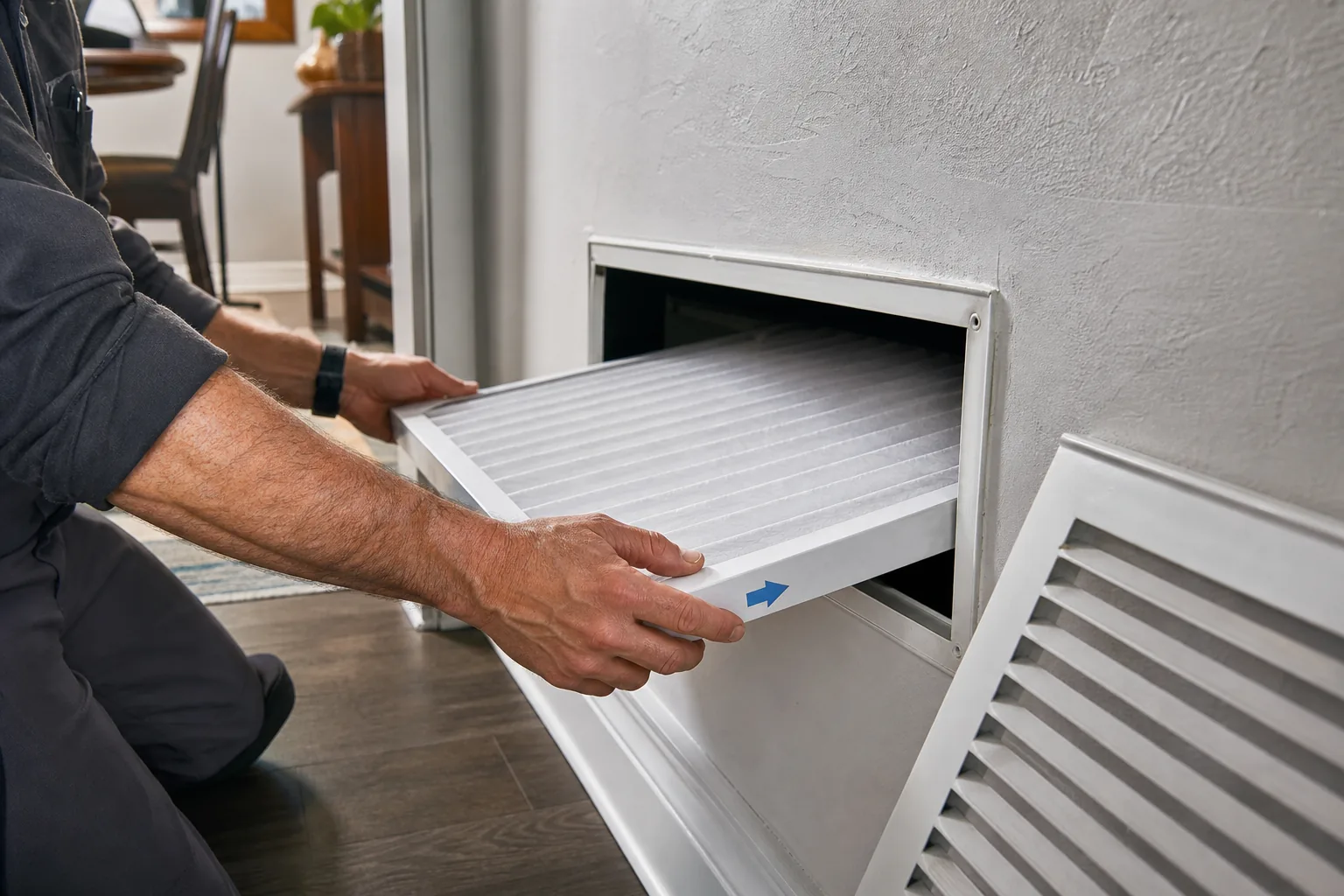
Pro Tip:Write the date on the filter frame when you install it. That gives you a simple reminder to check it again next month.
Step 2: Keep Supply Vents and Return Grilles Clear
Clear vents help keep air moving across the coil. Even with a clean filter, blocked registers or return grilles can limit airflow enough to contribute to ice. Supply vents send cooled air into rooms. Return grilles draw room air back toward the system.
Walk through the house and make sure each supply vent is open. Move rugs, curtains, boxes, and furniture away from vents and return grilles. A couch pushed over a large return grille can restrict airflow even if every smaller vent looks clear.
Don’t close vents in rooms you aren’t using to try to save energy. Many systems are designed to move air through the whole home. Closing several vents can change the airflow through the ducts and reduce the air reaching the coil. If one room is always too warm or too cold, ask a technician about the cause instead of closing more vents.
Check visible ductwork for a section that has come apart or looks crushed, especially after work in an attic or crawl space. Don’t open the air handler or reach into moving parts. If several rooms have weak airflow, the cause may be deeper in the duct system or blower.
Local homes face different conditions. Rocklin and Roseville can have long, hot spells when AC systems run hard, while cooler evenings in the foothills may tempt you to shut vents in a room. Keep the airflow paths open either way. For more on how restricted airflow can lead to a freeze-up, see this overview of common AC freezing causes .
By now, every supply vent should be open, and no return grille should sit behind furniture or a closed door.
Step 3: Set the Thermostat for Steady Cooling
Steady thermostat settings help your AC run as intended. Setting the temperature extremely low doesn’t make the system cool faster. It can keep the equipment running for long stretches, and a system with an airflow or mechanical problem may then develop ice.
Set the thermostat to Cool and choose a comfortable temperature rather than pushing it far below the room temperature. If the house feels warm, lower the setting a little and give the system time to respond. Avoid repeated large changes while you wait.
For normal cooling, leave the fan on Auto unless your equipment instructions say otherwise. In Auto, the indoor blower runs with the cooling cycle. If ice appears, turn cooling Off. You can switch the fan to On to move room air across the coil while it thaws, but only if the indoor blower runs normally and water isn’t near electrical parts.
Check thermostat batteries if the screen is dim or shows a low-battery warning. A weak battery can interfere with thermostat operation. It’s an easy check that homeowners may overlook, though it won’t fix a refrigerant leak, a weak blower, or a blocked coil.
Weather matters, too. On a cool Sierra foothill evening, don’t keep the compressor running if outdoor conditions are unusually cold. Use the fan setting or open windows when outdoor air feels comfortable instead. Lincoln’s cooler evenings can make that a useful choice after a hot afternoon.
If you’re unsure which thermostat setting to use after a freeze-up, leave cooling off until all visible ice has melted. The normal fan setting and the thawing setting serve different purposes.

Step 4: Keep the System Clean and Schedule Seasonal Maintenance
Clean equipment and regular service can catch problems that a filter check won’t. Dust on the indoor evaporator coil can reduce heat transfer. A dirty outdoor condenser can also limit how well the system releases heat. Either way, the AC may struggle to cool your home.
Keep leaves, grass, and other loose debris away from the outdoor unit. Don’t put objects against the cabinet. If you rinse off visible dirt, use gentle water and keep it away from electrical parts. Don’t use a pressure washer or bend the thin metal fins. Stop if cleaning would mean removing panels or handling wiring.
The indoor coil is harder to reach. Some systems allow safe cleaning by a homeowner, but others have a sealed cabinet or delicate parts close by. Don’t force a panel open or spray cleaner into equipment you can’t inspect. If the coil is heavily dirty, or you’re not sure how to reach it safely, leave the job to a technician. Our safe evaporator coil cleaning guide explains when to stop and get help.
Keep the condensate drain clear as well. This line carries water away from the indoor unit. If it clogs, meltwater from a frozen coil may spill from the drain pan and damage nearby flooring or ceilings. Watch for standing water near the air handler or a pan that doesn’t drain. Don’t pour cleaning products into the line unless your equipment instructions approve them.
Schedule professional maintenance before the main cooling season, and follow the service schedule recommended for your system. A technician can inspect the coil and drain, check airflow, and test the blower and its electrical parts. A failing blower motor or capacitor can reduce airflow even when the filter is new.
Home Worx Heating and Cooling provides seasonal maintenance for homes in Auburn, Penn Valley, and nearby communities. We can check for issues that aren’t safe or easy to diagnose with a visual inspection. That’s also when a technician can assess whether the system needs repair rather than another filter change.
Key Takeaway:A clean filter helps, but it can’t rule out a dirty coil, a drain problem, or a failing blower.
Step 5: Act Quickly if You See Ice or Notice Weak Airflow
If you see ice on the indoor unit or refrigerant line, or the vents suddenly push very little air, turn the thermostat to Off. Don’t keep cooling the home. Ice blocks airflow, and continued operation can add more ice and leave a lot of water behind when it melts.
If the indoor blower works normally, set the fan to On so room-temperature air can pass over the coil. Give the ice time to melt. A light frost may clear sooner than a coil covered in solid ice; a heavy freeze can take much longer. Put towels near the indoor unit and check the drain pan as water collects.
Don’t chip ice with a knife, screwdriver, or other sharp tool. The coil has thin fins and refrigerant tubing that can be damaged. Don’t pour hot water on it or use a heat gun. If water reaches electrical parts, stop and arrange service.
While the system thaws, replace a dirty filter and open blocked vents. Once all visible ice is gone, you can try cooling again if there are no other warning signs. Watch the system. If ice returns, switch it off and arrange a professional diagnosis instead of repeating the thaw.
Low refrigerant is one possible cause, but it isn’t something to top off yourself. Refrigerant levels can drop because of a leak, and a technician needs to find the cause and assess the system.
A weak blower, a faulty control board, or a problem with the refrigerant metering device can also cause a freeze-up. A homeowner can note symptoms, such as new noises or weak airflow, but testing electrical components and refrigerant parts takes proper training and tools. In Penn Valley and Lincoln, as elsewhere in the region, recurring ice is a reason to stop cooling and book an inspection.
Home Worx Heating and Cooling offers repair service across Placer and Nevada counties. When ice returns after you’ve replaced the filter and cleared the vents, get the system checked rather than guessing at the cause.
FAQ
Why does my AC freeze up even with a clean filter?
A clean filter doesn’t rule out other airflow or equipment problems. A dirty evaporator coil, blocked duct, weak blower, low refrigerant, or a control fault can still cause ice. Turn cooling off if you see frost. If the coil freezes again after it fully thaws, have a technician find the cause before running the system again.
Should I turn off my AC if it freezes?
Yes, switch the thermostat to Off when you see ice. Continuing to cool can build more ice and reduce airflow further. If the indoor blower works normally, set the fan to On to help thaw the coil. Protect the area from meltwater, and don’t chip at the ice or use heat.
How often should I change my AC filter?
Check it monthly during cooling season, then replace it when it’s visibly dirty or at the interval listed by the filter or system maker. Dust, pets, and home projects can mean more frequent changes. Use the right size and type, and point the airflow arrow toward the air handler.
Can low refrigerant make an AC freeze?
Yes, low refrigerant can lower pressure in the system and make the indoor coil cold enough to freeze moisture. A refrigerant shortage may point to a leak, so don’t try to add refrigerant yourself. Turn off cooling if ice appears and arrange a professional diagnosis, especially if the freeze-up returns.
Can I run my AC on a cool night?
It’s best not to run cooling when outdoor temperatures are unusually low for your system. Cool night air may be enough to make the home comfortable without the compressor. If the AC is already icing up, shut cooling off and let the coil thaw before restarting it.
Conclusion
Check the filter monthly, keep every vent clear, and arrange service if ice returns after a full thaw. Home Worx Heating and Cooling can inspect your system and help prevent another freeze-up. Contact us to arrange local service in Auburn, Colfax, Rocklin, Roseville, Grass Valley, Penn Valley, or Lincoln.