
HVAC UV Light Benefits: What Homeowners Should Know
The most useful HVAC UV light benefits are often less dramatic than the ads suggest. A lamp aimed at a damp indoor coil can help limit microbial growth there, but it won't trap dust or clean every part of your home's air.
We analyzed 82 comments and questions from YouTube, Reddit and Quora about HVAC UV lighting and found that 45% mentioned mold and bacteria elimination.
For homeowners, the key is matching the lamp to the problem. Here’s how these systems work, what results are realistic, and what to ask before installation.
Table of Contents
What an HVAC UV Light Does and Where It Works
An HVAC UV light is a lamp installed inside a forced-air heating and cooling system. Most use UV-C light to disrupt the ability of some microorganisms to grow. The lamp can target a fixed surface, such as the evaporator coil, or shine into the airstream as air moves through a duct.
The coil is the clearer use case. In cooling mode, moisture forms on the indoor coil as it removes heat from the air. Dust can mix with that moisture and form a film. A lamp aimed at the coil keeps shining on the same area while the system runs, so the surface gets far more exposure than a particle moving quickly through a duct.
An in-duct lamp has a different job. It shines on air as it passes, and that brief exposure makes results depend on lamp strength, placement, and airflow speed. The lamp can't treat what it can't reach. A coil can also cast shadows, so the light won't hit every surface inside an air handler. For homes in Rocklin and Roseville, coil access and airflow are factors to consider when assessing placement.
Lamp placement depends on the target surface, and ongoing UV exposure can degrade plastics, rubber gaskets, or filter materials that aren't UV-resistant. In practice, the right location depends on the air handler, coil, access panels, and nearby parts.
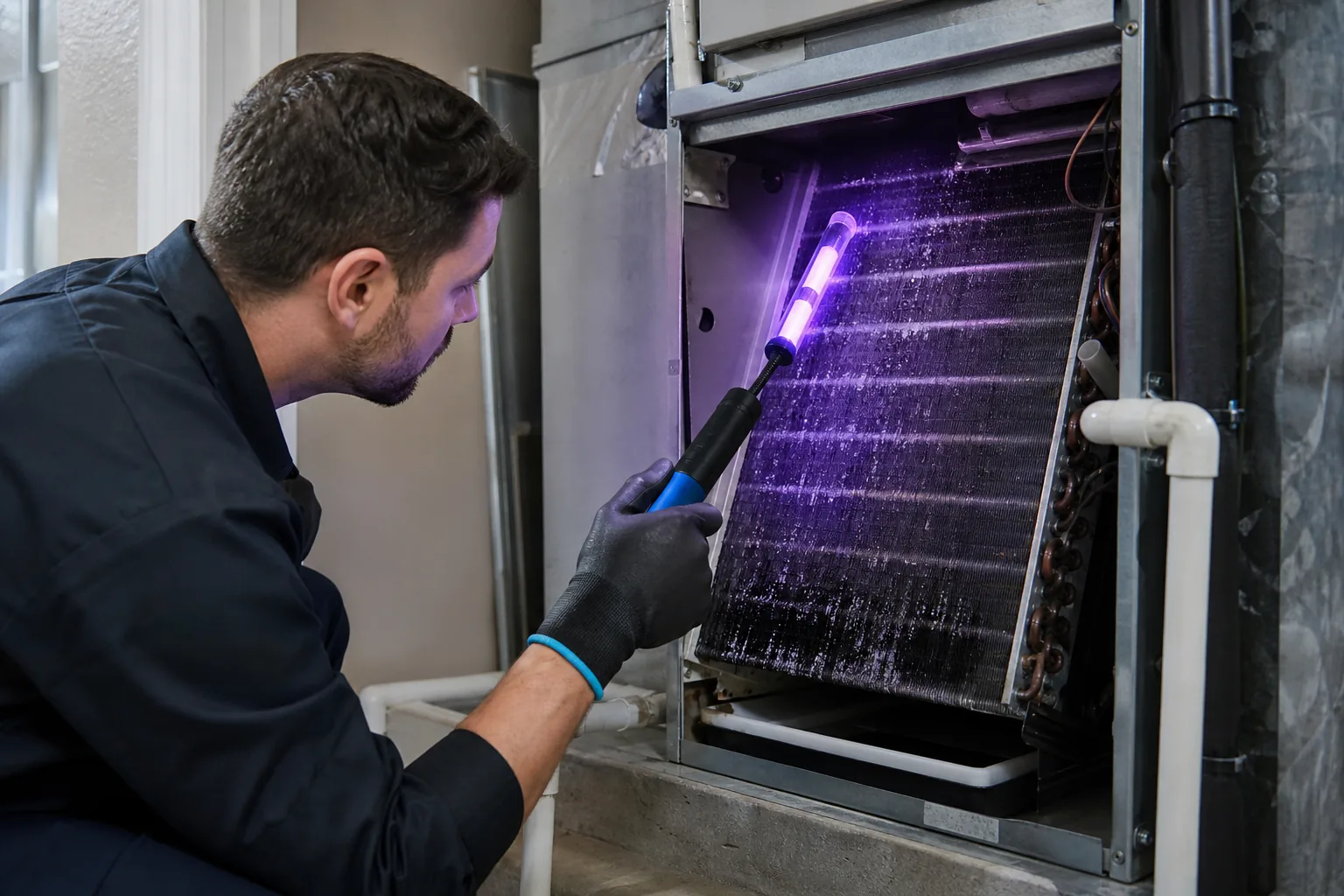
We assess the equipment and the reason for considering a UV light before recommending an approach. In Colfax and Auburn, that may mean checking a coil for visible buildup or tracing a musty smell before discussing a lamp. Homeowners in Grass Valley and Penn Valley can also start with an equipment assessment. If you're weighing placement or system fit, our UV light installation guide explains the difference between coil treatment and airstream treatment.
Some systems use a coil lamp and a separate lamp in the duct. That setup covers two targets, but more coverage doesn't mean every airborne particle is treated. UV-C works only on microbes that receive enough exposure. It doesn't act like a filter that catches particles as air passes through.
Far-UVC at a different wavelength is also being explored for use in occupied spaces. It's mainly a commercial application today, and it shouldn't be treated as a simple swap for a standard HVAC lamp. Ask what wavelength a proposed system uses and what area it is designed to treat. For local guidance in Lincoln, contact Home Worx Heating and Cooling .
Potential Benefits: Cleaner Coils, Fewer Musty Odors, and More
The most dependable benefit is helping control microbial growth on the surfaces the lamp reaches. That matters most when a coil stays damp during cooling. A cleaner coil can help preserve airflow and heat transfer, though UV light doesn't remove dust or clean a coil that's already heavily soiled.
UV-C can help prevent biofilm formation on HVAC coils and reduce mold growth on residential evaporator coils. By limiting buildup, it may also reduce cleaning labor during scheduled maintenance. Those benefits depend on the lamp reaching the coil surface.
A UV lamp may also help reduce a musty odor when the source is microbial growth on an illuminated coil or nearby surface. It won't fix every smell. A clogged drain, standing water, electrical fault, or odor source elsewhere in the house needs its own diagnosis.
In a home with a persistent coil odor, it helps to first inspect the drain and coil. If the coil is dirty, cleaning may be needed before a lamp can help slow new growth. After that, a coil-mounted lamp can keep shining on the treated area between maintenance visits.
Cleaner coils may also help a system hold its performance, especially if buildup had been restricting airflow or heat transfer. But savings on an energy bill aren't automatic. The effect depends on the coil's condition, how long the system runs, lamp placement, and ongoing care. A clean coil in an already well-maintained system may leave less room for a noticeable change.
People often ask whether a UV light helps with allergies. It doesn't capture pollen, dust, or pet dander. A filter does that job. The two can complement each other: filtration catches particles, while a properly placed UV lamp targets certain microbes on treated surfaces.
For homes in Rocklin or Roseville, where summer cooling can mean long periods of coil use, the first question is still whether the coil has a microbial growth issue. Homeowners in Auburn and Lincoln can start with the same check. Our indoor air quality tips cover how filtration fits into a wider plan. A UV lamp is one tool, not a fix for every air concern.
Across the Sierra foothills, hot, dry summers and cold winters make seasonal HVAC care relevant. Home Worx Heating and Cooling is a family-owned HVAC contractor based in Colfax, CA, serving Placer County and Nevada County, including Grass Valley and Penn Valley.
Limitations, Safety, and When a UV Light May Not Help
UV-C is a line-of-sight treatment. Dust, equipment parts, insulation, and coil fins can block the light. A lamp can be on and still leave some surfaces untreated. Placement and exposure time matter, especially for in-duct systems where air passes the lamp quickly.
UV lights don't remove inert particles or gases. They won't trap dust, pollen, smoke, or pet dander, and they can't replace a filter. A filter also won't fix a damp coil or a blocked condensate drain. Each tool has a separate job.
They may not help if the odor has another cause, or if the system needs cleaning or repair first. A UV lamp doesn't fix poor drainage, excess moisture, or inadequate airflow. Those problems need to be found and addressed rather than covered with an added device.
Direct exposure to UV-C light can harm skin and eyes. A correctly installed lamp stays inside the closed air handler or duct. Keep people and pets away from direct light during service, and don't look at an energized lamp.
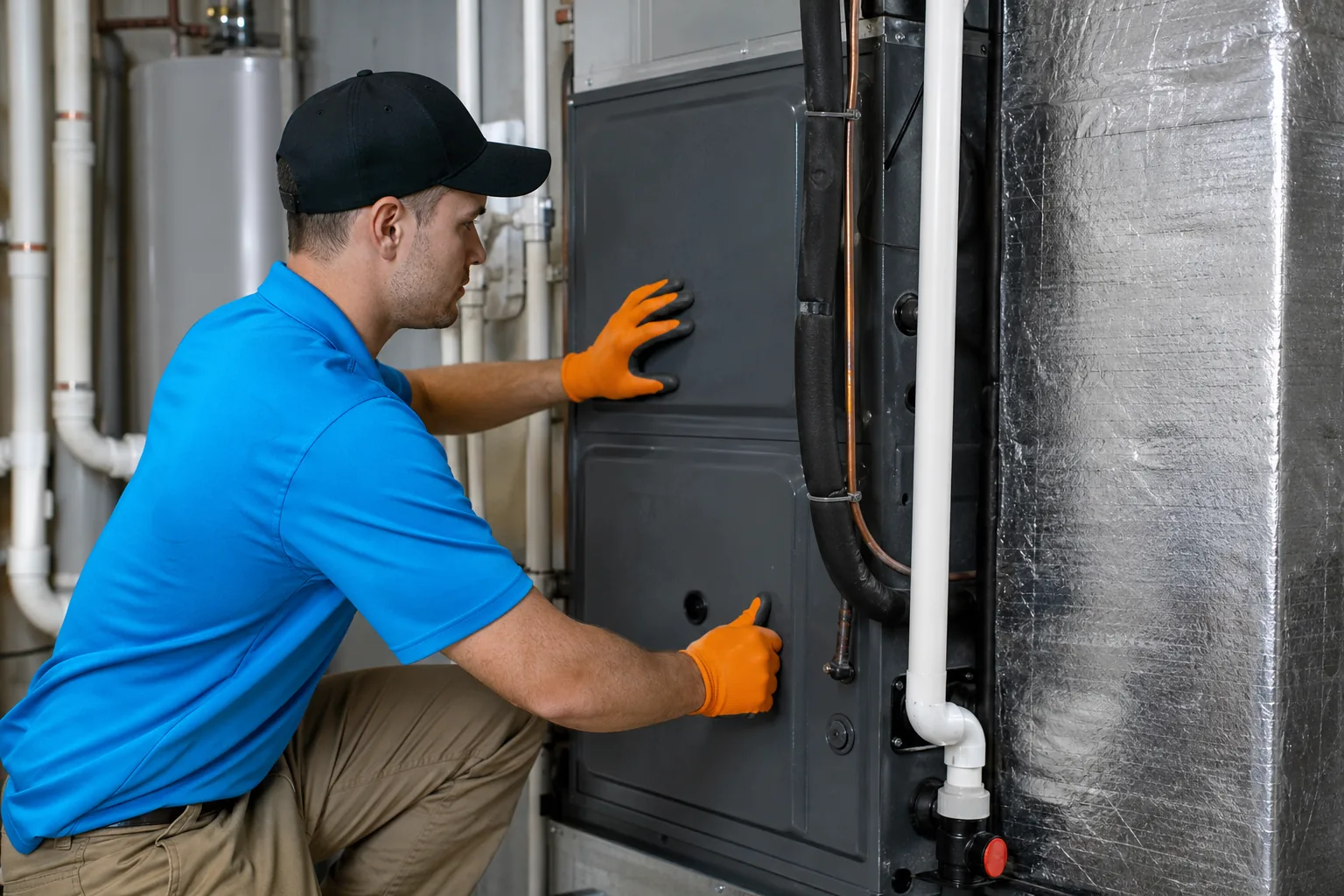
Ozone is another point to check. Some older UV lamps can emit ozone, which can irritate the lungs. Ask for a system intended for HVAC use that doesn't produce ozone. Don't assume that every device described as a purifier uses the same technology.
Long-term UV exposure can also damage some plastics, rubber parts, wiring insulation, or filter materials that aren't made to withstand it. A technician should position and shield the lamp so it treats the intended surface without shining on vulnerable components. This is one reason a bulb placed at random inside a duct isn't a sound installation plan.
UV lamps lose useful output as they age, even if they still glow. Performance claims also need context: a test result for a specific surface or organism doesn't show how the device will perform in a different air handler. Ask what the test measured and whether it reflects the intended use in your home.
Installation, Upkeep, and Local Considerations
Installation starts with a look at the system. A technician checks where the coil sits, how much space is available, what the lamp would illuminate, and whether the electrical setup can support it. The design should also allow safe service later, with the lamp kept out of direct view when the cabinet is open.
Upkeep is simple but shouldn't be skipped. Dust on a lamp can cut the amount of UV-C that reaches the target. Replacement timing depends on the lamp and how it runs. Use the manufacturer's instructions and have the lamp checked during regular HVAC service.
There are ongoing costs beyond installation. Include lamp replacements and service visits when weighing value. Energy savings, if any, depend on how dirty the coil was and how the system runs. Don't count on a UV light to pay for itself through lower bills without a system-specific estimate.
Local conditions matter, too. In the Sierra foothills, hot, dry summers put cooling equipment to work, while cold winters bring a separate heating season. In Grass Valley or Penn Valley, a UV light may make sense if inspection finds recurring growth on a damp coil. It isn't a standard need for every home.
Filter choice matters alongside UV. A higher-efficiency filter can catch more particles, but it also needs to suit the system's airflow needs. UV doesn't make a filter's job unnecessary or correct a filter that's too restrictive for the equipment. We can review the coil, filter fit, and airflow before suggesting an air-quality change.
For homeowners in Lincoln, the best next step is an inspection if a musty smell keeps returning or a coil shows visible buildup. Home Worx Heating and Cooling serves these foothill communities, including Auburn, Colfax, Rocklin, Roseville, Grass Valley, Penn Valley, and Lincoln. We can help you decide whether coil cleaning, a UV lamp, or another repair fits the problem.
Frequently Asked Questions About HVAC UV Lights
Do HVAC UV lights really work?
Yes, they can help control some microbial growth on surfaces the lamp directly reaches. Coil-mounted lamps have a steady surface to treat, while air-stream lamps expose moving air for a shorter time. Results depend on lamp output, placement, and upkeep. UV light isn't a replacement for filtration, cleaning, or fixing moisture problems.
Will a UV light get rid of a musty HVAC smell?
It may help if the odor comes from microbial growth on an illuminated coil or nearby surface. It won't fix smells caused by a blocked drain, standing water, electrical trouble, or another source in the home. Find the cause first. A dirty coil may need professional cleaning before a lamp can help slow new growth.
Are HVAC UV lights safe for people and pets?
They can be used safely when the lamp is installed inside a closed HVAC cabinet or duct and kept from direct view. UV-C can harm eyes and skin during direct exposure, so don't look at a lit lamp or open the unit while it's on. Ask the installer about shielding and the steps used during service.
How often does an HVAC UV bulb need to be replaced?
Many standard lamps need replacement about once a year, but the right schedule depends on the model and its instructions. A bulb can still glow after its useful UV-C output has declined. Keep a record of the installation or replacement date, and have the lamp checked during routine HVAC maintenance.
Can a UV light replace my HVAC filter?
No. A filter traps particles such as dust and pollen, while a UV lamp targets certain microbes on surfaces it illuminates. UV light won't capture pet dander or smoke. Keep using a filter that fits your system, and ask an HVAC technician before changing to a higher-efficiency option.
Conclusion
Consider a UV light when an inspection points to recurring microbial growth on the coil, not as a cure-all for indoor air concerns. Start with a system check and a clear goal for the lamp. Home Worx Heating and Cooling can help assess your equipment and discuss local service options.