
Leaky Ductwork Symptoms: Signs and What They Mean
A room that stays chilly while the rest of your home feels warm can point to leaky ductwork. The same goes for a whistle near a vent or a door that shifts when the system starts. Leaky ductwork symptoms often show up as small clues first. Here’s what they can mean and when to get a closer look.
We analyzed 36 YouTube comments about leaky ductwork symptoms and found that 22% mentioned duct leaks.
Table of Contents
Sounds and Dust That Can Point to Leaking Ducts
Listen near supply vents and any duct sections you can safely see while the heat or air conditioning runs. A high whistle may mean air is squeezing through a narrow gap. A low roar can point to air escaping through a larger opening or a loose connection.
Dust can leave another clue. Look for streaks near duct joints or a buildup around a vent that returns soon after cleaning. A dusty return grille may simply need a clean, but recurring dirt near a seam can suggest air is moving through a gap.
Many leaks happen where one duct section joins another, or where a branch connects to a main duct. Age, vibration, a poor fit, or physical damage can loosen these points. A torn or separated section needs more than a dab of sealant. It may need to be reconnected or repaired first.
If you spot a small gap on an accessible duct, use a product intended for sealing duct gaps or UL 181 foil tape. Use products intended for duct joints rather than general-purpose tape. Our guide to sealing air ducts explains which visible checks are safe and when to stop.
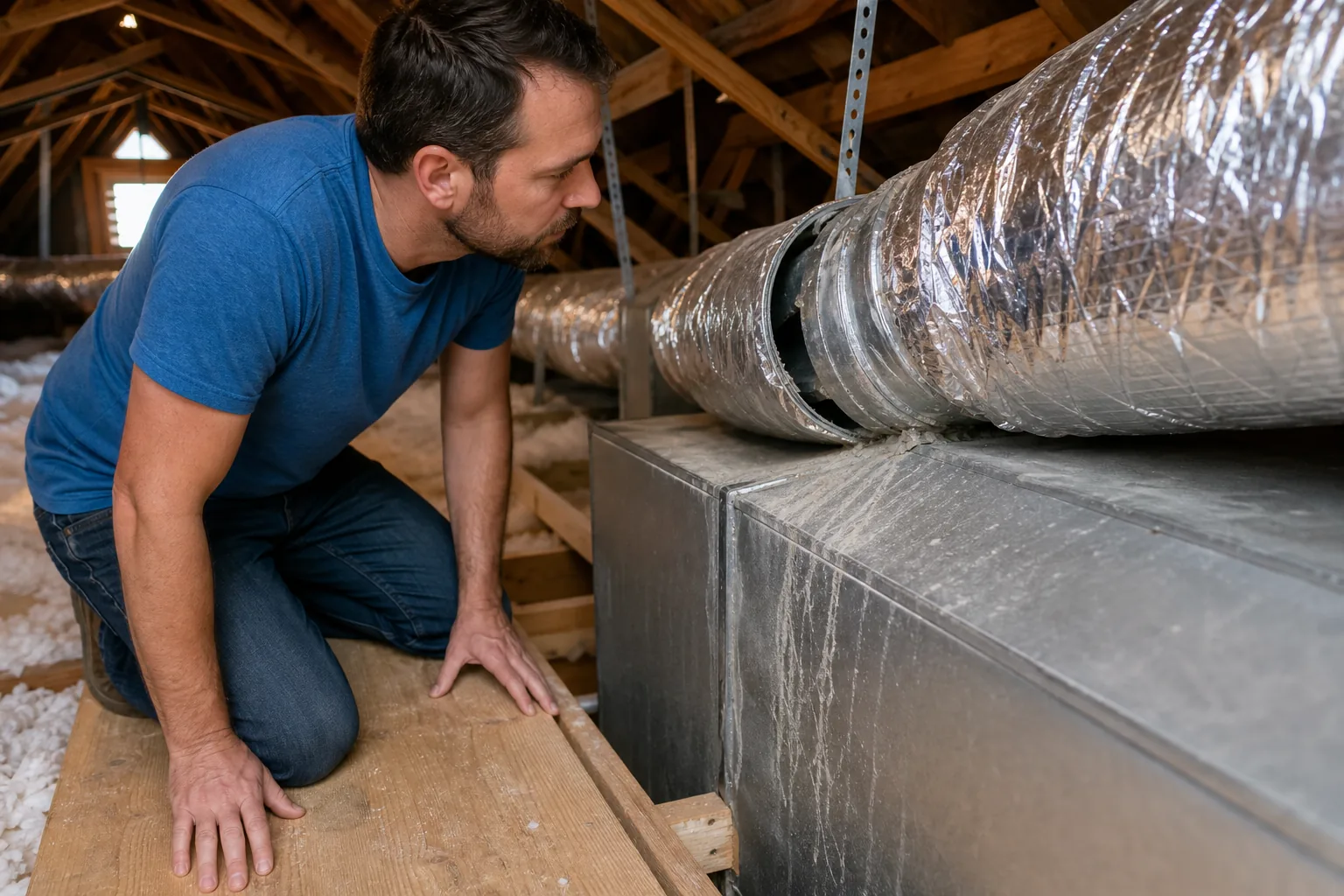
In homes around Colfax and Rocklin, duct runs may pass through an attic or crawlspace. Don’t step off a safe walkway or reach near wiring to chase a sound. A faint whistle is a clue, not a reason to take risks.
Uneven Temperatures and Unexpected Energy Bills
When conditioned air escapes before it reaches a room, that room may feel warmer in summer or colder in winter. You might notice weak airflow at one vent while another room feels comfortable. A closed or blocked vent can cause similar trouble, so check for a pattern across the home rather than blaming the ducts after one bad day.
Watch what happens during a normal heating or cooling cycle. If the thermostat reaches its setting in the main living area but a far bedroom stays uncomfortable, air may be escaping along the branch that serves it. A crushed duct, closed damper, or blocked return can also limit airflow. The symptoms help narrow the cause, but they don’t confirm it on their own.
Look at your utility bills over time. A rise without a clear change in weather, system use, or household routine can be a reason to inspect the ductwork. Leaks can make the HVAC system run longer as it tries to make up for air lost along the way. A longer run time can also happen for other reasons, such as a dirty filter or an equipment fault.
Our guide to why some rooms are hotter than others covers other causes, including sunlight and airflow. That distinction matters in Auburn and Roseville, where a sun-facing room can heat up even when its duct is sound.
In the Sierra foothills, hot, dry summers and cold winters put heating and cooling systems to work across the seasons. A leak can waste cooled air during a heat spell, then let heated air escape when temperatures drop. If several rooms feel off and bills have climbed, add duct inspection to the list of possible causes.
Pressure Changes, Drafts, and Indoor Air Quality Clues
Watch interior doors when the blower starts. A door that moves, swings shut, or becomes harder to open may signal a pressure imbalance. Duct leaks can play a part, though the way air moves through the home also depends on room layout and return-air paths.
Notice drafts, too. Air pulled into a return-side leak may come from an attic, crawlspace, or wall cavity instead of the home’s living space. That air can carry dust or other material into the system. A draft by a window or exterior door has a different likely source, so pay attention to where you feel it.
Dust around vents is worth tracking if it keeps coming back. A leak near a return can draw in particles that bypass the usual path through the filter. Dust alone doesn’t prove a duct leak, and a dusty home can have other causes. But dust trails near a joint plus weak airflow or uneven room temperatures make a duct check more reasonable.
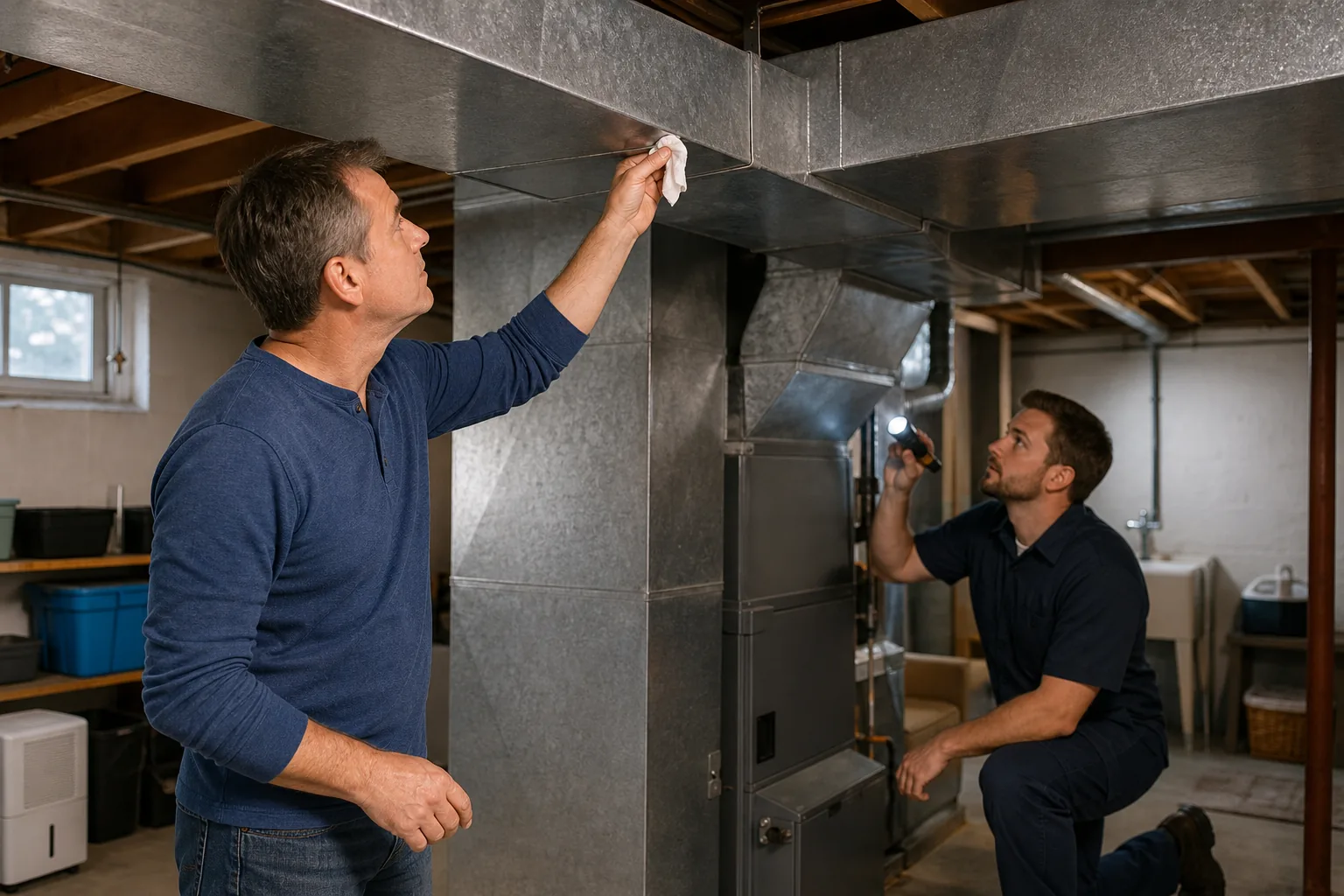
A tissue can help you see airflow at a vent or near an accessible duct seam. Hold it close without letting it touch a hot surface or moving part. If it moves strongly at a seam while the system runs, note the spot. This is a simple clue, not a measurement of how much air the duct loses.
Keep your check visual and safe. Don’t use a flame to look for moving air.
In Roseville or Lincoln, note which rooms feel drafty and whether the change happens when the HVAC runs. These details can help a technician tell a duct issue from a draft through the building shell. Contact Home Worx Heating and Cooling for local service.
When a Duct Leak May Signal a Bigger Safety or Equipment Problem
A loose joint is often repairable. A crushed, torn, or disconnected duct is a different problem because sealant alone may not restore its shape or hold the connection in place. If you see damaged insulation or a section that has pulled apart, leave it for a professional to assess.
Leaks can also add strain to heating and cooling equipment. If the system runs for long stretches yet rooms still feel uncomfortable, don’t assume a larger unit is the answer. A technician can check whether the duct system is losing air or whether the equipment itself needs attention.
Take extra care if your home has fuel-burning heating equipment. A return leak can affect pressure around combustion appliances, and combustion gases need to vent outdoors. Don’t try to test or correct a possible venting problem yourself. If a carbon monoxide alarm sounds, leave the home and contact emergency services.
Sealing is not the right fix for every duct. A technician may recommend reconnecting a loose run, sealing a sound joint, or replacing a damaged section. The condition of the duct and access to it shape the repair. If the work is part of a larger HVAC project, ask which local permit rules and inspections apply before work begins.
Home Worx Heating and Cooling provides HVAC repair, inspection and maintenance services. You can review the company’s HVAC services in the Colfax area before arranging an assessment.
That kind of inspection can help separate a small seam leak from a wider airflow or equipment issue. It’s a better basis for choosing a repair than guessing from one noisy vent.
What to Check Yourself and When to Call an HVAC Professional
Start with checks you can make without opening equipment or entering an unsafe attic. Note the rooms that feel too warm or cool, then compare airflow at their vents while the system runs. Make sure supply vents and return grilles aren’t blocked by furniture or curtains.
Next, listen near accessible duct sections. Look for a whistle, a low roar, dust streaks, loose foil tape, or a joint that has come apart. If a duct is easy to reach from a stable floor or platform, you can hold a hand near the seam to feel for escaping air. Don’t climb across ceiling joists or move heavy items to reach a duct.
A short checklist can keep the inspection focused:
Compare room temperatures and note which rooms have weak airflow.
Check vents and return grilles for blockages or visible dirt.
Listen for a whistle near accessible duct joints while the system runs.
Look for damaged insulation, loose connections, or visible dust trails.
Write down when the symptoms happen and whether utility bills have changed.
For safe, accessible repairs, use a product made for HVAC ducts. A suitable duct-sealing product or UL 181 foil tape can seal suitable joints, but tape won’t repair a crushed run or reconnect a separated section.
Call an HVAC professional if you find a large opening, a disconnected or crushed duct, or a leak you can’t reach safely. A technician can inspect the accessible runs and use pressure testing to assess leakage. A thermal camera may help locate a hard-to-see leak, but a quick home check can’t measure the full system.
Home Worx Heating and Cooling serves Auburn, Colfax, Rocklin, Roseville, Grass Valley, Penn Valley, and Lincoln. For homes with older or damaged ducts, ask whether sealing or section repair fits the condition of your system. California permit needs depend on the work, so check the local building department for project requirements. If you’re considering energy rebates, confirm current program rules and eligibility before counting on savings. Contact Home Worx Heating and Cooling for local ductwork service.
Frequently Asked Questions
What are the most common leaky ductwork symptoms?
Common signs include uneven room temperatures, weak airflow, dust streaks near duct joints, and whistling or roaring sounds. A utility bill that rises without an obvious reason can add to the concern. One symptom may have another cause, so look for a pattern and ask a professional to confirm suspected leaks.
Can leaky ducts make one room hotter than another?
Yes, a leak can keep conditioned air from reaching the room served by that duct. But a blocked vent, a closed damper, sun exposure, or another airflow issue can create a similar pattern. Check whether the vent is open and clear, then note whether weak airflow and uneven temperatures continue.
Can I check for duct leaks myself?
You can look at accessible duct joints, listen for unusual sounds, and compare airflow across rooms. A tissue near a safe, exposed seam may show air movement. Don’t enter an unsafe attic or crawlspace, and don’t use a flame. Hidden leaks or damaged duct sections need professional inspection.
What should I use to seal a small duct leak?
Use a product designed for duct sealing on a suitable, accessible joint. General-purpose tape may not be suitable for a lasting duct repair. Turn the system off before working, and don’t seal over damaged insulation, electrical parts, or a joint that has come apart. Ask a technician if you’re unsure.
When should I call an HVAC professional?
Get professional help if you find a large gap, a crushed or disconnected duct, or a leak in an unsafe spot. Also ask for an inspection when several symptoms appear together or the system runs a long time without making rooms comfortable. For homes in Grass Valley, Penn Valley, and Lincoln, contact family-owned Home Worx Heating and Cooling for local service in Placer and Nevada counties.
Conclusion
If uneven temperatures, recurring dust, or duct noise keep showing up, arrange an HVAC inspection instead of guessing at the cause. Home Worx Heating and Cooling serves foothill communities including Grass Valley and Penn Valley. Contact the team through its website to discuss a local ductwork check and the next safe step.