
Should I Repair or Replace My Furnace?
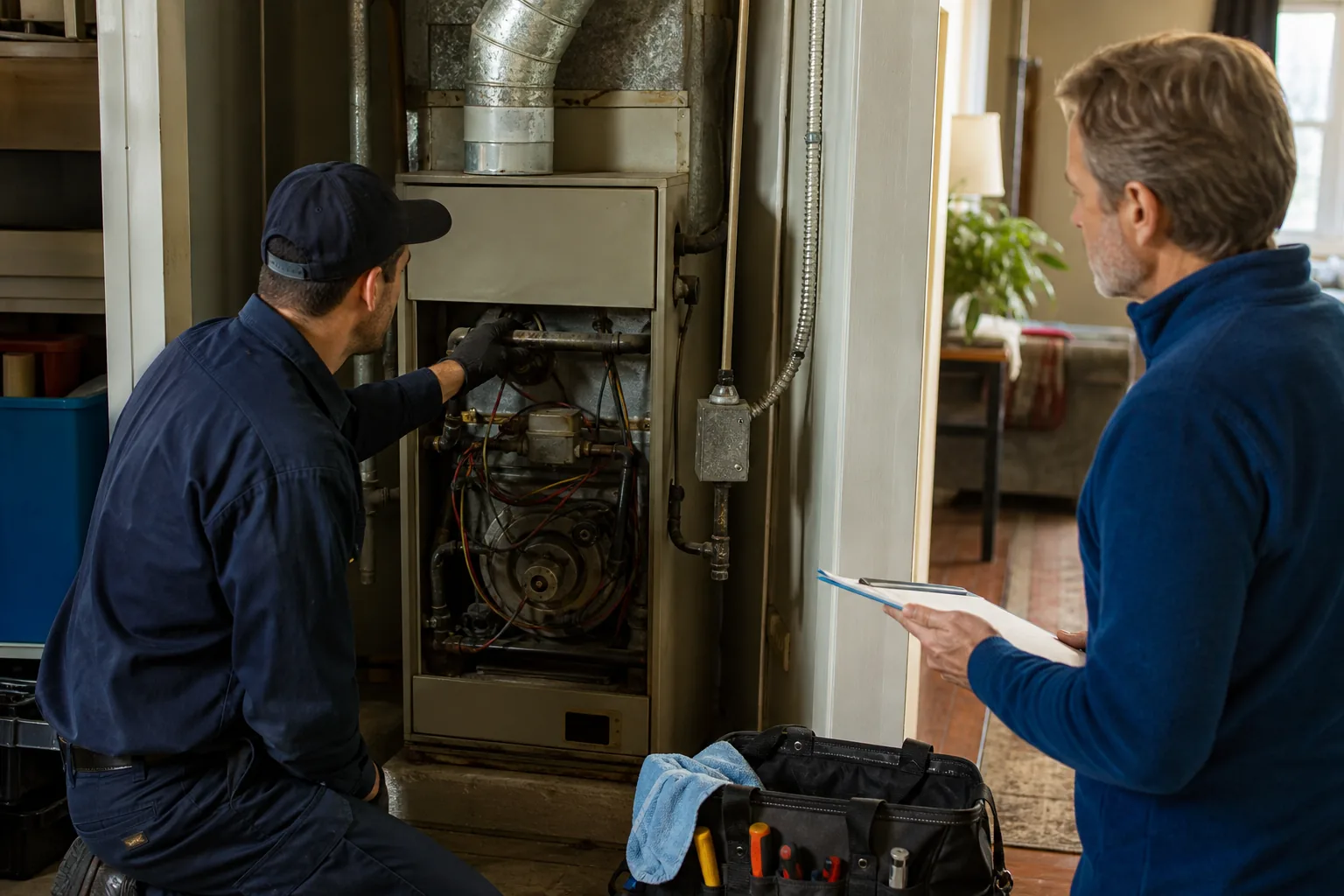
Should I repair or replace my furnace? If it’s under about 10 years old and the repair is relatively modest, repair may make sense. If the furnace is older, needs repeat work, or has a major failure, compare the repair quote with replacement costs before deciding.
For homes in the Sierra foothills, the choice also depends on winter use, comfort, and the condition of your ducts. Here’s how to weigh those factors without relying on one rule alone.
We analyzed 5 ranking pages about furnace repair versus replacement and found they covered only 2 of 25 safety and cost checks, with none mentioning the $5,000 rule, duct condition, warranty coverage, or local rebate eligibility. Only 2 of the 5 pages raised carbon monoxide safety at all.
Table of Contents
How Furnace Age and Condition Affect the Decision
Age sets a useful starting point, but it doesn’t decide the issue by itself. A furnace that’s 11 years old and has worked well may be worth repairing. A younger unit with a serious safety problem or a record of repeated breakdowns needs a closer look.
A gas furnace typically lasts 15 to 20 years, and replacement is worth considering as it nears that age. Other cost guidance uses a lower threshold, around 10 to 12 years, when comparing repair costs with the price of a new unit. That range is a prompt to assess the whole system, not a fixed deadline.
If you don’t know the furnace’s age, check the installation paperwork or the label on the unit. You can also ask a technician to identify the model and explain its likely age. For more background, see this furnace lifespan guide .
Condition matters just as much. Ask whether the repair addresses one worn part or a symptom of a larger problem. A small ignition repair on a furnace that heats evenly is different from a major repair on a unit that has needed service several times in one winter.
Also check warranty coverage before approving costly work. Some parts may have separate warranty terms, and coverage can change the amount you’d pay. Ask the technician to identify the failed part and explain what the repair is expected to fix.
In Auburn, Colfax and Rocklin, a furnace may sit idle for months, then run hard during a cold stretch. That first start can reveal a problem.
When considering a replacement, ask how the new system will be sized for your home. A larger furnace isn’t automatically better. Duct condition and airflow matter too, since a new unit can’t fix a blocked return or leaking duct on its own.
For local guidance, contact Home Worx Heating and Cooling .
Key Takeaway:Use age as a signal, then weigh the furnace’s repair history, current condition, and warranty.
Compare the Repair Estimate With Replacement Costs
Get a written repair estimate and compare it with a replacement quote for your home. Common furnace repairs can cost between $125 and $500, while gas furnace replacement can range from $3,800 to $10,000, depending on the system and installation.
Those figures are a starting point, not a local quote. The total can change with the equipment, installation needs, and the work required around the furnace. In the foothills, ask the contractor to spell out any venting or duct changes that affect the proposal.
For a local cost discussion, see this furnace repair cost guide for Penn Valley . Then compare like with like: a repair estimate should state the part, labor, and any other work included. A replacement quote should explain the proposed equipment and installation scope.
A common rule of thumb is to compare the repair bill with half the price of a new system. It’s a guide, not a verdict. A smaller repair on a well-kept furnace may be sensible even if the unit is older. A repair that approaches half the replacement quote deserves more scrutiny, especially if the furnace has failed more than once.
The $5,000 rule is another rough check: multiply the furnace’s age by the repair estimate. If the result is above $5,000, replacement may be worth considering. Use this only as a rough check alongside the system’s condition and a professional evaluation.
For example, a 10-year-old furnace with a $300 repair gives a result of $3,000. That points toward repair, but the furnace’s history still matters. Neither calculation tells you whether the part is safe to repair or whether the fix will last.
Ask for the cost of the immediate repair and the reason it failed. If the repair is approved, ask what to watch for afterward. If replacement is proposed, request a separate estimate so you can judge the costs side by side.
Warning Signs That Repeated Repairs May Not Be Worth It
One repair doesn’t mean a furnace is at the end of its life. A pattern is more useful. Keep a note of the date, the part repaired, and the amount paid. If the same issue returns or a new fault appears soon after, ask whether the system has a larger problem.
Rising heating bills can be another clue, especially when your thermostat habits and home comfort haven’t changed. Compare similar winter months rather than drawing a conclusion from one cold spell. A clogged filter or duct issue can also make a furnace work harder, so rule out airflow problems before blaming the unit.
Uneven heat deserves the same care. A cold room may point to ductwork or airflow rather than a failing furnace. Ask the technician to check whether the problem comes from the equipment or from how warm air moves through the home. Replacing the unit without fixing a duct issue may leave the room cold.
Recurring loud bangs, grinding, or repeated shutdowns call for a professional inspection. A cracked heat exchanger is especially serious because it can create a carbon monoxide risk. Don’t approve a major repair or replacement based only on a vague warning. Ask what the technician found and how the finding was confirmed.
Frequent repairs and inconsistent comfort are common reasons to consider replacing a furnace that is nearing the end of its service life. For other potential clues, see additional furnace warning signs .
Keep safety separate from cost. If a carbon monoxide alarm sounds, follow its instructions and leave the home. If you smell gas, leave and contact the gas utility or emergency services from outside. Don’t keep running a system that a qualified technician has identified as unsafe.
Replacement becomes a stronger option when several problems show up together: repeat repairs, declining comfort, higher use, and an older furnace. A single symptom may have a small fix. Several at once deserve a full assessment.
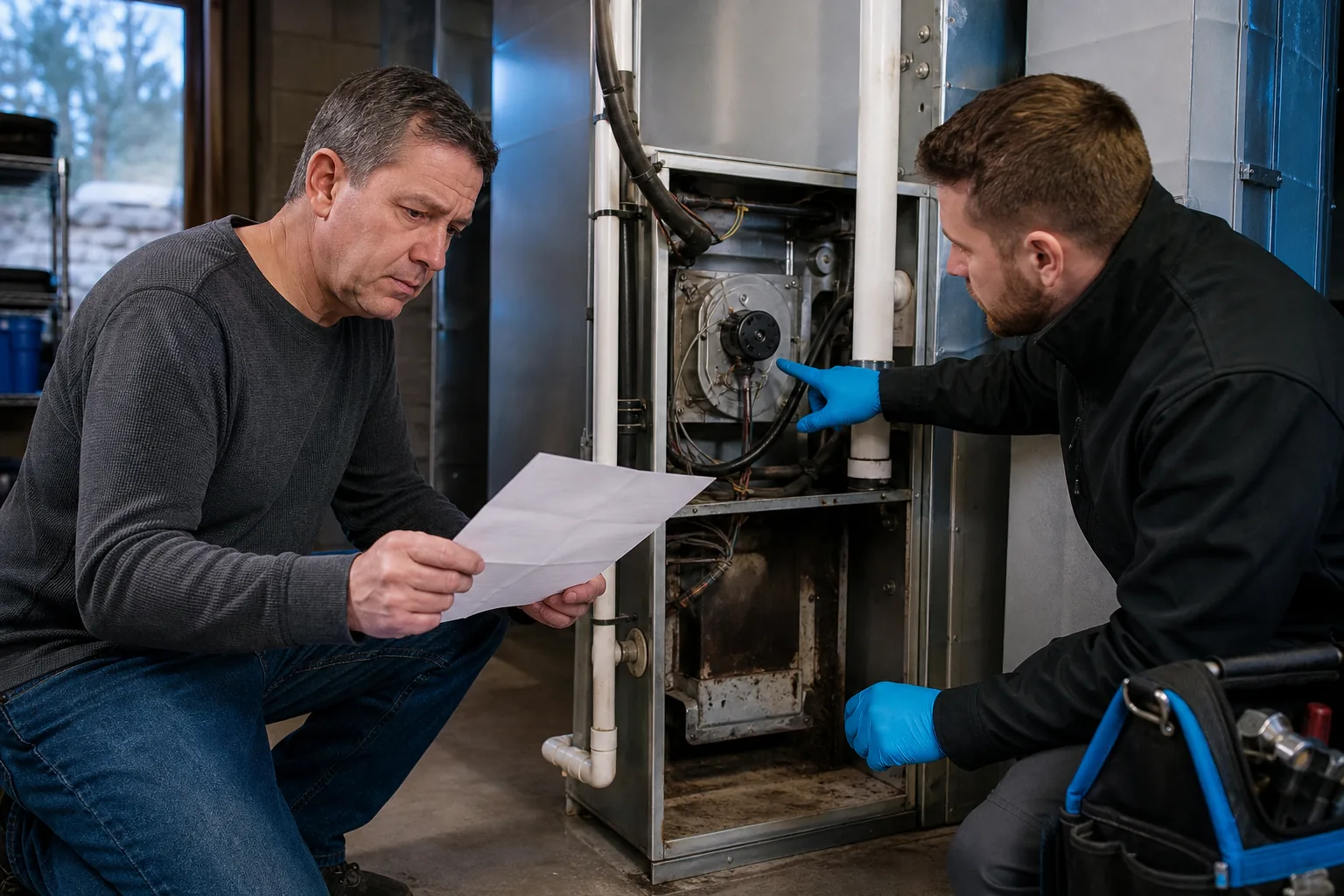
Pro Tip:Keep repair receipts together. A short service history helps a technician see whether you’re facing one isolated fault or a pattern.
Make a Local Decision for Your Home and Heating Needs
Homes in this part of Northern California can face hot, dry summers and cold winter nights. That means your furnace may see long periods of rest followed by steady use when temperatures drop. A system that runs through a cold stretch should heat the home evenly and cycle in a way that feels consistent.
Local conditions differ by home, too. A house in Grass Valley or Penn Valley may have different heating needs from a home in Rocklin or Roseville. Insulation, window quality, duct layout, and the way you use each room all shape the best choice.
When comparing replacement, ask the contractor to review the home’s heating needs rather than simply match the old furnace size. Ask whether the ducts can support the proposed equipment. If one room has always been cold, ask whether airflow or duct changes should be part of the plan.
Replacement may also involve local permits. Ask who will handle any required permits and what work the estimate includes. If you’re exploring a high-efficiency system, ask about current rebate eligibility and how your utility service affects the options. Eligibility and terms can vary, so confirm them before counting a rebate toward the budget.
Home Worx Heating and Cooling serves Auburn, Colfax, Rocklin, Roseville, Grass Valley, Penn Valley, and Lincoln. We’re a family-owned local contractor with heating repair, installation, and maintenance services. Our team can look at the furnace and help you compare the repair with a replacement plan.
Home Worx offers new HVAC system installation for as low as $120 a month, subject to terms and conditions. Ask for details and compare the payment terms with the full installed cost. Financing can make a project easier to plan, but it doesn’t change whether the proposed system fits your home.
Before you decide, ask for clear answers to three points: what failed, what the repair should accomplish, and what replacement would include. If the technician recommends a new furnace, ask how the new system will be sized and tested after installation. If repair is the recommendation, ask what future signs would change that advice.
That process gives you a choice based on the house in front of you, not a rule applied to every furnace. For a homeowner in Lincoln with a newer unit and one modest repair, that may mean fixing it. For an older furnace in Roseville with repeat breakdowns, getting a replacement estimate may be the wiser next move.
Frequently Asked Questions
At what age should I replace my furnace?
Consider replacement as your furnace approaches 15 years, especially if it needs frequent repairs or heats unevenly. Age alone doesn’t mean it must go. A technician can check its condition and repair history. If it’s around 10 to 12 years old, use the age as a prompt to compare repair costs and efficiency with a replacement quote.
Is it worth repairing a furnace that is 15 years old?
It can be, if the fault is minor and the furnace has been reliable. Before approving the repair, compare its cost with a replacement estimate and ask whether other parts show wear. A major repair on an older unit with repeat breakdowns may be harder to justify than one modest fix.
What is the $5,000 rule for furnaces?
The $5,000 rule is a rough way to compare age with repair cost: multiply the furnace’s age by the repair estimate. A result above $5,000 suggests you should consider replacement. It’s not a firm cutoff. Check the repair history, safety, warranty, and the actual replacement quote too.
Will a new furnace lower my heating bills?
A newer, higher-efficiency furnace may use less fuel to provide heat, but the bill change depends on your current unit, home, weather, and energy use. Ask for the proposed system’s AFUE rating, which measures how much fuel becomes heat. Compare that rating with your existing furnace and ask about rebate eligibility before estimating savings.
Conclusion
Repair a newer, reliable furnace when the fault is limited and the estimate is modest. If it’s older and repairs keep adding up, get a replacement quote before the next cold spell. Contact Home Worx Heating and Cooling to have your furnace assessed and compare the options for your home.