
Signs of a Bad Furnace Blower Motor and What They Mean
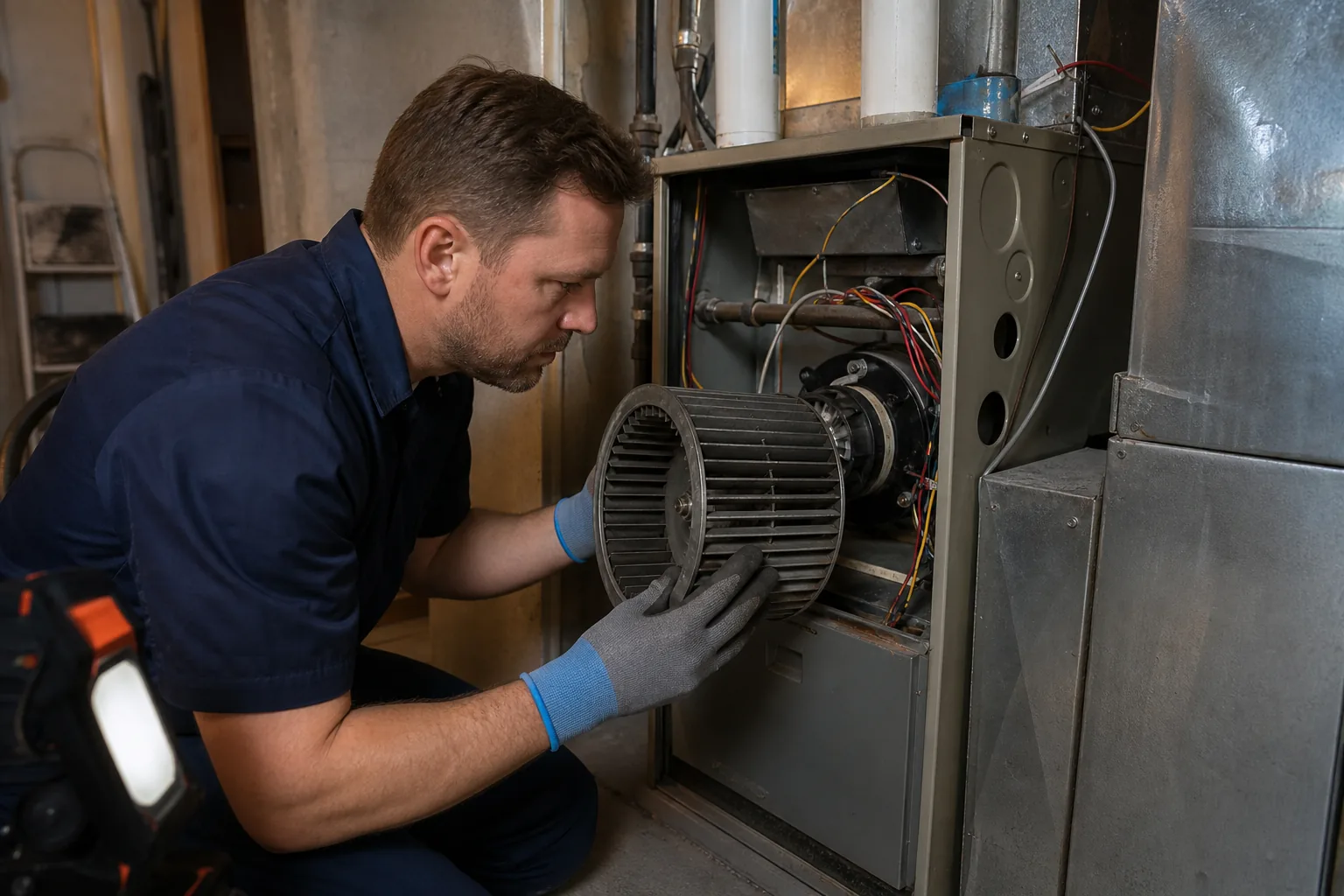
A furnace can make heat and still leave your rooms cold if its blower motor can’t move air. Signs of a bad furnace blower motor include weak airflow, new grinding or squealing, a humming fan that won’t start, and a hot or burnt smell. Here’s what those clues can mean, what else may cause them, and when to stop troubleshooting.
We analyzed 56 comments and questions from YouTube and Quora about bad furnace blower motor signs and found that 23% mentioned do-it-yourself repairs.
Table of Contents
What the Furnace Blower Motor Does and Why It Matters
The blower motor spins a fan wheel inside your furnace or air handler. That wheel pulls air through the return duct, moves it across the furnace’s heat exchanger, then pushes warmed air through the supply ducts. When your system cools the house, the same blower moves air across the cooling coil.
That means the blower affects both heating and cooling. If it stops, the furnace may still light, but warm air won’t reach the rooms. In cooling mode, a weak or stopped blower can also leave the system with too little airflow.
PSC motors are a common older design. They use a capacitor to help the motor start and run. ECM motors use electronic controls and may adjust their speed to meet the system’s airflow needs. Some ECM units have a motor and a separate control module, so a bad module doesn’t always mean the motor itself has failed.
That difference matters when the system stops working. Replacing the wrong part can leave the original fault in place. A blower diagnosis should match the motor type and furnace model, not just the sound or lack of air at a vent.
In the foothills, a blower works through cold winter heating cycles and long, hot, dry summer days. In Auburn, Colfax, Rocklin, Roseville, Grass Valley, Penn Valley, and Lincoln, keep track of new sounds or changes in airflow before the furnace quits altogether. A short note about when the sound starts can help narrow down the problem.
If a technician confirms that the motor needs replacement, the right part depends on the furnace and motor design. Our page on furnace blower motor replacement in Rocklin explains factors that can affect that repair.
Common Signs of a Failing Furnace Blower Motor
One symptom alone doesn’t prove the motor has failed. Look for a change from the system’s normal behavior, especially when several clues show up together.
Weak or no airflow
If air barely comes from several vents, or no air comes out at all, the blower may not be turning at the right speed. A worn motor, a failed capacitor, or an electrical fault can cause that pattern. But a clogged filter or blocked return can also cut airflow, so don’t assume the motor is the only cause. Check the filter first.
Humming, grinding, squealing, or rattling
A low hum with no fan movement can mean the motor is receiving power but can’t start. On a PSC motor, a weak capacitor is one possible cause. Grinding or squealing may point to worn motor bearings. Rattling can come from a loose part or debris near the blower wheel.
Notice when the sound begins and whether the fan starts afterward. A new noise that gets louder or lasts through the cycle deserves prompt attention. A sound by itself can’t identify the failed part.
A motor that starts slowly, stops, or runs hot
A blower that takes longer than usual to start, runs slowly, or cuts out mid-cycle may be struggling with a motor fault or another electrical issue. A motor that feels very hot can have tripped its thermal overload, a safety feature that stops it when it overheats. Restricted airflow can contribute to overheating too.
Burnt odor or repeated breaker trips
A sharp burnt smell near the furnace may come from overheated wiring or a motor component. Turn the system off if you smell burning. A breaker that trips more than once is another reason to stop using the furnace. Don’t keep resetting it to see if the problem goes away.
Short heating cycles
If the burners start and shut down before the home warms, poor airflow may be making the furnace overheat and trigger a safety limit. A blower problem is one possible cause. A dirty filter or another airflow restriction can produce similar behavior.
For a homeowner, the safest check is outside the furnace cabinet: look at the filter and make sure supply vents and return grilles aren’t blocked. Weak airflow, unusual noise, overheating, and early shutdowns can have more than one cause, so a technician should confirm the fault.
Don’t remove the blower panel to reach the motor. It may expose moving parts and live electrical components. If you also suspect a capacitor, read our guidance on testing a furnace capacitor safely , but leave the test and any repair to a qualified technician if you’re not trained to handle it.
How to Tell a Blower Motor Problem from Other Furnace Issues
Several furnace faults can look like a bad blower. The useful question is not only “Is there air?” It’s also what the furnace does before the airflow stops, and whether the motor receives the right signal and power.
Start with checks that don’t open the cabinet
Set the thermostat to the right system mode, then check that its fan setting hasn’t been changed by mistake. Look at the filter if it’s in an accessible slot. Replace it with the specified size if it’s visibly loaded. Make sure the return grille and supply vents are open.
If just one room has weak airflow, the issue may be local, such as a blocked register or duct problem. If airflow is weak throughout the home, the filter, central return, blower, or a system control deserves a closer look. These checks can help describe the issue, but they can’t confirm a failed motor.
Capacitor, motor, or control board?
A humming PSC motor that won’t turn may have a failed capacitor. ECM motors don’t use the same external run capacitor, and some have a separate electronic module. A failed ECM module can leave a healthy motor unable to run, so a technician may inspect both parts before recommending a replacement.
A control board can also fail to send the motor its operating signal. A technician can check the signal and voltage at the correct points using the furnace wiring diagram. Some PSC blower circuits use 120-volt power, but the proper test points and expected readings vary by equipment.
What a technician may test
With the power shut off and verified, a technician can try turning the blower wheel by hand. It should move freely rather than feel stuck or drag heavily. The wheel should also be checked for wobble or damage. A stiff wheel may point to bearing wear or a mechanical obstruction.
With the right meter, a technician can check motor windings for continuity and resistance. On a multi-speed motor, resistance readings across the common wire and speed taps should be interpreted using that motor’s design. An open reading or a near-zero reading where the manufacturer expects resistance can point to a winding fault. A continuity beep test may also help check a motor’s resistor or limiter.
For an ECM motor, diagnostic readings must match its model-specific service instructions. Some procedures compare three readings and use a tolerance such as 10 percent, but that isn’t a universal pass-or-fail rule for every ECM. A clamp-on meter can also measure current draw. Current above the motor’s nameplate rating may indicate excess load, but the reading needs to be assessed alongside airflow and the motor’s specifications.
A trained technician may use a direct-power or bypass test to separate a control-board fault from a motor fault. That test involves hazardous voltage and changes to wiring. It isn’t a homeowner test. If the motor runs during a proper bypass test, the control path may be at fault; if it doesn’t, further motor checks are needed.
When a Blower Motor Problem Needs Professional Attention
Turn the furnace off and arrange service if you smell burning, see smoke or scorch marks, hear loud grinding, or the breaker trips repeatedly. Don’t run the furnace with its panels removed. Don’t keep restarting it when the same warning returns.
A motor housing or ECM module may have burnt marks, melted insulation, or damaged parts that aren’t visible from outside the cabinet. Finding those signs requires access to electrical components. Even after power is switched off, some components can hold a charge. A qualified technician can inspect the parts without relying on guesswork.
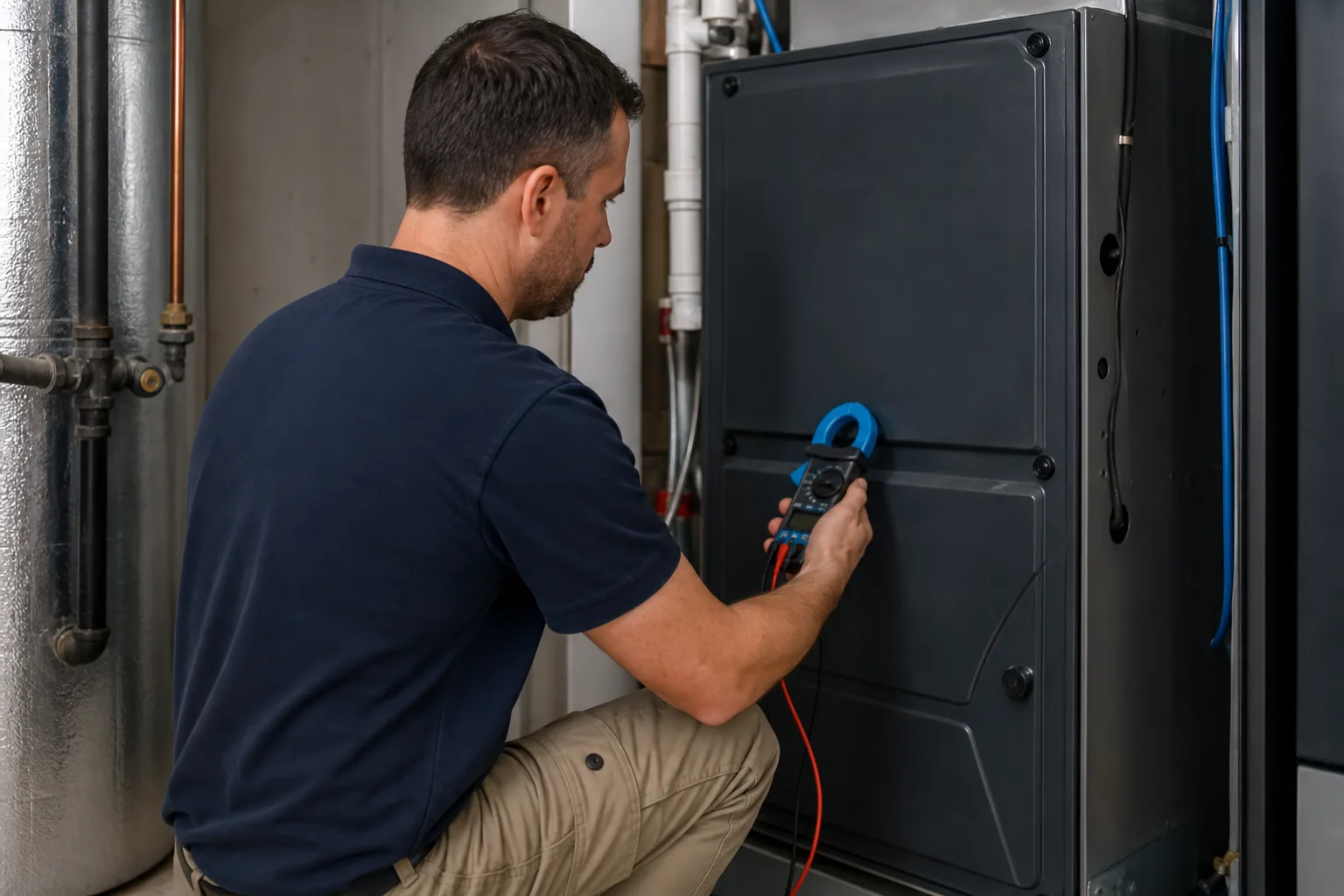
A full diagnosis may include checking the filter and blower wheel, testing the capacitor when the system uses one, checking the motor and module, and verifying the board’s output. The technician may also inspect wiring for loose connections or heat damage. Those steps help separate a failed motor from a capacitor, ECM module, control board, or airflow restriction.
Ask what test supports the diagnosis before approving a motor replacement. A useful explanation should name the part that failed and the reading or visible fault that points to it. If a repair estimate is substantial, ask whether the part is covered by the manufacturer’s warranty and whether the repair includes a workmanship warranty.
Home Worx Heating and Cooling provides HVAC repair for homeowners in Placer and Nevada counties. We serve Rocklin and Roseville, along with Grass Valley and Penn Valley. If you’re in Lincoln, Auburn, or Colfax, we can help assess a blower problem and explain the repair options.
If you hear a new sound but aren’t sure where it comes from, our article on common causes of furnace noises can help you describe what you notice. It won’t replace an inspection when the sound comes with heat, smoke, or repeated shutdowns.
A carbon monoxide alarm is a separate emergency, not a blower diagnosis. Leave the home and contact emergency services from a safe location. Don’t re-enter until responders say it’s safe.
Frequently Asked Questions
Can a furnace run if the blower motor is bad?
Yes, the furnace may begin its heating sequence even if the blower doesn’t move air. But without airflow, heat can’t be delivered through the ducts, and the furnace may shut down on a safety control. Turn the system off if the blower stays still or you notice a hot smell, then arrange professional service.
Why does my furnace blower hum but not start?
A humming blower that doesn’t turn may have a weak capacitor, a stuck wheel, a failed motor, or an electrical control problem. PSC motors use a capacitor, while ECM systems use electronic controls. Don’t reach inside the furnace to push-start the wheel. A technician can test the parts and identify the fault safely.
Can a dirty filter make the blower motor overheat?
Yes, a loaded filter can restrict airflow and add strain to the system. Restricted airflow may also cause the furnace to overheat and shut off its burners. Check an accessible filter and replace it with the specified type if needed. If weak airflow or short cycles continue, have the furnace checked rather than repeatedly restarting it.
Should I replace the furnace blower motor myself?
Most homeowners should leave motor testing and replacement to an HVAC professional. The work can involve high voltage, stored electrical charge, wiring changes, and parts that must match the furnace. A technician can also determine whether the actual fault is a capacitor, control board, ECM module, or airflow restriction instead of the motor.
Conclusion
Shut the furnace off if you notice a burnt smell, repeated breaker trips, or a blower that hums without turning. Then note what the system did and arrange a professional diagnosis. Home Worx Heating and Cooling can help homeowners across the local service area get a clear assessment and plan the next repair.