
Signs of Low Refrigerant in AC: How to Check
Common signs of low refrigerant in an AC include warm air, long run times, ice on a coil or copper line, and hissing near the equipment. These clues can point to a leak, but they don’t prove the refrigerant is low. Check what you can safely, then leave pressure tests and refrigerant work to a trained HVAC technician.
We analyzed 51 comments and questions from YouTube, Quora and Reddit about low Refrigerant signs in air conditioners and found that 25% mentioned troubleshooting steps for an AC.
Table of Contents
Step 1: Check Whether the AC Is Cooling Normally
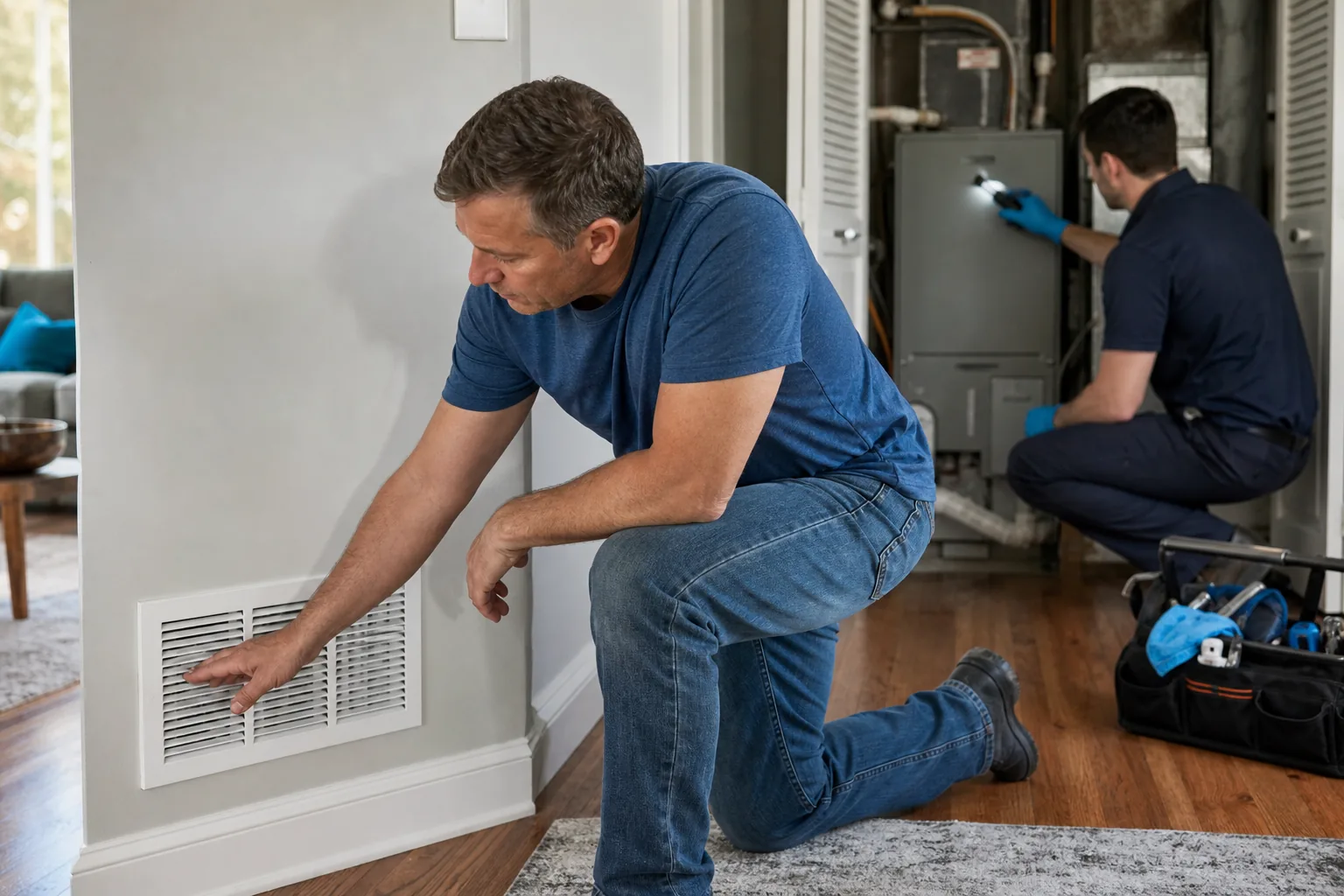
Start with the air coming from a nearby supply vent. If it feels close to room temperature after the system has been running, note that. Low refrigerant can reduce the system’s ability to move heat out of your home, so the air may feel weak or only slightly cool. Homeowners in Rocklin and Roseville can use this same check.
Refrigerant is the fluid that carries heat between the indoor and outdoor parts of an AC system. It moves in a sealed loop. It isn’t fuel, so a system in good repair shouldn’t use it up as part of normal operation. If the charge is low, there may be a leak or another issue that needs diagnosis.
Before you suspect refrigerant, check the thermostat. Make sure it’s set to Cool, then look at the filter if it’s easy to reach. A clogged filter can restrict airflow and make cooling worse. If those basic checks don’t explain the change, compare what you’re feeling with the other signs below. Our guide to safe checks for an AC blowing warm air can help you rule out simple causes.
One clue alone doesn’t settle the question. A dirty indoor coil, airflow trouble, or a faulty part can also cause poor cooling. A technician may compare temperatures and check the system’s operating readings before deciding whether refrigerant is low.
In Auburn and Colfax, a hot, dry stretch can make a cooling problem stand out quickly. Homeowners in Grass Valley, Penn Valley, and Lincoln can watch for the same signs. Still, don’t assume the refrigerant is the cause just because the home feels warm. The pattern matters: weaker cooling paired with longer run times or visible ice deserves attention.
Step 2: Observe Airflow, Run Time, and Your Electric Bill
Notice whether air moves strongly from the vent, then compare it with how the system has worked in the past. Low refrigerant may go with weak cooling, but weak airflow can also come from a dirty filter, closed vent, or a problem with the blower. A homeowner can check visible, easy-to-reach items. Don’t open sealed equipment panels.
Next, pay attention to the run cycle. Does the AC keep running without bringing the home near the thermostat setting? Or does it start and stop again in short bursts? Low refrigerant can reduce cooling and may contribute to short cycling, where the system turns off before a normal cooling cycle is complete. But thermostat, electrical, and equipment issues can cause similar behavior.
Write down roughly when the system starts and stops, and whether the home gets cooler at all. That record is more useful than turning the thermostat lower and hoping for a change. A lower setting can make the system run longer without fixing the underlying problem.
Then look at your electric bill in context. Compare it with a similar month, but keep weather, utility rates, and changes in how you use the AC in mind. A higher bill by itself doesn’t diagnose a refrigerant leak. It becomes a stronger clue when comfort has also dropped and the system runs much longer than usual.
In Rocklin or Roseville, note whether the problem shows up mainly during the hottest part of the day or lasts into the evening. If only one room feels warm, mention that too. Uneven temperatures may point to airflow or duct trouble rather than low refrigerant alone.
Humidity is another part of comfort. The AC removes some moisture as it cools, so a system that can’t cool well may leave the home feeling clammy. That feeling isn’t a refrigerant test, but it’s worth adding to your notes if it began around the same time as the cooling change.
Make a short record:note the thermostat setting, how long the system runs, which rooms feel warm, and whether the bill changed. A few clear details can help a technician narrow down the cause.
Step 3: Look and Listen for Ice or Possible Leak Sounds
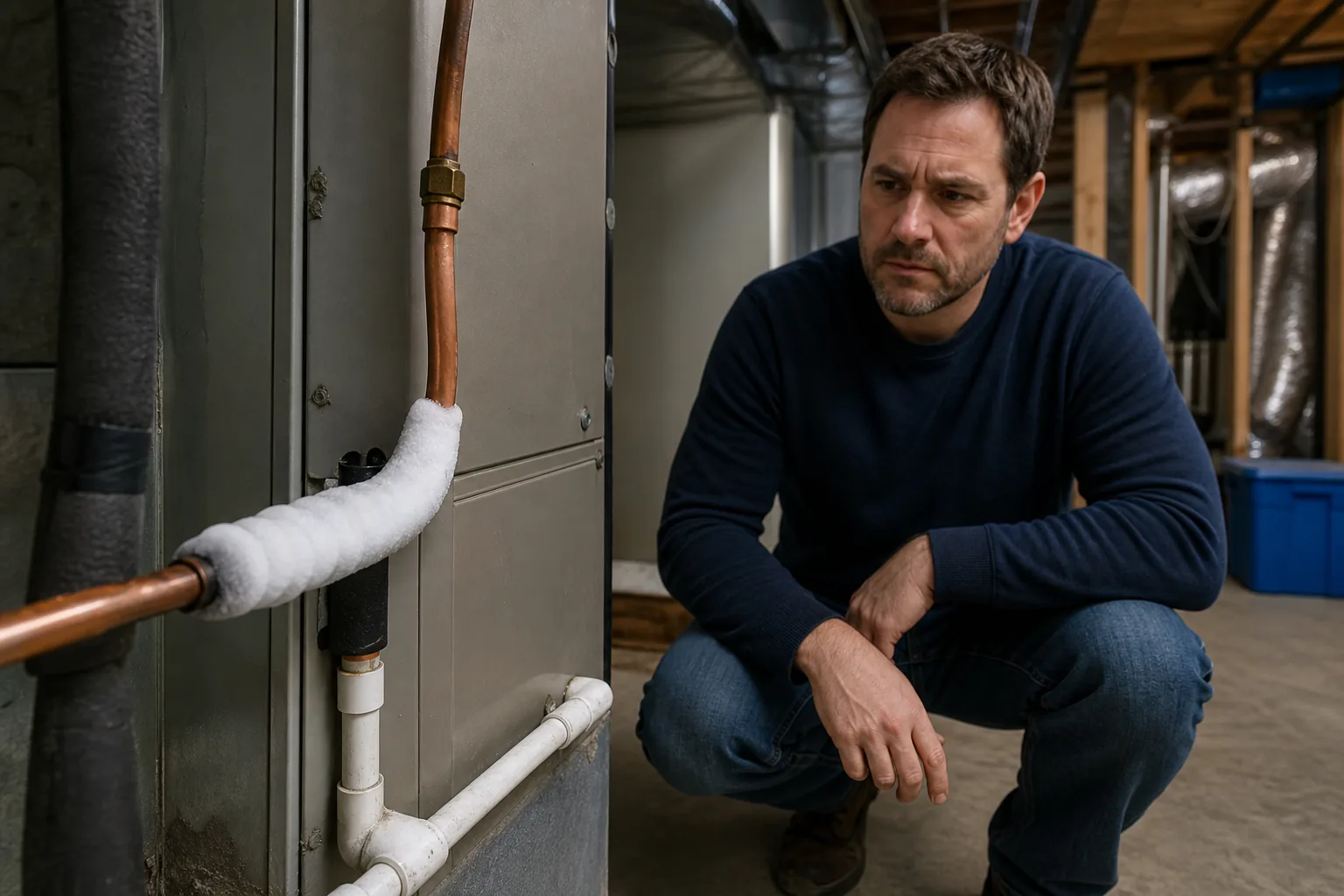
Look from a safe distance for frost or ice on an exposed copper refrigerant line or near the indoor coil, if it’s visible without removing a panel. Ice can form when the evaporator coil gets too cold. Low refrigerant is one possible cause, but restricted airflow can also freeze a coil.
If you see ice, turn cooling off at the thermostat and let it thaw. Don’t chip, scrape, or heat the ice. Water may collect as it melts, so keep clear of wet electrical areas. You can set the fan to On only if the blower works normally and it’s safe to do so. If you’re unsure, leave the system off and arrange service.
Ice can reduce airflow further and make cooling worse. That’s why continuing to run an iced-up system isn’t a good test. If the ice returns after thawing, don’t repeat the same cycle and hope it holds. Arrange an inspection.
Listen for a steady hiss or a bubbling or gurgling sound near the indoor equipment, outdoor unit, or refrigerant lines. Those sounds may point to refrigerant escaping or moving abnormally. They aren’t proof on their own, but a new sound paired with weaker cooling is worth reporting. Don’t touch the lines or try to find a leak by hand.
Oily residue near a copper joint or connection can also be a clue to mention. Look only at parts you can see without taking anything apart. A stain may have another cause, so let a technician assess it rather than treating it as a confirmed leak.
If there’s visible ice or a possible leak sound, shut off cooling and contact a technician. Home Worx Heating and Cooling serves homeowners in Grass Valley and Penn Valley, along with nearby Sierra foothill communities. You can also review our other warning signs that can point to low refrigerant as you note what you’ve observed.
Step 4: Record the Symptoms and Arrange a Professional Diagnosis
Before you arrange service, write down what changed and when. Include whether the air feels warm, whether airflow seems weak, how long the system runs, and whether it cycles on and off often. Add any ice, unusual sound, visible residue, or recent bill change. Photos of visible ice can help, but don’t remove panels to get them.
A technician can check operating pressures and temperatures, inspect the system, and look for a leak. The readings need to be interpreted with the equipment and conditions in mind. A gauge reading alone isn’t a home test, and connecting gauges to refrigerant lines isn’t a safe DIY step.
Low refrigerant usually means the system has lost some of its charge or was not charged correctly. If a leak is found, ask what caused it and what repair is needed. Adding refrigerant without fixing a leak may only bring back cooling for a while. Ask for the diagnosis and the repair plan, not just an amount to add.
Refrigerants also differ by system. R-22 is no longer produced or imported in the United States, though existing equipment may still be serviced with available recovered, reclaimed, or previously produced refrigerant. Existing R-410A systems can still be serviced through their useful life. The refrigerant type is on the equipment label; don’t try to substitute one type for another.
If you suspect a refrigerant leak, call a licensed HVAC technician to diagnose and fix it; do not attempt to check refrigerant yourself.
Ask how the technician will confirm the charge and check for a leak. A sound repair plan should address the cause, not only the symptom. If a leak repair is confirmed, our local information on AC leak repair costs in Grass Valley can help you understand the kinds of cost questions to discuss. Actual work depends on the equipment and the leak found.
Home Worx Heating and Cooling is a family-owned contractor based in Colfax, serving Placer and Nevada County communities, including Auburn, Rocklin and Roseville. The team provides HVAC repair and 24/7 emergency repair service in Grass Valley, Penn Valley and Lincoln as well. Contact us to arrange an assessment if you’re in the service area.
Frequently Asked Questions
How can I tell if my AC is low on refrigerant?
Warm air, longer run times, ice on a coil or refrigerant line, and possible hissing can point to low refrigerant. None of these signs proves the charge is low, since airflow or equipment faults can look similar. A technician needs to check the system’s readings and inspect for a leak before recommending a repair.
Can I check my AC refrigerant with a gauge?
No, don’t connect a gauge or open the refrigerant circuit yourself. Refrigerant pressure readings need to be taken with the right tools and interpreted for the specific system and conditions. A homeowner can safely note vent temperature, run time, visible ice, and sounds, then share those details with a technician.
Should I turn off my AC if I see ice?
Yes. Turn cooling off and let the ice thaw without scraping or heating it. Ice can block airflow and may point to a refrigerant or airflow problem. If the ice returns, or you’re unsure how to thaw the system safely, leave it off and arrange a professional diagnosis.
Does low refrigerant mean my AC has a leak?
Often, a low charge means refrigerant escaped through a leak, since a sealed AC system shouldn’t use it up during normal operation. An installation or service issue may also be involved. A technician can check the system and explain what caused the low charge before adding refrigerant or proposing a repair.
Can I add refrigerant to my AC myself?
No. Don’t recharge a home AC yourself. The correct refrigerant and charge depend on the equipment, and adding refrigerant without finding a leak may not solve the problem. A qualified technician can check for the cause, repair the system if needed, and confirm its operation afterward.
Conclusion
Check the thermostat and accessible filter, note the system’s behavior, and turn cooling off if you see ice. Don’t handle refrigerant or keep running a system with clear warning signs. Contact Home Worx Heating and Cooling to arrange local service and get the cause checked.