
Why Is My AC Blowing Warm Air? Try These Fixes
Warm air from an air conditioner doesn't always mean the compressor is dead. A dirty filter, wrong thermostat setting, lost outdoor power, or low refrigerant can cause the same symptom. Start with the safe checks below, then stop before you open electrical panels or handle refrigerant. Home Worx Heating and Cooling helps homeowners across Northern California find the actual cause.
Table of Contents
Step 1: Check the Thermostat and Air Filter
If you're asking why your AC is blowing warm air, start inside at the thermostat and return vent. These checks take only a few minutes and don't require tools.
Set the thermostat toCOOL. Lower the target temperature several degrees below the room temperature. Then set the fan toAUTO, not ON. When the fan is set to ON, it can keep blowing after the cooling cycle stops. That air may feel warm because it is simply moving room air through the house.
Wait about five minutes after changing the setting. Many systems have a short delay before the outdoor compressor starts. Listen for the outdoor unit. You should hear it start while the indoor blower continues to move air.
Next, inspect the filter at the return grille or indoor air handler. Hold it near a light. If dust covers much of the filter surface, replace it with the same size and a compatible rating. A clogged filter restricts airflow across the indoor coil. That can make the coil freeze, which leaves the vents blowing room-temperature air.
Don't run the system for hours with a badly blocked filter. In the hot, dry summers around Roseville and Lincoln, dust can build up fast. Homes near open land may need more frequent checks than the calendar suggests. A monthly look is a good habit during heavy use.
We also recommend taking a photo of the old filter before removing it. The photo shows its airflow direction and size. Install the new filter with the arrow pointing toward the equipment.
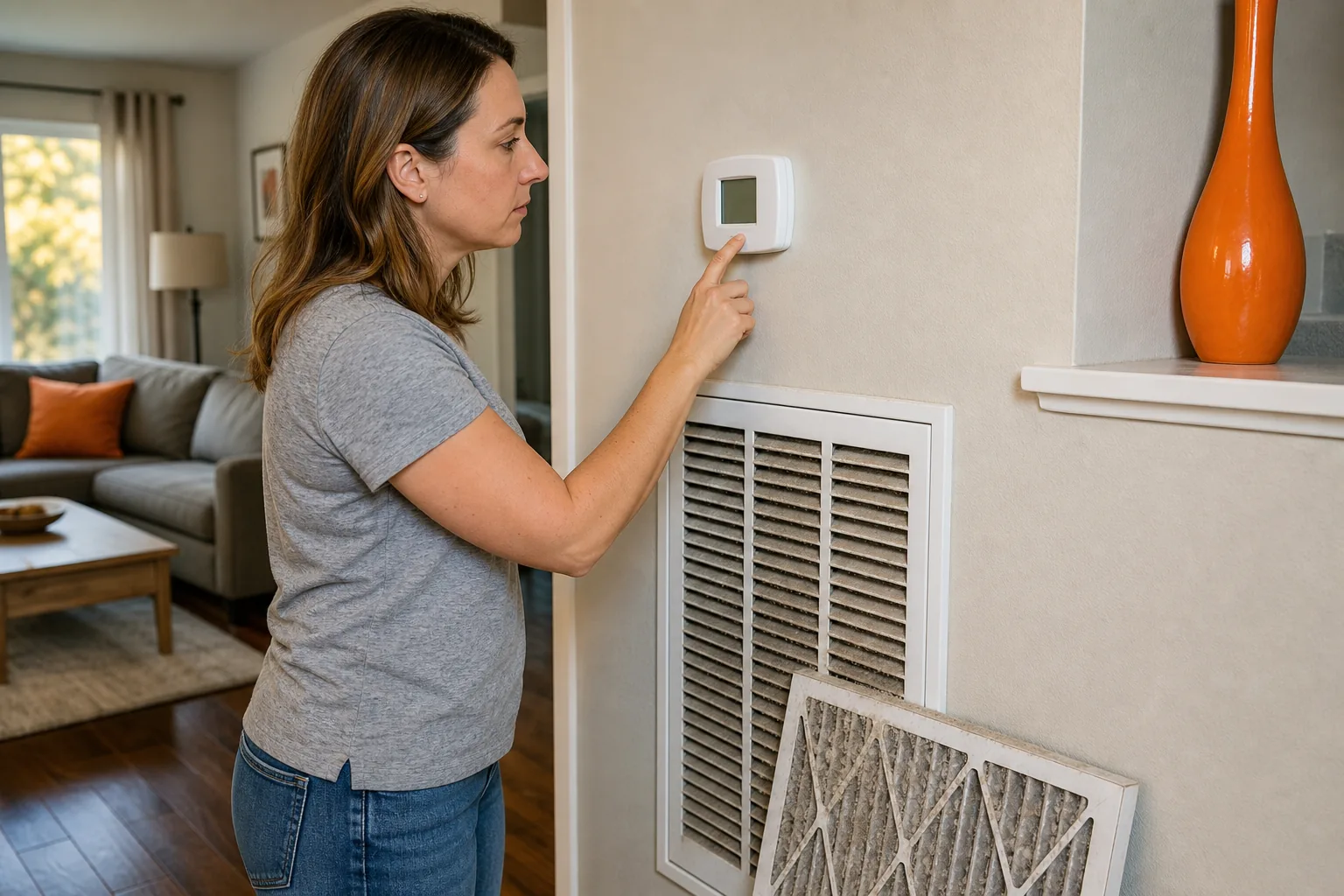
If the filter is clean and the thermostat is correct, continue with the outdoor unit. For another look at common causes, our guide to AC not blowing cold air covers the same first checks in more detail.
Key Takeaway:A clean filter and a thermostat set to COOL with the fan on AUTO rule out two common causes before you inspect the system outside.
Step 2: Inspect the Vents, Outdoor Unit, and Breaker
When an AC blows warm air, check whether the indoor fan is running while the outdoor unit stays silent. That pattern often points to lost power outside rather than a failed indoor blower.
Walk through the home and open every supply vent in the rooms that need cooling. Make sure furniture, rugs, or curtains aren't blocking them. Check the return grille too. A blocked return can starve the system of air and increase strain on the indoor coil.
Now look at the outdoor condenser. Keep a safe distance from the fan and moving parts. Check whether the fan spins and whether the unit makes its usual operating sound. Remove leaves or tall weeds near the cabinet, but don't reach through the grille. Never spray water into an energized unit.
Find the electrical panel and look for a tripped breaker marked for the air conditioner or outdoor unit. A breaker that sits between ON and OFF may have tripped. Move it fully to OFF first, then back to ON. Reset it only once.
If it trips again, leave it off. Repeated trips can point to a short, failed capacitor, motor fault, or compressor problem. Those parts can hold dangerous electrical charge even after power is removed. You shouldn't remove the service panel or test live wiring without the right training.
California homeowners also need to think about permitted work when an HVAC repair changes equipment or electrical connections. A licensed contractor can tell you when local permit rules apply and can keep the repair aligned with manufacturer requirements. That matters in Auburn and Colfax, where a quick reset may solve a simple outage, but repeated trips need a proper diagnosis. Homeowners in Rocklin and Roseville should take the same approach, while those in Grass Valley, Penn Valley, and Lincoln can leave repeated electrical problems to a trained technician.
Refrigerant management requirements also show why some AC work belongs with trained technicians.
Don't confuse a quiet outdoor unit with proof that the compressor is bad. The thermostat signal, disconnect, breaker, capacitor, and control board can all affect startup. Home Worx Heating and Cooling can test that sequence instead of replacing parts by guesswork.
Pro Tip:If the breaker trips twice, write down what happened and leave it off. That detail helps the technician find the fault faster.
Step 3: Look for Ice, Leaks, or Other Refrigerant Warning Signs
Ice on the indoor coil or copper line is a strong clue when your AC blows warm air. It usually means the system cannot move heat normally, though the cause may be restricted airflow or low refrigerant.
Turn the system off at the thermostat. If you can reach the indoor unit safely, look for frost on the larger insulated copper line. Outside, inspect the same line near the condenser. You might also see ice around the outdoor cabinet or notice water beneath the indoor unit after the ice melts.
Don't chip away the ice. Don't keep switching the system on and off to force cooling. Let it thaw with the cooling cycle off and the fan set to AUTO. The blower may run briefly if your thermostat allows fan-only mode, but don't use heat to speed up thawing.
A dirty filter can cause a frozen coil because too little warm air crosses the coil. Low refrigerant can cause a similar result because the pressure and temperature in the coil fall too far. A blocked drain can add water damage without being the original cause.
Look for oily marks near copper fittings or a faint hiss. These signs don't prove a leak, but they make a refrigerant problem more likely. Refrigerant doesn't get used up like fuel. If the charge is low, a leak or prior service issue needs attention.
Never add refrigerant from a can or loosen a fitting. The right charge depends on the equipment and operating conditions. An incorrect charge can hurt performance and damage the compressor. It can also leave the leak in place, so the warm-air problem returns.
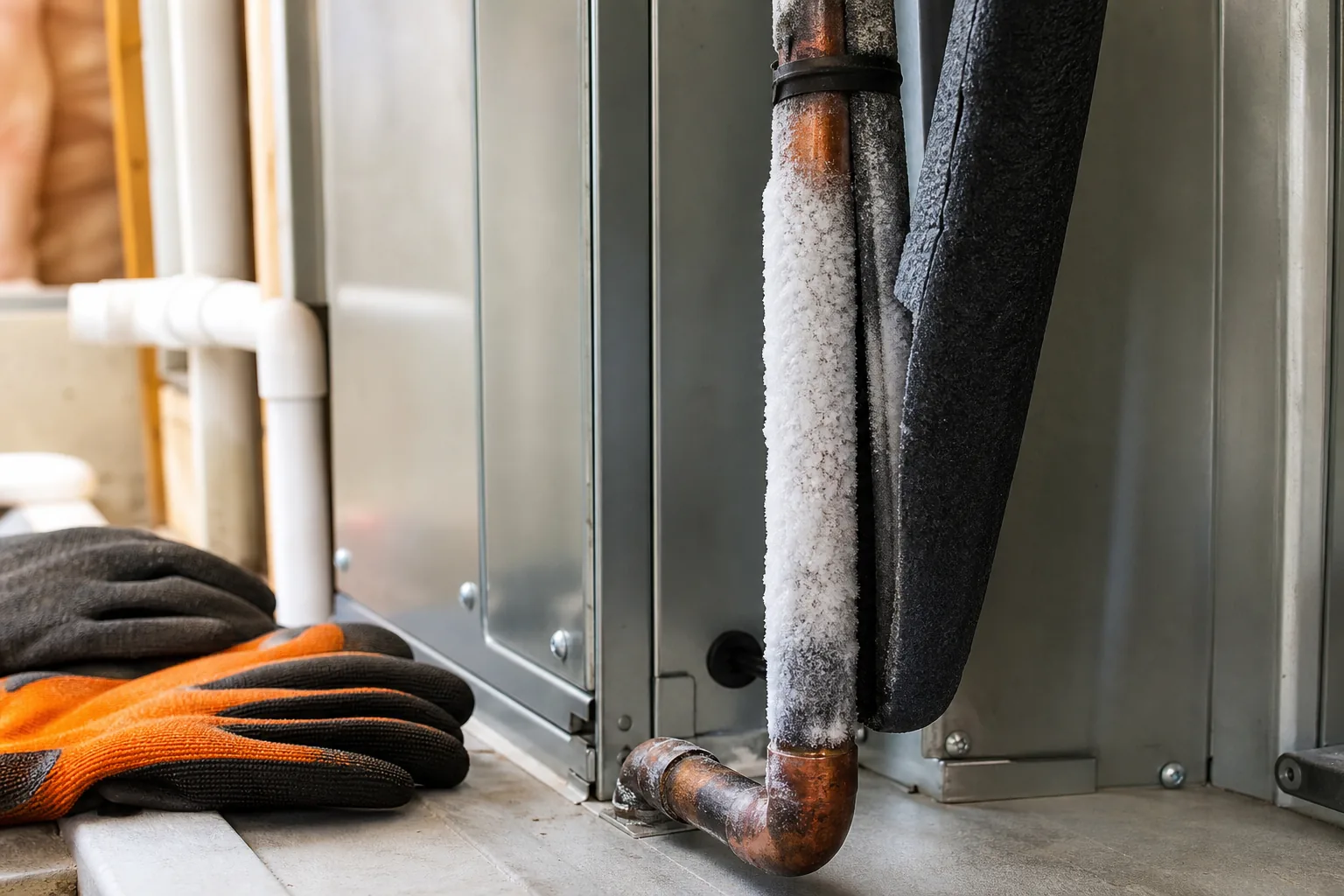
For homeowners in Grass Valley and Penn Valley, large temperature swings can make a system run hard during summer heat. Homeowners in Auburn, Colfax, Rocklin, Roseville, and Lincoln can use the same pause-and-check approach. Still, ice is a reason to pause, not a reason to keep testing. Our page on AC leak repair costs in Grass Valley explains what a technician may check before giving a repair estimate.
At this stage, you should know whether the problem is a setting, blocked airflow, lost outdoor power, or a possible frozen coil. That is enough information for a safe service request. You don't need to measure pressure yourself. Contact Home Worx Heating and Cooling for local service.
Step 4: Test the System After It Thaws and Know When to Stop
After the ice has fully melted, test the AC once. This helps separate a temporary airflow restriction from a fault that needs service.
First, replace a dirty filter. Then confirm that all nearby supply vents are open. Set the thermostat to COOL and the fan to AUTO. Lower the target temperature several degrees. Give the system at least ten minutes to start a full cooling cycle.
Check the air at a supply vent. It should feel clearly cooler than the room, though the exact temperature depends on the system and indoor conditions. Feel the larger insulated copper line outside. It may feel cool, but don't treat that touch test as a refrigerant diagnosis.
Watch for a return of the ice. Also listen for loud buzzing, repeated clicking, grinding, or a hard start. Stop the test if the breaker trips, water begins to spill, smoke appears, or the outdoor fan fails to run. Turn the system off and keep people away from exposed equipment.
A system that cools for ten minutes but warms up again still has a problem. The filter may be too restrictive, the coil may be dirty, the condensate drain may be blocked, or the refrigerant charge may be low. A short burst of cold air doesn't prove the repair is complete.
Don't open the condenser to inspect a capacitor. Capacitors can store electricity after the disconnect is pulled. You also shouldn't bypass a safety switch or bridge thermostat wires. Those shortcuts can create a shock risk and may damage the control system.
If your home is in Rocklin, Auburn, Colfax, Grass Valley, Penn Valley, Roseville, or Lincoln, test the system early in the day when the outdoor temperature is lower. The same rule helps during a heat wave. A safe test gives useful clues, but it shouldn't become a repeated trial-and-error cycle.
Keep notes on the time the system starts, the sound it makes, and whether ice returns. A short video of an unusual noise can help a technician understand the complaint without requiring you to recreate the fault. For local service, contact Home Worx Heating and Cooling.
Step 5: Get a Professional Diagnosis and Prevent the Problem
If warm air returns after the filter change and thaw cycle, schedule a diagnosis. At that point, the likely causes include a refrigerant leak, failed capacitor, outdoor fan problem, control fault, dirty coil, or compressor issue.
A technician should check the system in a clear order. First comes the thermostat call and indoor airflow. Next comes electrical power and outdoor operation. Then the technician can inspect coil condition, drain function, refrigerant pressures, and the compressor circuit.
Ask what failed before approving a part replacement. A useful diagnosis should explain the test result, the repair, and any safety concern. If refrigerant is low, ask whether the leak can be found and repaired instead of only adding more charge.
Home Worx Heating and Cooling serves homeowners and small businesses in Placer and Nevada counties. Our team handles AC repair, maintenance, installations, and air-quality work across the foothill region. We can help with a warm-air call in Roseville, Lincoln, Grass Valley, Auburn, Colfax, or Rocklin, then explain what needs to happen next.
Preventive care is less dramatic than an emergency repair, but it works best when it follows a routine. Check the filter each month during heavy use. Keep plants and debris away from the outdoor cabinet. Schedule seasonal service before the first long summer run, especially if the system has a history of freezing or breaker trips.
Ask the technician to check the condensate drain and outdoor coil during maintenance. A light layer of dust or cottonwood can cut airflow across the condenser. If the coil needs cleaning, use a trained technician when the cabinet must be opened or the coil fins are bent.
The air-conditioning maintenance guidance recommends regular professional maintenance and routine filter care as part of keeping cooling equipment working well. The exact service plan still depends on your system, home, and usage.
For property managers, keep a record of filter changes, service visits, and repeated complaints. A pattern across several units may point to a shared airflow or electrical issue. For homeowners, a simple note in your calendar can prevent the first hot weekend from becoming an emergency.
Home Worx Heating and Cooling is available for local service in Penn Valley and the surrounding communities. We focus on finding the cause before recommending the fix, so you can make a sound repair decision.
Use these signs of an AC emergency if the system also shows smoke, burning smells, water damage, or repeated electrical trips. In those cases, leave the equipment off until a qualified technician checks it.
Key Takeaway:If the AC still blows warm air after a clean filter and one safe thaw test, stop troubleshooting and arrange a professional diagnosis.
FAQ: Warm Air From an AC
Why is my AC blowing warm air but still running?
Your AC may be running its indoor blower while the outdoor unit has lost power or the compressor cannot start. Check that the thermostat is set to COOL and the fan is on AUTO. Then inspect for a tripped outdoor breaker. If the outdoor unit stays silent, leave the panel closed and arrange service.
Can a dirty filter make an AC blow warm air?
Yes, a dirty filter can make an AC blow warm air by restricting airflow across the indoor coil. The coil may freeze, which prevents normal cooling even though the blower keeps moving air. Replace the filter with the correct size, shut off cooling until any ice melts, then test the system once.
Should I turn off my AC if it has ice on it?
Yes, turn off cooling when you see ice on the AC line or indoor coil. Let the system thaw on its own, and don't chip the ice or add heat. Ice can come from blocked airflow or low refrigerant. If it returns after a filter change, a technician should inspect the system.
How long does it take for a frozen AC coil to thaw?
A frozen AC coil may take several hours to thaw, depending on the amount of ice and indoor conditions. Keep the cooling cycle off during that time. Water may appear as the ice melts, so watch for overflow near the indoor unit. Don't restart cooling until the ice is gone.
When should I call an HVAC technician for warm air?
Call an HVAC technician when warm air continues after you check the thermostat, replace a dirty filter, and inspect the breaker once. You should also arrange service for repeated trips, ice that returns, refrigerant warning signs, burning smells, or unusual electrical sounds. These faults need tests that are unsafe to perform casually.
Conclusion
Start with the thermostat, filter, vents, and outdoor power. If those checks don't restore steady cooling, leave the system off and contact Home Worx Heating and Cooling for a local diagnosis in Auburn, Colfax, Rocklin, Roseville, Grass Valley, Penn Valley, or Lincoln. A trained inspection is safer than guessing at refrigerant or electrical parts.