
Top Signs Your AC Needs Freon and What They Mean
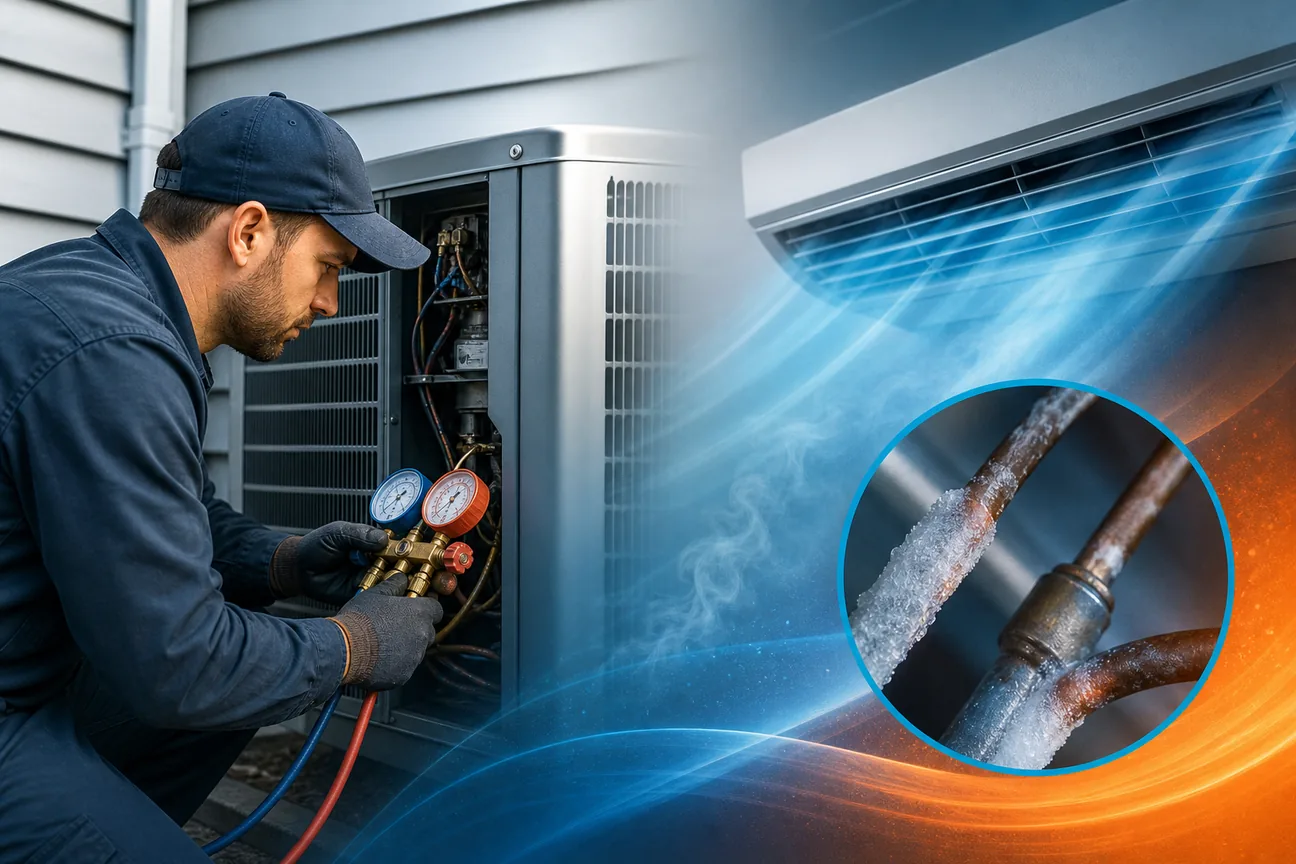
Signs your AC needs Freon can point to a refrigerant leak, but no single symptom proves that’s the cause. Warm air, ice, or an odd sound can also come from an airflow or equipment problem. Here are five clues to watch for and what to do next.
We analyzed 7 published HVAC contractor blog guides on signs of low AC refrigerant and found warm air from the vents listed first in 4 of the 7, more than any other sign. Longer cooling cycles led 2 guides, reduced efficiency led 1, and hissing or higher bills never ranked first.
Table of Contents
1. Warm Air From the Vents: Cooling That Has Suddenly Weakened
If the AC is running but the air from several vents feels warm or barely cool, the system may not be moving heat out of your home well. Low refrigerant can reduce the system’s ability to absorb heat at the indoor coil. A leak is one possible reason for a low charge.
Refrigerant moves heat through a closed cooling system. It isn’t fuel that the AC uses up during normal operation. Refrigerant’s role in heat transfer helps explain why a low charge can affect cooling, but the symptom alone can’t identify the fault.
Check the thermostat setting and make sure supply vents are open. A dirty filter or blocked airflow can also leave rooms warm. If the air stays warm after those basic checks, note whether the problem affects the whole home or just one room. That detail helps a technician narrow down the cause.
In Auburn or Colfax, a hot afternoon can make weak cooling feel urgent. But don’t assume that adding refrigerant is the fix. Our safe checks for an AC that isn’t cold enough can help you rule out simple airflow and thermostat issues before arranging service.
Home Worx Heating and Cooling serves homeowners across Placer and Nevada counties. If warm air comes with ice or a hissing sound, stop running the system and arrange a professional diagnosis.
2. Longer Cooling Cycles: The AC Runs but Struggles to Reach the Set Temperature
An AC that runs much longer than usual may be struggling to meet the thermostat setting. With too little refrigerant, the indoor coil may not absorb enough heat for the system to cool the home as expected. But long run times can also result from a dirty filter, a duct issue, or a system that’s working hard in hot weather.
Notice what happens over a full cycle. Does the indoor temperature slowly drop, stay steady, or rise while the AC keeps running? Does one room remain warm while nearby rooms cool? Share those details with the technician instead of treating run time as proof of a refrigerant leak.
In Rocklin or Roseville, a heat wave can push an AC to run for long stretches even when it’s working properly. The same can happen during hot weather in Auburn, Colfax, Grass Valley, Penn Valley, or Lincoln. Compare the system’s behavior with its usual performance, and check that the filter and vents aren’t blocked. If the AC runs for hours without making the home more comfortable, book a diagnostic visit.
Don’t connect a recharge kit or open refrigerant lines yourself. The technician needs to find the reason for the low charge and confirm the correct repair.
Long run times paired with warm air or ice deserve more attention than a long cycle by itself. Keep a short note of when the problem began and whether it changes during cooler parts of the day.
3. Ice on the Refrigerant Line or Indoor Coil: A Visible Clue, Not a Diagnosis
Frost or ice on the indoor coil or refrigerant line is a reason to switch cooling off. Low refrigerant can make the indoor coil too cold, so moisture freezes on its surface. As ice builds, it can block airflow and make cooling worse.
A clogged filter or another airflow problem can also cause a coil to freeze. Don’t remove equipment panels to look for the coil, and don’t chip away ice. If you can see frost on an exposed line, take a photo from a safe distance and share it with the technician.
After you turn off cooling, ice may melt and leave water near the indoor unit. Keep an eye on the area so water doesn’t spread, but leave the equipment closed. In Grass Valley or Penn Valley, where a home may need cooling during a warm stretch, it can be tempting to turn the AC back on as soon as the ice disappears. The same fault may cause it to freeze again.
If ice keeps returning, the system needs a proper diagnosis rather than a repeat thaw. These safe ways to prevent an AC from freezing cover basic airflow checks, but recurring ice calls for HVAC service.
Tell the technician whether the ice appeared on a pipe, near the indoor unit, or both. That description can help guide the inspection without asking you to open the system.
4. Hissing or Bubbling Near the AC: Possible Refrigerant Escaping
A hissing or bubbling sound near an indoor coil or refrigerant line can point to an active leak. Treat a new sound like this seriously, especially when the AC is also cooling poorly. Turn cooling off and arrange service. Don’t try to find the leak by touching pipes or opening the unit.
Sounds can be hard to locate, and a noise by itself doesn’t confirm the source. Make a note of when you hear it and where you seem to hear it from, such as near the indoor unit or outdoors. That is useful information for a technician.
Low refrigerant usually means the sealed system has a leak. Simply adding refrigerant doesn’t repair a leaking coil or connection, so the charge may drop again. A proper service visit should identify the problem and address it before the system is charged to its specified level.
Home Worx Heating and Cooling provides AC repair for customers in Placer and Nevada counties. We recommend shutting the system off if you hear persistent hissing or bubbling, then arranging a qualified leak check instead of continuing to run it.
5. Higher Electric Bills Alongside Poor Cooling: A Pattern Worth Investigating
A higher electric bill can add to the case for a closer look when the AC is also cooling poorly. Low refrigerant may reduce heat transfer, leaving the system to run longer to reach the thermostat setting and use more electricity.
Still, a bill increase doesn’t diagnose a refrigerant problem. Hotter weather, a thermostat change, or a restricted filter can also affect run time. Compare the bill with your cooling habits and note whether rooms feel warmer than usual or the AC stays on longer.
In Lincoln or Auburn, a spell of hot weather may explain a longer cooling schedule. But a bill spike paired with weak cooling or ice is a stronger reason to arrange an inspection. A technician can check the system rather than guess from energy use alone.
Seasonal service can help catch maintenance issues before the cooling season gets busy. Home Worx Heating and Cooling provides HVAC maintenance and AC repair in the local area, including Colfax, Rocklin, Roseville, Grass Valley and Penn Valley. Ask the technician to explain what they found and why the proposed work addresses the cause.
Think of the bill as a supporting clue, not a test. If it rises along with poor cooling, contact Home Worx Heating and Cooling for local service.
How These Five AC Symptoms Compare
Some clues are easier to act on than others. Use this table to decide what to report and how quickly to arrange service. None of the symptoms on its own confirms that refrigerant is low.
What you notice | What it may suggest | Other possible cause | What to do |
Warm air from several vents | Reduced heat transfer, possibly from low refrigerant | Thermostat or airflow problem | Check the setting and filter, then arrange service if it continues |
Long run time without reaching the setting | Cooling capacity may be reduced | Hot weather, duct issue, or dirty filter | Note the run pattern and get a diagnosis if cooling stays weak |
Ice on a line or coil | Low refrigerant is one possible cause | Restricted airflow | Turn off cooling and arrange an inspection |
Hissing or bubbling | Possible refrigerant leak | Another sound near the equipment | Shut off cooling and get qualified service |
Higher bill with poor cooling | Longer AC run time may be raising energy use | Weather or changed thermostat use | Compare with system performance and request a check if both changed |
Two or more clues at once make it more important to arrange service, but they still don’t replace testing. Share the timing, sounds, and visible ice with the technician. A full diagnosis can separate a refrigerant leak from a filter, coil, duct, or control problem.
For homeowners around Auburn, Rocklin, Roseville, and the foothill communities, Home Worx Heating and Cooling can assess the system and explain the repair options. We serve Colfax, Grass Valley, Penn Valley, and Lincoln as well.
FAQ: Signs Your AC May Need Refrigerant
How can I tell if my AC is low on refrigerant?
Warm air, long run times, ice on a coil or line, and hissing near the equipment can point to low refrigerant. None confirms it on its own. Airflow or equipment faults can cause similar symptoms. A licensed HVAC technician needs to inspect the system, find any leak, and check the refrigerant charge.
Does AC refrigerant get used up over time?
No, refrigerant circulates through a closed system during normal operation. If the charge is low, a leak or other system fault may be letting refrigerant escape. Adding more without finding the cause can leave the underlying problem in place. Ask the technician to explain the diagnosis and repair before recharging.
Should I turn off my AC if I see ice?
Yes. Turn cooling off if you see ice on a refrigerant line or indoor coil, then arrange service. Ice can block airflow and make cooling worse. Don’t chip at it or open equipment panels. After it melts, the fault may still be there, so don’t assume the system is ready to run normally.
Can I add Freon to my AC myself?
No. Adding refrigerant without finding the fault can leave a leak unrepaired. A qualified technician can check for leaks, repair the cause, and charge the system to the manufacturer’s specifications. Don’t attach a recharge kit or open refrigerant lines.
Conclusion
Warm air, ice, and unusual sounds are worth acting on, but only a diagnosis can confirm a refrigerant problem. Turn off cooling if you see ice or hear persistent hissing, then contact Home Worx Heating and Cooling to arrange local service.