
Top Ductless Mini Split Pros and Cons to Weigh
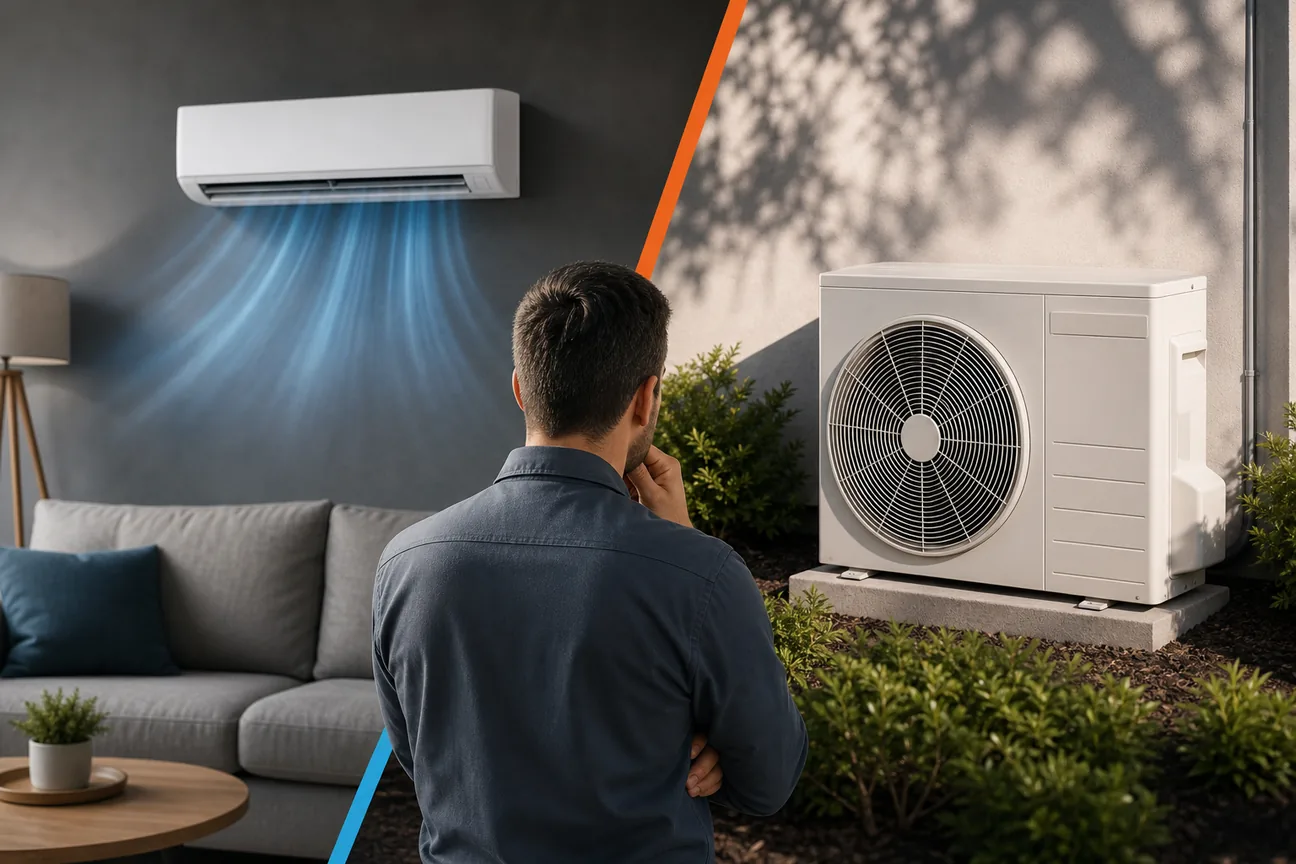
A ductless mini split can fix one stubbornly hot room without adding ductwork, but the indoor unit stays in view. These ductless mini split pros and cons can help you weigh targeted comfort against installation cost, upkeep, and winter performance. Here are five options and the kind of home each may suit. For homeowners in Auburn, Colfax, Rocklin, Roseville, Grass Valley, Penn Valley and Lincoln, local winter conditions also matter.
We analyzed 72 comments from YouTube and Reddit about ductless mini split systems and found that 19% mentioned the difficulty of installation and placement.
Table of Contents
1. One-zone Ductless Mini-Split: Targeted Comfort for One Room
A one-zone ductless mini-split connects one outdoor unit to one indoor unit. It’s a focused way to heat and cool a sunroom, converted garage, home office, or bedroom that the main system doesn’t reach well. In Auburn, a west-facing room that heats up late in the day may need a different solution than the rest of the house. A similar issue can arise in a Rocklin home office.
It doesn’t need a traditional duct run to deliver air into that room. Many mini-splits are heat pumps, so they can cool in summer and heat in winter. The indoor head has its own control, which lets you adjust that zone without changing the temperature elsewhere. A one-zone system can also suit a room addition in Roseville where extending existing ductwork would mean opening finished walls or ceilings.
When comparing options, consider system type, zone count, capacity, efficiency, installation needs, and budget. Installation pricing varies by project, so ask for a quote based on the actual room, not a broad home-size rule.
Room size is only part of sizing. Ceiling height, insulation, window area, and sun exposure all affect how much heating or cooling the space needs. A qualified installer can assess the room and match the system to its load. Our homeowner’s guide to mini split systems explains how the indoor and outdoor units work together.
The tradeoff is easy to see: a wall-mounted indoor unit takes up visual space, and its filter needs regular attention. If you only need comfort in one room, though, that may be a fair exchange for avoiding a new duct run. Home Worx Heating and Cooling installs mini splits and ductless systems in the local area, including Colfax, Grass Valley, and Penn Valley. Contact us for local service in Lincoln.
Key Takeaway:A single-zone unit is worth considering when one room needs help and the rest of the home feels comfortable.
2. TOSOT: Multi-Zone Budget Option
TOSOT is a budget-oriented brand with multi-zone mini-split systems.

That can help in a two-story home where upstairs rooms warm up before the main floor does. It can also suit a house in Rocklin or Grass Valley with a frequently used office and guest room that don’t need the same temperature all day. Because the system delivers air directly into the selected rooms, it doesn’t rely on a new network of ducts.
Multi-zone systems need more planning than one-room setups. The outdoor unit must suit the combined indoor units, and each head needs a route for refrigerant lines and a drain. The placement matters too. A unit installed where furniture blocks airflow can make a room less comfortable, even if the system’s capacity looks right on paper.
Separate room controls are useful, but they don’t mean every room should have a head by default. Start with the spaces where you feel the biggest comfort gap. A load calculation and a clear plan for unit placement can help avoid paying to condition rooms you rarely use.
Mini-split heads are visible on walls or ceilings. Some owners like the direct room control enough to accept that look; others prefer the hidden vents of a ducted system. In Roseville or Auburn, where summer afternoons can make west-facing rooms uncomfortable, a multi-zone layout may be worth comparing with central air, especially if the current ducts don’t serve those rooms well.
Home Worx Heating and Cooling can help assess whether a one-zone or multi-zone setup makes more sense for your floor plan in Colfax, Penn Valley, or Lincoln. The right answer depends on which rooms need attention and how the system can be routed through the home. Contact Home Worx Heating and Cooling for local service.
3. Mitsubishi Hyper-Heat: A Cold-Weather Option for Sierra Foothill Winters
Mitsubishi Hyper-Heat is a cold-climate mini-split line for homes that need dependable heat during colder spells. Published efficiency and low-temperature ratings vary by model, so compare the exact model in your quote.
A heat pump moves heat rather than making it by burning fuel. In heating mode, it draws heat from outdoor air and moves it indoors. As the outdoor temperature drops, a standard model may lose heating capacity. Cold-climate equipment is designed for stronger performance in low temperatures, but the specific model’s rated output at cold conditions matters more than the product label alone.
For a home in Grass Valley or Penn Valley, think about whether the mini-split will be the main heat source or will support another system. The room’s heat loss and the local winter design conditions should guide sizing. An oversized unit can cycle more than needed; an undersized one may struggle to keep up on a cold day.
Cold-weather performance is only one part of the decision. Ask the installer how the proposed system will heat the space at the temperatures your home actually sees. If the unit will be the main source of heat, also discuss what happens during the coldest stretch of winter and whether you’ll keep a backup heat source.
Installation quality matters for comfort and long-term operation. The indoor head needs room to move air, while the outdoor unit needs a suitable location and a clear route for its lines. Our mini split installation overview covers the main work involved, from equipment placement through system checks.
A cold-climate model may be more system than a seldom-used guest room needs. But for a space that must stay warm through foothill winter nights, checking low-temperature heating data is a sensible part of the comparison.
Pro Tip:Ask for the heating capacity at a low outdoor temperature, not only the model’s headline efficiency rating.
4. Daikin Aurora: Cold-Climate Performance with R-32 Refrigerant
Daikin Aurora is a cold-climate mini-split line. That makes it a model to compare when winter heating is part of the job, not only summer cooling.
Daikin Aurora uses R-32 refrigerant. Refrigerant type is one detail to ask about when comparing equipment, but it doesn’t replace the need to check capacity, efficiency, and the fit for your home. Ask the installer to explain the system’s published performance and which matched indoor and outdoor units are included in the proposal.
Aurora’s cold-weather rating may be relevant for a home in Lincoln or Colfax, but local conditions vary with elevation and the room itself. A sunny upstairs space and a shaded room with older windows can have very different heating needs. Proper sizing begins with the space and its heat loss, not the brand name.
One benefit shared by ductless heat pumps is heating and cooling from the same equipment. That can be useful in a finished attic or addition that stays hot in summer and cold in winter. The caveat is visible equipment indoors. Wall units can affect how a room looks, while ceiling or floor-mounted styles may work better in some layouts if the chosen system supports them.
Ask about routine care before you choose. Indoor filters need cleaning, and the outdoor unit needs clear airflow. Regular service can also give a technician a chance to check system operation before a small issue interrupts heating or cooling. Actual energy use depends on the system, the weather, your home, and how you set the controls.
A higher efficiency rating alone can’t tell you how quickly a project will pay back. Compare the installed quote with your current energy use and the rooms you plan to condition. If you expect to sell soon, treat any change in resale value as uncertain rather than counting on the equipment to add a set amount.
5. Central Air: A Ducted Alternative When Existing Ducts Are in Good Shape
Central air is the ducted alternative for homes with usable ductwork and a preference for one thermostat and hidden indoor equipment. It can be a simpler fit when the existing ducts already reach the rooms you want to condition. A central air conditioner cools; heating may come from a separate furnace or from a heat-pump system.
Condition matters. Leaky, poorly insulated, or badly routed ducts can reduce the comfort delivered to rooms. If the home already has sound ducts, replacing central equipment may cost less than installing multiple mini-split heads. If new ducts are needed, the project becomes larger.
Use this comparison to frame the first conversation with an HVAC contractor:
Home situation | Option to examine | Tradeoff to weigh |
One room has a comfort problem | One-zone mini-split | A visible indoor unit for focused room control |
Several rooms need separate settings | Multi-zone mini-split | More indoor units mean more placement and line routing decisions |
Existing ducts work well throughout | Central air or a ducted heat pump | One thermostat may not suit every room’s preferences |
There are no usable ducts | Compare ductless with the cost of adding ducts | Whole-home coverage needs a project-specific plan |
Central air keeps the indoor hardware out of sight, which some homeowners prefer. A ductless system makes the indoor unit visible, but gives direct control to the room it serves. Neither approach guarantees a higher resale price. A well-planned system that fits the home’s needs is easier to explain to a buyer than a unit selected only for its rating.
For a fuller local comparison, ductless and central air options in Placer County lays out the main differences. Home Worx Heating and Cooling can look at your existing ducts and room layout before recommending which approach to price.
FAQ: Ductless Mini Split Pros and Cons
What are the main downsides of a ductless mini split?
The main downsides are the visible indoor unit, the need to clean its filter, and the upfront cost of installing each zone. Cold-weather heating also depends on the model and its capacity at low temperatures. If your existing ducts are in good shape and already serve every room, replacing central equipment may be the simpler project.
Can a ductless mini split heat and cool a whole house?
Yes, a multi-zone mini-split can heat and cool several rooms, with indoor units set for separate zones. The system needs to be sized for the home and the rooms it serves. A layout with closed rooms or long distances between spaces may need careful planning. Compare the proposed zone plan with the coverage your current system provides.
Are mini splits cheaper to run than central air?
They can use less energy in the right home, especially when they avoid duct losses or let you condition only occupied rooms. But the system rating alone can’t predict your bill. Local weather, electricity rates, insulation, duct condition, equipment size, and thermostat settings all affect energy use. Compare estimates for your specific home and use pattern.
Do ductless mini splits work in cold winters?
Some cold-climate mini-splits are designed to keep heating in very low outdoor temperatures. Mitsubishi Hyper-Heat and Daikin Aurora are examples in this comparison. Check the selected model’s heating capacity at low temperatures, then compare it with the room’s heat loss. If the mini-split is your main heat source, discuss a backup plan for unusually cold weather.
Does a mini split add resale value?
There’s no guaranteed resale increase from installing a mini-split. Buyers may value comfortable rooms and efficient equipment, but their response depends on the home and the system’s condition. Keep the installation and service records, and make sure the equipment serves a clear need, such as an addition that the main system doesn’t reach.
Conclusion
Choose ductless when you need room-by-room control or lack useful ducts; favor central air when existing ductwork is sound and whole-home coverage is the goal. Ask Home Worx Heating and Cooling for a local assessment and a quote based on your rooms, ducts, and winter heating needs. We serve Auburn, Colfax, Rocklin, Roseville, Grass Valley, Penn Valley, and Lincoln.