
Top Signs You Need Duct Cleaning
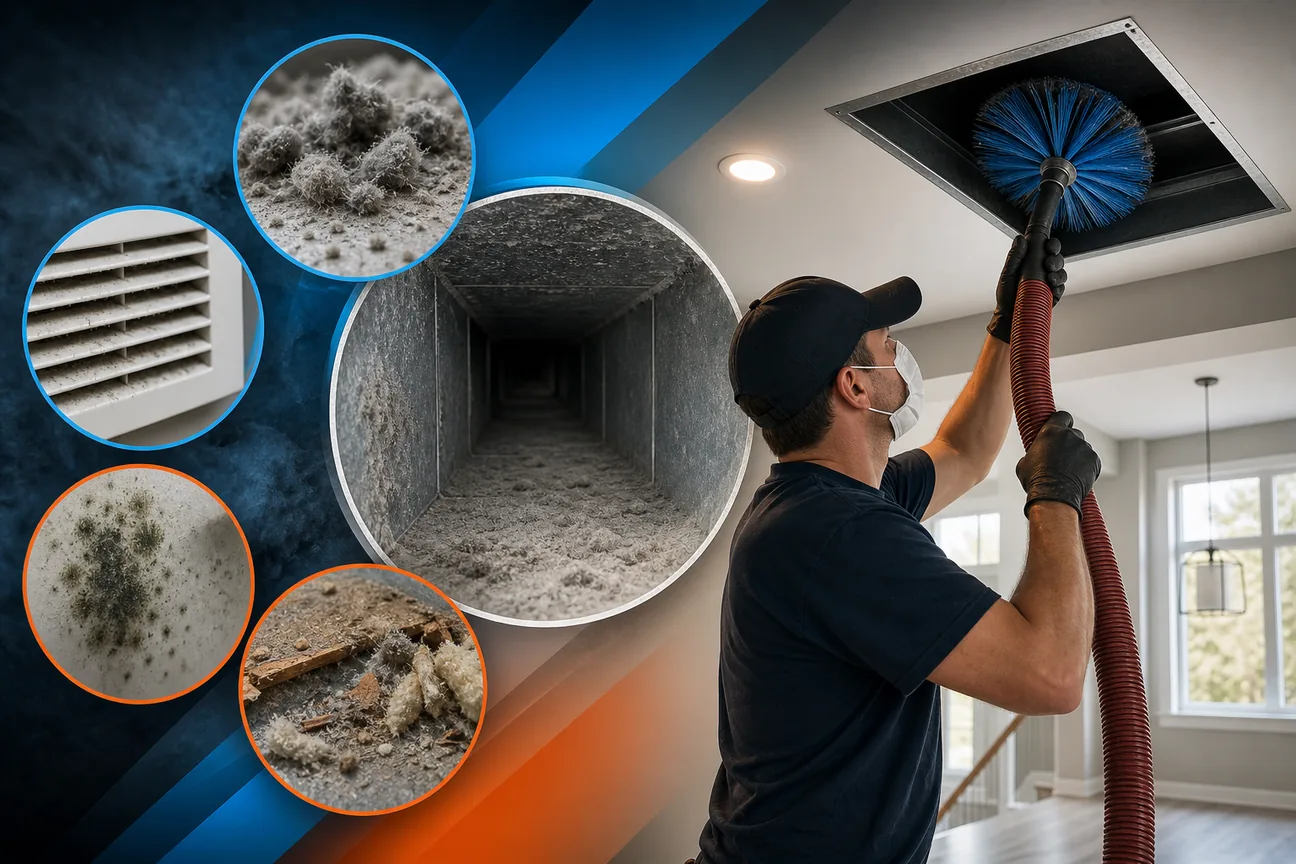
Dust that returns right after you clean can be frustrating. The clearest signs you need duct cleaning include debris blowing from vents, lasting musty smells, suspected mold, or pest evidence. We’ll explain what each clue may mean and when to ask an HVAC professional to inspect the system.
We analyzed 28 comments and questions from YouTube and Quora about signs you need duct cleaning and found that 36% mentioned dust and debris in ducts.
Table of Contents
1. Dust or Debris Blows Out of the Supply Vents
A puff of dust from a supply vent when the system starts deserves a closer look, especially if it happens more than once. Check whether the debris is coming from inside the vent opening or is simply sitting on the grille. A dusty grille alone is common. Dust-laden air passes through return grilles, so surface dust doesn’t prove that the ductwork has heavy buildup.
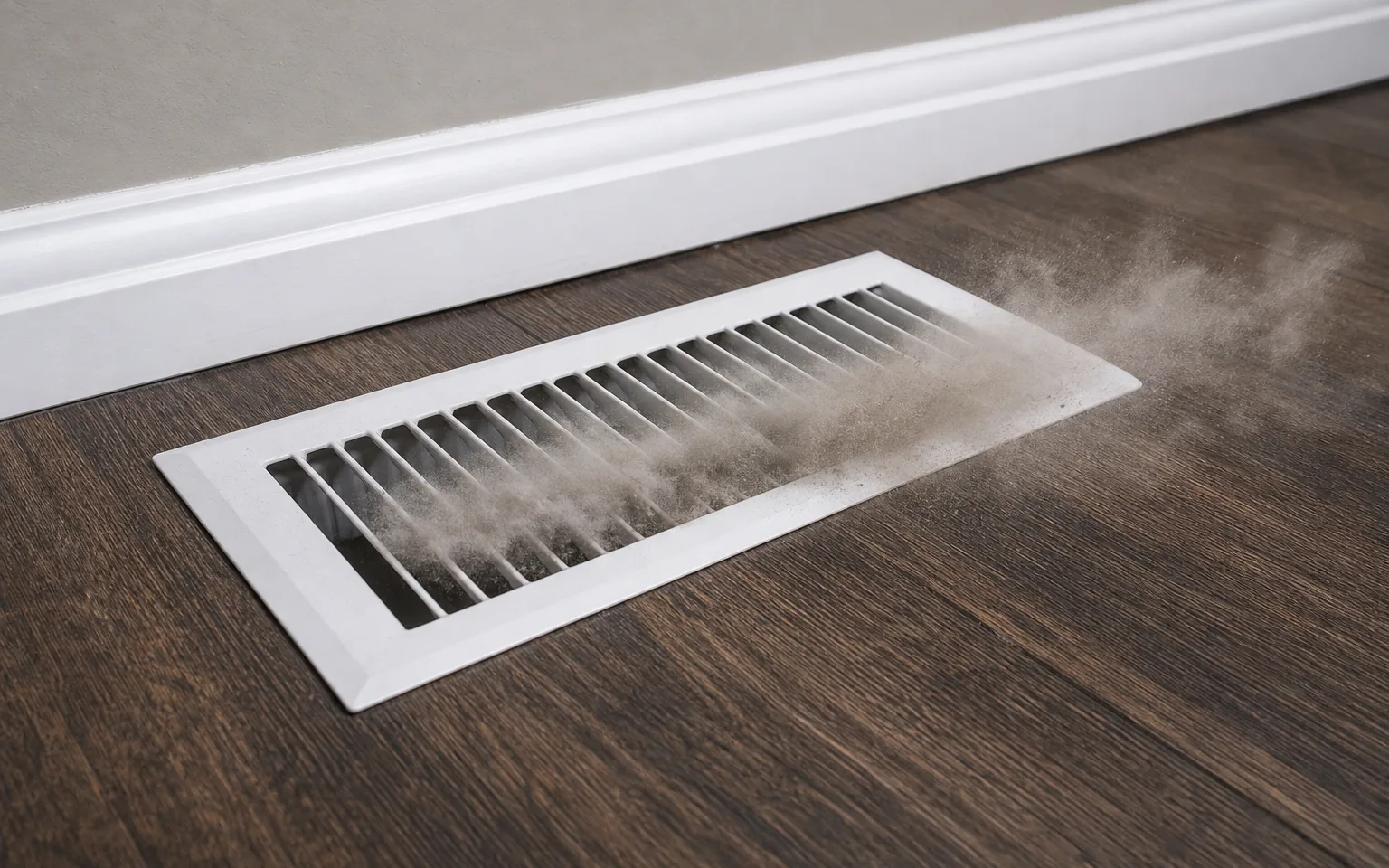
Look for a clear layer of debris inside an accessible duct opening. If dust keeps blowing into the room, note which vents are affected and whether it happens during heating, cooling, or both. A visible pile of hair or dust is a stronger reason to request an inspection than a thin coating near the register.
In Auburn, Colfax, and nearby foothill communities, dry weather can make household dust more noticeable. But dust has many possible sources, including outdoor air and normal activity indoors. A clogged filter, a gap around the filter, or a system issue can also play a part. For more ways to trace dust around the house, see our guide to common causes of a dusty home .
If you’ve had drywall work, floor sanding, or another renovation, construction dust may have entered the system. Keep the HVAC system off while dusty work is underway when it’s safe to do so. After the work, let dust settle and clean the rooms before restarting the system. If debris is still blowing from vents, ask for an inspection rather than assuming a duct cleaning alone will solve it.
2. Dust Returns Quickly Even After Regular Cleaning
If furniture gets dusty again soon after you clean, the HVAC system might be part of the picture, but that alone doesn’t confirm dirty ducts. Dust can enter from outdoors and come from cooking, cleaning, pets, and everyday movement around the home. Check the filter and return grille first. A filter that is loose, damaged, or heavily loaded may need attention.

Notice whether the dust shows up across the whole home or mostly near one room or vent. Dust streaks near a duct joint can point to a leak. A dusty return grille may simply collect particles as room air moves through it. Keep a simple note of when the dust returns and whether the system is running more often.
For general background, review the duct-cleaning guidance , but recurring dust alone doesn’t confirm that cleaning is needed.
Look for a source first, such as an air leak, a filter fit problem, or renovation debris. If the dust problem comes with weak airflow or a new system sound, an HVAC assessment can help sort out whether the ductwork is involved.
Key Takeaway:Dust returning quickly is a reason to investigate, not proof that the ducts need cleaning.
3. Musty or Stale Odors Persist When the HVAC Runs
A musty smell that returns whenever the heating or cooling system runs can point to moisture or debris somewhere in the system. Notice whether the smell comes from one vent or several. One affected room may suggest a local issue, while an odor throughout the home could start closer to the indoor unit or return side.

Don’t assume the duct is the source. A dirty filter, damp drain pan, clogged condensate line, or moisture near the cooling coil may cause a stale smell. Check for visible water around the indoor unit if it’s safe to do so. If you see water, staining, or damp insulation, ask an HVAC professional to look for the moisture source before arranging cleaning.
In Rocklin and Roseville, an odor that lasts beyond the first short run of the season deserves more attention than a brief smell after the system has been off. If the odor keeps coming back after a filter change, write down when it occurs and which rooms are affected. Our article on why an air conditioner may smell musty covers other parts of the system that can cause it.
Persistent odors can also come from sources outside the HVAC system, such as a damp room or plumbing leak. Air fresheners may hide the smell without fixing what’s causing it. A technician can inspect the system and help identify whether cleaning, a repair, or moisture control is the right next step.
Allergy symptoms alone don’t prove that ducts are dirty. The EPA says duct cleaning hasn’t been shown to prevent health problems. If sneezing, coughing, or dry eyes are your main concern, discuss possible causes with a health professional and ask about indoor-air options. Home Worx Heating and Cooling can help you assess air-quality options for your home.
4. You See Suspected Mold or Signs of Moisture Inside the HVAC System
Visible growth inside a duct or near a vent is a reason to get professional help. Still, a dark mark isn’t automatically mold. Dust, soot, and other residue can look similar, so don’t treat or brush a suspected patch before its cause is understood.
Look for moisture clues nearby, too. Water stains, damp insulation, condensation, or a musty smell can help an HVAC professional find where water is entering or collecting. Cleaning without correcting the moisture source can allow the problem to return. A system inspection should consider the affected duct area and the parts connected to it.
In Northern California foothill communities, hot summers and cold winters mean HVAC systems can sit through different weather conditions and long run times. The key is not to guess based on the season. If you see suspected growth or signs of water near the equipment, ask for an assessment promptly.
Be wary of a contractor who declares every dark mark to be mold without inspecting it. Ask what was seen, which areas may need work, and how the moisture source will be addressed. If chemical treatment is proposed, ask what it is and why it’s needed. The EPA notes that research on chemical treatments in ducts is limited, so homeowners should understand the proposed use before agreeing.
5. You Find Pest Evidence or Heavy Debris in the Ductwork
Scratching or movement sounds from a duct, visible droppings, nesting material, or insects near a register call for an inspection. Pests can enter through openings in the home or duct system. Cleaning may remove debris, but the entry point also needs attention or the signs could return.
Don’t reach deep into a duct or use a household vacuum on suspected pest waste. Take note of where you hear the sound or see the evidence, then have the area checked. In Grass Valley and Penn Valley, the same advice applies to homes that sit near wooded or open areas: identify how pests are getting in before treating the duct as the only problem.
Heavy debris is another strong clue, especially if you can see a buildup inside an accessible opening. Ask the contractor to explain which parts of the system they plan to clean. A full system job may involve more than the ducts, so get the work scope in writing. Our page about what affects air duct cleaning costs can help you understand which job details to discuss.
Choose a contractor who inspects before making a recommendation and explains how debris will be contained and removed. The National Air Duct Cleaners Association says proper cleaning involves loosening contaminants and collecting them under continuous negative pressure , which helps keep particles from spreading into living spaces. Avoid pressure to buy extra treatments before you understand the need for them.
Unusual noises can have other causes, too. A rattle may come from a loose panel, while a whistling sound can point to restricted airflow or a gap. If the sound is new, mention it during the inspection instead of assuming cleaning will fix it.
Quick Comparison: Which Signs Make Duct Cleaning More Likely?
One clue by itself may not settle the question. Use this comparison to decide whether to monitor the issue, check a simple part, or arrange an inspection. A contractor should explain the evidence before recommending work.
What you notice | What it may point to | Useful next move |
Dust on the grille | Normal dust near a return or supply opening | Clean the grille and watch for recurrence |
Dust blowing from vents | Loose debris, filter fit trouble, or another system issue | Note the vents and request an inspection if it repeats |
Musty smell or moisture | A damp area in the HVAC system or nearby | Find and fix the moisture source |
Suspected mold or pest evidence | Possible contamination or an entry point | Arrange a professional assessment promptly |
Uneven rooms or rising energy use | Airflow, duct, filter, or equipment trouble | Check for blocked vents and ask for system testing |
Weak airflow, uneven room temperatures, and a sudden energy-bill increase don’t prove that ducts are dirty. A clogged filter, leaking duct, or equipment problem can create similar symptoms. If a room in Lincoln stays too warm or cool, our uneven heating troubleshooting guide covers basic checks before you arrange service.
When cleaning is recommended, ask whether the work includes the full HVAC system and how the contractor will collect loosened debris. A clear explanation is a better sign than a broad promise to improve health or lower bills.
FAQ
How do I know if my air ducts need cleaning?
Repeated dust blowing from vents, heavy visible debris inside a duct, suspected mold, or pest evidence are stronger reasons to request an inspection. A dusty grille alone is common and doesn’t prove contamination. Note which rooms and vents are affected, then ask a qualified HVAC professional to inspect the system before you agree to cleaning.
Can dirty air ducts make my home dusty?
Dirty ducts can be one possible source of dust, but they aren’t the only one. The EPA says studies haven’t shown that dirty ducts raise indoor particle levels. Outdoor air, cooking, cleaning, and normal movement can add dust. Check the filter and grille, then look for heavy deposits inside the duct before deciding on cleaning.
Does a musty smell mean I need duct cleaning?
No. A musty smell may come from moisture near the cooling coil, a drain pan, a clogged drain, or a damp duct. Cleaning without fixing the source may not stop the odor from returning. Note whether one vent or the whole home smells musty, and ask for an HVAC inspection if the odor persists.
Should I clean my air ducts on a set schedule?
Routine duct cleaning isn’t recommended by the EPA. Consider it when there’s a specific reason, such as substantial debris, visible mold, or pest contamination. After a renovation, check for dust in the system and keep the HVAC equipment off during dusty work when safe. A professional can inspect the ducts and explain whether cleaning is warranted.
Conclusion
Don’t book duct cleaning just because the calendar says it’s time. Look for clear evidence, such as repeated debris from vents, suspected mold, or pest activity, and ask for an inspection that identifies the cause. Home Worx Heating and Cooling serves Auburn, Colfax, Rocklin, Roseville, Grass Valley, Penn Valley, and Lincoln. Contact our team to discuss a local HVAC assessment.