
Why Is My AC Leaking Water? Causes & Fixes
A puddle under your indoor AC unit is one of those problems that looks minor but can quietly cause water damage, mold, and a much bigger repair bill. Most leaks come down to a handful of root causes, and many of them you can fix yourself in under an hour.
Table of Contents
What Causes an AC to Leak Water?
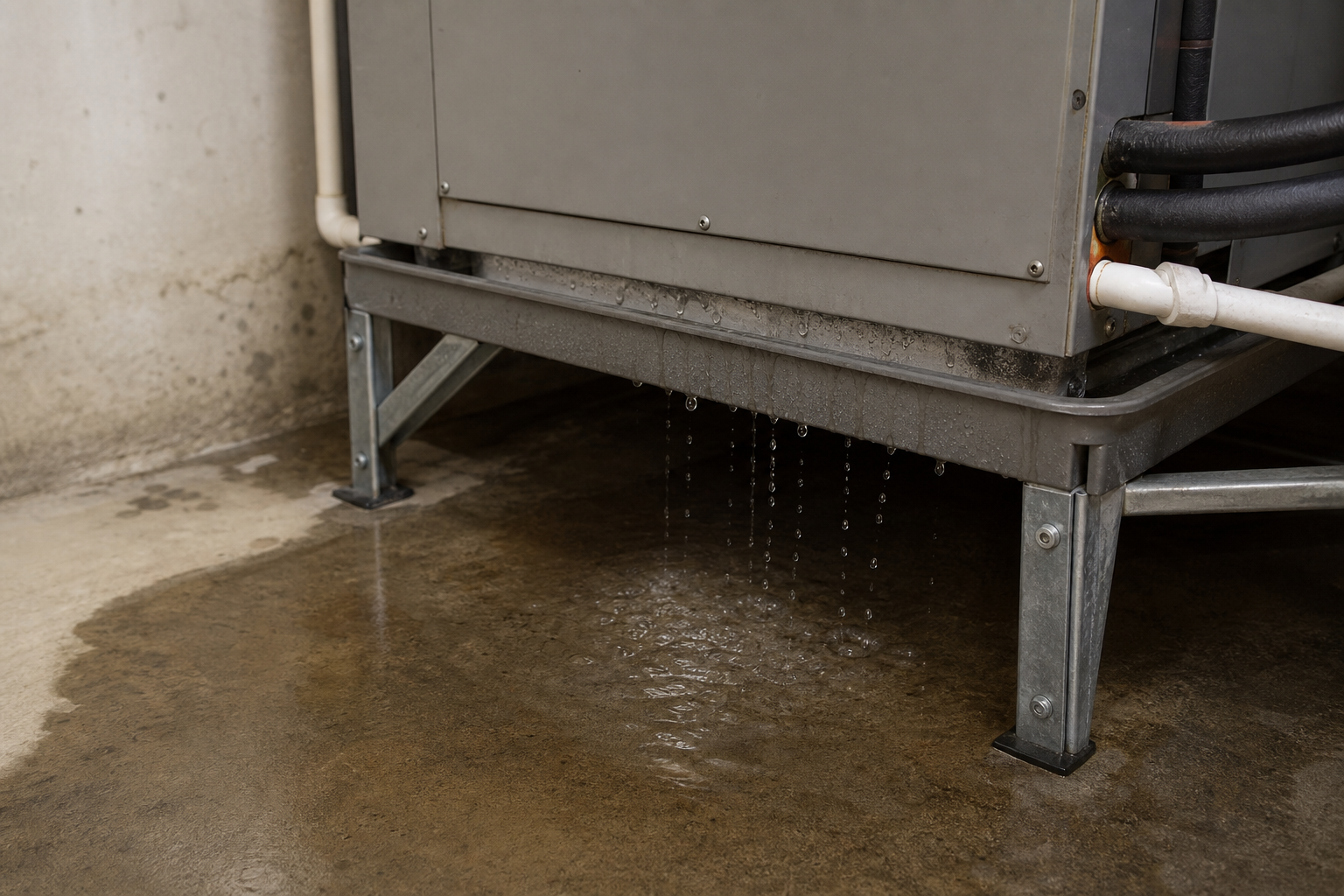
Your AC pulls warm air over a cold evaporator coil . That process pulls moisture out of the air, and that moisture has to go somewhere. Normally it drips into a drain pan and flows out through a condensate drain line . When any part of that path breaks down, water ends up on your floor.
Here are the most common causes:
Clogged Condensate Drain Line
This is the most frequent cause of AC water leaks. Algae, dust, and debris build up inside the drain pipe over time. Once it clogs, water backs up into the drain pan and eventually overflows into your home. You may also notice a musty smell before you ever see the puddle.
Frozen Evaporator Coil
When airflow over the coil is restricted, the coil gets too cold and ice forms on it. When the system shuts off, that ice melts fast. The drain pan can't handle the sudden volume, and water spills out. A dirty air filter is the most common reason airflow gets restricted in the first place.
Improper Unit Tilt
This one surprises a lot of homeowners. Your indoor unit needs a slight downhill slope toward the drain so condensation flows the right direction. If the unit is level or tilted the wrong way, water pools inside and drips into the house. A quick bracket adjustment can fix it in minutes, yet most people never check this.
Corroded or Cracked Drain Pan
The metal drain pan under your evaporator coil s can rust and develop small cracks over years of use. , a cracked drain pan produces a puddle near the indoor unit that's easy to mistake for a drain line problem. Small cracks can be sealed; a pan that's heavily corroded needs replacement.
Sweating Refrigerant Lines
Sometimes what looks like a leak is actually condensation forming on poorly insulated refrigerant lines. The pipes get very cold, and if the insulation is worn or missing, moisture from the air condenses on the outside of the pipe and drips down.
Poor Installation
If the unit was installed without proper leveling, water will never drain correctly. This is especially common after a DIY install or a rushed job. The fix is having a technician adjust the mounting brackets to restore the correct slope.
In the Sierra-foothill communities around Auburn and Colfax, AC systems run hard through long, dry summers. That extra runtime means drain lines clog faster and filters need more frequent attention than in cooler climates.
Key Takeaway:A clogged condensate drain is the leading cause of AC water leaks, but a unit that's tilted even slightly the wrong way can produce the same symptom with a fix that takes minutes.
Understanding the Condensate Drain System
To fix a leak, it helps to understand what you're working with. The condensate system is simple, but each part has to work correctly for water to exit the house rather than pool inside it.
The evaporator coil sits inside your air handler. As warm air passes over it, moisture in the air condenses on the coil's surface, just like water beads on a cold glass on a humid day. That water drips down into a shallow metal or plastic pan directly beneath the coil.
From the drain pan, a PVC pipe (the condensate drain line ) carries water outside or to a floor drain. Most systems have a primary drain line and a secondary overflow line. If the primary clogs, the secondary is supposed to catch the overflow. If both clog, you get a leak.
Some systems, particularly those installed in basements or interior rooms where gravity drainage isn't possible, use a condensate pump to push water up and out. If that pump fails, water backs up and overflows the pan. A broken condensate pump is less common than a clogged line, but it's a high-impact failure that requires pump repair or full replacement.
The evaporator coil condition matters here too. Dirty coils restrict heat transfer and can cause the coil to freeze, which then floods the drain pan when the ice melts. Keeping coils clean is part of keeping the whole condensate system working.
One thing worth knowing: the condensate system only handles liquid water. If your drain pan has a crack, or if the drain line has a low spot where water sits instead of flowing, you've broken the path even without a clog. That's why a full diagnosis looks at the pan, the pipe slope, and the line itself, not just whether the line is blocked.
Typical Fixes for the Most Frequent Issues
Most AC water leaks respond to one of a few straightforward fixes. Here's what to do for each cause, and what to realistically expect.
Clearing a Clogged Drain Line
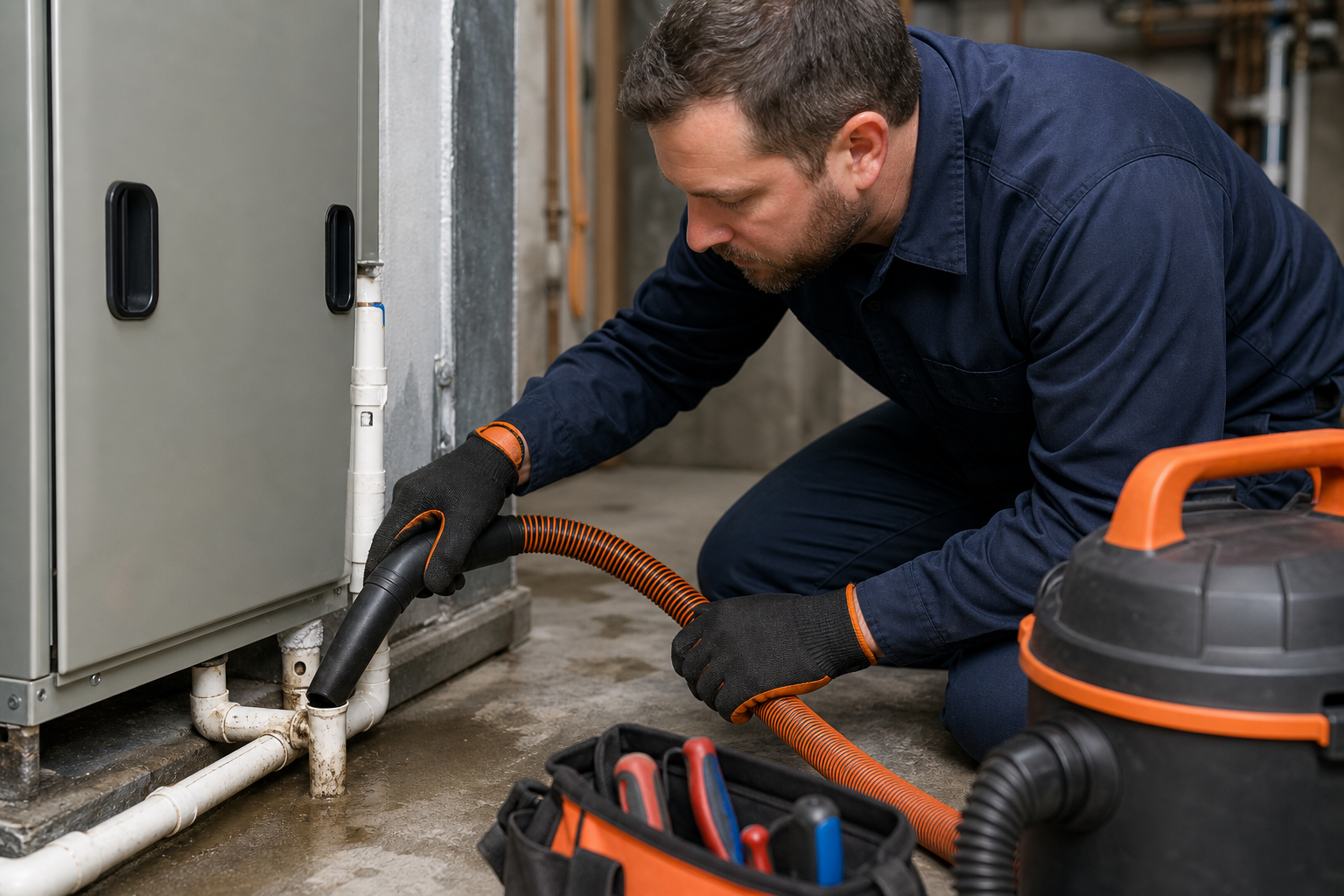
Turn off the AC at the thermostat first. Find the condensate drain line, usually a white PVC pipe near the indoor unit. Use a wet/dry vacuum on the outdoor end of the pipe to pull out the clog. Then pour about a cup of distilled white vinegar into the access port (the T-shaped cap near the air handler) and let it sit for 30 minutes. The vinegar breaks down algae and slime. Flush with warm water, then check the drain pan to confirm it's emptying. Our summer HVAC maintenance checklist includes this exact step as a seasonal task because it's that effective at preventing repeat clogs.
Fixing a Frozen Coil
Switch the thermostat to fan-only mode and let the coil thaw completely. This can take two to four hours. While you wait, check the air filter. If it's visibly dirty or you can't remember the last time you changed it, replace it now. Once the coil is thawed and the filter is clean, restart the system in cooling mode and monitor it. If the coil freezes again within a day or two, you likely have a refrigerant issue, and that requires a licensed technician.
Correcting Unit Tilt
Check whether your indoor unit is level or slightly tilted. It should slope very slightly toward the drain, not away from it. If it's off, adjust the mounting brackets. This is a two-person job on most wall-mounted units. If the unit was professionally installed and has always leaked, improper leveling during installation may be the cause.
Sealing or Replacing the Drain Pan
Dry the pan completely and look for rust spots or hairline cracks. Small cracks can be sealed with a waterproof sealant suitable for HVAC applications. A pan with widespread corrosion should be replaced. Drain pans are relatively inexpensive parts, but accessing them on some units requires disassembly, so factor that in when deciding whether to DIY or call a pro.
Cause | DIY Friendly? | Fix | When to Call a Pro |
Clogged drain line | Yes | Vacuum + vinegar flush | If clog returns within days |
Dirty air filter / frozen coil | Yes | Replace filter, thaw coil on fan mode | If coil refreezes after filter change |
Improper unit tilt | Sometimes | Adjust mounting brackets | If original install was professional |
Cracked drain pan | Sometimes | Seal small cracks or replace pan | Heavy corrosion or hard-to-access pan |
Failed condensate pump | No | Pump repair or replacement | Always |
Refrigerant leak / low charge | No | Refrigerant recharge or leak repair | Always (requires EPA certification) |
One rule of thumb: if you've done the DIY fix and water comes back within 48 hours, the underlying cause is something you can't see from the outside. That's the point to stop troubleshooting and get a technician in.
Preventative Maintenance to Stop Future Leaks
Most AC water leaks are preventable. The fixes above solve the immediate problem, but without regular upkeep, the same issues come back every season.
Change the Air Filter Every 30 Days
A dirty filter is the single most common upstream cause of coil freezing and drain overflows. During peak cooling season in Placer County, where systems run for months straight, a 30-day replacement cycle is realistic. If you have pets or live near dusty roads, check it every two to three weeks instead.
Flush the Drain Line Monthly in Summer
You don't need to vacuum the line every month. A cup of white vinegar poured into the access port is enough to keep algae from building up. Do it on the same day you check the filter so it becomes one habit instead of two.
Inspect the Drain Pan Annually
Once a year, wipe out the drain pan and look for rust, cracks, or standing water that shouldn't be there. Catching a small crack early costs far less than replacing water-damaged flooring or drywall later.
Schedule a Professional Tune-Up
Annual maintenance by a licensed HVAC technician catches problems that routine DIY care misses. A technician will check refrigerant charge, clean the evaporator coil, test the condensate pump if you have one, and verify the drain line is clear end to end. A dirty system works harder and puts strain on every component, leading to earlier failures. A tune-up before the hot season is cheaper than an emergency call in July.
Pro Tip:Set a phone reminder on the first day of April to flush the drain line and replace the filter. By the time temperatures climb in the foothills, your system is already prepped for the season.
Check Refrigerant Line Insulation
If you've noticed water dripping from the refrigerant lines themselves rather than the drain pan, the foam insulation on those pipes may be cracked or missing. Replace any damaged sections. This is a quick fix at a hardware store and prevents condensation from being mistaken for a refrigerant leak.
When to Call a Professional HVAC Contractor
Some AC water leaks are genuinely DIY territory. Others aren't, and pushing past that line usually makes things worse or more expensive.
Call a professional when:
The coil keeps freezing even after you've replaced the filter. This usually means low refrigerant, and recharging refrigerant requires EPA Section 608 certification.
Water is actively pooling near your electrical panel, soaking into drywall, or dripping through a ceiling. That's structural water damage in progress.
You've cleared the drain line and it clogs again within a week. There may be a deeper blockage or a design problem with the drain routing.
The condensate pump runs but water still backs up. Pump replacement is straightforward for a tech but involves electrical work that most homeowners shouldn't attempt.
You smell refrigerant (a sweet, chemical odor) near the unit. That's a different kind of leak entirely and needs immediate attention.
For homeowners in Placer and Nevada County, Home Worx Heating and Cooling offers 24/7 emergency service for exactly these situations. Whether it's a frozen coil at 10 p.m. or a drain pan failure discovered before a home inspection, the team handles same-day and next-day repairs across Auburn, Colfax, Rocklin, Roseville, Grass Valley, and the surrounding area. Knowing a local contractor is a phone call away makes the decision to stop DIY-ing much easier.
It's also worth noting that California requires licensed contractors for certain HVAC repairs. Work involving refrigerant, electrical components, or new equipment installations needs a C-20 HVAC license. That's not a bureaucratic detail; it affects whether your homeowner's insurance covers related damage. The condensate system on a furnace has the same considerations during heating season, so a contractor who knows both systems is worth having on call.
Home Worx Heating and Cooling is a family-owned team with deep roots in the Sierra-foothill region. They understand how hard Northern California summers push residential HVAC systems, and they're set up to respond fast when a leak turns into an emergency.
FAQ
Is it safe to run my AC if it's leaking water?
No, turn it off until you find the cause. Running a leaking AC can worsen water damage to your floors, walls, and ceiling. It can also cause mold to grow inside the unit or in surrounding materials. If the leak is from a frozen coil, running the system makes the ice worse. Shut it down, check the filter, and inspect the drain line before restarting.
Why does my AC leak water only when it's hot outside?
High outdoor temperatures make your AC run longer and pull more moisture from the air. That extra condensation volume overwhelms a partially clogged drain line that might handle lighter loads just fine. It can also accelerate coil freezing if airflow is borderline. A drain line that seems fine in spring may overflow by mid-July in the foothills.
How much does it cost to fix an AC water leak?
Clearing a clogged drain line is typically the most affordable repair. Replacing a drain pan or condensate pump costs more, and a refrigerant recharge or coil repair is among the higher‑cost items. Pricing varies based on the component and local rates; obtaining a quote from Home Worx Heating and Cooling will provide a specific estimate for your system.
Why does my AC leak water after it turns off?
This usually means ice built up on the evaporator coil while the system was running. When the unit shuts off, the ice melts quickly. If the drain line is even partially clogged, it can't handle the sudden flow and water spills over. Replace the air filter first. If the coil was icing regularly, a refrigerant check may also be needed.
Can a dirty air filter really cause my AC to leak water?
Yes, and it's one of the most common reasons. A clogged filter blocks airflow across the evaporator coil. Without enough warm air moving over it, the coil drops below freezing and ice forms. When the system cycles off, that ice melts faster than the drain can handle. Changing the filter every 30 days during cooling season prevents this entirely.
Conclusion
Most AC water leaks trace back to a clogged drain line, a dirty filter, or a unit that isn't tilted quite right. Start with those three checks before assuming anything more serious. If the leak persists after you've worked through the basics, or if water is getting into your walls or ceiling, that's the moment to call in a professional. Reach out to Home Worx Heating and Cooling for fast, reliable service across Placer and Nevada County. We're here when you need us.