
What Does an HVAC Tune-Up Include? A Homeowner's Guide
What does an HVAC tune-up include beyond a filter check? A technician inspects, cleans, tests, and adjusts parts that affect comfort, performance, and safe operation. The exact checklist depends on your equipment and the provider, but cooling and heating visits have different priorities.
We analyzed 46 comments and questions from YouTube, Reddit and Quora about HVAC tune-up tasks and found that 13% mentioned sales pressure and upselling.
Table of Contents
What an HVAC Tune-Up Covers, and What It Is Not
A tune-up is planned maintenance. The technician checks how the system runs, cleans accessible parts, and records findings. It can help catch wear or poor performance before a peak-use season, but it isn't a promise that a system won't break later.
The work usually falls into a few areas: airflow, electrical parts, controls, cleaning, drainage, and system performance. A typical AC tune-up may include thermostat checks, coil cleaning, refrigerant checks, electrical inspection, and a look at the condensate drain. The specific work varies by contractor and equipment.
For many systems, a technician checks the filter and blower, looks at wiring and connections, tests the thermostat, and runs the equipment to see how it performs. Lubrication may be needed for some moving parts. In Grass Valley and Penn Valley, a cooling visit may include coil and refrigerant checks; a heating visit may focus on combustion and safety controls.
A tune-up is different from a repair. If a technician finds a failed capacitor, a refrigerant leak, or a cracked heat exchanger, diagnosing and fixing that issue is separate work. Ask which tasks are included in the visit and request approval before any added repair begins.
Home Worx Heating and Cooling provides seasonal HVAC tune-ups and maintenance in the foothills. Hot, dry summers and cold winters make seasonal checks useful for homeowners in Auburn, Colfax, Rocklin, and Roseville. For homeowners in Auburn or Colfax, a written checklist helps show what was checked and which findings need attention. You can also read our guide to improving HVAC efficiency at home for upkeep between visits.
Inspection:Look for wear, damage, or blocked airflow.
Cleaning:Clear accessible dirt from parts such as coils.
Testing:Check controls and system operation.
Adjustment:Correct settings or other items covered by the service scope.
Key Takeaway:A tune-up checks and maintains working equipment; repairs for failed or unsafe parts may need a separate quote.
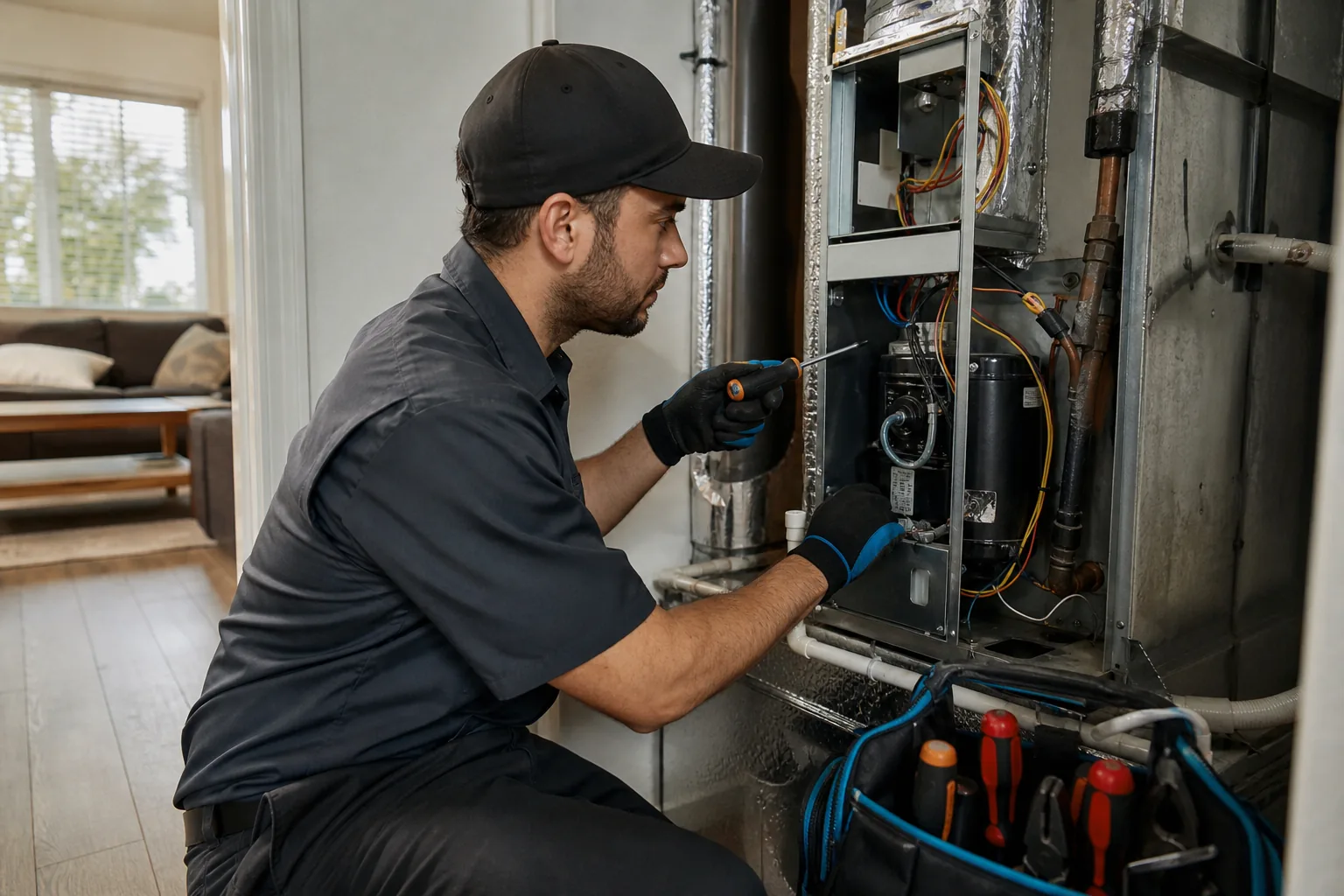
Cooling-System Checks Before Sierra Foothill Summer
Before summer, the technician focuses on the air conditioner or heat pump in cooling mode. In Rocklin and Roseville, a long stretch of hot, dry weather can mean the system runs for hours. A spring visit gives the tech time to spot a concern before the first hot spell brings a rush of service requests.
Coils are a key part of that visit. The outdoor condenser coil releases heat, while the indoor evaporator coil absorbs it. Dirt on either coil can get in the way of heat transfer. The technician may inspect and clean accessible surfaces, then check that the outdoor unit has room to move air.
The visit may also include a filter review, blower inspection, and airflow check. A dirty filter can restrict air movement. A blocked drain can keep water from leaving the indoor unit as it should. The technician may inspect the drain pan and test whether the line is clear.
Electrical parts get attention too. A technician may check the capacitor, contactor, wiring, and electrical connections. A capacitor helps a motor start or run; the contactor switches power to key parts. Wear or heat damage can affect operation, so ask whether the technician tested these parts or only looked at them.
Refrigerant checks need a trained technician with the right tools. They may measure system pressures and operating readings to assess the charge. If the charge is low, simply adding refrigerant may not address the cause. Ask whether the technician found signs of a leak and what the readings mean for your system.
The technician should run the system and assess its response. That can include checking the thermostat, looking at air temperatures, and listening for unusual noise. If rooms cool unevenly, mention which ones. A warm upstairs room in Rocklin, for example, may point the technician toward airflow or duct concerns, not only the outdoor unit.
Homeowners can check the filter and keep loose leaves clear of the outdoor unit, if the equipment instructions allow. Don't open electrical panels or handle refrigerant. A useful filter replacement schedule depends on the filter and how often your system runs.
Book before the hottest part of the season if you can. A tune-up may support steady operation, but it can't make an undersized or damaged system perform like a new one.
Heating, Heat Exchanger, and Carbon Monoxide Safety Checks
Heating maintenance shifts the focus to safe startup, combustion, venting, and heat delivery. For a gas furnace, a technician may inspect the burners, ignition parts, flame sensor, vent, and safety switches. The exact checks depend on the furnace and the service scope.
The heat exchanger separates combustion gases from the air that moves through the home. A technician looks for signs of cracks or damage. They may also perform a carbon monoxide safety test and check how the furnace starts and runs. These tasks call for training and test equipment, not a homeowner's visual check alone.
Gas connections and venting matter because the furnace needs to burn fuel and move exhaust safely. If the technician finds a concern, ask what was tested, what the result means, and whether the system should keep running. A safety concern may require repair before normal use.
For a heat pump, heating service focuses on heating-mode operation and the controls that support it. The technician may check the reversing valve, defrost controls, and auxiliary heat operation, depending on the system. A heat pump uses the same equipment for heating and cooling, so describe any issue you notice in either mode.
Uneven warmth, a new odor, repeated shutdowns, or a rise in energy use can be reasons to book service sooner. If you smell gas or a carbon monoxide alarm sounds, leave the home and contact the appropriate emergency service or utility from a safe location. Don't wait for a routine tune-up to address an urgent safety concern.
Homeowners around Grass Valley and Penn Valley often rely on heating equipment through cold winter nights. We recommend asking for a service summary that records the checks and flags any repair separately. Our furnace tune-up guide for Rocklin homeowners explains what to ask when comparing service scopes.
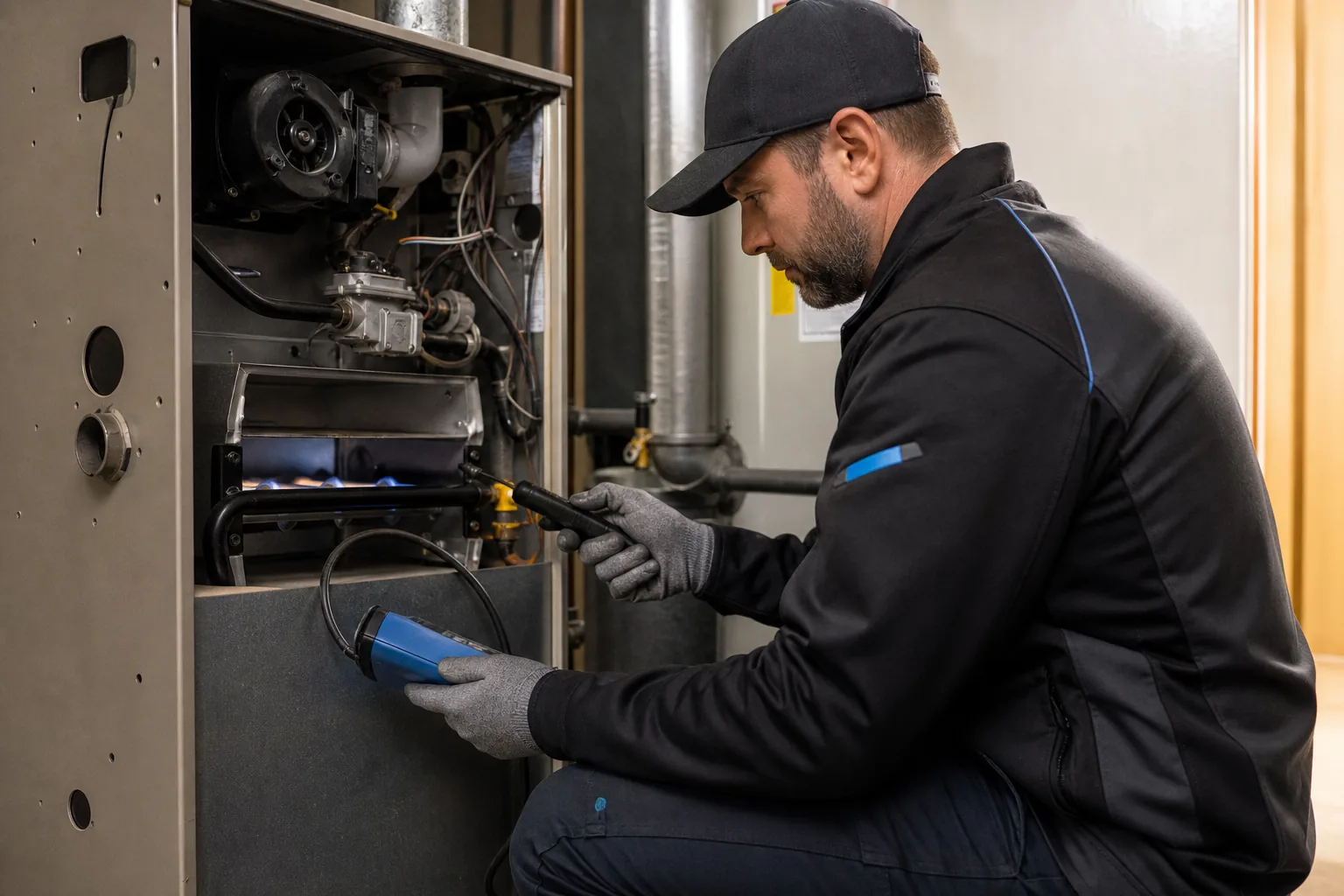
Pro Tip:Before the visit, write down new sounds, odors, uneven rooms, or changes in system run time. A clear symptom list helps the technician focus the checks.
What to Expect During the Visit, and When to Schedule
A technician will usually need access to the thermostat, indoor equipment, and outdoor unit. Clear boxes or stored items away from the equipment. Keep the outdoor unit's air path free of loose debris, and make sure the technician can reach the electrical shutoff and service panels.
Before the appointment, check the filter if you can do so safely. Note its size or take a photo for your records. Make a short list of comfort problems, such as a room that stays warm, a system that starts and stops often, or water near the indoor unit. Don't remove equipment panels to investigate.
During the visit, the technician may start the system, take readings, inspect components, and clean accessible areas. A simple visit can take about an hour, though equipment access and system condition can change the time. If the tech finds a fault, ask whether the visit has shifted from maintenance to diagnosis.
When the work is done, ask for a written summary. It should make clear what the technician checked, what they measured, and whether they recommend repair. If a repair is proposed, ask what it addresses and whether it is included in the tune-up price before approving it.
Schedule cooling maintenance in spring, before the air conditioner is working hard. Plan heating maintenance in fall, before cold weather settles in. A home with a separate furnace and central AC may need a visit for each system. Equipment type and manufacturer guidance can change the schedule, so check your owner's manual.
Home Worx Heating and Cooling serves local homeowners in Auburn, Colfax, Rocklin, Roseville, and Lincoln in Placer County, as well as Grass Valley and Penn Valley in Nevada County. Our seasonal maintenance visits are meant to prepare equipment for both heating and cooling seasons. Ask whether your service plan fits your system and what tasks each visit includes.
Costs depend on the system and the work included. Request the scope and price in writing, and ask whether cleaning, filter replacement, or any repair is priced separately.
Two visits a year can make sense for separate heating and cooling equipment used through hot summers and cold winters. A heat pump may follow a different schedule. Ask whether current PG&E or state rebate terms apply to your planned work; a tune-up by itself doesn't guarantee rebate eligibility.
A technician may provide a written summary of checks and recommendations. Keep that report with past service records so you can compare findings at the next visit.
We also offer seasonal HVAC maintenance plans. Before choosing a plan, compare the listed tasks and visit timing with the needs of your equipment.
HVAC Tune-Up FAQs
How often should I get an HVAC tune-up?
Most homes benefit from professional maintenance before the main heating and cooling seasons. If you have a separate furnace and air conditioner, that can mean a spring cooling visit and a fall heating visit. A heat pump's schedule may differ. Follow the equipment manual and ask a technician to account for the system type and how heavily you use it.
Does an HVAC tune-up include repairs?
A standard tune-up is preventive maintenance, not an open-ended repair appointment. It may include inspection, cleaning, testing, and adjustments covered by the agreed scope. If a part has failed or the technician finds a leak or safety issue, diagnosis and repair may cost extra. Ask for the finding and estimate before approving additional work.
Can I tune up my HVAC system myself?
You can handle simple upkeep allowed by your equipment manual, such as checking or changing a filter and keeping vents clear. Leave refrigerant work, electrical testing, combustion checks, and internal repairs to a trained HVAC technician. Opening panels or testing live electrical parts can cause injury or damage the system.
What should I ask the technician after a tune-up?
Ask what was inspected and tested, whether the system's readings were within its specifications, and what needs follow-up. Request a written summary. If the technician recommends a repair, ask what problem it addresses and whether it is separate from the tune-up. That record can help you track changes at later visits.
Conclusion
Schedule separate seasonal checks when your home has distinct heating and cooling equipment, and ask for the task list before the visit. To discuss service for your home in Placer or Nevada County, contact Home Worx Heating and Cooling and request a tune-up scope that matches your system.