
What Is Auxiliary Heat on a Thermostat?
Auxiliary heat is your heat pump’s backup plan. It turns on when the outdoor unit can’t keep up, such as during a cold Sierra foothill morning or a defrost cycle . Most of the time, the switch happens on its own. The key is knowing when AUX heat is normal and when it points to a fault.
In this guide, we’ll explain what the thermostat message means, how auxiliary heat works, why it can raise your electric bill, and when Home Worx Heating and Cooling should inspect the system.
We pulled January average low temperatures from weatherspark.com for 7 communities Home Worx serves: Auburn, Colfax, Grass Valley, Lincoln, Penn Valley, Rocklin, and Roseville. We cross-checked those figures against usclimatedata.com and areavibes.com data for the same towns. The readings ranged from 39°F in Lincoln to 41°F in Colfax and Roseville, averaging 40.1°F across the 7 towns. That average sits almost exactly on the 40°F mark used to separate a normal AUX cycle from one worth a service call.
Table of Contents
What Auxiliary Heat Means on a Heat Pump Thermostat
When people ask what is auxiliary heat on thermostat displays, the short answer is supplemental heat. A heat pump remains the main heating source, while AUX heat helps when the heat pump cannot reach the set temperature by itself.
A heat pump moves heat instead of making heat in the same way a furnace does. It pulls available heat from outdoor air and moves that heat indoors. As outdoor air gets colder, the system may need more time to warm the home. At some point, the thermostat calls for a second heat source.
That second source is often electric heat strips inside the indoor air handler. These strips work much like a large electric heating element. Some homes have a dual-fuel system instead. In that setup, a gas furnace provides backup heat when outdoor conditions become too cold for the heat pump to work well.
Auxiliary heat can also appear during defrost mode. Frost may form on the outdoor coil during heating. The heat pump briefly changes its operation to melt that frost. During this short period, the thermostat may use backup heat so the air coming from your vents stays warm.
AUX heat is usually a comfort and safety feature. It can help protect the home from a long temperature drop if the heat pump needs help. It also gives the system another way to heat the house if the primary unit struggles.
The exact controls vary by equipment. A thermostat may show “AUX,” “AUX heat,” or “Stage 2.” Auxiliary heat and emergency heat are different operating commands.
In Auburn, Colfax, Grass Valley, or Penn Valley, a brief AUX display during a cold spell may be expected. In Rocklin, Roseville, or Lincoln, it may appear less often because winter conditions are usually milder. Local weather still varies by home, elevation, insulation, and system size.
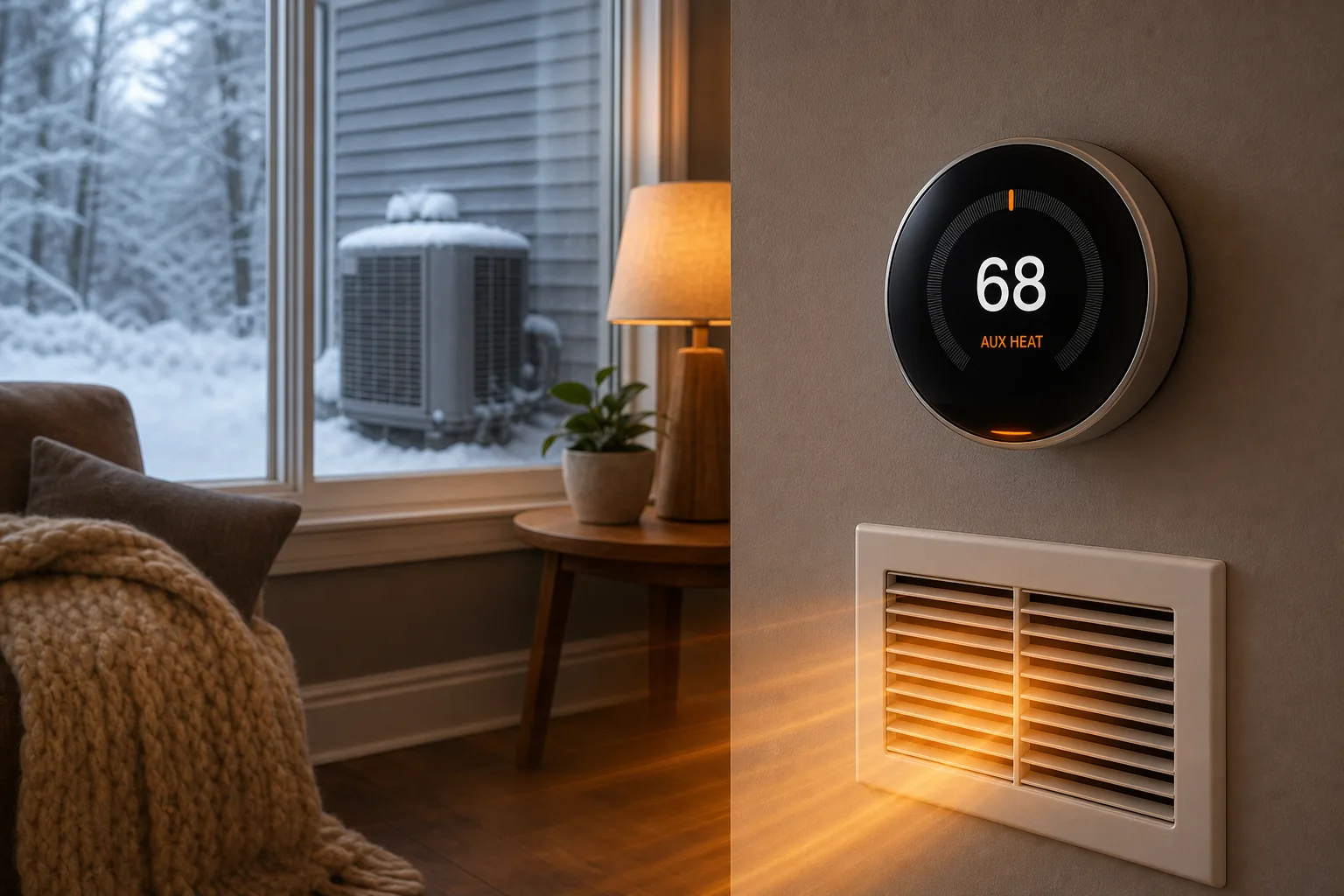
Key Takeaway:AUX heat is a backup mode that assists the heat pump. It isn’t automatically a sign that something is broken.
For local service, contact Home Worx Heating and Cooling.
How Auxiliary Heat Turns On
Auxiliary heat turns on when the thermostat decides that the heat pump needs help. This answers the usable side of what is auxiliary heat on thermostat settings: the display reflects a control decision, not a separate setting you must manage each time.
The thermostat watches the indoor temperature and the target temperature. If the home falls behind, the control can bring on the second heat stage. A large temperature increase can trigger AUX heat too. For example, raising the setting several degrees after returning home may ask the system to recover faster than the heat pump can manage alone.
Outdoor temperature also matters. There is no universal number for every system. The thermostat, outdoor sensor, equipment design, and installer settings all affect the changeover point.
A dual-fuel system usually changes from the heat pump to a gas furnace when the outdoor temperature drops below its balance point . The balance point is the temperature at which the heat pump can no longer meet the home’s full heating demand at the desired efficiency.
Electric heat strips may turn on when the heat pump struggles, during very cold weather, or while the outdoor unit defrosts. The heat pump may still run at the same time in some systems. That is different from emergency heat, which normally shuts down the heat pump and runs the backup source as the main heater.
Cold weather is not the only trigger. Restricted airflow can make a healthy heat pump look weak. A dirty filter limits the air moving through the indoor coil. Blocked outdoor airflow can also reduce performance. Snow, leaves, or packed debris around the outdoor unit can make the system work harder.
Before changing advanced thermostat settings, check the simple items. Make sure the system is set to Heat. Check that the filter is clean. Look around the outdoor unit and clear loose debris without bending the coil fins.
If your thermostat still seems hard to read, our guide on how to read a thermostat explains common temperature readings and icons. That can help you tell the difference between AUX heat, a normal heating call, and emergency heat.
Homeowners in Grass Valley and Penn Valley may see AUX heat more often than someone at a lower elevation. That alone does not prove a problem. The pattern matters more than one cold morning.
Auxiliary Heat vs. Emergency Heat vs. Backup Heat
Auxiliary heat, emergency heat, and backup heat describe related parts of a heat pump system, but they don’t mean the same thing. The biggest difference is who starts the heat source and whether the heat pump keeps running.
Term | How it starts | What the heat pump does | Typical use |
Auxiliary heat | Thermostat starts it automatically | May keep running | Helps during cold weather, recovery, or defrost |
Emergency heat | Homeowner selects it manually | Heat pump shuts off | Temporary heat after a heat pump failure |
Backup heat | General term for the secondary source | Depends on the system | Describes electric strips or a furnace paired with a heat pump |
Electric heat strips are a common backup source. They use electricity to produce heat and can warm the home quickly. A dual-fuel system uses a gas furnace instead. Some older systems may use an oil furnace, though the right choice depends on equipment, fuel access, and local conditions.
The word “emergency” does not mean the heater itself is different. In many systems, emergency heat uses the same electric elements that provide auxiliary heat. The difference is the command. AUX is automatic support. EM heat is a manual choice that tells the system to stop using the heat pump.
That manual setting deserves care. Use emergency heat when the heat pump has stopped working or a technician tells you to use it. It can keep a home warm for a short time, but electric backup heat may cost more to run than normal heat pump operation.
For a closer look at the controls, see our explanation of what emergency heat does on a thermostat . The guide also covers why emergency heat should lead to a service check rather than become a long-term setting.
Think of the modes this way. Auxiliary heat is the system helping itself. Emergency heat is you telling the system to bypass the heat pump. Backup heat is the broad name for the equipment waiting behind the heat pump.
In Lincoln, a properly sized heat pump may rarely need backup heat. In Colfax or Grass Valley, colder nights can make the backup source more useful. A technician should set the changeover point for the equipment and the home, not copy a number from a different house.
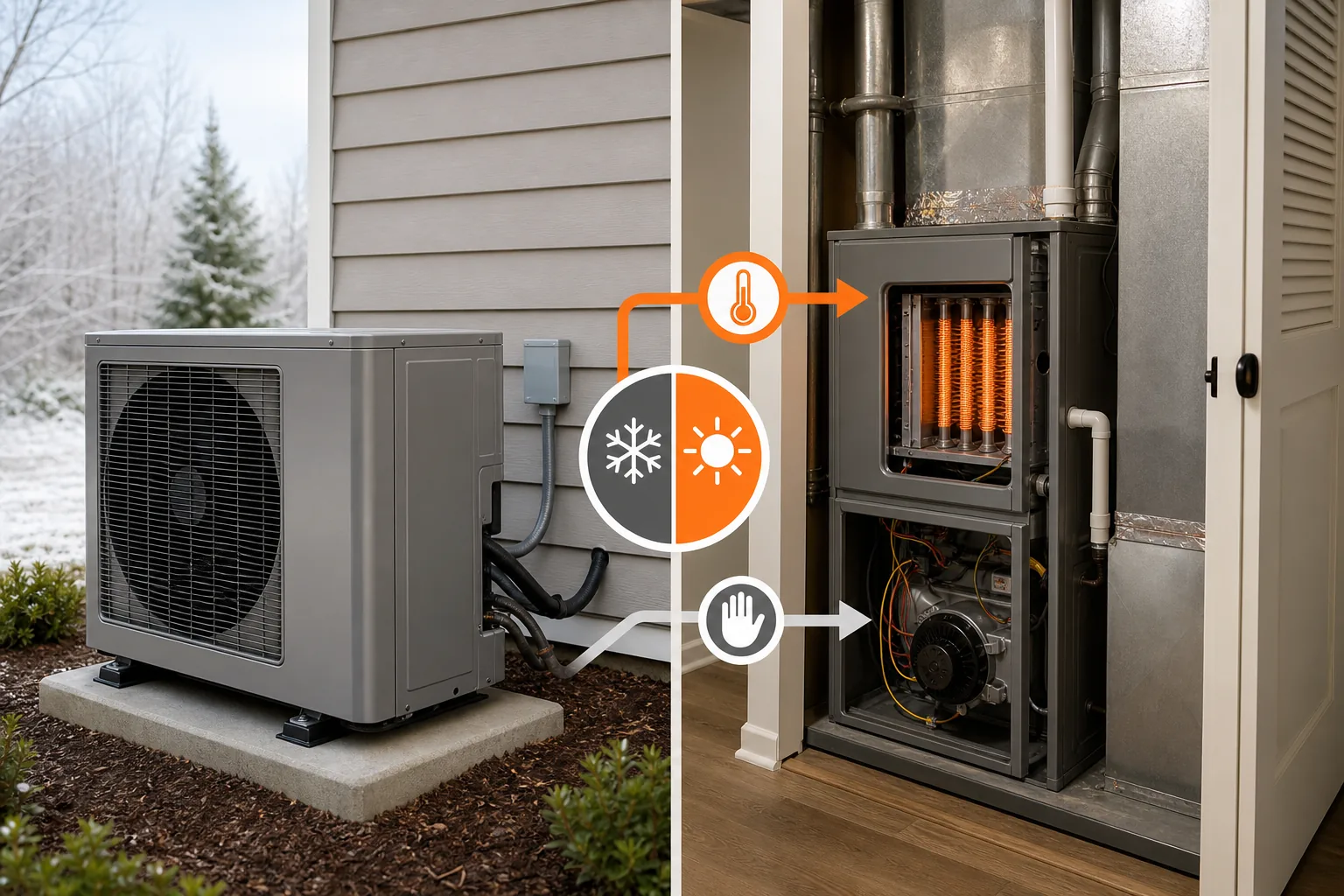
Pro Tip:Don’t switch to EM heat just because AUX appears. First check whether the heat pump is running and whether the display clears after the home reaches the set temperature.
Does Auxiliary Heat Cost More and Is It a Problem?
Auxiliary heat can cost more, especially when the backup source is electric resistance heat. A heat pump moves heat into the home, while resistance strips use electricity to make heat. The strips can provide fast warmth, but they usually use more power for the same heating task.
That does not make every AUX cycle a problem. A short cycle during defrost or a cold morning is part of normal operation. The concern is repeated or constant AUX operation when outdoor conditions are moderate.
Watch the pattern. If AUX appears for a few minutes and then disappears, the system may be doing its job. If it stays on for hours above about 40°F, the heat pump may not be carrying its share of the load.
Possible causes include a dirty air filter, blocked outdoor airflow, low refrigerant, a failed outdoor fan, a control problem, or a thermostat issue. Poor insulation or a large heat loss can also leave the system struggling, even when the equipment works correctly.
There is no honest single price for AUX heat. Your bill depends on the strip size, run time, outdoor temperature, home insulation, electric rate, and system condition. PG&E customers in Placer and Nevada counties should compare the bill with the thermostat run pattern rather than assume every increase came from auxiliary heat.
For example, a home in Roseville may use AUX during a sharp cold snap after a large thermostat setback. A home in Penn Valley may show the same message because the outdoor unit is iced over or airflow is restricted. The display alone cannot tell you which cause is present.
Keep the thermostat set point steady when possible. Large setbacks can force a long recovery cycle. Replace a dirty filter with the correct size. Don’t cover the outdoor unit or pour hot water over ice. Those steps may reduce unnecessary backup operation, but they won’t fix a mechanical fault.
Our local team at Home Worx Heating and Cooling can test the heat pump, thermostat signals, airflow, and backup heat controls when AUX use seems out of place. A proper test is safer than guessing from the display.
When to Call an HVAC Professional About AUX Heat
Call an HVAC professional when auxiliary heat stays on too long, appears during mild weather, or comes with weak airflow. The question is not only what is auxiliary heat on thermostat screens. It is why your system keeps asking for it.
Schedule service if you notice any of these signs:
AUX stays on for hours when outdoor temperatures are above about 40°F.
The indoor temperature keeps falling even though the system runs.
The outdoor unit never starts in Heat mode.
The outdoor coil remains covered in ice after a defrost cycle .
Your electric bill jumps while AUX runs almost nonstop.
The system makes grinding, scraping, or harsh electrical sounds.
The thermostat switches between heating modes without reaching the set point.
Start with safe checks. Confirm the thermostat is in Heat. Check the filter. Make sure supply vents are open. Look for snow, leaves, or other blockage around the outdoor unit. Then stop if the problem remains.
Do not remove electrical panels or test live wires. Electric heat strips can carry high voltage, even when the thermostat looks simple. Refrigerant work also requires the right tools and training.
Home Worx Heating and Cooling serves Auburn, Colfax, Rocklin, Roseville, Grass Valley, Penn Valley, and Lincoln. Our family-owned team works across Placer and Nevada counties, where a home in the foothills can face very different heating demands from one in the valley.
Before a repair, we can check whether the issue comes from the heat pump, the thermostat, airflow, or the backup stage. That distinction matters. Replacing a thermostat won’t solve a failed outdoor fan, and adding heat strips won’t solve a system that cannot move enough air.
If your heat pump isn’t heating well, our checklist of safe checks for a heat pump that isn’t heating can help you rule out simple issues before service. If AUX keeps running after those checks, arrange an inspection.
FAQ
What does AUX heat mean on a thermostat?
AUX heat means your heat pump has turned on a secondary heat source. The thermostat usually does this when the outdoor unit cannot meet the heating demand, during defrost, or after a large temperature increase. It may use electric heat strips or a furnace, depending on the system. A short display is often normal.
Is auxiliary heat the same as emergency heat?
Auxiliary heat and emergency heat can use the same backup equipment, but they start differently. AUX heat turns on automatically while the heat pump may keep running. Emergency heat is selected manually and normally shuts off the heat pump. Use EM heat only when the heat pump has failed or a technician directs you to use it.
Why is my auxiliary heat running constantly?
Constant auxiliary heat can mean the heat pump is not carrying the load. A dirty filter, blocked outdoor coil, low refrigerant, failed fan, control fault, or poor system sizing may be involved. If AUX stays on during mild weather, the home never reaches the set point, or the outdoor unit won’t run, arrange professional service.
Does auxiliary heat use more electricity?
Electric auxiliary heat usually uses more electricity than normal heat pump operation because resistance strips make heat directly. A brief cycle may have little effect, while long run times can raise the bill. The actual cost depends on strip size, run time, outdoor weather, insulation, and your electric rate.
Should I turn off auxiliary heat?
You usually should not turn off automatic auxiliary heat. The thermostat uses it to protect comfort when the heat pump needs help. Instead, check the filter and outdoor airflow. If AUX runs for long periods when it is not very cold, have an HVAC professional inspect the system rather than changing advanced settings.
Conclusion
Auxiliary heat is a normal backup function, but constant AUX operation deserves attention. Keep the thermostat in its normal Heat mode, check the filter and outdoor unit, then contact Home Worx Heating and Cooling if the display stays on or comfort drops. We can inspect the system for homeowners across Auburn, Colfax, Rocklin, Roseville, Grass Valley, Penn Valley, and Lincoln.