
Why Is My Furnace Leaking Water? 5 Steps
A puddle near your furnace can come from a clogged condensate drain, a humidifier, the air conditioner, or a nearby pipe. In some cases, it points to a serious furnace fault. Follow these five steps to limit damage, find the source, and decide when Home Worx Heating and Cooling should inspect the system.
Table of Contents
Step 1: Turn Off the Furnace and Check for Immediate Hazards
If you’re asking why is my furnace leaking water, start by making the area safe. Don’t reach into a wet furnace cabinet or touch wiring near standing water.
Set the thermostat to Off. Then use the furnace power switch, which often looks like a light switch near the unit, to shut off power. If water has reached electrical parts, stop there. Don’t remove panels or reset the system.
Look and listen before you move anything. Leave the area and seek urgent help if you smell gas, hear hissing, see smoke, or notice a strong burning odor. A carbon monoxide alarm also changes the situation. Carbon monoxide is a colorless, odorless gas that can cause serious harm, as explained in this reference on carbon monoxide.
Use towels or a shallow container to keep water away from flooring. Don’t stand in water while reaching for a breaker. If the leak is large, shut off the nearby water supply only if you can reach it safely without touching wet electrical parts.
Take a few photos before cleaning up. Capture the puddle, the pipes above it, the drain pan, and any wet insulation. Those details can help a technician see what changed before the water spread.
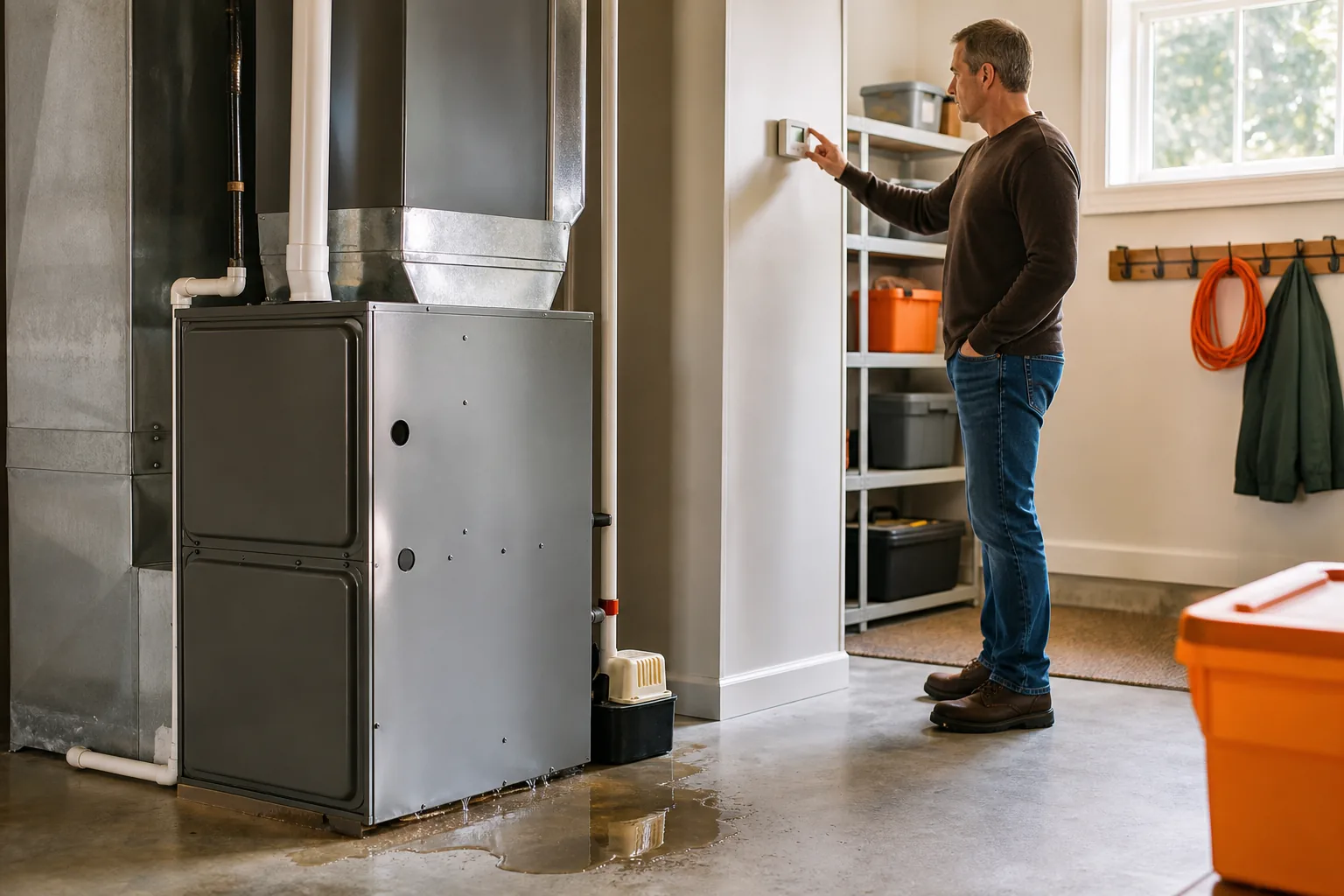
Homeowners in Auburn and Colfax often see leaks after long periods of system use. In Rocklin and Roseville, the same puddle may appear during air conditioner season even when the furnace gets the blame. The first rule is simple: power off, keep clear of wet electrical parts, then inspect from the outside.
Key Takeaway:Turn off the system before you inspect the leak, and treat gas smells, alarms, smoke, or wet wiring as reasons to stop immediately.
Step 2: Identify Whether the Water Is Condensation, a Drain Leak, or Plumbing
The answer to why is my furnace leaking water often depends on what type of furnace you have. A high-efficiency condensing furnace makes water as it pulls more heat from exhaust gas. That water should flow through a drain line.
Check the exhaust pipe. White PVC pipe usually points to a high-efficiency furnace. A metal flue is more common on a standard furnace, which normally doesn’t produce condensate during heat operation. The rating label on the furnace can also help. High-efficiency models often show an AFUE rating of 90 percent or more.
Now ask when the water appears. A leak during winter heating may come from a blocked condensate line, frozen pipe, failed pump, or furnace drain pan. A leak during summer may actually come from the air conditioner coil above the furnace. That coil makes water when the AC runs.
For a summer leak, note whether the water starts after the AC has run for a while. Water from an overflowing AC pan can fall into the furnace cabinet and spread across the floor. That is why a furnace may look like the source when the cooling system is at fault. Our guide to common AC water leaks and fixes covers that related problem in more detail.
Next, trace the water upward. Start at the floor and follow each wet edge. Check the furnace cabinet, the pan under the coil, the condensate tubing, the humidifier, and nearby plumbing. A dry furnace with a wet pipe beside it may have a plumbing leak instead.
A humidifier leak often leaves water near a small supply tube or drain tube. Look for a loose fitting, a pinhole, or water entering the cabinet from above. Don’t confuse a humidifier drain with the larger condensate line. They may sit close together but serve different parts.
Write down the pattern. “Only during cooling” points in one direction. “Only during heating” points in another. “It leaks even when the system is off” makes a plumbing source more likely.
Step 3: Check the Condensate Drain, Trap, Pan, and Pump
A blocked drain is one of the most common answers when a condensing furnace leaks water. The drain carries moisture away from the furnace. When sludge, dust, algae, or debris blocks the path, water backs up.
With power off, find the drain tube leaving the furnace. Follow it to the floor drain, plumbing connection, or condensate pump. Look for a loose connection, a sharp bend, a sag, or a section that has pulled apart. A drain needs a clear path. A low spot can hold water and collect debris.
Inspect the trap and pan from the outside. The trap is a small section designed to hold water while letting condensate drain. The pan catches water under a coil or furnace section. A cracked pan can leak even when the drain tube is clear. Rust marks often show where water has been sitting.
If the line ends in a condensate pump, check whether the pump basin is full. A pump that never runs may have lost power, a stuck float, or an internal fault. Don’t open the pump housing unless the instructions for that exact model allow it.
Some homeowners use a wet/dry vacuum at the end of the drain line to pull out a soft clog. That can work when the outlet is easy to reach and the line is clearly identified. Never use compressed air if you don’t know how the line is connected. Pressure can push a fitting loose or force water into the cabinet.
Don’t drill into a drain line or cut a fitting just because a video suggests it. A hole may make later service harder and can send water into the wrong part of the system. If you can’t tell which tube is the condensate drain, stop and ask a technician.
High-efficiency furnace vent pipes also need the correct slope. They should not have random dips where water can collect. Installation rules vary by furnace model, so check the manufacturer instructions rather than changing pipe angles by guesswork. Detailed venting guidance from a home inspection source explains why pipe pitch and termination matter in high-efficiency furnace vent systems.
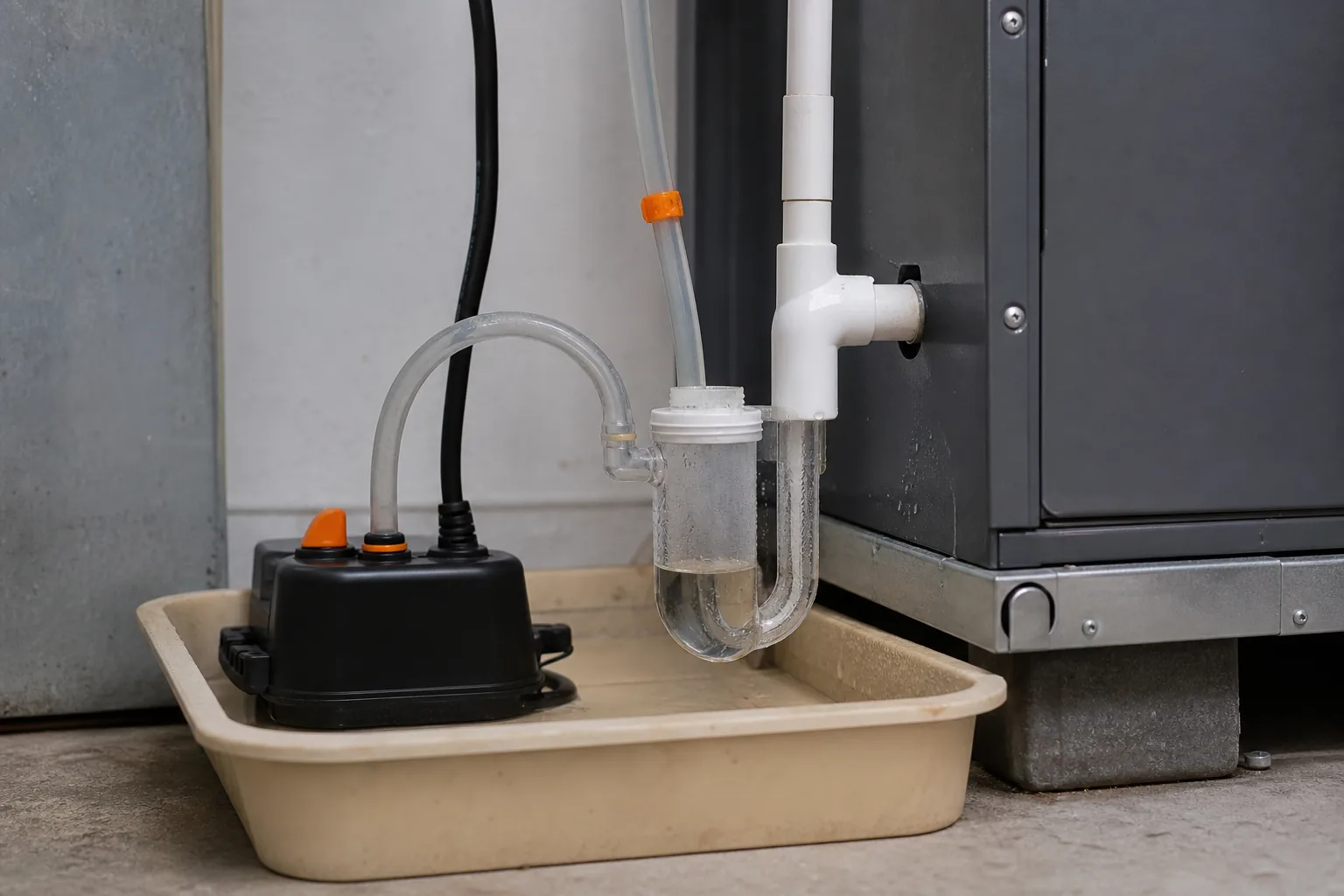
After a basic inspection, leave the furnace off if water is still moving. A clean-looking tube does not rule out a blocked trap, failed float switch, cracked pan, or internal drain fault. Those parts need a closer test.
Pro Tip:Mark the drain tube with a small piece of plain tape before disconnecting anything. That helps you avoid confusing it with a humidifier or equipment drain line.
Step 4: Look for Common Sources Beyond the Furnace
When a furnace is leaking water, the furnace itself may be innocent. Look above, beside, and behind the unit before you assume the cabinet has failed.
Start with the air conditioner coil. In many homes, the indoor coil sits above the furnace. During hot, dry Sierra foothill summers, the AC can run long enough to produce a steady stream of condensate. A clogged AC drain pan or line lets that water overflow onto the furnace.
Then inspect the air filter and return grille. A packed filter restricts airflow. Poor airflow can make the cooling coil too cold, which may lead to ice. When the ice melts, water can spill into the pan faster than the drain can carry it away. A dirty filter doesn’t explain every leak, but it can add stress to the system.
Check the humidifier if your home has one. Follow the small water supply tube to its connection. Look for a wet fitting or a slow drip. A humidifier can leak while the furnace stays dry inside. Don’t tighten a plastic fitting hard enough to crack it.
Look at nearby plumbing next. Water lines for a washer, water heater, utility sink, or whole-house filter may run through the same room. Feel the outside of a pipe with a dry paper towel. A wet mark that returns while the HVAC system is off points away from the furnace.
Water can also travel along a floor, wall, or duct before it reaches the furnace. Trace the highest wet spot, not just the biggest puddle. If the water appears after rain, inspect the wall, ceiling, and vent area for an outside leak.
In Grass Valley and Penn Valley, cold winter nights can freeze an exposed condensate line. In Lincoln, a summer AC drain issue may be more likely when cooling demand is high. The season gives you a clue, but it doesn’t prove the source.
Keep the system off while you watch the area for a few minutes. If water continues to appear, the source may be plumbing or stored water. If it stops, ask what was running just before the leak began.
Step 5: Decide Whether to Clean, Monitor, or Call an HVAC Professional
Some furnace leaks come from an accessible drain blockage. Others involve sealed combustion parts, electrical controls, a cracked heat exchanger, or a failed condensate pump. Your next step depends on what you found, not on how small the puddle looks.
You may clean and monitor the issue when all of these are true:
The system is powered off before inspection.
You can clearly identify the condensate drain.
The water source is outside the furnace cabinet.
There is no gas smell, alarm, smoke, or wet electrical part.
The drain connection is easy to restore without cutting or drilling.
After a simple drain clearing, dry the area and watch the next operating cycle. Keep the floor dry enough to spot a new drop. If the leak returns, don’t keep flushing the line and hoping for a different result. A recurring clog can point to poor slope, a dirty trap, a pan problem, or a pump that is failing.
Arrange professional service when the furnace leaks from inside the cabinet, the source is unclear, or the system trips a breaker. A cracked heat exchanger needs special care because combustion gas can enter the air path. The heat exchanger keeps combustion gases separate from household air, so damage is a safety issue, not a routine drain repair. A professional inspection is the right move when you see soot, unusual odors, repeated cycling, or unexplained airflow changes.
Home Worx Heating and Cooling provides HVAC repair and emergency service for homeowners across Placer and Nevada counties. Our team can inspect the drain path, pan, pump, humidifier, coil, and furnace controls instead of treating the puddle as a guess-and-replace problem.
Don’t run the furnace just to see whether the leak gets worse. If you need help with a system that has stopped working after the leak, our guide to safe furnace checks can help you avoid unsafe resets while service is pending.
For prevention, schedule a yearly inspection before the cold season. Keep the filter changed on the schedule recommended for your home. Make sure drain lines stay supported and that the area around the furnace stays clear. If you see moisture again, take a photo and note whether the AC, furnace, or humidifier was running.
Key Takeaway:A one-time clear drain may be a homeowner task, but recurring water, cabinet leaks, safety signs, or uncertain sources call for HVAC service.
FAQ
Why is my furnace leaking water in winter?
A furnace may leak in winter because a condensate drain is blocked, frozen, disconnected, or served by a failed pump. High-efficiency furnaces make water during normal operation, but that water must drain away. Turn off the system and check for pooled water, frozen tubing, or wet connections. If the line is not clear, arrange professional service.
Is a furnace leaking water dangerous?
A leaking furnace can be dangerous when water reaches electrical parts or when the leak involves a heat exchanger. Water can cause corrosion and short circuits. A damaged heat exchanger may also allow combustion gases into the home. Shut the system off if you see wet wiring, smell gas, hear unusual sounds, or have a carbon monoxide alarm.
Why does water leak from my furnace when the AC runs?
Water that appears while the AC runs often comes from the indoor cooling coil above the furnace. The coil makes condensate, which should flow through a pan and drain line. A clogged pan or drain can overflow onto the furnace. Check the AC drain path, but don’t open wet electrical panels or cut tubing.
Can I unclog a furnace condensate drain myself?
You may clear an accessible soft clog if you can identify the drain with certainty and keep power off. A wet/dry vacuum can pull debris from some drain lines. Don’t drill, force compressed air, or disconnect unknown tubes. Stop if water enters the cabinet, the clog returns, or the drain pan and pump are hard to inspect.
When should I call Home Worx Heating and Cooling?
Contact Home Worx Heating and Cooling when the leak continues, returns after cleaning, reaches electrical parts, or has no clear source. Service is also the right choice for gas smells, alarms, unusual furnace odors, repeated shutdowns, or suspected heat exchanger damage. We serve Auburn, Colfax, Rocklin, Roseville, Grass Valley, Penn Valley, and Lincoln.
Conclusion
Turn off the system, trace the water to its highest wet point, and don’t run the furnace when safety signs are present. If the source is unclear or the leak returns, contact Home Worx Heating and Cooling for local HVAC service across Auburn, Colfax, Rocklin, Roseville, Grass Valley, Penn Valley, and Lincoln.