
Why Is My Furnace Making a Banging Noise?
A sudden bang when your furnace starts can be more than a nuisance. A furnace making a banging noise may have delayed ignition, while a softer pop from the ducts can come from metal warming up. The timing and tone are useful clues, but a loud startup boom needs prompt attention.
Table of Contents
What the Timing and Type of Bang Can Tell You
Start by noting when the sound happens. A single boom right as the burners light points to a different issue than a pop from a duct a few minutes after warm air starts moving. A bang that happens when the furnace stops can also have a different cause.
Listen from a safe spot near the furnace and then near the closest air register. Don’t remove the furnace panels or reach inside. Note whether the sound is one loud bang, a series of pops, or a repeating rattle. Also write down whether the furnace keeps heating afterward.
A light ping or pop from sheet-metal ductwork can happen as it warms and shifts. A sudden bang at startup may point to delayed ignition and warrants professional attention.
Pay attention to where the sound seems loudest. A noise at a register may come from a duct panel flexing under airflow. A deep boom at the furnace cabinet deserves more caution. If the noise is new, strong, or getting worse, stop repeated test runs and arrange an inspection. Homeowners in Rocklin and Roseville can use the same clues to describe the sound to a technician.
A short recording on your phone can help you describe the sound to a technician, but it can’t confirm the cause. Note the thermostat setting and how long the furnace had been running. If you’re also hearing clicks before the furnace starts, our guide to furnace clicking noises can help you tell routine startup sounds from a pattern that needs service.
In Auburn, Colfax, or Lincoln, cold winter starts may make a furnace run more often. That can make a normal duct pop easier to notice. Repeated bangs at the burner are different. Treat those as a service issue, not a sound to monitor for weeks. Grass Valley and Penn Valley also have cold winter conditions. For local service, contact Home Worx Heating and Cooling .
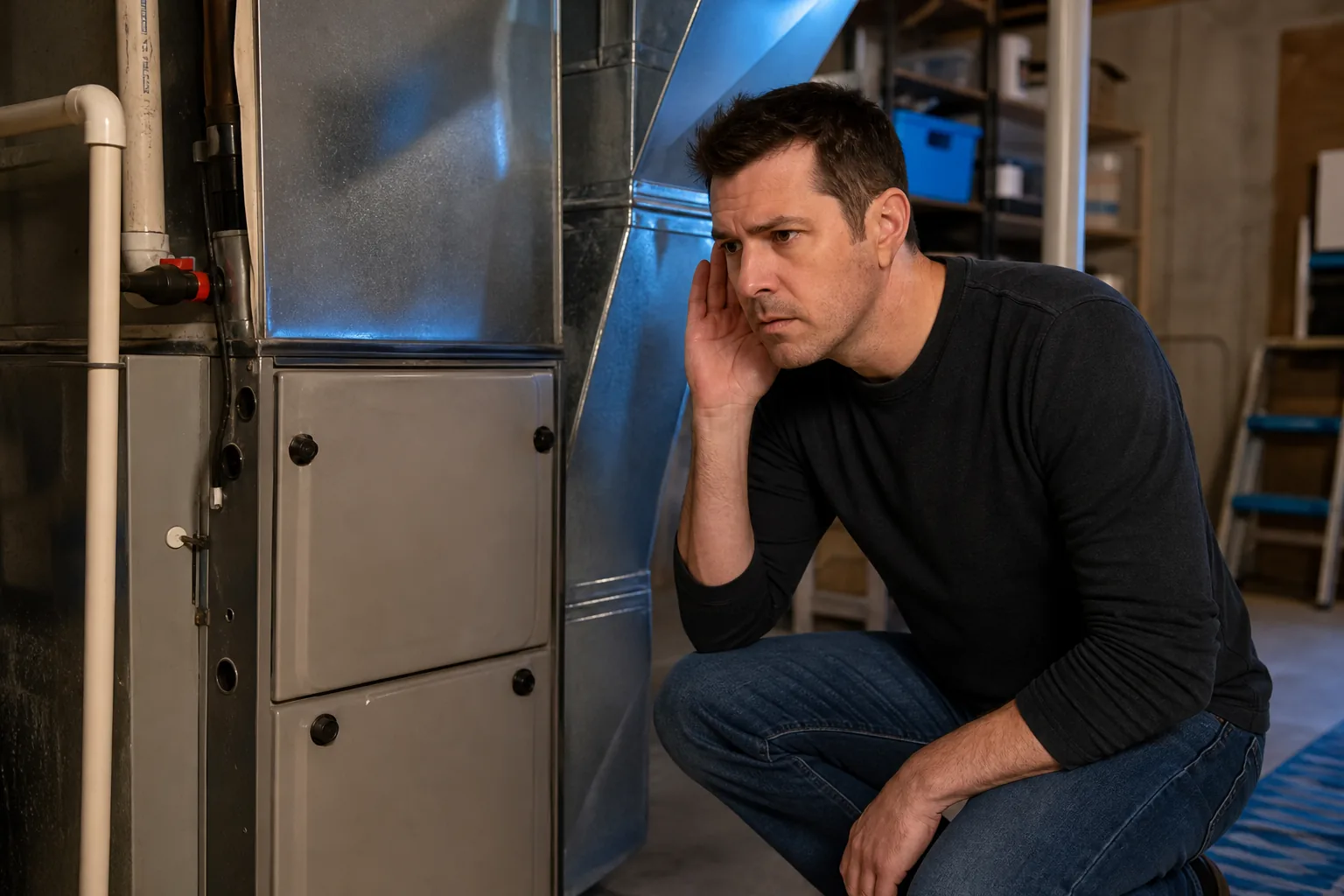
Delayed Ignition: Why a Bang at Startup Needs Attention
Delayed ignition happens when gas doesn’t light right away after the furnace calls for heat. If gas gathers before the burners ignite, the ignition can make a loud bang. Dirty burners or an ignition part that isn’t working as it should can contribute to this pattern.
In Auburn and Colfax, a startup boom is not the same as a faint duct pop. It may mean the ignition sequence needs a technician’s attention. A sudden bang at startup can point to delayed gas ignition, so arrange professional help. Don’t keep turning the furnace off and on to see if the sound goes away.
The concern is repeated stress inside the furnace. A delayed ignition can damage parts over time, and a serious combustion problem can pose a safety risk. A bang alone doesn’t prove there’s a cracked heat exchanger, but a technician should check the burners and combustion system rather than guess from sound.
If you smell gas, leave the home right away. Don’t switch lights or appliances on or off inside. Once you’re outside and away from the smell, contact the gas utility or emergency services. If a carbon monoxide alarm sounds, follow its instructions and get everyone outside. Don’t return until it’s safe.
With no gas smell or alarm, a loud bang still calls for prompt professional service. Turn the furnace off if you can do so safely, and don’t open the cabinet to clean burners or test gas parts. Home Worx Heating and Cooling serves Rocklin, Roseville, Grass Valley, Penn Valley and Lincoln, as well as local homeowners with furnace issues that need a trained diagnosis.
The cost of a delayed-ignition repair depends on what the inspection finds and the work required. A technician should explain the fault and the proposed repair before starting. Our furnace ignition troubleshooting guide covers safe checks for a furnace that won’t light, but a loud bang is a reason to stop troubleshooting and seek service.
Ductwork Popping as Metal Expands and Contracts
Sheet-metal ducts change shape slightly as warm air moves through them. A broad, thin duct panel may flex, then pop back into place. This can sound like a bang, especially in a quiet home or when the furnace first runs on a cold day.
Duct pops often come from a register, wall, ceiling, or accessible duct run rather than the furnace cabinet. They may happen once as the system starts, or repeat as the metal warms and cools. In Sierra foothill communities such as Grass Valley, Penn Valley, Auburn, and Colfax, winter temperature changes can make those shifts more noticeable indoors.
Check the simple, safe things first. Make sure supply registers are open and return grilles aren’t covered by furniture or rugs. Look at the air filter and replace it if it’s dirty, using the size and type recommended for your furnace. A clogged filter can restrict airflow and add strain to the system.
Don’t screw braces into ducts or add insulation inside them based on a sound alone. A technician can find the panel that flexes and decide whether a brace, insulation, or another repair makes sense. Access and the amount of work affect the price.
There’s a useful difference between quiet popping and a harsh bang that comes from the furnace itself. A mild duct pop with normal heat may be low urgency. If the sound grows louder, repeats throughout a cycle, or comes with weak airflow, have the system checked. Home Worx Heating and Cooling also repairs ducts and vents, so an inspection can include both the furnace and the nearby ductwork.
A phone recording can help compare where a noise is loudest. Treat it as a note-taking aid, not a diagnosis. Phone microphones don’t show whether a burner is lighting safely or a duct is under too much pressure.
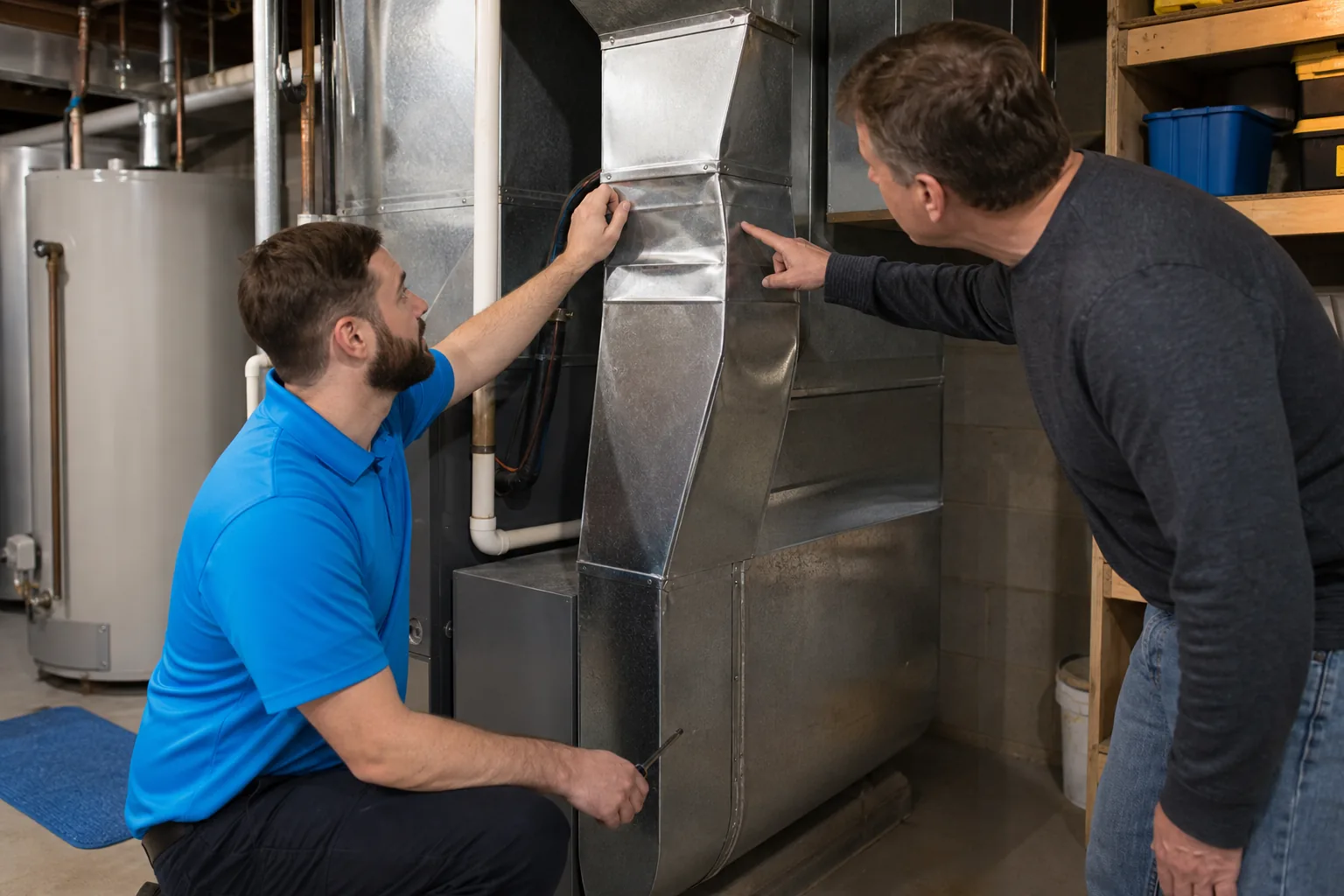
Loose Parts, Blower Problems, and Noises That Need Prompt Service
A loose outer panel may rattle when the blower starts. If a panel looks out of place, turn the system off before checking whether it is seated properly. You can tighten an easy-to-reach exterior screw, but don’t remove a cover to reach internal parts.
A knocking or rattling sound that comes from inside the furnace may point to a loose blower wheel or another part of the blower assembly. The wheel moves air through the system. If it shifts, hits its housing, or has a damaged blade, it needs an inspection and repair by a qualified HVAC technician.
Other sounds can help narrow down the issue. Squealing may point to a worn belt or motor bearing. Grinding can mean a motor part is wearing down. A steady buzz may come from an electrical part. These sounds don’t all have the same cause, so don’t assume that a bang means the blower is at fault.
A dirty filter or blocked return can also limit airflow. Check the filter and make sure vents are open, but don’t raise the thermostat again and again to force more heat. Frequent starts and stops can make an existing problem harder to assess. If the furnace shuts down, trips a breaker, or keeps making a harsh noise, leave internal checks to a technician.
Soot near the furnace, a burning odor, smoke, or a carbon monoxide alarm changes the urgency. Stop using the system and get help. If there’s a gas smell, leave first and contact help from outside. Homeowners in Rocklin and Roseville can contact Home Worx Heating and Cooling for furnace repair when a new sound points to a mechanical or safety issue.
A simple repair might involve tightening an accessible panel. Replacing a blower wheel or motor is a different job. The technician should identify the source before recommending parts, so you’re not paying for a guess that leaves the noise in place.
What to Do Next: Safety, Repair Costs, and Local Service
Use the sound as a clue, then keep your checks to things you can safely see. Write down when the noise starts and stops. Check the thermostat setting, look at the filter, and make sure vents and return grilles aren’t blocked. Don’t inspect burners, gas valves, wiring, or the blower with the furnace open.
Costs depend on the source: a duct brace, an ignition repair and a blower repair are very different jobs. Ask for a diagnosis and a written estimate before approving work.
For a high repair estimate, compare the furnace’s age and condition with the cost of repair. Ask what the repair covers and whether the part or labor has a warranty. If the technician finds a larger failure, get a clear explanation of the repair-versus-replacement choice. Our overview of signs you may need a new furnace can help you think through that decision without treating every odd sound as a reason to replace the system.
Choose a service company that explains its inspection, shares the cause it found, and gives you a written estimate before work begins. Ask who will do the repair and what the estimate includes. A sound diagnosis should account for when the noise occurs and whether it comes from the furnace, blower, or ducts.
Home Worx Heating and Cooling is a family-owned contractor based in Colfax and serving Placer and Nevada County communities. Its service area includes Auburn, Colfax, Rocklin, Roseville, Grass Valley, Penn Valley, and Lincoln. The team provides heating repair and maintenance, with 24/7 emergency repair available.
Preventive care can catch a dirty filter or loose part before cold weather puts the system under steady demand. Check the filter regularly during the heating season and follow the furnace maker’s replacement guidance. An annual furnace tune-up can include inspection and safety checks. A yearly visit can also give you a chance to mention any sound that has changed.
When you arrange service, share the sound pattern, when it began, and whether the furnace still heats. If you have a recording, offer it to the technician. Those details can help focus the visit, but the technician still needs to inspect the equipment before confirming the cause. Contact Home Worx Heating and Cooling for local service.
Frequently Asked Questions
Why does my furnace bang when it first turns on?
A loud bang at startup may mean delayed ignition, where gas doesn’t light as soon as it should. Turn off the furnace if you can do so safely, and arrange prompt service rather than repeating startup tests. A softer pop from a duct as warm air begins to flow may come from expanding metal, but a strong boom at the furnace needs attention.
Can a dirty furnace filter cause banging?
A dirty filter can restrict airflow and add strain to the furnace, which may contribute to duct noise or blower problems. Check the filter and replace it with the correct size and type if it’s dirty. A filter won’t explain every bang, especially a loud boom at burner startup, so arrange service for repeated or severe noise.
Is ductwork popping dangerous?
Occasional light popping from metal ducts as they warm or cool is often less urgent than a loud bang from the furnace. Make sure vents and return grilles are clear, then note when the pop happens. Get the ducts checked if the sound is harsh, persistent, or paired with weak airflow or poor heating.
Should I keep running my furnace if it makes a loud bang?
Don’t keep running a furnace that makes a repeated or violent startup bang. Turn it off if you can do so safely and arrange professional service. If you smell gas, leave the home without operating switches, then contact the gas utility or emergency services from outside. If a carbon monoxide alarm sounds, follow its safety instructions and get everyone out.
Conclusion
A light duct pop may be a normal response to heat, but a loud bang at startup needs a prompt diagnosis. Note when the sound occurs, avoid opening the furnace, and contact Home Worx Heating and Cooling for local service if the noise is strong or recurring.