
Why Is My Heat Pump Freezing Up? Safe Checks
If you’re asking, “Why is my heat pump freezing up?” a thin layer of frost may be normal, but a thick coat of ice needs attention. In heating mode, the outdoor coil can get colder than the air around it, so moisture may freeze on its surface. Check where the ice forms, look for blocked airflow or runoff, and stop before opening the unit or handling refrigerant.
We analyzed 50 comments from YouTube and Reddit about heat pump freezing and found that 22% mentioned performance drop in cold weather.
Table of Contents
Step 1: Identify Where the Ice Is and When It Appears
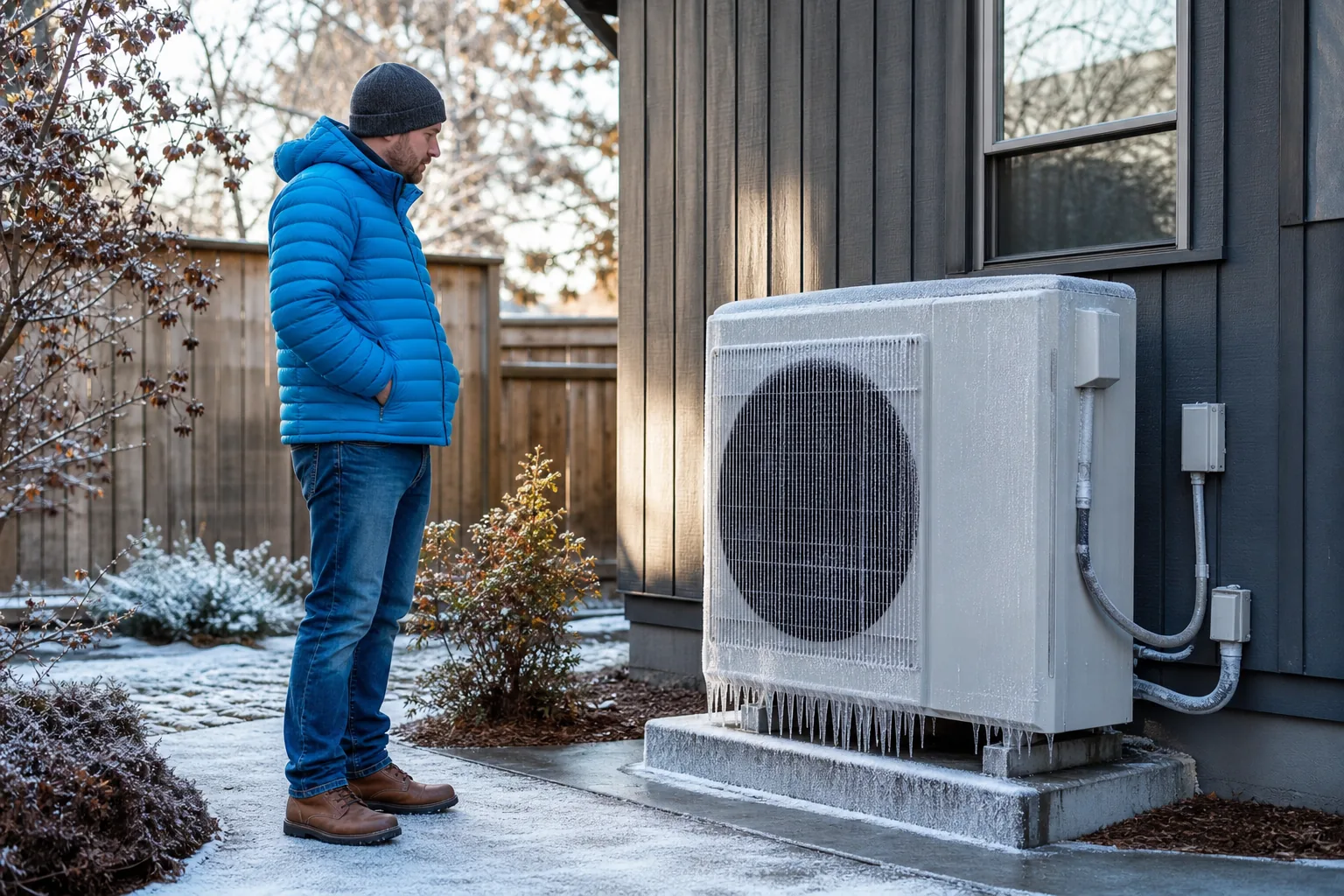
Start by looking at the unit from a safe distance. A light, even frost on the outdoor coil can form in cold, damp weather. Many heat pumps clear that frost on their own through a defrost cycle. A thick layer that stays in place, covers the fan area, or keeps growing is different.
Notice where ice starts. Ice across the coil may point to a defrost or airflow problem. Ice building under the unit or on one side can point to water dripping from a roof, gutter, or nearby drain. Don’t reach through the grille to inspect the fan or coil.
Watch what the system does. During defrost, the outdoor fan may pause while the unit warms the outdoor coil. You may hear a change in sound, and a little steam can rise as frost melts. That brief change can be normal. Carrier’s heat pump troubleshooting information describes defrost as part of normal heat-pump operation.
Also note when the ice appears. Does it form only during a cold spell, after rain, or soon after the system starts? Does the house feel colder, or do the vents seem to move less air? Write down what you see and the thermostat mode. That record helps a technician tell a short defrost cycle from a freeze-up that keeps returning.
If you’re in Auburn or Colfax, wet weather and roof runoff can leave water near an outdoor unit. Homeowners in Rocklin may notice a different pattern during a cold snap. The weather helps explain what you see, but a solid block of ice still deserves a careful check. For more context on cold-weather operation, see what happens when heat pumps work below freezing .
Heat pumps that draw heat from outdoor air have an exposed outdoor coil, so frost can form there. Ground-source systems move heat through buried loops instead; they don’t have the same outdoor coil that collects frost. In summer, ice can instead form on an indoor coil when airflow is poor or the refrigerant system has a fault. That’s a separate issue from normal winter frost outside.
Key Takeaway:Light frost that clears can be normal. Ice that stays, spreads, or affects heating needs a closer look.
Step 2: Turn the System Off and Let Ice Thaw Safely
If ice is thick or the fan looks trapped, don’t keep running the heat pump. Turn the thermostat to Off. If your thermostat has Emergency Heat, use it only when the outdoor unit can’t run safely or has failed. Emergency Heat uses the system’s backup heat rather than normal heat-pump operation, and it may cost more to run.
Let the ice melt on its own. When outdoor temperatures are above freezing, thawing can take a few hours; colder weather may stretch that time.
Don’t chip at the ice, pour hot water over the unit, or use a hair dryer or heat gun. The thin coil fins can bend easily, and sudden heat can harm parts. Keep children and pets away while the ice melts. If you see damaged wires or smell something burning, leave the equipment alone and arrange service.
Some systems let the indoor fan run while the outdoor unit thaws, but controls differ by model. Don’t guess at thermostat settings if you’re unsure. Our safe heat pump thawing steps explain what a homeowner can check without opening the equipment.
After the ice clears, don’t assume the cause is fixed. If the unit quickly freezes again, leave it off and arrange a service visit. Repeated ice can point to low refrigerant from a leak, a failed sensor or defrost control, or restricted airflow. Those aren’t homeowner repairs. Home Worx Heating and Cooling serves Auburn, Colfax, Rocklin, Roseville, Grass Valley, Penn Valley and Lincoln. Contact the team for local service.
Step 3: Check the Air Filter, Vents, and Indoor Airflow
A clogged filter can cut the air moving through the indoor coil. That can lower system performance and contribute to icing. Turn the system off before checking the filter, then slide it out by its frame. If it looks packed with dust, replace it with the size and type listed on the filter or equipment instructions.
Check the supply vents in each room. Open vents that someone has closed, and move rugs or furniture away from them. Make sure return grilles aren’t blocked either. The system needs a clear path for air to move back to the indoor unit. Don’t remove panels to look for a hidden coil or fan.
A filter that looks clean doesn’t rule out an airflow problem. Dust may collect on a coil, or a blower may not move air as it should. Those checks involve equipment parts, so leave them for a technician. If the air from the vents feels weak, or some rooms have little heat, note which rooms are affected.
Check the thermostat too. Confirm it’s set to Heat and that the target is above the room temperature. A heat pump may run for long stretches in cold weather, and the outdoor temperature where backup heat is needed varies by system and home. That point is often called the balance point. It doesn’t mean the unit should remain encased in ice.
For homeowners in Roseville or Lincoln, start with the filter and open vents before changing thermostat settings again. If the system still heats poorly, these safe checks for a heat pump that isn’t heating can help you decide what to note before requesting service.
Pro Tip:Write down the thermostat mode, filter condition, and rooms with weak airflow. A short symptom record can save time during a service visit.
Step 4: Look for Outdoor-Unit Obstructions and Watch the Defrost Cycle
With the system off, look around the outdoor unit for leaves, branches, packed snow, or other loose debris. Clear items you can reach without opening the cabinet. Keep snow and stored objects away from the air path. Don’t use a pressure washer or brush the coil fins; they bend easily.
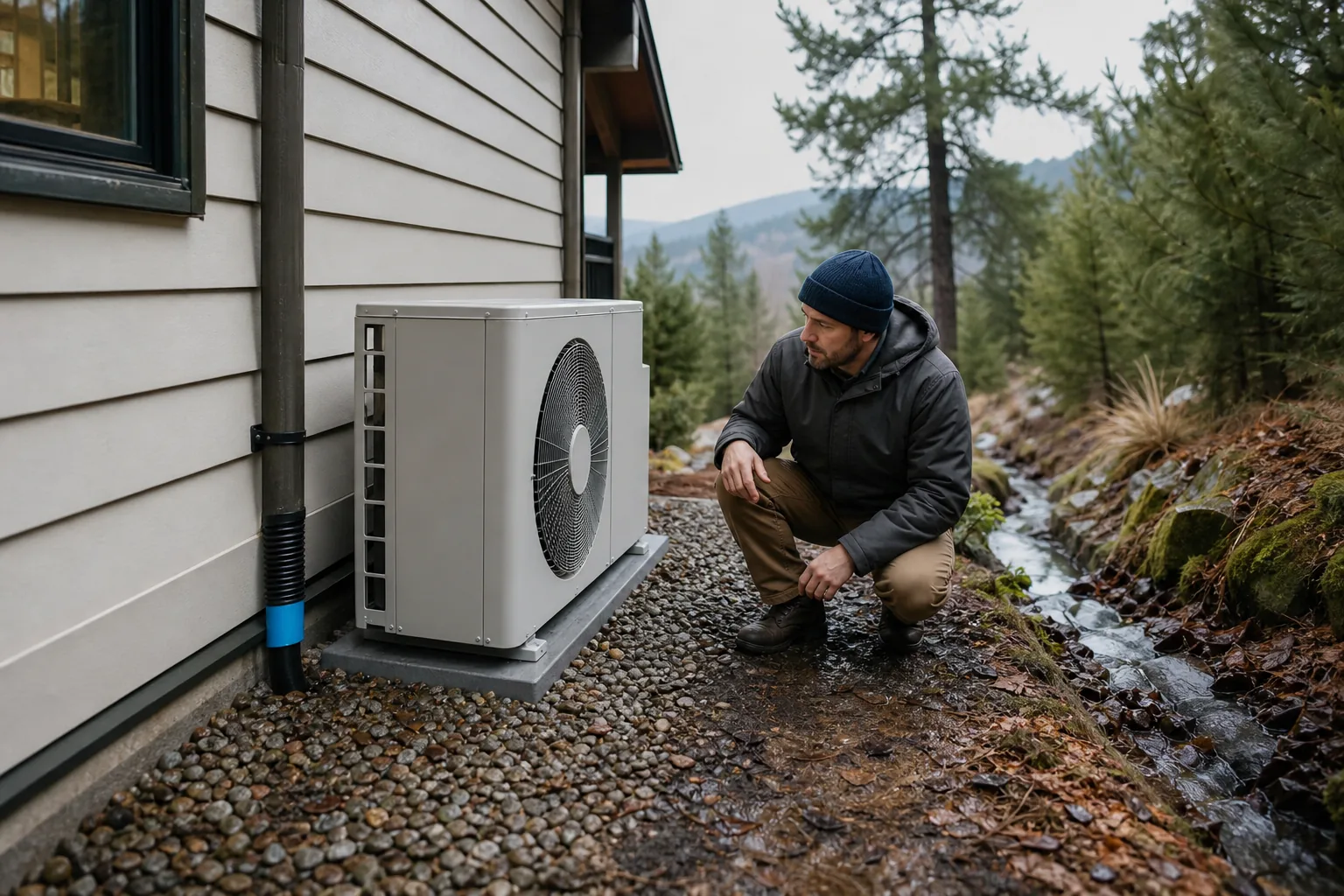
Look above the unit as well. A blocked gutter or roof edge can send water onto the cabinet, where it freezes faster than the defrost cycle can clear it. Check for a steady drip or a patch of ice that starts below a roofline. If runoff is the source, the gutter or drainage path needs attention so water no longer lands on the unit.
Now observe the next normal heating cycle from a safe spot. A working defrost cycle should clear frost from the outdoor coil. Timing varies with the equipment and weather, so don’t judge the system by a strict timer. If the unit repeatedly enters defrost but the ice remains, or it never seems to defrost despite heavy ice, stop troubleshooting and arrange service.
Some faults involve a temperature sensor, control board, or reversing valve. The reversing valve changes the direction of refrigerant flow so the system can heat or cool. Diagnosing or forcing a defrost cycle can involve live electrical parts, so don’t open the cabinet or try to short test pins.
In Grass Valley or Penn Valley, check whether water from a roof or gutter reaches the unit after rain. Clear the source of the runoff where it’s safe to do so. If ice keeps returning from the bottom up, or the fan can’t turn freely, keep the system off until a technician checks it.
Step 5: Call an HVAC Technician for Persistent Ice or a System Fault
Get professional help when heavy ice returns, the unit can’t complete defrost, or your home won’t stay warm. Arrange service if the outdoor fan is stuck, the system makes a new harsh sound, or the thermostat shows a fault. If you see smoke or smell burning, switch the system off and keep away from it.
Low refrigerant can make a coil too cold and cause fast ice buildup. Refrigerant levels don’t simply need topping up: a low charge often means there’s a leak that needs to be found and repaired. Gauges, pressure readings, leak checks, and refrigerant handling belong to trained HVAC technicians. Don’t connect gauges or open refrigerant lines yourself.
A technician can check whether the unit gets the right signal to defrost and whether the coil clears during the cycle. They can also assess airflow, refrigerant charge, and parts such as the sensor or control board. If a repair is needed, ask what failed and whether the cause has been addressed, not only whether the ice was removed.
A temperature check at the vents may help describe the symptom, but one reading doesn’t prove the heat pump is working correctly. Results depend on indoor and outdoor conditions, system design, and whether backup heat is running. Share the room temperature and supply-air reading with the technician, but don’t use a single temperature split as a DIY pass-or-fail test.
Home Worx Heating and Cooling serves homeowners in Placer and Nevada counties, including Auburn, Colfax, Rocklin, Roseville, Grass Valley, Penn Valley, and Lincoln. Our team handles heat pump repair and seasonal maintenance. A service visit can help identify airflow trouble, drainage issues, or a system fault before repeated freezing leads to more strain.
For prevention, keep the filter clean and the outdoor air path clear. Check gutters where roof water may reach the unit. Home Worx Heating and Cooling recommends seasonal service and annual coil cleaning. A regular inspection can catch a problem before the next stretch of cold, wet weather.
FAQ
Is it normal for a heat pump to have frost on it?
Yes, a light layer of frost on the outdoor coil can be normal during cold, damp weather. The heat pump should clear it through a defrost cycle. Heavy ice that stays in place, blocks airflow, or returns soon after thawing is a warning sign. Turn the system off if ice traps the fan, then arrange a professional check.
Can a heat pump freeze up when it’s warm outside?
Yes. During summer cooling, the indoor coil can freeze if airflow is restricted or the refrigerant system has a problem. That’s different from winter frost on the outdoor coil. Turn the system off if you see ice, check the accessible filter, and don’t run the equipment until the ice has melted. If it returns, request service.
Should I use emergency heat when my heat pump is iced over?
Use Emergency Heat only when the outdoor unit can’t run safely or has failed, and follow your equipment instructions. It uses backup heat instead of normal heat-pump operation, so it may use more energy. Don’t switch modes just because you see a light frost or notice the outdoor fan pause during a normal defrost cycle.
Can I add refrigerant to a frozen heat pump myself?
No. Refrigerant work requires the right tools and training, and low refrigerant often points to a leak. Adding refrigerant without finding the cause won’t fix the leak. Keep the unit off if it’s heavily iced or heating poorly, then have an HVAC technician check the charge and locate any leak.
Conclusion
Light frost may clear on its own, but thick or repeated ice isn’t something to chip away or ignore. Check the filter and outdoor area, then stop if the ice returns or a system fault appears. For local heat pump repair or seasonal service in the Sierra foothills, contact Home Worx Heating and Cooling.