
Do Heat Pumps Work Below Freezing? What to Know
Yes, heat pumps can work below freezing. They move heat from outdoor air into your home, but their heating capacity and efficiency can drop as the air gets colder, and not every model handles low temperatures the same way.
For homeowners in Northern California’s Sierra foothills, the useful question is whether a specific system can meet the home’s heat demand. Model choice, sizing, airflow, and backup heat all affect the answer.
We analyzed 500 ENERGY STAR-certified cold-climate heat pump records in the EPA's public heat pump database and found heating capacity at 5°F ranged from 57% to 127% of each model's capacity at 47°F. 87 of the 500, or 17%, kept less than 70% of rated output, showing one model's cold-weather rating can differ from another's.
Table of Contents
How a Heat Pump Pulls Heat From Freezing Air
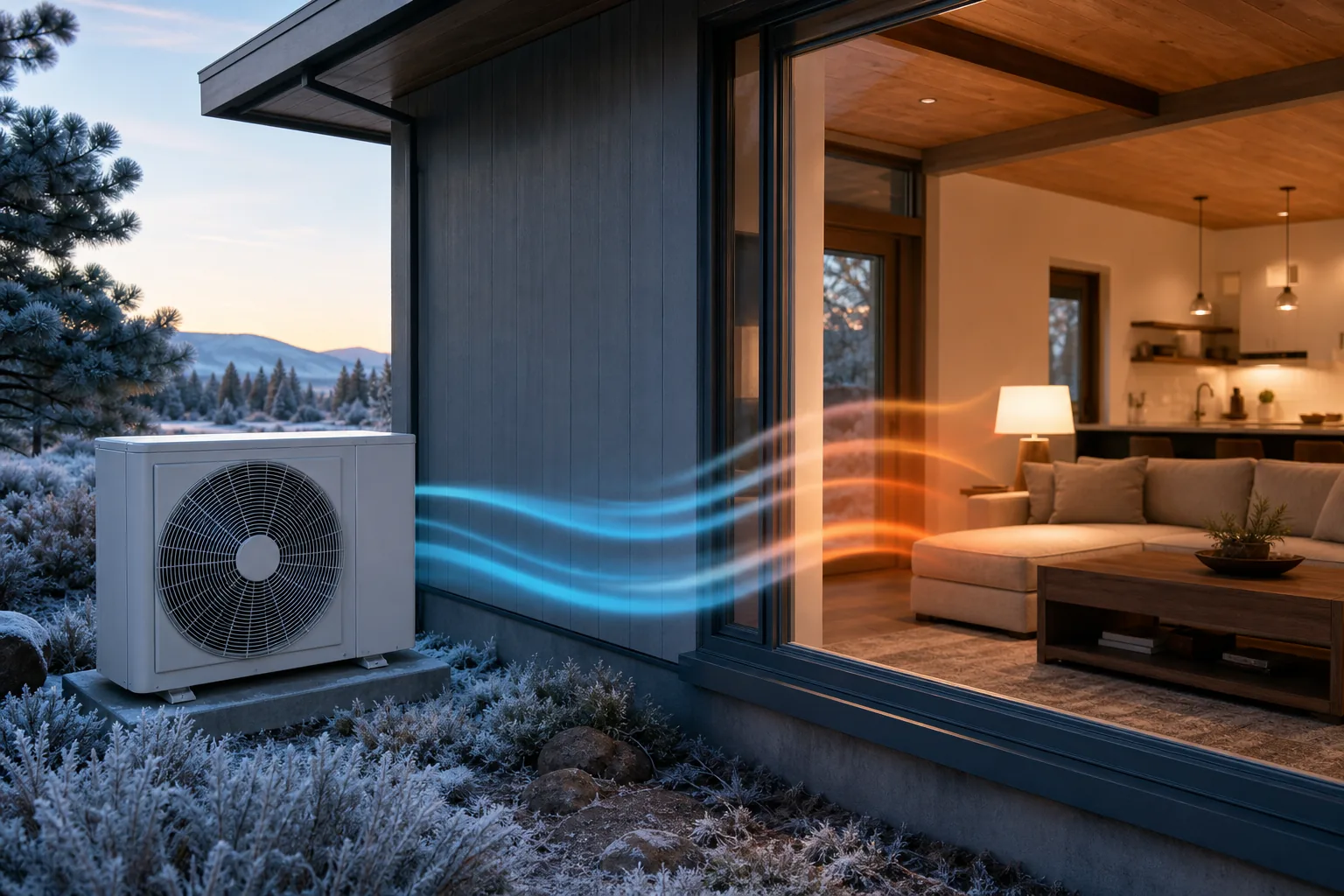
An air-source heat pump can heat a home when the outdoor air is below 32°F because cold air still contains heat energy. The outdoor coil gets colder than the air around it, so heat moves into the refrigerant inside the coil. The system then compresses that refrigerant and sends the captured heat indoors.
Think of the unit as an air conditioner that can run in reverse. In summer, it moves heat out of the house. In heating mode, a reversing valve changes the direction of refrigerant flow so the system can bring heat inside. A heat pump and air conditioner comparison can help clarify how the same basic equipment can cool and heat.
This process moves heat rather than making it through fuel combustion or electric resistance. A measure called coefficient of performance , or COP, compares heat delivered with electricity used. A COP of 3 means the system delivers three units of heat for each unit of electricity under those test conditions. The COP changes with outdoor temperature and the system’s operating state.
Air-source systems draw heat from outdoor air. Geothermal, or ground-source, systems use buried loops to exchange heat with the ground instead. The ground source is less exposed to fast air-temperature swings, but installation needs suitable land and a ground loop. Most homeowners considering a standard heat pump are looking at an air-source system.
What Changes as Temperatures Drop
Heat pumps can run below freezing, but the amount of heat they can deliver and the electricity they need both change as outdoor temperatures fall. The temperature where a particular model struggles depends on its design, condition, installation, and the home’s heat loss. There is no single cutoff that applies to every system.
As the outdoor coil gets colder, it becomes harder to draw in heat. The compressor may work harder, and the unit may deliver less heat than it does in milder weather. That can mean longer run times. A heat pump that runs for long stretches on a cold day isn’t automatically broken, especially if it’s holding the indoor temperature steady.
Cold-weather performance is often described with COP. Unlike a simple efficiency label, COP can vary with outdoor temperature and operating conditions. If the COP falls, the unit still may deliver more heat than the electricity it uses. But if it can’t meet the home’s heat loss, a backup source may need to help.
Some cold-climate models use variable-speed compressors and other design changes to maintain heating output at lower temperatures. Some designs may also use vapor injection. These features don’t make every model equivalent. Check the manufacturer’s performance data at low outdoor temperatures, not only its headline efficiency rating or product name.
Humidity and moisture matter, too. Damp air can add frost to the outdoor coil, which may trigger more defrost cycles. Snow can also block airflow if it piles up around the unit. Neither condition means the heat pump can’t work, but both can affect output and energy use.
For a fair running-cost comparison with natural gas or propane, use your own current utility rates and the heat pump’s cold-weather performance data. Fuel prices, equipment efficiency, and backup heat all affect the result, so a general estimate may not fit your home. Homeowners in Rocklin, Roseville, Penn Valley, and Lincoln can contact Home Worx Heating and Cooling for local service.
Defrost Cycles and Backup Heat: What Homeowners May Notice
Frost on the outdoor coil is a normal part of winter operation. When frost builds up, the heat pump briefly changes how it runs to warm the outdoor coil and melt the ice. The outdoor fan may stop during this defrost cycle. You might see a cloud of water vapor or hear a short change in sound.
During defrost, the system temporarily directs less heat indoors. Some systems use auxiliary heat to help keep the home comfortable during that pause. Auxiliary heat is a supplemental source that helps when the heat pump alone can’t meet the home’s heating demand.
Auxiliary heat may also come on when the thermostat detects that the indoor temperature is falling behind its set point. It can be electric resistance heat or, in a dual-fuel setup, a furnace. Since resistance heat uses electricity to make heat directly, frequent or long use can raise energy use. A brief cycle during a cold spell doesn’t by itself show that something is wrong.
The thermostat may display “AUX” when supplemental heat runs. That’s different from emergency heat, which usually tells the system to stop using the outdoor heat pump and rely on the backup source. If you’re unsure what your controls mean, our explanation of auxiliary heat on a thermostat covers the distinction.
In Colfax or Grass Valley, a homeowner might notice the outdoor fan pause, then see frost melt away while the system resumes heating. Let the cycle finish. Don’t chip ice from the coil or pour hot water over the unit, since either can damage equipment or create a safety risk.
A thin layer of frost that clears is different from thick ice that remains. If defrost seems to happen constantly, lasts longer than usual, or fails to clear ice, arrange a service check. Those signs can point to a control, airflow, or equipment problem.
What Helps a Heat Pump Keep Up in a Northern California Winter
A heat pump’s cold-weather performance starts with the match between the equipment and the home. A contractor should calculate the home’s heating load, often with Manual J, rather than size a system by square footage alone. The calculation accounts for heat loss and helps show whether a heat pump can carry the load by itself or needs backup.
Ask for the equipment’s heating capacity at low outdoor temperatures, not just its advertised maximum. A standard air-source model may suit one home, while a cold-climate model or dual-fuel system may fit another. A dual-fuel setup lets the heat pump handle conditions where it performs well, then uses a furnace when the control strategy calls for it.
Home conditions count. Air leaks, poor insulation, and leaky ducts increase heat loss. Blocked vents or a dirty filter can also restrict airflow. A correctly sized system can still feel inadequate if warm air can’t reach the rooms that need it.
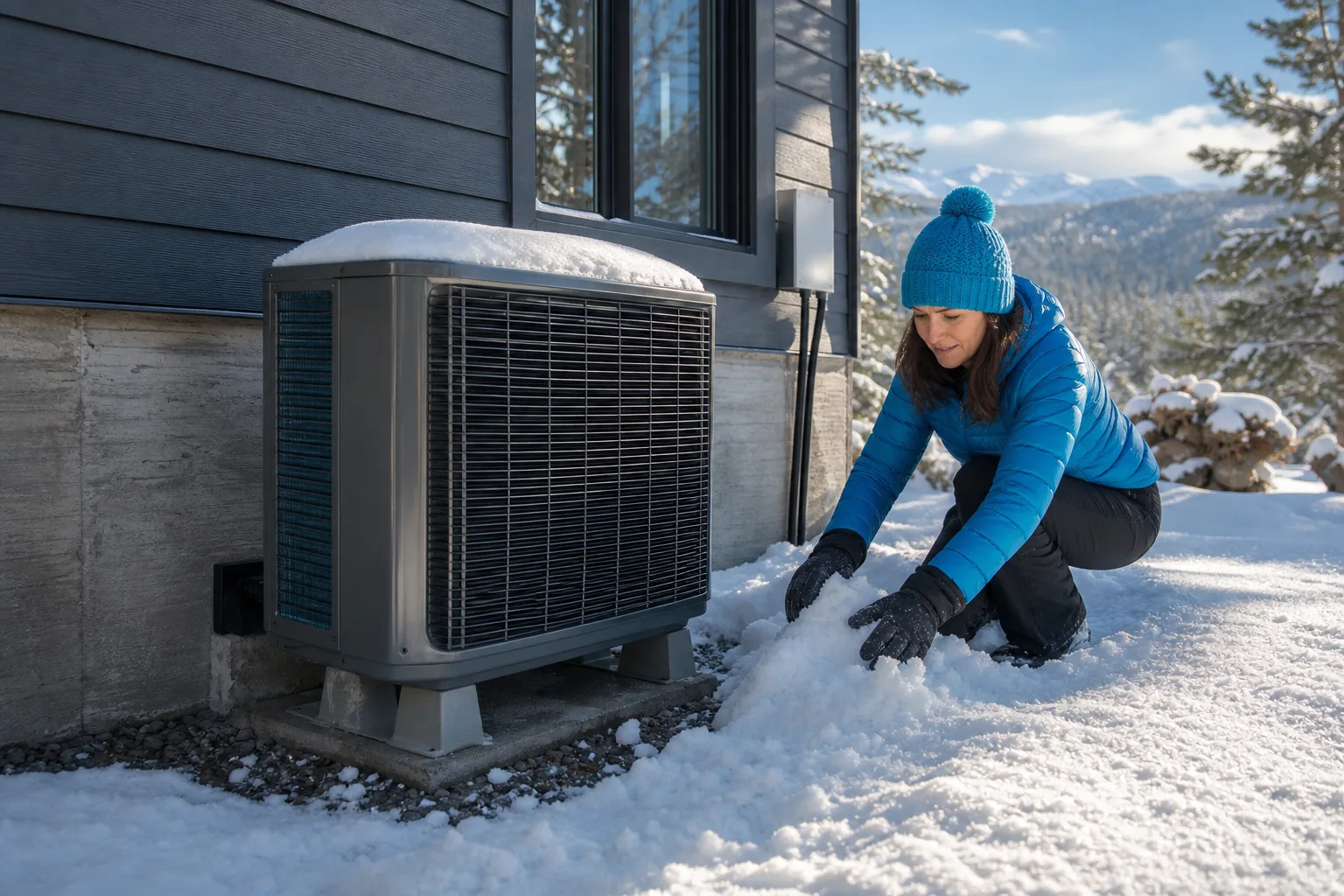
Keep the outdoor unit clear so air can pass through the coil. After snowfall, clear loose snow from around the unit without bending its fins or striking the cabinet. Don’t cover a heat pump that’s operating in winter. It needs open airflow to heat and to complete defrost.
Home Worx Heating and Cooling serves foothill communities across Placer and Nevada counties and can assess a home’s equipment, airflow, and backup heat plan. The goal is to match the system to the house, not assume one model works equally well everywhere.
When to Call an HVAC Professional
Some winter signs are normal. A short defrost cycle, temporary fan pause, or longer run time during very cold weather doesn’t necessarily mean the system needs repair. Start with safe checks: confirm the thermostat is set to Heat, make sure the fan setting is appropriate, and check whether the air filter is visibly dirty.
Look around the outdoor unit for leaves or snow blocking airflow, but don’t open the cabinet or handle wiring. Keep supply vents and return grilles clear indoors. If these checks don’t help, a technician can inspect the system without guesswork.
Call for service if the unit is covered in thick ice that doesn’t clear, the house keeps losing heat, or the system makes a new loud or repeated noise. Also get help if the thermostat calls for heat but the indoor fan doesn’t run, or if the heat pump runs for a long time in mild weather without reaching the set temperature.
Homeowners in Auburn or Lincoln can also use our safe checks for a heat pump that isn’t heating to rule out simple thermostat or airflow issues. If the system still struggles, Home Worx Heating and Cooling can inspect it for problems with controls, airflow, sizing, or the outdoor unit.
For homes in Grass Valley and Penn Valley, local elevation and the home’s heat loss can shape equipment needs. Contact Home Worx Heating and Cooling for help deciding whether the issue is normal cold-weather operation or a fault that needs repair.
FAQ
Do heat pumps work below freezing?
Yes, many heat pumps work below freezing, but their output and efficiency depend on the model and conditions. An air-source system keeps drawing heat from outdoor air, even when that air is cold. If it can’t meet the home’s heating demand, auxiliary heat may help. Check the unit’s low-temperature performance data rather than relying on a general temperature cutoff.
At what temperature does a heat pump stop working?
There isn’t one temperature at which all heat pumps stop working. Some standard models lose heating capacity sooner than cold-climate models, and system condition matters too. ENERGY STAR tests cold-climate performance at 5°F, but a qualifying unit can run below that point. Backup heat may be needed when the heat pump can’t keep up efficiently.
Is steam coming from my heat pump normal?
Often, yes. A brief cloud of vapor can appear when a heat pump runs a defrost cycle and melts frost from its outdoor coil. The fan may pause during this process. The cloud should clear as the cycle ends. Thick ice that stays on the unit, or defrost cycles that keep getting longer, calls for professional service.
Should I use emergency heat when it freezes?
No, freezing weather alone usually isn’t a reason to switch to emergency heat. Many systems use auxiliary heat automatically when extra warmth is needed. Emergency heat generally disables the outdoor heat pump and runs only the backup source. Check your thermostat instructions, and contact an HVAC professional if the system can’t hold a safe indoor temperature.
Conclusion
Heat pumps can work below freezing, but the right model and proper sizing matter more than a single temperature cutoff. If your system struggles, keeps icing over, or relies on backup heat often, have it checked. Contact Home Worx Heating and Cooling for an evaluation in Auburn, Colfax, Rocklin, Roseville, Grass Valley, Penn Valley, or Lincoln.