
Why Is My Heat Pump Running Constantly?
When your heat pump seems to run without a break, the cause may be as simple as a dirty filter or as involved as a system that can’t meet your home’s heating needs. If you’re asking why your heat pump is running constantly, start by checking whether it’s keeping the home comfortable. Long run times can be normal in cold weather, but poor comfort or thick ice deserves attention.
We analyzed 54 comments from YouTube and Reddit about heat pump constantly running and found that 28% mentioned thermostat settings.
Table of Contents
When Constant Heat Pump Operation Is Normal
A heat pump moves heat between the outdoors and your home. It doesn’t always deliver heat in short bursts like some furnaces do. On a cold day, it may run for a long stretch while it slowly brings the rooms to the thermostat setting.
In the foothills, cold winter mornings can raise demand. A longer run may be normal if the indoor temperature stays steady and the system sounds as it usually does. The useful question is not only how long it runs, but whether it can hold the set temperature.
Frost can also form on the outdoor coil during heating. The heat pump may briefly switch into defrost mode to melt it. You might see steam or notice cooler air from a vent for a short time. Those signs alone don’t mean the system is broken. Thick ice that stays in place, though, is different. It can block airflow and prevent normal operation.
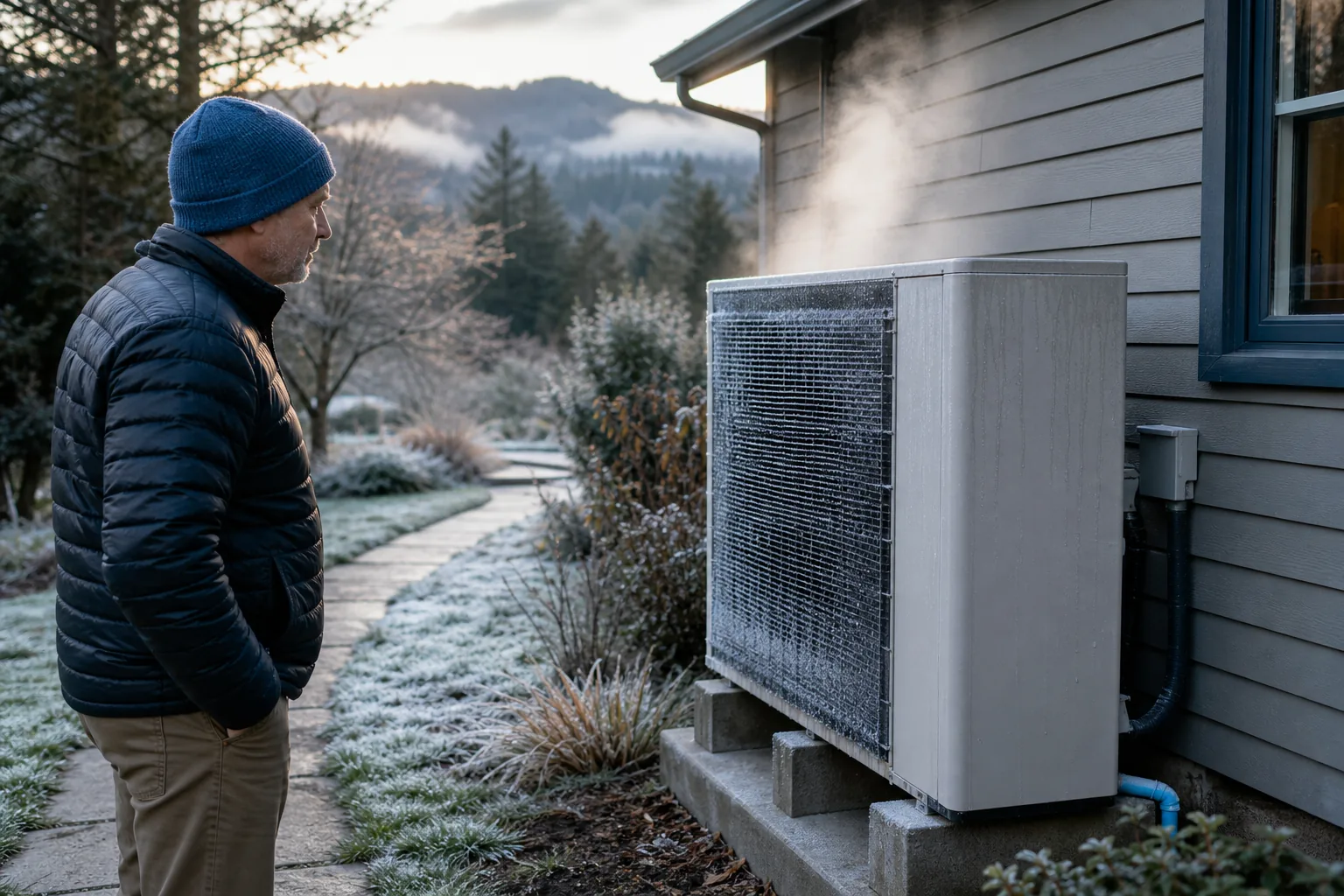
If you see persistent ice, don’t chip at it or pour hot water over the unit. Those actions can damage parts. Our safe checks for a freezing heat pump explain what frost can look like and when it needs service.
For a closer look at defrost and seasonal operation, review this general heat pump equipment resource . In day-to-day use, watch the pattern: brief frost that clears is unlike ice that keeps building.
Key Takeaway:A long run can be normal if your home holds its temperature. Persistent ice or falling indoor temperatures calls for a closer check.
For local service, contact Home Worx Heating and Cooling .
Common Causes of a Heat Pump That Won’t Stop Running
When the system runs but can’t reach the thermostat setting, it may be working against a problem. Begin with airflow and settings. They’re common causes, and you can check them without opening the equipment cabinet.
Restricted airflow
A clogged filter limits the air moving through the indoor system. Blocked vents or a dirty outdoor coil can also make it harder for the heat pump to move heat. The system may keep running while rooms warm slowly or unevenly. Check the filter and clear visible leaves or other debris around the outdoor unit. Don’t reach inside it.
Thermostat settings
Confirm that the system is set to Heat when you want heating. The fan should usually be set to Auto. In On mode, the indoor fan can keep blowing between heating cycles, which may make it seem like the heat pump itself never stops. A smart thermostat can also have a schedule or setting that doesn’t match your routine.
If the thermostat shows AUX or Emergency Heat, note which one it displays. Auxiliary heat can assist during cold weather or defrost. Emergency Heat is a separate setting that may rely on backup heat instead of the outdoor heat pump. If it stays on in mild weather, or the house still won’t warm, arrange a check rather than leaving it on by guesswork.
Equipment problems
Low refrigerant, a leak, a faulty outdoor fan, or a defrost control issue can reduce heating performance. These parts need professional testing. A system with an airflow or equipment fault may run longer without delivering enough heat.
Dirty filters, incorrect thermostat settings and a dirty outdoor coil can all contribute to continuous operation, so check basic settings and outdoor airflow before seeking service. If those checks don’t change the pattern, the cause may need a technician’s tools.
Check the filter in good light; dust can pack across its surface even when one side looks clean. Use the size and type specified for your system when replacing it. For local service, contact Home Worx Heating and Cooling.
How Weather, Home Heat Loss, and System Size Affect Run Time
Outdoor temperature changes the job your heat pump has to do. As the air gets colder, the system may need longer to move enough heat indoors. A long winter run in Penn Valley doesn’t automatically point to a fault, especially if the home stays comfortable.
But the home itself matters too. Drafts, weak insulation, or leaky ducts can let heat escape as the system adds it. Then the heat pump has to keep working to replace heat the house keeps losing. A room that stays chilly while the rest of the house feels fine may point to a duct or airflow issue rather than a problem with the whole unit.
Installation issues can reduce a heat pump’s expected performance in cold-climate homes. That’s why an evaluation should include how the equipment is installed and how air moves through the home, not just whether the outdoor unit turns on.
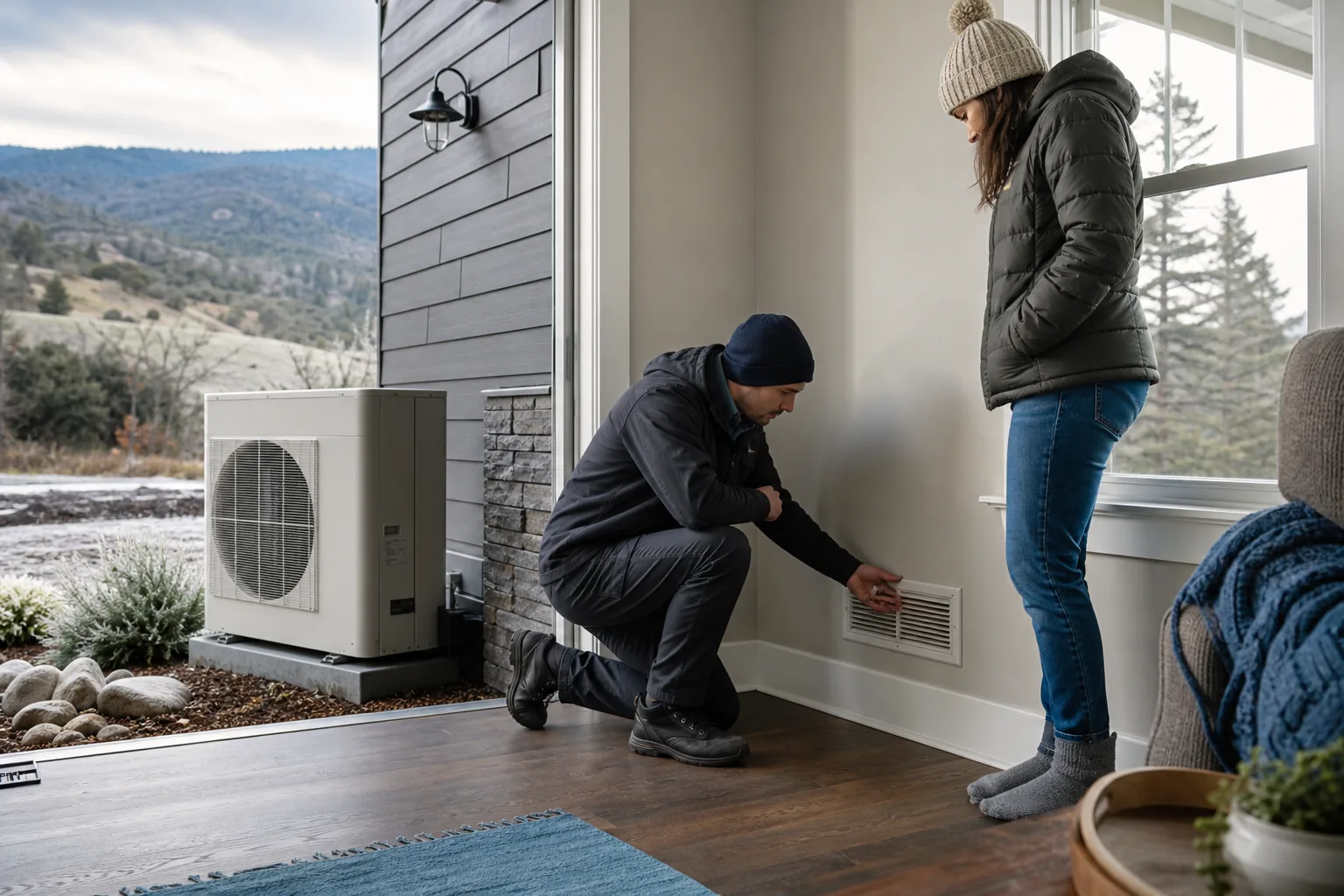
System size is another factor. An undersized heat pump may run for long periods and still fall short on the coldest days. An oversized one can reach the thermostat setting too quickly, then stop and start often. That pattern is called short cycling. It’s not the same as steady, extended operation, but it can also create wear and uneven comfort.
Before replacing equipment, ask whether the home’s heating needs were measured. A Manual J load calculation estimates how much heating and cooling a home needs. It considers details such as the home’s size and heat loss. Guessing based only on the old unit can carry an old sizing problem into a new installation.
Residents in Rocklin and Roseville may notice long summer cooling runs, while colder foothill nights in Auburn, Colfax, Grass Valley, and Lincoln can stretch winter heating cycles. The same system can behave differently as the season changes. If the run time has changed suddenly, note the weather and indoor temperature before assuming it’s normal.
For more on the upkeep that supports steady operation, use our heat pump maintenance checklist to review filter care and seasonal checks.
Pro Tip:Write down the indoor temperature, thermostat setting, and outdoor conditions when you notice long runs. Those notes help a technician see whether the pattern tracks with weather or points to a system issue.
For local heat pump help in Placer and Nevada counties, contact Home Worx Heating and Cooling.
What Homeowners Can Check, and Warning Signs to Take Seriously
Start with checks that don’t require tools or access to electrical parts. Set the thermostat to the mode you want, confirm the fan is on Auto, and check whether a schedule or hold setting is changing the target temperature.
Next, look at the air filter. If it’s visibly dirty, replace it with the correct size and type. Check that supply vents and return grilles aren’t blocked by rugs or furniture. Outdoors, remove loose leaves or other debris from around the unit, but don’t open panels or bend coil fins.
Make one change at a time. If you replace the filter and adjust the thermostat together, it may be hard to tell which one helped. Then watch whether the home reaches the set temperature and whether the system returns to a steadier run pattern.
Some signs need a professional rather than more home checks:
The heat pump runs for hours in mild weather but the indoor temperature keeps falling.
Thick ice remains on the coil after a defrost cycle.
Airflow feels weak, or one part of the home stays far colder than the rest.
The system starts and stops every few minutes.
You hear a new grinding, buzzing, or repeated loud noise.
A breaker trips again after it has been reset once.
If a breaker trips again, don’t keep resetting it. If you smell burning or see smoke, turn the system off if you can do so safely and seek prompt help. Those symptoms aren’t routine run-time concerns.
Homeowners in Lincoln can use the same basic checks, but a filter or thermostat change won’t fix a refrigerant leak or failed motor. Home Worx Heating and Cooling handles heat pump repair and maintenance for local homes, including when safe checks haven’t resolved the issue.
When to Call an HVAC Professional and What a Diagnosis Involves
Arrange service when the heat pump can’t maintain comfort, runs constantly in mild weather, or shows a warning sign such as persistent ice. A professional can test the system instead of guessing from one symptom. That matters because a dirty filter and a refrigerant problem can both lead to long runs, but they need different fixes.
A diagnosis often starts with your observations. Tell the technician when the long runs began, what the thermostat displays, whether the home reaches its target, and whether you’ve heard new sounds. Share any recent filter change or repair. Details about the pattern can help narrow the checks.
The technician may inspect airflow, the indoor and outdoor coils, thermostat response, and the outdoor fan. They can also test electrical parts and review how the system starts, runs, and changes modes. If the symptoms point to a refrigerant issue, specialized testing can help confirm whether the charge is correct or there’s a leak.
Defrost operation deserves attention if the outdoor coil stays iced over. A technician can check whether the controls and sensors are responding as they should. If the fan stops during a normal defrost cycle, that alone may be expected. If it won’t run during heating or the coil doesn’t clear, the cause needs diagnosis.
When sizing may be involved, ask how the system’s capacity compares with the home’s heat loss. A replacement should fit the home, not simply match the size of the old unit. Installation conditions can also affect performance, especially in cold weather.
Home Worx Heating and Cooling serves Colfax, Auburn, Rocklin, Roseville, Grass Valley, Penn Valley, and Lincoln, along with nearby Northern California communities. We provide heat pump repair, maintenance, and installation. Our team can assess the cause and explain the next step before you decide how to proceed.
Regular service can also catch developing airflow or control concerns before the next stretch of heavy use. Home Worx Heating and Cooling offers seasonal tune-ups and service packages. The right visit depends on the system’s condition and what you’re noticing, not a promise that every long run needs a repair.
Frequently Asked Questions
Is it normal for a heat pump to run all day in winter?
It can be normal for a heat pump to run for long stretches during cold weather. If the home holds its temperature and the system runs as usual, the long cycle may reflect higher heating demand. If the temperature keeps dropping, airflow is weak, or ice stays on the outdoor coil, arrange a professional check.
Should my heat pump fan be set to Auto or On?
For most standard heating cycles, set the thermostat fan to Auto. On keeps the indoor blower running even when the heat pump isn’t actively heating, so you may feel air from the vents between cycles. If the fan setting is correct but the system still runs constantly, check the filter and thermostat schedule.
Can a dirty filter make a heat pump run constantly?
Yes. A dirty filter can restrict airflow, making it harder for the system to heat the home. Check the filter and replace it with the correct type if it looks clogged. If run times stay long after the change, another issue, such as blocked outdoor airflow or a system fault, may be involved.
When should I call for heat pump service?
Get professional help if the heat pump can’t reach the thermostat setting, stays iced over, short-cycles, or makes a new loud noise. Call for service if it runs constantly in mild weather despite a clean filter and correct settings. Refrigerant, electrical, and internal control checks aren’t homeowner tasks.
Conclusion
A heat pump may run for a long time in cold weather, but it should still keep your home comfortable. Check the thermostat and filter first, then arrange a professional diagnosis if the temperature falls or warning signs persist. Contact Home Worx Heating and Cooling for local heat pump service across the foothills.