
AC Condensate Drain Clogged? Clear It Safely
Updated: Oct 1
A clogged AC condensate drain can leave water near your indoor unit or stop your system from cooling. In Northern California’s hot, dry summers and cold winters, the blockage may involve sludge, mineral scale, or a drain line that doesn’t slope properly. Work through these steps in order, and stop if water is near electrical parts or the cause isn’t clear.
We reviewed the 8 online guides currently ranking for a clogged AC condensate drain, including pages from Trane, Carrier, Lennox, and Aire Serv. Only 1 of those 8 pages explicitly warned against pouring bleach or a household drain opener into the line, and one recommended bleach outright. Just 2 of the 8 spelled out a step to restore power and confirm drainage after clearing the clog. Skipping either step leaves a homeowner unsure whether harsh chemicals damaged the line or whether the water is actually gone for good.
Table of Contents
Step 1: Turn Off the AC and Check for Warning Signs
When you suspect an AC condensate drain is clogged, stop the system before you inspect it. Set the thermostat to Off. If water is rising in the drain pan, leaking through a ceiling, or close to electrical equipment, leave the AC off and get help.
If you can safely reach the air handler’s service switch or breaker, turn off power to the indoor unit before opening any homeowner-accessible area. Don’t remove panels that aren’t meant for routine access. If you’re unsure which switch controls the unit, don’t guess.
Look for clues without touching wiring or wet equipment. Check for standing water near the indoor unit, a damp ceiling below an attic system, or a musty smell near the vents. A built-in protection feature may shut off cooling when water rises. Don’t bypass it. The shutdown may be protecting your home from an overflow.
Water near the unit doesn’t prove the drain is the cause. A frozen coil can release water as it thaws. A cracked drain pan, a failed condensate pump, or a plumbing leak can look similar. Notice where the water starts, then dry the area you can reach. If a ceiling or wall is wet, arrange prompt help rather than hiding the leak with a DIY fix.
Carrier’s homeowner instructions say to turn off the AC before cleaning the drain line and describe suction at the outdoor outlet as one clearing method. If water has damaged a finished room, these common AC water-leak causes and fixes can help you decide what to check next.
During hot, dry Sierra foothill summers, homeowners in Auburn and Colfax can see these symptoms during long cooling runs; the same warning signs apply in Lincoln. Contact Home Worx Heating and Cooling for local service.

Step 2: Find the Condensate Drain Line and Inspect the Outlet
When an AC condensate drain is clogged, first find both ends of the line. The drain carries water from the indoor coil’s drain pan to an outlet, floor drain, or condensate pump. Many home systems use PVC pipe, but layouts vary.
Look near the indoor air handler for a drain pipe leaving the coil or pan area. Some systems have a capped vertical opening, often called a cleanout. Don’t assume every cap is safe to remove. If the pipe route or opening isn’t clear, leave it alone and ask a technician.
Then locate the line’s discharge point. It may end outside near the foundation, near the outdoor unit, or at a floor drain. Some systems send water to a condensate pump instead. Don’t cap or block the outlet. Clear only loose debris you can reach at the opening, such as leaves or an insect nest.
Check the visible pipe for standing water, sagging sections, a disconnected joint, or a sharp rise. A gravity drain needs a steady downward path. If the line dips and holds water, or appears to slope back toward the indoor unit, cleaning may not fix the cause. Don’t lift or force the pipe; it may be attached to a pan that can crack.
A recurring clog can come from more than dirt. Dust and organic residue can form sludge, while minerals can build up inside the pipe. An outlet blocked by mud or insects can also slow drainage. In Grass Valley and Penn Valley, a line exposed to cold weather may need a closer look if water remains in a low spot. Leave slope changes or hidden pipe repairs to an HVAC professional.
If you can’t tell whether your system has a gravity drain or a pump, don’t pour water into an unknown opening. The AC drain-line cleaning steps explain where common access points are, but your equipment’s setup may differ.
Pro Tip:Take a photo of the visible pipe route before you touch a cap. It can help you put parts back as found and show a technician where the line disappears.
Step 3: Clear the Clog With a Wet/Dry Vacuum
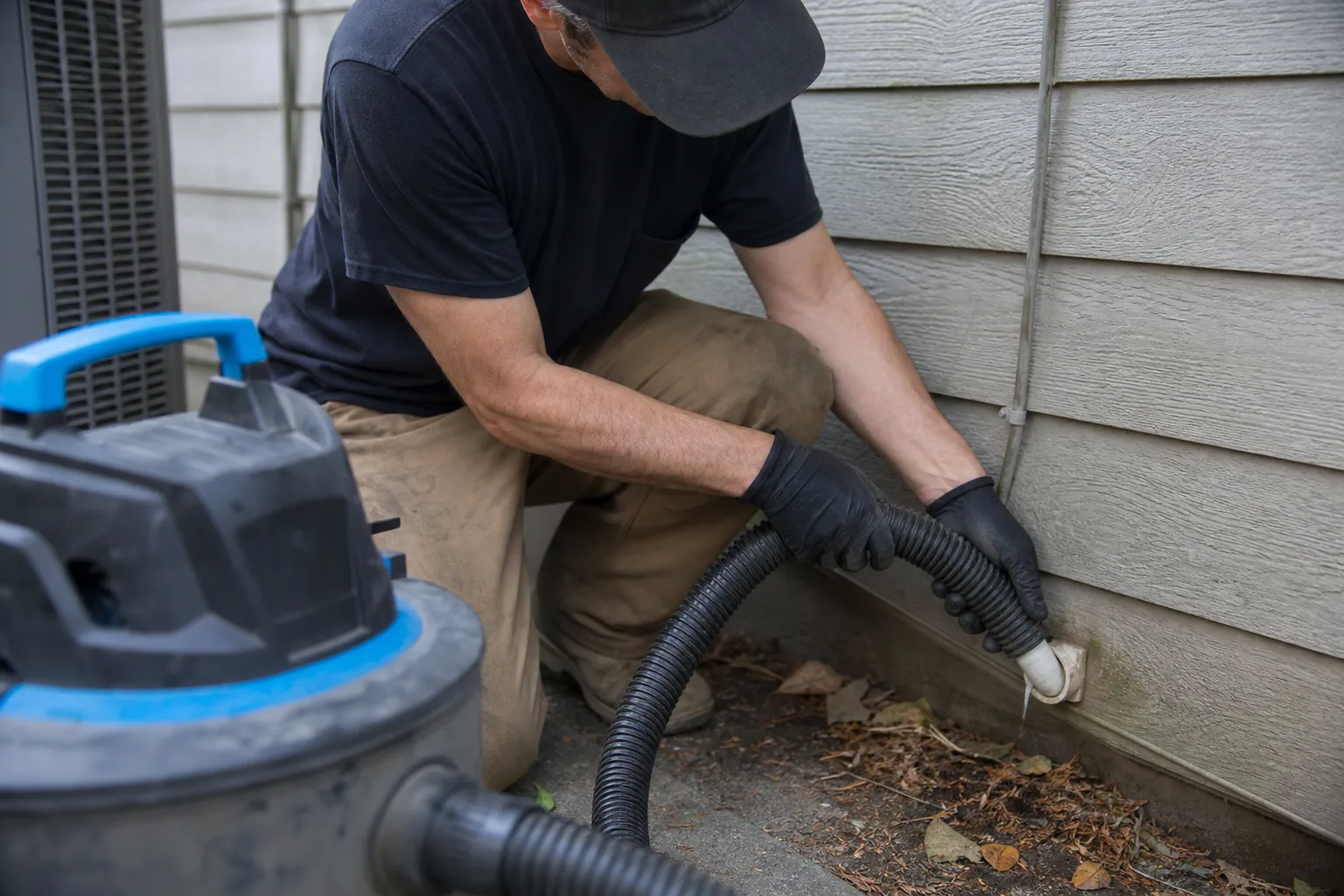
A wet/dry vacuum can pull a soft blockage out of an accessible condensate line. It’s often a better first try than pushing debris farther into the pipe. Use this method only if you can safely reach the outdoor outlet and identify it as the condensate drain.
Keep the AC and indoor unit power off. At the outdoor end, remove loose debris around the pipe opening. Fit the vacuum hose over the outlet. A towel can help reduce the gap, but don’t force the hose onto the pipe or make a seal so tight that it strains the fitting.
Run the vacuum briefly, then check its collection tank. Dark water or soft sludge may come out. That can be a sign that the clog has loosened, but it doesn’t prove the whole line is clear. Empty the tank carefully and wash it after the job. Treat the water as dirty equipment runoff, not drinking water.
Don’t use a vacuum on a line connected to a pump or shared drain unless the system’s instructions allow it. Suction may affect a trap or pull debris into a pump. If you can’t identify the line, stop. Don’t push a metal hanger, rigid rod, or unapproved snake into the PVC. It can puncture the pipe or separate a joint inside a wall.
After suction, look at the outlet and the indoor area again. If water still stands in the pan, the line may have a deeper blockage, a bad slope, or a damaged section. Don’t repeat the same attempt over and over. A hard mineral plug or a hidden pipe problem needs the right tool and a clear view of the system.
In Rocklin and Roseville, long summer AC runs can make a slow drain more noticeable. Still, no water at the outlet on a dry day doesn’t always mean a clog. The system may not be producing much condensate at that moment.
Step 4: Flush the Line Only With a Manufacturer-Approved Method
Once suction has cleared loose debris, check your equipment manual before adding liquid. Cleaning methods vary by system. If the manual doesn’t approve a flush, or you can’t find the right access point, don’t pour anything into the drain.
Some manufacturer guidance recommends distilled white vinegar for a residential drain line. For example, Carrier describes pouring vinegar through an indoor access point as one option. Follow the instructions for your own system, including the amount and access point. Don’t treat a general online recipe as a rule for every air handler.
Never pour a household drain opener into the condensate line. Avoid bleach unless the equipment maker specifically directs you to use it. Chemicals may harm parts or create fumes, and bleach must never be mixed with vinegar or another cleaner. If you’ve already added a chemical, don’t add a second one to counteract it.
If your manual allows a flush, add the approved liquid slowly through the correct access point. Watch for any backup. Stop if liquid rises in the opening, spills into the cabinet, or fails to reach the discharge. Don’t keep adding liquid to a blocked line. Wipe up drips and replace the cleanout cap if you removed it.
A flush can help with residue on the pipe walls, but it may not shift a solid obstruction. A snake, pressure tool, or nitrogen blast can damage a pipe or fitting if used the wrong way. Don’t try nitrogen as a DIY shortcut. If the vacuum and approved flush don’t clear the line, let a technician choose a safe method.
Mineral scale or a repeated clog may point to a line that needs repair, not another chemical treatment. If a blockage returns soon after cleaning, ask the technician to check the slope and pipe supports. For a deeper look at seasonal drain care, the summer HVAC maintenance checklist includes a condensate drain task.
Step 5: Restore Power, Test the AC, and Prevent Another Clog
After clearing an AC condensate drain clog, restore power only when tools are removed and any access cap or panel is back in place. Turn the thermostat to cooling. Stay near the indoor unit during the first part of the test.
Check the drain pan and nearby floor for new water. If you can safely see the outlet, look for water leaving the line while the AC runs. The amount depends on the weather and indoor moisture, so don’t judge the repair by one dry moment. A rising pan, fresh leak, or another system shutdown means the problem isn’t solved.
Turn the system off again if water returns or you hear unusual sounds near the drain. Don’t keep resetting a float switch. A clogged line is one possible cause, but a faulty pump, a disconnected pipe, or a pan problem can also interrupt drainage. Repeated shutdowns call for a proper diagnosis.
To reduce repeat clogs, inspect the visible pan area monthly during cooling season. Check the drain outlet for debris. Replace the air filter on the schedule that fits the filter and system. Dust that reaches the coil can mix with condensate and add sludge to the drain.
Before the cooling season, check the line using only the cleaning method approved for your system. A yearly HVAC tune-up can also catch a sagging pipe, a worn pump, or a pan issue before water escapes. In Lincoln, where homes can face long warm spells, a spring check is a useful time to confirm the drain works. In colder months, ask a technician to assess exposed lines that may hold water or face freezing conditions.
Home Worx Heating and Cooling serves Auburn, Colfax, Rocklin, Roseville, Grass Valley, Penn Valley, and Lincoln. If the blockage keeps coming back or the leak is near a ceiling or electrical part, Home Worx Heating and Cooling’s local HVAC service can help find the cause. We’re based in Colfax and serve Placer County and Nevada County.
Key Takeaway:A clear drain should keep the pan from filling during a cooling test. If water rises again, stop the system and get the line and its setup checked.
FAQ
Can I use a wet vacuum to clear my AC condensate drain without damaging the unit?
Yes, a wet/dry vacuum can clear a simple AC condensate drain clog when you attach it to a known, accessible outlet and the system instructions allow it. Keep the AC off, use gentle suction, and don’t force the hose onto the pipe. Stop if the line connects to a pump or shared drain you can’t identify.
Is it safe to use bleach or household drain openers in an AC drain line?
No, don’t use household drain openers or bleach unless the equipment maker specifically approves a method for your system. Drain openers may harm parts, and bleach can create dangerous fumes if mixed with other cleaners. Never mix chemicals. For a clogged condensate line, use only a manufacturer-approved flush or ask an HVAC technician.
How often should I inspect my AC condensate drain?
Check the visible pan and outlet monthly during the cooling season, then inspect the drain before heavy AC use begins. Follow your equipment manual for cleaning frequency and products. If an AC condensate drain clog returns after cleaning, don’t keep flushing it on a tighter schedule. Ask a technician to check for slope, scale, or a pump fault.
Can a clogged condensate drain cause mold or make my AC shut off?
Yes, standing water from a clogged AC condensate drain can leave damp surfaces where mold-like growth may appear. A musty smell or visible growth is a reason to find and dry the moisture source. Some systems also shut down when a sensor detects rising water. Don’t bypass the system; have the drain problem checked.
Can a clogged condensate drain make my AC freeze up, and should I try nitrogen?
A drain clog can cause water to back up, but a frozen coil may point to a separate airflow or equipment issue. Turn the AC off if you see ice, and get the system checked after it thaws. Don’t use nitrogen as a DIY clearing method. High pressure can damage the drain line or fittings. For local service in Auburn, Colfax, Rocklin, Roseville, Grass Valley, Penn Valley, or Lincoln, contact Home Worx Heating and Cooling.
Conclusion
Start with the safest method your system allows: switch off the AC, inspect the outlet, then use gentle vacuum suction if the setup is clear. If water returns or you can’t trace the drain, contact Home Worx Heating and Cooling for local service in the Sierra foothills.