
Furnace Short Cycling Causes: What’s Behind It?
If your furnace keeps switching on and off before the house feels warm, something may be interrupting its heating cycle. A dirty filter is a common cause, but thermostat placement, safety controls, or a furnace that’s too large can also be behind it.
Here’s how to spot the pattern, check a few safe things at home, and know when a technician should take over.
Table of Contents
What Furnace Short Cycling Looks and Sounds Like
Furnace short cycling means the system starts heating, shuts off before the thermostat reaches its set temperature, then starts again soon after. The repeated starts are the clue. A furnace can make normal stops as it heats a home, so pay attention to whether it keeps restarting while the rooms still feel cold.
You might hear the inducer fan start, a click as the burners light, then the indoor blower. If the burners go out after a brief run, note whether the blower keeps moving air. That detail can help a technician tell whether a safety control stopped the flame or the thermostat ended the call for heat.
Watch the thermostat during a cycle, too. If it still shows that it’s calling for heat when the burners stop, the furnace may have shut down because of a limit, ignition, or venting issue. If the call ends at the same time, the thermostat or its wiring may be involved. These signs point to a cause, but they don’t prove which part has failed.
Keep a simple record of what you notice: how long the furnace runs, whether the burners light, and whether the blower stays on. A short video of the sound or a photo of an error code can help, but don’t remove panels while the unit runs. For another overview of common shutdown patterns, see why a furnace keeps turning off .
A cold night can make normal cycles more frequent because the house loses heat faster. But repeated brief runs on ordinary winter days, especially when the home never reaches the set temperature, deserve attention. Short cycling can waste energy and add wear to parts that start and stop with each cycle.
Airflow Problems: Clogged Filters and Blower Trouble
Restricted airflow is one of the first things to check when looking for furnace short cycling causes. The furnace needs enough air moving across its heat exchanger , the part that warms the air sent through your ducts. If too little air passes over it, the furnace can get too hot and shut off the burners through a safety limit.
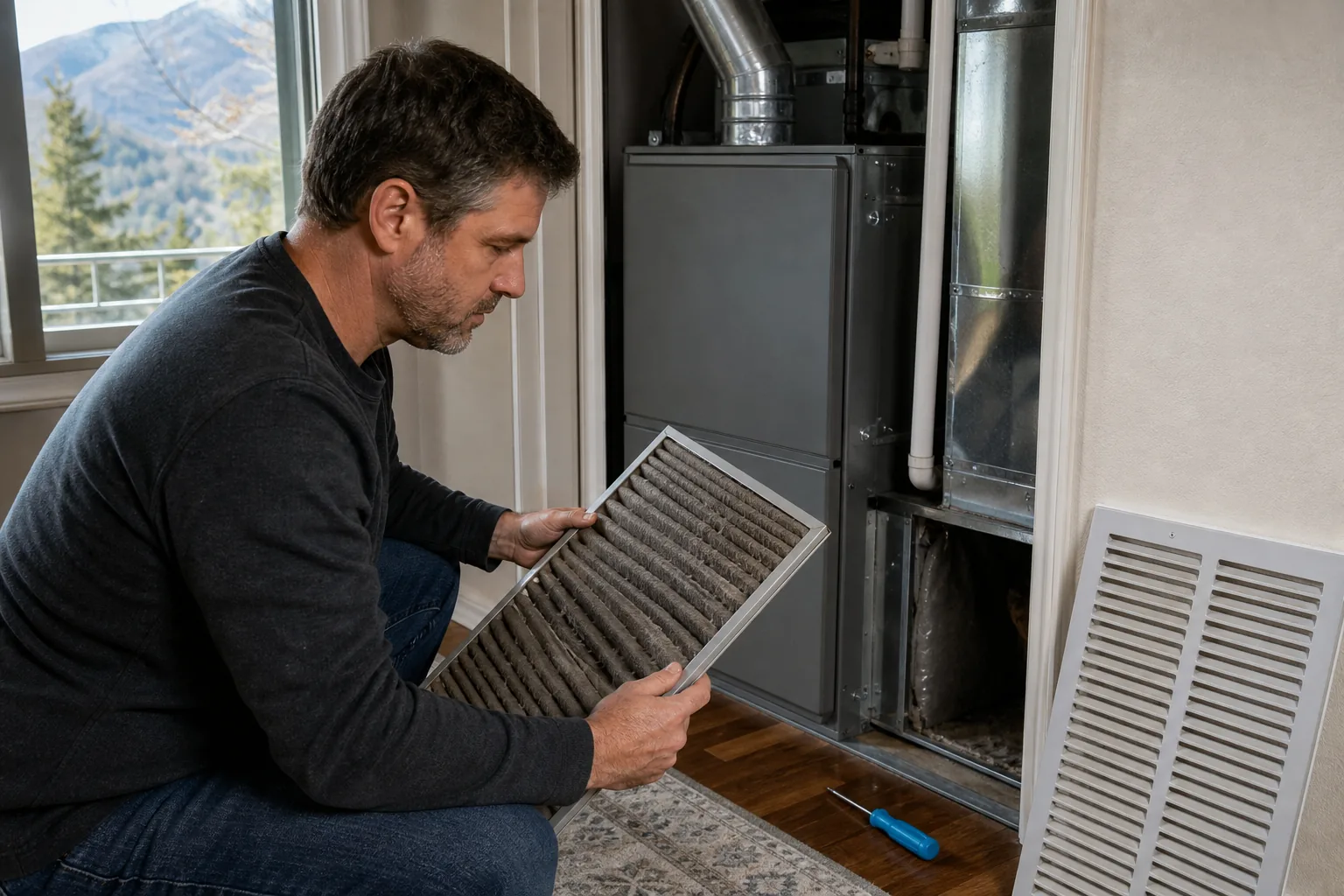
Start with the filter. Turn the furnace off before checking it, then look for a filter that’s loaded with dust or bent out of shape. Replace it with the correct size and type, following the airflow arrow on its frame. A filter that’s too restrictive for the system can also make it harder for air to pass through.
Next, walk through the rooms and check supply registers and return grilles. Keep them open and clear of rugs, furniture, or boxes. Closing several vents to push more heat into other rooms can raise pressure in the ducts and reduce airflow at the furnace. If rooms are uneven, don’t assume shut vents are the fix.
Bryant’s furnace guidance explains that a clogged filter can restrict airflow, overheat the heat exchanger, and trigger the high-limit switch. That safety response stops the burners to protect the furnace. Once the unit cools, it may try to heat again, repeating the pattern.
Weak airflow can also point to a worn or failing blower motor. You may notice little air from the registers, or hear an unusual hum, squeal, or rattle near the furnace. Duct leaks, blocked returns, or undersized ducts can create similar trouble. A technician can measure airflow and check the blower rather than guessing at a motor replacement.
Check the filter as part of routine upkeep, especially during the heating season. How quickly it collects dust depends on the filter and the home, so follow its instructions and inspect it regularly. Our guide to furnace filter direction can help you confirm the arrow faces the right way.
Flame Sensor and Ignition Safety Shutdowns
A dirty flame sensor can make a furnace light briefly, then shut the burners off. This small metal part checks that a flame is present after the gas valve opens. If soot or oxidation blocks its signal, the control board may treat the flame as missing and close the gas valve as a safety measure.
This pattern often looks different from overheating. The burners may light and go out within seconds, sometimes followed by another attempt. The furnace may try a few times before it stops or enters a lockout. A flame sensor is one possibility, but a failed igniter, loose connection, or another ignition fault can cause similar symptoms.
The igniter starts the flame. If it’s cracked, worn, or not heating as it should, the furnace may fail to light and then try again. Don’t touch or test ignition parts while the system is powered. Gas and electrical parts can make a small repair unsafe if you’re not trained to work on them.
These furnace short cycling causes need a careful diagnosis because the same symptom can come from different parts. A technician can check whether the igniter works, confirm the flame signal, and inspect the wiring before cleaning or replacing anything. Cleaning a sensor won’t fix a weak igniter or a separate control problem.
If you want to understand what a sensor cleaning involves, our flame sensor cleaning guide explains the process. If you’re not comfortable with the task, leave it to a trained HVAC professional. Don’t bypass a flame sensor or other safety switch to keep the furnace running.
Furnaces also use safety controls to stop operation when they detect a problem. That shutdown is a warning, not a nuisance to work around. If the furnace keeps failing to light, or you notice soot or a gas odor, stop trying to restart it and arrange qualified service. If a carbon monoxide alarm sounds, leave the home and seek emergency help from a safe place.
Thermostat Location, Calibration, and Wiring Issues
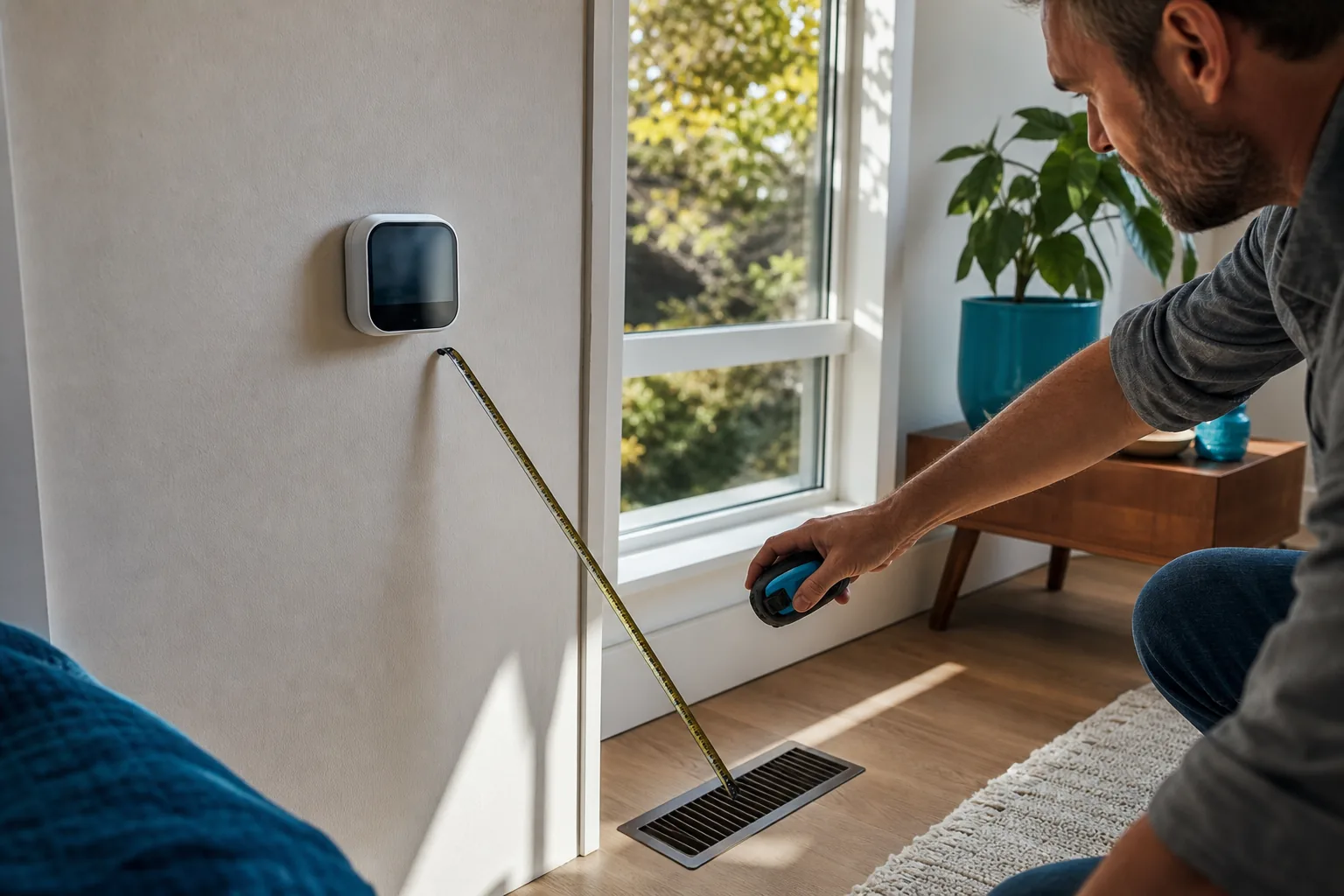
A thermostat can cause short cycling if it reads the wrong temperature or sends an erratic signal. If it sits in direct sun, beside a heat register, or near a kitchen heat source, it may sense warmth that the rest of the home hasn’t reached. Then it can tell the furnace to stop too soon.
Look at the thermostat’s location before changing settings. Is a lamp or sunny window warming it? Is it close to a supply vent? You can move an object that gives off heat, but relocating the thermostat itself involves wiring and should be handled by a qualified person.
Check simple settings that the owner’s manual says you can adjust. Make sure the thermostat is set to Heat and that its schedule or temperature setting isn’t ending the call early. If it uses batteries, replace them when the display indicates they’re low. A battery change won’t fix a thermostat that’s poorly placed or incorrectly set up for the furnace.
Loose or corroded thermostat wires can also interrupt the call for heat. A technician can inspect those connections and check whether the thermostat’s settings match the furnace. If your home has a staged furnace or zoning controls, mismatched settings can affect how the system runs. Don’t pull wires from the wall or test live terminals yourself.
For homeowners in Auburn or Rocklin, a thermostat in a sunlit room may read differently from a cooler hallway or bedroom. In Colfax, cold outdoor conditions can make comfort issues more noticeable, but the thermostat still reads only the area around it. A technician can check its location and compare the thermostat reading with the room temperature.
Oversized Furnaces, Control Boards, and Heat Exchanger Faults
A furnace can short cycle even when it’s working as designed if it’s too large for the home’s heating needs. It may warm the area near the thermostat quickly, reach the set temperature, then shut off before heat spreads evenly through the rooms. When the house cools, the thermostat calls for heat again.
This is different from a safety shutdown. With an oversized system, the thermostat may end the call because it senses the target temperature. With an airflow or ignition fault, a furnace safety may stop the burners while the thermostat still wants heat. That difference matters when deciding what to test.
Proper sizing calls for a heat-load calculation that considers the home, not just its square footage or the size of the old furnace. Insulation, windows, air leaks, and duct design affect how much heat a home needs. If you’re replacing a furnace, ask how the contractor will assess the home’s heating load before choosing equipment.
A faulty control board can also send the wrong signal to the gas valve or blower, causing the furnace to stop at the wrong time. A technician may inspect the board for damaged parts or loose connections, then compare its error codes with the furnace’s service information. A code can point to a circuit issue without proving that the board itself is the failed part.
A cracked heat exchanger is a more serious concern. It can affect how the furnace heats air and may trigger safety shutdowns. Only a qualified technician should inspect it. If the furnace repeatedly overheats, don’t assume a new limit switch is the whole fix. The cause of the overheating needs to be found as well.
Blocked intake or exhaust vents can also interrupt the furnace’s pressure switch, which checks that the combustion system is venting properly. On a high-efficiency furnace, a blocked condensate drain can affect that process, too. From a safe spot outdoors, look for visible leaves or debris at vent openings. Don’t insert tools or remove furnace tubing.
Home Worx Heating and Cooling serves communities including Roseville, Grass Valley, Penn Valley, and Lincoln. We can inspect a furnace that keeps cycling and explain whether the issue points to airflow, sizing, a control, or a safety shutdown.
Annual maintenance can catch a dirty filter, worn parts, or venting concerns before they lead to repeated shutdowns. If the cycling continues after a filter change and clear vents, book an inspection rather than replacing parts based on a guess.
FAQ
Why does my furnace turn on and off every few minutes?
A furnace that turns on and off every few minutes may have restricted airflow, an ignition fault, a thermostat issue, or a safety switch that keeps stopping the burners. Check the filter and make sure vents are open and clear. If the pattern continues, note what happens during startup and arrange professional diagnosis.
Can a dirty furnace filter cause short cycling?
Yes, a dirty filter can reduce airflow enough to overheat the furnace and trigger its high-limit safety switch. Replace a visibly loaded filter with the correct size and type for your system. If short cycling continues after the change, the cause may be a blower, duct, or control issue.
Is it safe to keep running a furnace that short cycles?
Repeated short cycling means the furnace isn’t completing normal heating cycles, so don’t ignore it. A safety control may be stopping the burners to protect the system. Turn the furnace off if you smell gas or see signs of damage. If a carbon monoxide alarm sounds, leave and seek emergency help.
Can an oversized furnace short cycle?
Yes, an oversized furnace can heat the area near the thermostat quickly and end the call for heat before warmth reaches the rest of the home. That can lead to frequent starts and uneven comfort. A heating-load calculation can help confirm whether the furnace size fits the house.
Conclusion
Start with safe checks: inspect the filter, clear vents, and note how the furnace behaves. If it still cycles, have a qualified technician find the cause before parts wear further. Home Worx Heating and Cooling serves Placer and Nevada counties. Contact us to arrange local furnace service.