
How to Improve Airflow in a House: 5 Steps
Uneven airflow can leave one room stuffy while another feels too cold. If you're looking for how to improve airflow in a house, start with open vents and a clean filter, then check how air moves between rooms. These five steps work through the simple fixes first and help you spot when it’s time to get your HVAC system checked.
We analyzed 5 of the top-ranking web pages for how to improve airflow in a house and found that 0 of the 5 describe a door-open test for isolating a stuffy room or mention checking outdoor air quality before opening windows. Only 2 of the 5 mention a professional duct inspection at all.
Table of Contents
Step 1: Check Supply Vents, Return Grilles, and Room Airflow
Start by checking the paths air uses to enter and leave each room. Supply vents blow heated or cooled air into rooms. Return grilles let that air flow back to the HVAC system. If either one is blocked, the room may feel stuffy or uneven.
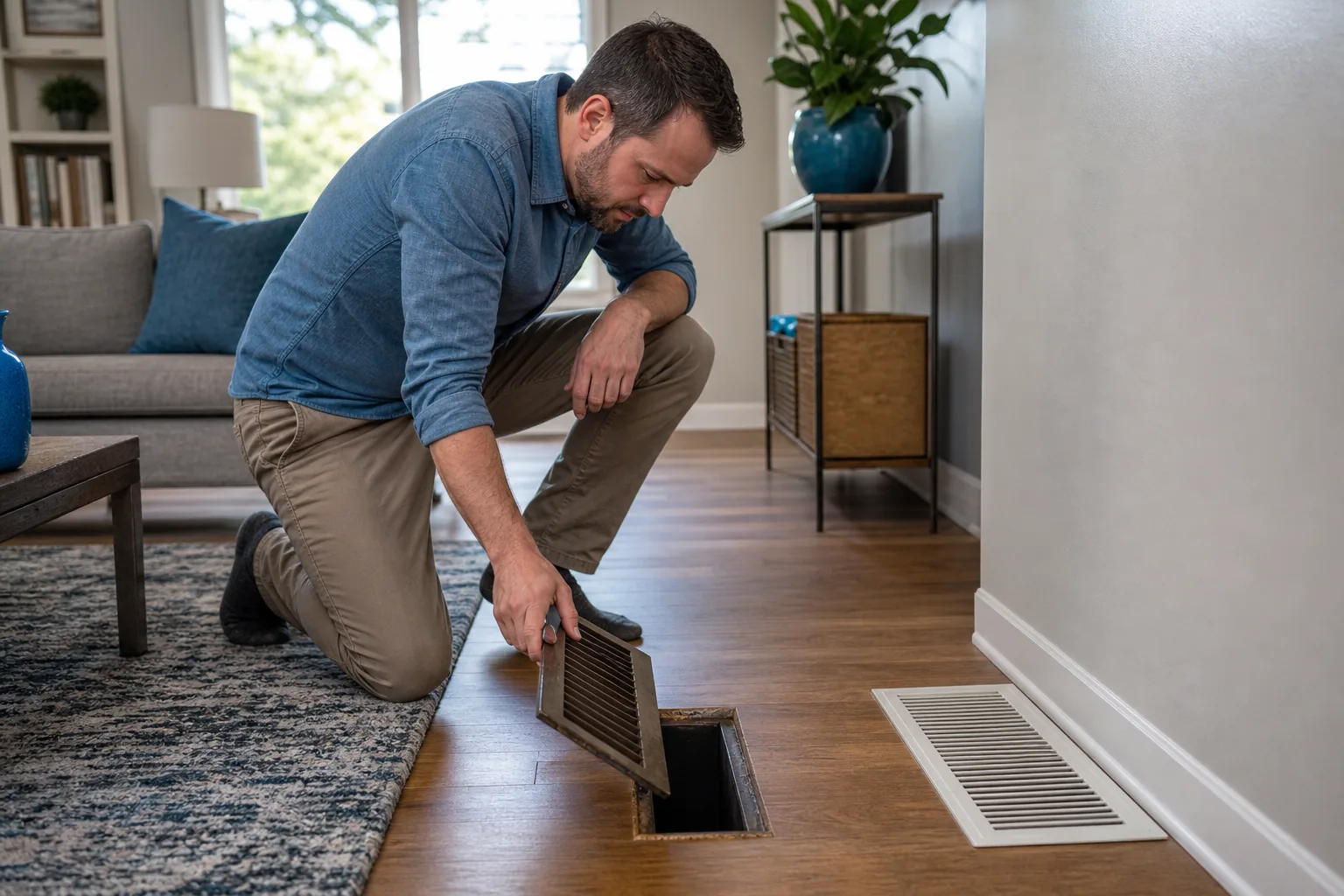
Turn on the heating or cooling system. Walk from room to room and hold your hand near each supply vent. You should feel air moving. Check that the vent louvers are open, then move rugs, curtains, furniture, and storage away from the vent. Keep return grilles clear too.
Notice which rooms feel different. A weak stream in one bedroom points to a different issue than weak airflow throughout the house. Make a short note of the room, the vent, and whether the system was heating or cooling. That record can help you explain the problem if you need service.
If a room feels stuffy only when its door is shut, leave the door open during a heating or cooling cycle. See if the room feels more comfortable. Air needs a path back to the system, and some rooms have no return grille of their own. For related room-by-room checks, see why some rooms are hotter than others .
In Auburn or Colfax, check rooms at more than one time of day. Sun and outdoor temperatures can change how comfortable a room feels, so compare airflow while the system is running rather than judging by temperature alone.
Milestone:You should know which vents are blocked, which rooms have weak airflow, and whether an open door changes the result.
Step 2: Replace the HVAC Filter and Clear Dust Buildup
A dirty filter can restrict the air moving through a heating or cooling system. Check it before changing thermostat settings or buying add-on fans. Find the filter at the return grille or inside the air handler, then switch off the system before removing it.
Look at the filter in good light. If it’s coated in dust, replace it with the size and type your system calls for. Follow the airflow arrow printed on the filter frame so it points toward the air handler. A filter that doesn’t fit well can let air slip around its edges.
Don’t assume a filter with a higher rating is always the right choice. A filter that’s too restrictive for the system can reduce airflow. Use the type recommended by the equipment maker or ask an HVAC technician to check what your system can handle.
Replace or clean central heating and air-conditioning filters regularly. Check yours each month, especially during heavy heating or cooling use, and follow the filter maker’s replacement instructions.
While the filter is out, wipe loose dust from the grille and the area around the filter slot. You can vacuum dust from the vent face and clean a removable register cover. Don’t push a vacuum hose far into ductwork or take apart the air handler. Those jobs can damage parts or disturb debris.
For more ways to keep a system working well, review these HVAC efficiency steps . A clean filter is a useful first check, but it won’t fix a crushed duct or a room with no clear return-air path.
Milestone:You should have a clean, correctly sized filter in place, with its arrow facing the right way.
Step 3: Improve Air Circulation Between Rooms
When a room gets supply air but has a poor path back, the air can feel trapped. Try the simplest test first: open the room door while the HVAC system runs. If comfort improves, the closed door may be limiting circulation.
A portable fan can help move air through a doorway. Place it so it pushes air from the warmer or stuffier room toward the hall, or aim it to draw cooler hallway air into the room. Test one direction at a time. Give the room a few minutes, then see whether the change helps.
Ceiling fans can also move air around the room. They don’t add heated or cooled air, but moving air can make people feel more comfortable. Use the fan only in rooms people are using, and set its direction based on the fan’s instructions and the season.
Keep furniture and curtains away from return grilles. A couch placed over a return can block the path back to the system, even if the supply vent is wide open. If a room still has poor airflow with the door open, note that for a technician. The system may need a better return-air path.
In Rocklin or Roseville homes, compare a room near the thermostat with a room farther away. If only the distant room feels stagnant, try the open-door test there before moving furniture or changing system settings.
Pro Tip:Change one thing at a time. If you open the door and add a fan together, you won’t know which change helped.
Milestone:You should know whether an open door or a portable fan improves circulation between the room and the rest of the home.
Step 4: Ventilate at the Right Time and Use Exhaust Fans
Air circulation moves indoor air around. Ventilation brings outdoor air in and sends indoor air out. Open windows when outdoor conditions are comfortable and the air is clean. Close them when outside air is smoky, dusty, very hot, or much colder than you want indoors.
In the Sierra foothills, a cool morning may be a good time to air out a home during a hot summer day. Check the outdoor air first. Opening windows during smoke or high heat can make indoor comfort worse, not better. This can apply to homes in Auburn, Colfax, Rocklin, Roseville, and Lincoln, as well as Grass Valley and Penn Valley.
Run the bathroom exhaust fan during a shower and the kitchen range hood while cooking, if it vents outdoors. These fans remove moisture or cooking pollutants close to where they start. Let the bathroom fan run after a shower until the room feels less damp.
When conditions allow, increasing outdoor air ventilation by opening windows can bring fresh air in, while exhaust fans help remove moisture and cooking pollutants. Ventilation is one way to support indoor air quality, alongside reducing indoor sources of pollution.
Don’t treat a kitchen or bathroom fan as a whole-house ventilation system. Local exhaust clears air near that room. A whole-house system is designed to provide ongoing ventilation across the home, and the right setup depends on the building and its occupants.
For homeowners in Grass Valley or Penn Valley, use window ventilation when outdoor conditions suit the season. When you can’t open windows comfortably, exhaust fans can still help clear moisture and cooking fumes at their source.

Milestone:You should have a simple plan for when to open windows and when to rely on exhaust fans.
Step 5: Get Ductwork and HVAC Performance Checked
If vents are open and the filter is clean but airflow still feels weak, the cause may be inside the ductwork or HVAC system. Look only at ducts you can reach safely, such as visible runs in a utility area. With the system on, listen for unusual whistling and feel near accessible joints for air escaping.
Don’t climb into tight spaces or pull apart ducts to find a leak. A technician can inspect the duct system, check how air moves, and look for issues that a room-by-room check can’t reveal. Tell them which rooms have weak airflow and what you’ve already tested.
A system can also have airflow trouble if its parts or duct layout don’t suit the home. A technician may need to assess the equipment and the duct design together. For an overview, read this guide to whole-house ventilation strategies .
Ask what the inspection found before agreeing to repairs. A clear explanation should connect the symptom to a part of the system, such as a restricted duct, a damaged connection, or a ventilation setup that needs adjustment. If duct sealing is recommended, learn what duct sealing involves before work begins.
Home Worx Heating and Cooling provides HVAC repair, system maintenance, and air-quality solutions. We serve homeowners in Lincoln along with communities across Placer and Nevada counties, including Grass Valley and Penn Valley. If airflow problems persist after the basic checks, we can assess the system and discuss the next step.
For a new ventilation setup, ask the contractor how it will work with your existing HVAC equipment and how the outdoor air intake will be placed. Requirements can depend on the project and local rules, so confirm whether permits apply before work starts.
Milestone:You should have a clear list of affected rooms and a better sense of whether the issue needs a professional inspection.
FAQ: Improving Airflow in a House
Why is airflow weak in one room?
Weak airflow in one room can come from a blocked vent, a dirty filter, or a problem with the duct serving that room. Check that the supply vent is open and unobstructed. Then see whether leaving the door open changes how the room feels. If the problem remains, note it for an HVAC technician.
Should I close vents in rooms I don’t use?
Usually, keep supply vents open unless your HVAC professional tells you otherwise. Closing vents can change how air moves through the duct system and may not send more air to other rooms. Start by clearing blocked vents and checking the filter instead of using closed registers to balance room temperatures.
Can opening windows improve airflow?
Yes, opening windows can bring fresh outdoor air inside when the weather and outdoor air quality are good. Open windows when outside air feels comfortable, then close them if smoke, dust, heat, or cold makes the indoor air less comfortable. Window ventilation doesn’t replace a whole-house ventilation system.
How often should I check my HVAC filter?
Check the filter about once a month, especially when your heating or cooling system runs often. Replace or clean it based on its condition and the maker’s instructions. Use the right size and type for your system. A clogged or poorly fitting filter can limit airflow or let dust pass around it.
When should I call an HVAC professional about airflow?
Ask an HVAC professional to check the system if airflow stays weak after you clear vents and replace a dirty filter. Get help sooner if several rooms have poor airflow, a vent makes unusual noises, or you suspect a duct problem. Share which rooms are affected and what you’ve tested.
Conclusion: Restore Comfortable, Consistent Airflow
Start with open vents, a clean filter, and a clear path between rooms. If those checks don’t help, contact Home Worx Heating and Cooling for local HVAC service in the foothill communities we serve. We’ll help you work out what to check next.