
How to Lower Your Heating Bill in Winter
If you’re looking for how to lower your heating bill in winter, start with the steps that cost little: seal drafts, adjust your thermostat, and check your heating system. In the Sierra foothills, cold nights can expose weak spots in a home fast. Work through these fixes in order, then weigh bigger upgrades if your system still runs hard.
We analyzed 37 comments and questions from YouTube and Quora about lower heating bills in winter and found that 43% mentioned air leaks.
Table of Contents
Step 1: Find and Seal the Biggest Sources of Heat Loss
Start where cold air gets in. On a windy day, check the edges of exterior doors and windows with your hand. Look for daylight around a door, cracked caulk, or a loose window seal. You can also hold a strip of tissue near the frame. If it moves, air may be leaking through.
Use weatherstripping on moving parts, such as a door that opens. Use caulk for fixed gaps. A removable window insulation kit can help renters or anyone who can’t change the window. Ask your landlord before adding permanent seals or making other changes to the property.
Check outlet plates on exterior walls, too. Foam gaskets can reduce drafts there. Keep the fix simple: turn off power to the outlet before removing the plate, and don’t cover a vent or block a required air opening.
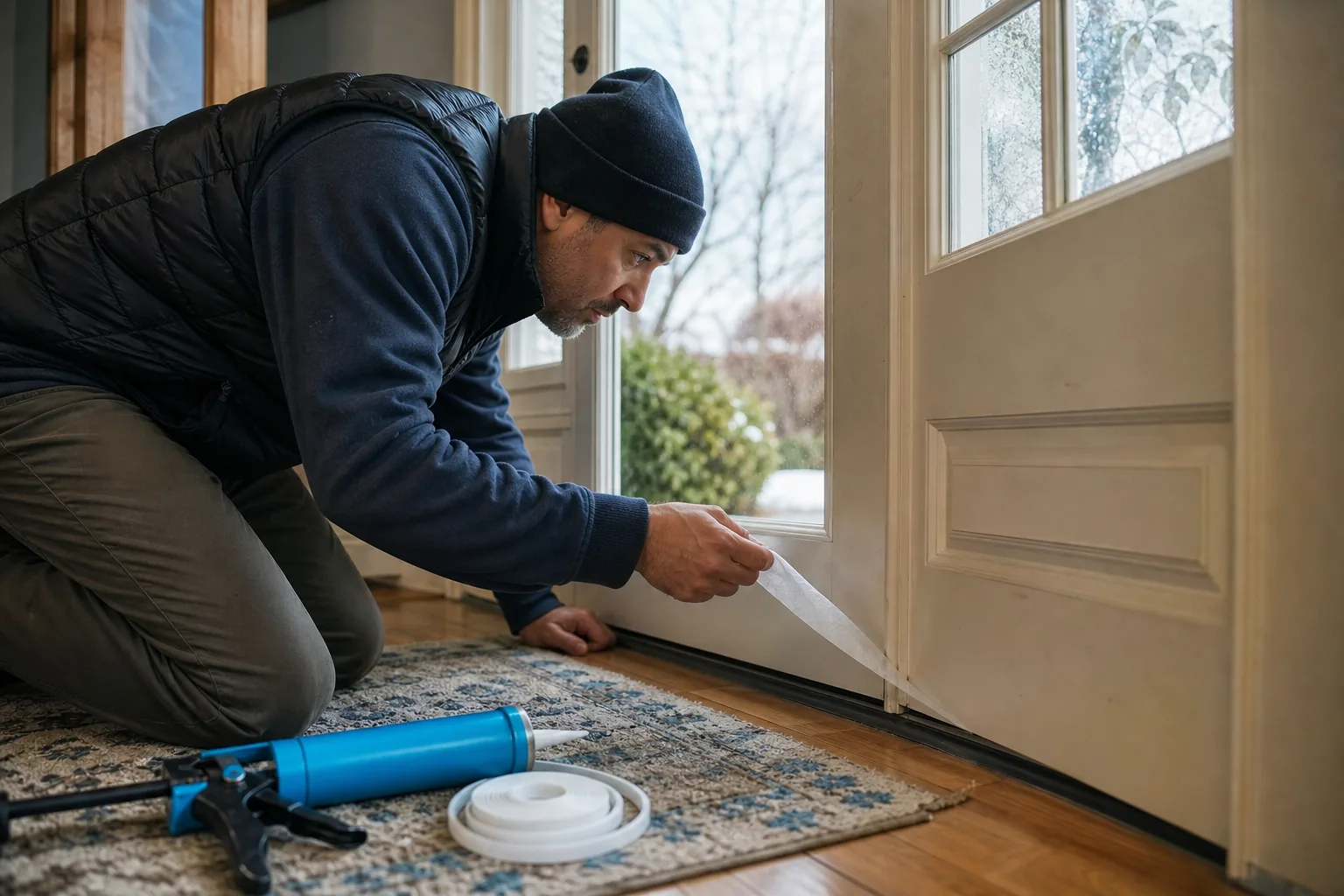
In Auburn or Colfax, take a walk through the rooms you use most before buying supplies. A draft at a frequently used door may be a better first fix than a small gap in a spare room. In Rocklin, renters can start with removable window film and heavier curtains, then ask the property owner to repair worn seals.
The U.S. Department of Energy includes draft reduction among its winter energy-saving steps . Seal one clear leak at a time, then check whether the room feels less drafty. If a gap is large or near wiring, gas lines, or the furnace vent, get qualified help instead of filling it yourself.
Step 2: Set the Thermostat and Use Sunlight Strategically
Choose the lowest temperature that still feels safe and comfortable for the people in your home. Try lowering the setting by one degree first. Give the change time, then see how it feels before adjusting again. A smaller change is easier to stick with than a big drop that leaves everyone reaching for the control.
Use a schedule if your home is empty at set times. Lower the heat while you’re away or asleep, then bring it back to your preferred setting before you need the room warm. The Department of Energy says turning a thermostat back while you’re asleep or away can help reduce heating and cooling use. Its advice is a starting point, not a promise of a set bill reduction.
Heat pumps may need a different approach. A large setback can prompt some systems to use backup electric heat while warming the home again. If you see an AUX or Emergency Heat message, check your system manual or ask an HVAC technician before changing advanced settings. For more on choosing a heat-pump setting, see Home Worx Heating and Cooling’s advice on winter heat-pump temperatures .

Let the sun help during the day. Open curtains on sunny windows, then close them at night to slow heat loss through the glass. Thermal curtains can help, too. Keep furniture and curtains clear of supply vents so warm air can move through the room.
In Roseville, a programmable thermostat can help a household keep a steady schedule on workdays. If someone at home needs a warmer room, heat that space safely rather than pushing the whole house to an uncomfortable setting. Don’t use aggressive setbacks if an older adult, infant, or person with a health condition needs steady warmth.
Step 3: Maintain the Furnace, Boiler, and Ducts
A dirty filter can restrict airflow and make a heating system work harder. Check your filter monthly. Replace it when it’s dirty, and follow the system maker’s guidance for the right size and type. ENERGY STAR also advises regular filter checks and yearly system maintenance in its home heating and cooling guidance .
Keep supply vents and return grilles clear. A rug, box, or sofa over a vent can disrupt airflow. If some rooms stay cold while others get too warm, note which rooms are affected and when. That detail helps a technician look for airflow or control problems.
Arrange a yearly tune-up for a furnace, boiler, or heat pump. A technician can inspect and clean parts, check system operation, and flag wear before peak winter use. Home Worx Heating and Cooling provides heating maintenance and seasonal tune-ups in its service area. Its service information says tune-ups can support efficient operation and keep systems under warranty, so ask about the terms for your equipment.
Check exposed ductwork in an attic, crawl space, or garage for loose joints or damaged insulation. Leaky ducts can send heated air into spaces you don’t use. ENERGY STAR estimates that sealing and insulating ducts in unconditioned spaces can prevent heat loss of up to 20 percent. Don’t use ordinary cloth duct tape for a lasting repair. If ducts are hard to reach or badly damaged, have a professional assess them.
Boiler controls vary by model. Don’t copy a flow-temperature setting from a video or another home. A qualified technician can check whether your boiler supports an adjustment and whether it still heats your home well after the change.
Watch the short video below for another look at seasonal heating care.
For a closer look at basic upkeep, use this winter furnace maintenance checklist as a prompt for what to inspect and when to bring in a technician.
Step 4: Upgrade Insulation or Equipment When Quick Fixes Aren’t Enough
If rooms remain cold after you seal obvious gaps, check the attic insulation next. Look for thin or uneven coverage, especially near the attic hatch. Don’t step between ceiling joists or cover recessed lights unless the fixture and insulation are rated for that setup. A contractor can assess insulation needs and the safest way to add more.
Wall or crawl-space insulation may make sense during a larger repair or renovation. These jobs need more planning than weatherstripping, so compare the home’s condition with the cost and expected use. A home energy assessment can help identify where heat is escaping before you commit to a major project.
Consider a system upgrade if your furnace is aging, needs frequent repairs, or struggles to keep the home warm. The right replacement depends on the home, fuel source, duct condition, and local climate. Ask the contractor to explain the equipment choice and confirm whether permits or utility incentives apply to your project. Check current program rules before counting a rebate toward your budget.
Home Worx Heating and Cooling serves homeowners in Grass Valley, Penn Valley, and Lincoln, along with other nearby communities. Its website lists HVAC installation and financing as service options, including a new-system plan advertised at $120 per month, or about $4 per day, with terms and conditions. Ask the company to explain the terms and whether a system assessment fits your home before making a decision.
Small business owners and property managers can use the same sequence: seal obvious leaks first, review thermostat schedules, then assess insulation and equipment. Keep a short record of cold rooms and heating issues so a service visit can focus on the places that need attention.
Frequently Asked Questions
What is the cheapest way to lower a heating bill?
Sealing a clear draft is often a low-cost first step. Add weatherstripping to a leaky door or use a removable window kit where it’s allowed. Then adjust the thermostat schedule and close curtains at night. Start with one room or one door, and check whether the change improves comfort before buying more materials.
What temperature should I set my thermostat to in winter?
Set it to the lowest temperature that keeps your household comfortable and safe. Try a small reduction while you’re home, then use a lower setting when the home is empty or everyone is asleep. People with health needs may require steady warmth. Heat-pump systems can also respond differently to large temperature changes.
How often should I change my furnace filter?
Check the filter once a month and replace it when it’s dirty, following the equipment maker’s directions. ENERGY STAR advises checking filters monthly and replacing them at least every three months. Pets, dust, and heavy system use can affect how quickly a filter gets dirty, so use its condition as your guide.
Can sealing ducts lower heating costs?
Yes, sealing ducts in unheated areas can reduce heat loss. ENERGY STAR says sealing and insulating ducts in unconditioned spaces can prevent losses of up to 20 percent. The result depends on the ducts and the home. Have a professional inspect ducts that are hard to reach or show signs of damage.
When should I replace my furnace?
Consider an assessment if the furnace struggles to heat the home, needs repeated repairs, or has reached the point where you’re weighing repair against replacement. Age alone doesn’t settle the question. Ask a qualified contractor to check the system and explain suitable replacement options, including expected operating needs and any applicable permits or incentives.
Conclusion
Start with drafts and thermostat schedules, then keep up with filter checks and yearly maintenance. If those steps don’t solve the problem, ask for an assessment before choosing an upgrade. For local help in the foothills, contact Home Worx Heating and Cooling, and review its guidance on what affects a heat pump’s electricity use as you compare options.