
How to Make Your Furnace More Efficient

Learning how to make your furnace more efficient starts with simple checks, not a new system. A clean filter and fewer drafts can help your current furnace run better, while replacing an electric furnace with a heat pump can use much less electricity for heating.
Work through these steps in order. Start with low-cost tasks, then weigh professional service or new equipment against your home’s needs and energy rates.
We analyzed 5 web pages (Hunker, Service company blogs and energy-program pages) about making a furnace more efficient and found that 0 of the 5 mention heat pumps, AFUE ratings, or written estimates. Only 1 of the 5 mentions financing.
Table of Contents
Step 1: Replace the Filter and Keep Up With Basic Maintenance
A clean filter lets air move through the furnace more easily. Check yours every month during heavy heating use. Replace it when it’s dirty, or follow the schedule and filter type listed for your system.
Before you start, turn the furnace off at the thermostat. Find the filter slot and note the arrow on the old filter. The arrow points in the direction of airflow, usually toward the furnace. Put in a filter of the same size and rating. A filter that’s too dense for your system can restrict airflow, so don’t choose a higher rating without checking the furnace instructions or asking a technician.
If you’re unsure which way the filter goes, our explanation of furnace filter direction can help you check before restarting the system. Keep a note of the filter size and the date you changed it. That small habit makes the next change easier to plan.
Keep supply vents and return-air grilles clear of furniture, rugs, and curtains. Dust visible vent covers with the furnace off. Don’t open the furnace cabinet or handle wiring, gas parts, or the burner. Those jobs belong to a trained professional.
Homeowners in Auburn and Colfax can start with these checks before the first cold stretch. For more detail on filter timing, see our guide to when to replace a furnace filter .
Key Takeaway:Check the filter monthly during heating season, then replace it based on its condition and the system’s instructions.
Step 2: Reduce Heat Loss Around the Home
Your furnace can only heat the rooms well if warm air reaches them and stays there. Look for drafts around doors and windows. Use weatherstripping or caulk where suitable, and check whether the attic or other areas need more insulation.
Check accessible duct joints for gaps, especially in a crawl space or attic. Leaks in supply ducts can let heated air escape before it reaches living spaces. Sealing and insulating ducts in hard-to-reach areas may call for a contractor. Don’t climb into an unsafe space or work near exposed wiring.
In winter, ask whether foundation vents should be closed at your home. That can help limit cold air entering through the foundation, but don’t block any opening needed for safe appliance ventilation. If you’re unsure what a vent does, have a qualified pro check it first.
Avoid closing several supply registers to force more heat into other rooms. That can interfere with airflow through the system. If one room stays cold, note when it happens and tell the technician. A duct or airflow issue may need a closer look.
These steps are part of the broader approach in our home HVAC efficiency guide . It covers airflow and insulation alongside basic system care. In Rocklin or Roseville, walk through the rooms you use most and note where drafts or uneven heat stand out.
Step 3: Use Thermostat Settings and Schedules Wisely
A thermostat schedule can reduce heating demand when the house is empty or everyone is asleep. Set the temperature a few degrees lower during those times, then schedule it to warm up before you’re home or out of bed. The best setting is one your household can keep using comfortably.
If you have a programmable thermostat, check that its clock and schedule are right. Daylight-saving changes, power interruptions, or a new routine can leave the schedule out of sync. Change one setting at a time and watch how the home feels before making another adjustment.
Look at the fan setting, too. In many furnace systems, “Auto” runs the blower when heat is needed, while “On” keeps it running. If yours is set to “On,” check the owner’s manual before changing it. Continuous fan use can be useful for some households, but it uses electricity when the furnace isn’t heating.
Don’t use a thermostat setback as a fix for rooms that are already cold or uneven. That can make the issue harder to spot. Write down the room, time of day, and thermostat setting when the problem occurs. A technician can use that information to assess comfort and airflow.
For a home in Grass Valley, a schedule may need to reflect colder nights and the hours people are actually away. Adjust it to your routine rather than copying someone else’s settings.
Pro Tip:Make one thermostat change, then give the home time to respond before changing another setting.
Step 4: Schedule a Professional Furnace Inspection
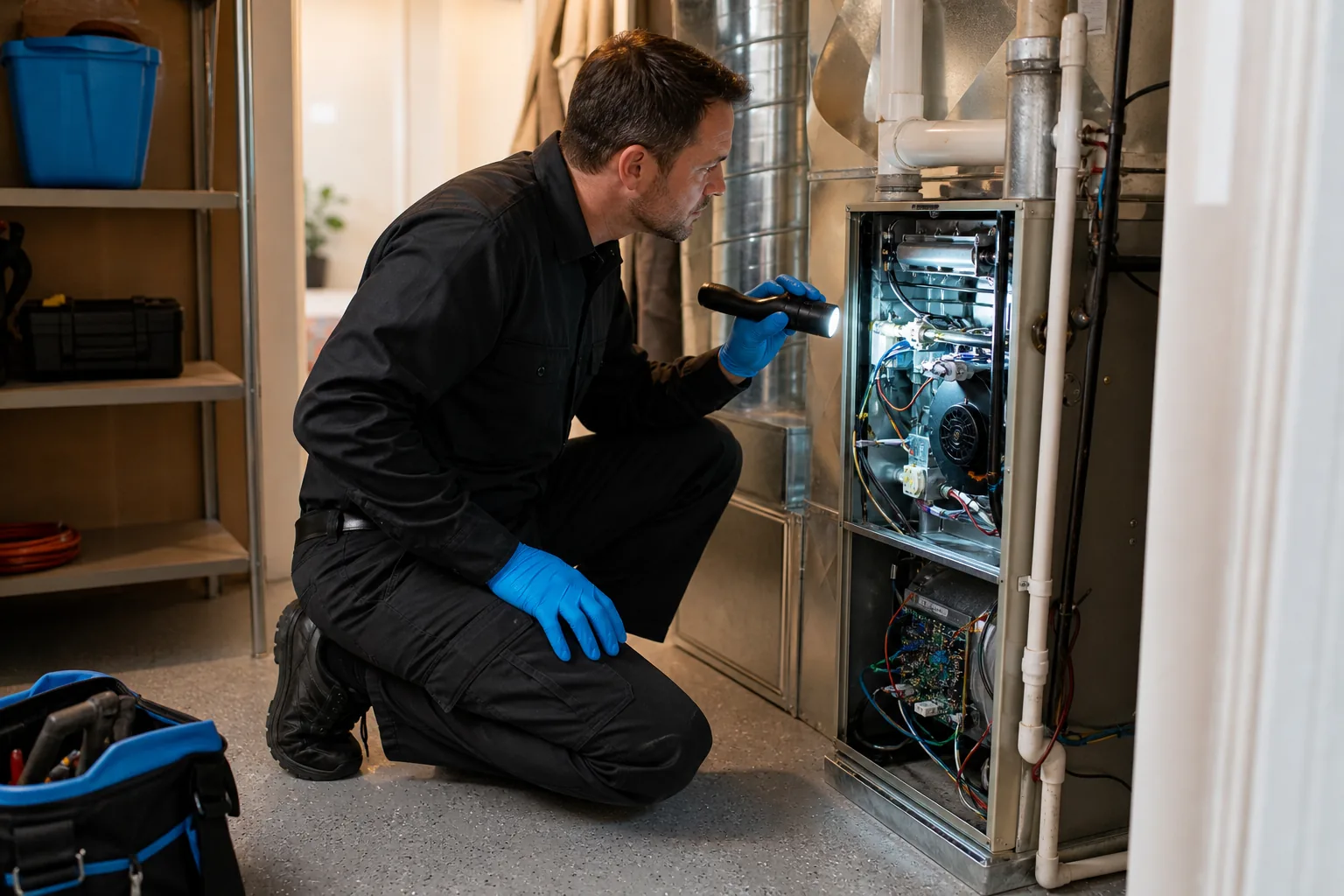
Book a professional check before the heating season or when the furnace runs longer than usual, makes a new sound, or struggles to hold the set temperature. A technician can assess its operation and service components that aren’t safe for a homeowner to handle.
When you book, describe what you’ve noticed. Tell the technician if some rooms feel colder, if the furnace starts and stops often, or if the filter gets dirty quickly. Ask what was checked and whether any repair is needed now. A clear explanation helps you decide what to do next.
If you have a gas furnace, leave burner or combustion work to a qualified technician. Don’t remove panels or try to adjust gas or electrical parts yourself. If you suspect a gas leak or a carbon monoxide problem, leave the home and follow local emergency guidance.
A furnace’s efficiency rating can help when comparing its performance. A higher AFUE rating indicates better heat conversion; ask the technician to identify your current rating if you’re considering a replacement.
Home Worx Heating and Cooling provides heating maintenance and seasonal tune-ups in Auburn, Colfax, Rocklin, Roseville, Grass Valley, Penn Valley and Lincoln. Contact the team for local service and ask what a visit will cover before work begins.
Step 5: Decide Whether Repair, Upgrades, or Replacement Makes Sense
Don’t replace a furnace based on age alone. Compare its condition, repair needs, comfort, and energy use with the cost of a new system. If the furnace has a single repair need and otherwise heats the home well, a repair may be the sensible first move.
Ask for a written estimate that separates the repair from any optional work. For a replacement, ask how the system will be sized for your home and whether existing ducts can support it. A higher efficiency rating won’t solve drafts or poor airflow by itself.
If your home has an electric resistance furnace, compare it with a heat pump. A heat pump moves heat rather than making it with resistance coils. That can lower the electricity used for heating, but results depend on the home, equipment, and how it’s used, and the saving applies to heating, not necessarily the whole utility bill.
Heat pump replacement costs vary widely with the home and equipment, so compare a full estimate with likely energy costs before deciding. Your bill also depends on your utility rates and the home’s heat loss. Ask the installer to check permit needs and whether any current incentive applies to your specific project. Don’t count on a rebate until you’ve confirmed the rules and eligibility.
Home Worx Heating and Cooling serves Placer and Nevada County communities, including Lincoln. Financing for a new HVAC system starts as low as $120 a month (terms and conditions apply). Ask for the full terms and a project estimate before weighing financing against other payment options.
Choose replacement when the full picture supports it, not just because a new unit has a higher rating. If you want to compare system types first, our overview of energy-efficient HVAC system options can help frame the discussion.
Frequently Asked Questions
How often should I change my furnace filter?
Check your furnace filter about once a month during periods of regular use. Replace it when it looks dirty or when the system’s instructions say it’s due. The right schedule depends on the filter and your home. Dust, pets, and heavy system use can mean you need to change it more often.
Does turning down the thermostat make a furnace more efficient?
Yes, lowering the thermostat while you’re asleep or away can reduce the heat your home needs during those hours. Use a schedule that fits your routine, then check comfort when the system warms the home again. If rooms stay cold or heat unevenly, address that problem instead of relying on a lower setting.
Can sealing ducts improve furnace efficiency?
It can help when heated air is escaping through accessible gaps in supply ducts. Check visible joints and note ducts in attics or crawl spaces. Leave hard-to-reach or unsafe areas to a qualified contractor. Avoid closing multiple room registers as a substitute, since that can affect system airflow.
Is a heat pump more efficient than an electric furnace?
A heat pump can use less electricity for heating than an electric resistance furnace because it moves heat instead of producing it with heating coils. Your actual savings depend on the equipment, home, climate, and energy rates.
Conclusion
Start with the filter and drafts, then schedule a professional check if the furnace still struggles. If replacement looks likely, compare repair and system estimates before committing. Contact Home Worx Heating and Cooling to discuss furnace service or an upgrade for your Northern California home.