
When to Replace an HVAC System: Signs and Timing
When to replace an HVAC system depends on more than its age. If your equipment is around 10 to 15 years old, watch for rising bills, repeat repairs, or rooms that never feel right, then weigh those signs together before deciding.
Table of Contents
The Warning Signs: Age, Bills, and Comfort Problems
Age gives you a reason to look closer, not an automatic deadline. A well-kept system may keep working past the point when another unit starts to fail. Furnaces also have different service lives by type. Our guide to furnace life spans explains why gas and electric models can follow different timelines.
In Auburn, a system that has handled years of hot summers and cold winter nights may show wear sooner than its calendar age suggests. Compare energy bills from similar weather periods. If costs keep climbing while your thermostat habits stay about the same, ask a technician to check the equipment and airflow before blaming age alone.
Pay attention to comfort, too. A room that stays warm while the rest of the house cools may point to a duct or airflow problem, or to equipment that can no longer keep up. Weak airflow, long run times, or frequent starts and stops deserve a diagnosis. Short cycling, when a system switches on and off too often, can raise energy use and add wear, but a technician should find its cause before you consider replacement.
Grinding, banging, or repeated rattling sounds need attention. A burning smell can signal an electrical fault, while a musty odor may point to moisture or growth in the system. Ice on a coil or water near indoor equipment also needs prompt inspection. These problems can be repairable, so treat them as warning signs, not proof that the whole system must go.
Older equipment that uses R-22 refrigerant may be harder and more costly to maintain. Ask the technician to confirm which refrigerant your system uses and whether a leak or part failure changes the repair outlook. For a second look at cooling-specific warning signs, see our guide to when an air conditioner may need replacement .
When planning a replacement, homeowners can ask about available rebates and financing to help manage upfront costs.
When Repairs Stop Making Sense
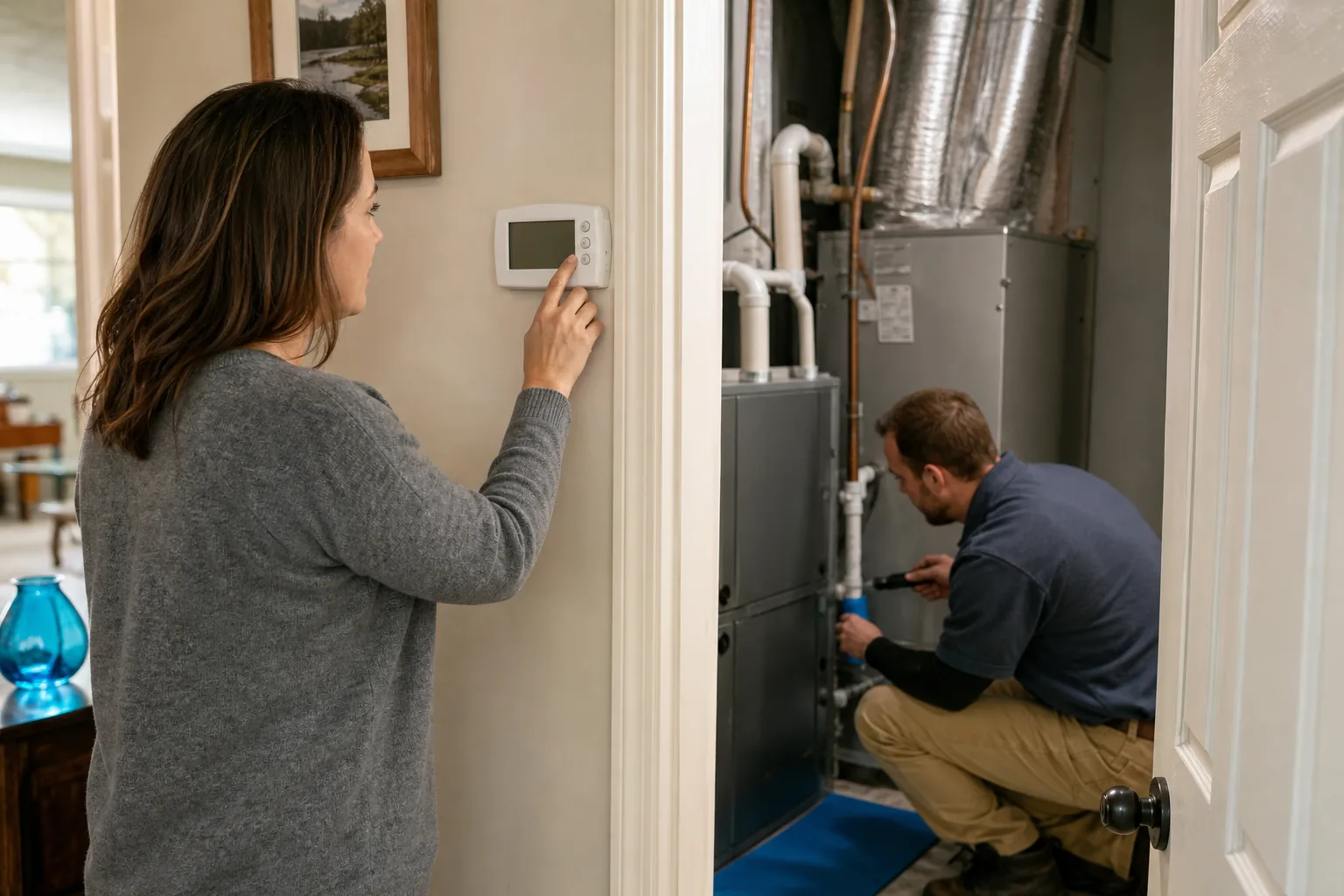
A repair can be the right call when the system is relatively young, the fault is clear, and the rest of the equipment works well. Replacement deserves a closer look when major problems keep returning or when one repair would take a large share of the cost of a new system. In Northern California’s Sierra foothill communities, hot, dry summers and cold winters can make dependable heating and cooling especially important.
One common screening rule compares the system’s age with the repair estimate: multiply the age in years by the repair cost in dollars. If the result is over $5,000, get a replacement estimate before approving the repair. This is a prompt to compare options, not a firm rule or a substitute for a diagnosis.
Another rough guide is to review replacement when a single repair reaches about 30 to 50 percent of a new system’s cost. The exact answer depends on the unit’s condition, the repair’s expected life, and the price of a correctly sized replacement. Ask for both estimates in writing so you can compare what each option covers. Homeowners in Auburn, Rocklin and Roseville can also check applicable California and Placer County permit requirements, along with available PG&E or state energy rebates.
Then consider the pattern. If your Colfax home has needed several repairs in one or two seasons, a low-cost fix today may not be the only cost to weigh. The same considerations apply in Grass Valley, Penn Valley and Lincoln. Add recent repair bills to your notes. Include changes in energy use and comfort. A system that has had one isolated issue is different from one that keeps failing in new ways.
Replacing only one part can make sense, especially if the other equipment is in good shape. But mismatched old and new components can affect performance and warranty coverage. A qualified contractor can explain the trade-offs between replacing one component and changing the full system.
A clear diagnosis should identify the failed part, the likely cause, and what the proposed work is expected to fix. You shouldn’t have to make a large decision from a vague estimate. Contact Home Worx Heating and Cooling for local help comparing repair and replacement options.
Efficiency, System Fit, and the Environmental Trade-Off
A newer system may use less energy, but the result depends on the home and the installation. A unit that is too large can cycle too often. One that is too small may run for long stretches without keeping rooms comfortable. Ask how the contractor sized the system, rather than choosing by square footage alone.
A proper load calculation estimates how much heating and cooling a home needs. It considers factors such as insulation, windows, layout, and local weather. That matters in the foothills, where a home in Grass Valley may face different winter conditions than a lower-elevation home in Penn Valley. Our guide to choosing the right HVAC system size explains what goes into the assessment.
Ask for the equipment’s efficiency rating and what it means for your expected use. Compare proposed systems on the same basis, and ask whether duct repairs or thermostat changes are part of the plan. A smart thermostat can help manage run times and schedules, but it can’t fix poor sizing, blocked airflow, or leaky ducts on its own.
Replacement can also change how much energy your home uses for heating and cooling. A heat pump moves heat rather than making it through fuel combustion, while a furnace burns fuel to make heat. Which setup fits depends on the home, the existing equipment, local weather, and your utility costs. Ask the contractor to explain how the proposed system will handle both cold winter mornings and summer heat.
Refrigerant matters as part of the equipment choice, but don’t assume a particular type alone makes a system the right fit. Ask which refrigerant the proposed equipment uses and how the change affects service needs. If your existing unit uses R-22, have the technician explain the repair options and whether that changes the case for replacement.
Home Worx Heating and Cooling installs complete HVAC systems, heat pumps, and ductless systems. A local assessment can help match the equipment to your home rather than treating the highest efficiency rating as the only goal.
Replacement Timing, Costs, and Incentives in the Foothills
There is no single season that makes replacement right for every household. Planning before a system fails can give you time to compare estimates and equipment. If your system is struggling, don’t wait for a breakdown simply to reach a preferred month. Comfort and safe operation come first.
In Rocklin and Roseville, hot, dry summers can put cooling equipment under heavy demand. In higher foothill areas, winter cold can make a weak heating system harder to ignore. If your unit is aging but still running, ask for an assessment before the peak season. That gives you a chance to review options without deciding during an urgent outage.
Costs vary with the home, system type, equipment size, ductwork, and installation needs. A useful estimate should separate the equipment from labor and any needed duct or electrical work. Ask what the price includes, which warranty terms apply, and whether the contractor expects extra work after installation begins. Compare complete proposals, not just the equipment price.
Check current state, utility, and federal incentive rules before counting on a rebate or tax credit. Eligibility can depend on the equipment and household details, and programs can change. Ask the contractor which programs may apply, then confirm the rules with the program administrator or a tax professional. We also offer financing, with new HVAC systems from as low as $120 a month, subject to terms and conditions.
California permit requirements can depend on the scope of work and local jurisdiction. Ask who will confirm the permit needs before installation and whether that step is included in the project. A written plan should also state how the old equipment will be removed and how the new system will be tested.
For homes in Lincoln, start planning when repairs repeat or comfort slips, not only after the system stops. A technician can check the equipment, review your repair history, and help you decide whether to maintain, repair, or replace it.

Frequently Asked Questions
How old should an HVAC system be before I replace it?
Age alone doesn’t decide when to replace an HVAC system. Many homeowners start planning when equipment reaches roughly 10 to 15 years, but maintenance, installation quality, and use affect its condition. If an older system still runs well, has steady bills, and needs few repairs, it may have useful life left. Ask for an inspection when age comes with other warning signs.
What are the clearest signs my HVAC system needs replacing?
Repeat major repairs, rising energy use, and ongoing comfort problems together make a stronger case than one sign alone. Loud new sounds, weak airflow, short cycling, or ice on a coil call for a technician’s diagnosis. Some faults are repairable. Replace only after comparing the diagnosis and repair estimate with the system’s condition and a full replacement proposal.
Is it worth repairing an HVAC system that is 15 years old?
It can be, if the fault is isolated and the repair cost is modest compared with replacement. But a major repair on a 15-year-old system deserves a closer comparison, especially if other repairs have followed or comfort has dropped. Ask for written estimates for both paths, and consider the system’s recent history rather than age by itself.
When is the best time of year to replace HVAC equipment?
The best time is before the system fails, when you have enough time to compare options and plan the work. Spring or fall can be useful planning periods, but an unsafe or failing system should be addressed when the problem arises. In foothill communities, review heating performance before winter and cooling performance before summer demand rises.
Can a new HVAC system lower my energy bills?
A new system may lower energy use if the old equipment has lost performance and the replacement is sized and installed well. Savings depend on the home, system, weather, utility rates, and how you use the equipment. Ask for efficiency details and make sure the estimate addresses airflow, duct condition, and thermostat setup as well as the unit itself.
Conclusion
Use age as a prompt to assess, not a command to replace. If repairs are recurring or comfort and energy use are getting worse, ask Home Worx Heating and Cooling for a local assessment and compare a written repair estimate with a replacement plan. That gives you a clear next step for your home.